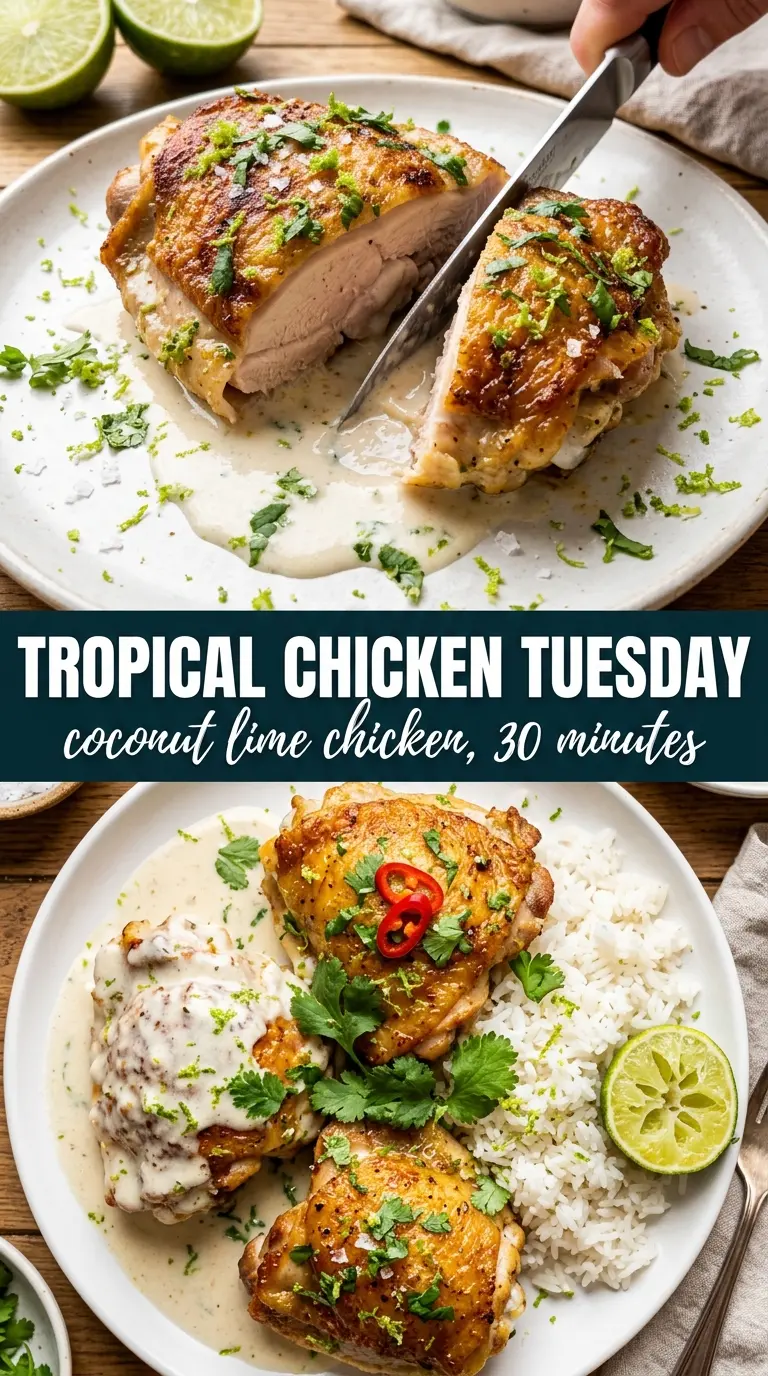
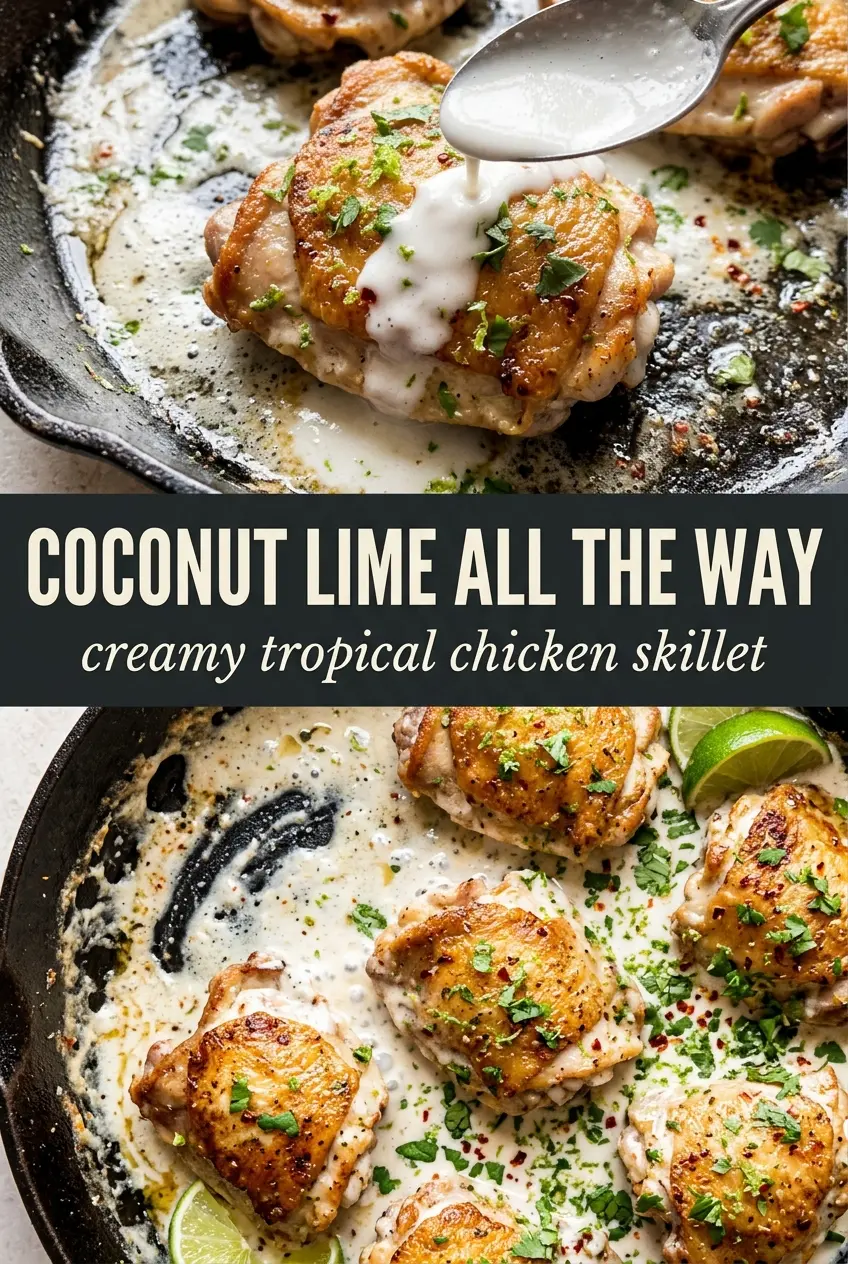
Golden chicken thighs in a coconut lime sauce hit that rare weeknight sweet spot: the skin stays crisp enough to matter, the sauce turns silky instead of watery, and the lime cuts through the richness so every bite tastes clean and bright. This is the kind of pan dinner that looks like it took more work than it did, which is always a good sign in my kitchen.
The trick is using full-fat coconut milk and giving the chicken a real sear before anything else. That first browning builds flavor in the pan, and the coconut milk thickens best when it gets a little time to simmer with the onions, garlic, and ginger before the lime goes in at the end. Add the citrus too early and you lose that fresh pop; add it last and the sauce wakes right up.
Below you’ll find the timing that keeps the chicken juicy, the ingredient details that matter most, and a few smart swaps for making this work with what you’ve got on hand.
The sauce thickened into the prettiest silky coating, and the lime at the end kept it from feeling heavy. I served it over rice and my husband went back for seconds before I’d even sat down.
Coconut Lime Chicken has the kind of silky coconut sauce and crispy-skinned chicken that make leftovers worth looking forward to.
The Mistake That Keeps Coconut Sauce from Turning Silky
The sauce in this dish looks simple, but the texture depends on a couple of small choices. Full-fat coconut milk gives you body; the light stuff tends to stay thin and separate once the lime goes in. The other big variable is heat. If the pan is boiling hard when you add the coconut milk, the sauce can look broken before it has a chance to come together.
Start with a steady simmer after the chicken goes back in. That gentle cook thickens the coconut milk, softens the onion, and lets the ginger and garlic blend into the sauce instead of tasting sharp. The lime juice and zest belong at the end because acid brings the whole dish into focus, but too much heat can flatten that bright finish.
- Bone-in, skin-on chicken thighs — These stay juicy through the simmer and give you the best flavor in the skillet. Boneless thighs work in a pinch, but they cook faster and won’t build quite the same depth.
- Full-fat coconut milk — This is the backbone of the sauce. Shake the can well before opening, and don’t swap in carton coconut beverage; it won’t thicken the same way.
- Fresh ginger and garlic — These carry the Thai-inspired flavor here. Ground ginger won’t give the same clean heat, so use fresh if you can.
- Lime zest and juice — The zest gives you the fragrant top note, while the juice sharpens the sauce at the end. Bottled lime juice will work, but the flavor is flatter and less lively.
- Soy sauce — A small amount adds salt and gives the coconut milk a deeper savory edge. If you need a gluten-free version, tamari works the same way.
What Each Ingredient Is Actually Doing in This Chicken Dish
- Chicken (pat dry for browning) — Room temperature cooks more evenly. Even pieces ensure uniform doneness.
- Oil or butter (the browning medium) — High-heat oil essential for proper searing. Creates pan flavor.
- Seasonings (salt, pepper, spices) — Apply generously. Chicken carries the entire flavor profile.
- Aromatics (garlic, ginger, herbs) — Cook with fat to bloom flavors. Become the foundation.
- Sauce or braising liquid (if using) — This keeps chicken moist. Balance richness with acid.
- Vegetables (if using) — Layer by cooking time so everything finishes together.
- Acid (vinegar, wine, lime, or pineapple) — This brightens and prevents one-dimensional flavor.
- Proper doneness (165°F internal temperature) — Use thermometer for accuracy. Overcooked is dry.
Getting the Chicken Crispy Before the Sauce Goes In
Seasoning the Thighs
Pat the chicken dry and season it all over with salt, pepper, garlic powder, and turmeric. Dry skin is what helps the thighs sear instead of steam, and the turmeric gives the final sauce a warm gold color. If the chicken goes into the pan damp, the skin will stick and the browning will suffer from the start.
Building the First Layer of Flavor
Lay the chicken skin-side down in hot coconut oil and leave it alone for 6 to 7 minutes. You want a deep golden crust that releases cleanly when it’s ready; if it clings to the pan, it needs more time. Flip it for just a few minutes on the other side, then pull it out so the onion can cook in the same fat and pick up all those browned bits.
Turning the Pan Drippings into Sauce
Cook the onion until it softens and starts to turn translucent, then add the garlic and ginger for just a minute. Once the coconut milk, broth, and soy sauce go in, scrape the bottom of the skillet with a wooden spoon. Those browned bits are what make the sauce taste built, not assembled.
Finishing Without Overcooking
Return the chicken skin-side up, cover the skillet, and simmer gently until the thighs reach 165°F. Keep the heat at a low bubble, not a hard boil, or the sauce can split and the chicken can tighten up. Stir in the lime juice and zest only after the heat comes down so the citrus stays bright and the sauce finishes glossy.
What to Change When You Need This to Fit Your Kitchen
Make It Dairy-Free Without Losing Body
This recipe is naturally dairy-free as written, and that’s part of why the coconut milk works so well. If you’re tempted to lighten it with cream, don’t; the coconut milk is what gives the sauce its texture and makes the lime taste rounded instead of sharp.
Swap in Boneless Chicken Thighs or Breasts
Boneless thighs will cook faster and stay forgiving. Chicken breasts also work, but they dry out more easily, so pull them as soon as they hit temperature and don’t let them sit in a hard simmer. The sauce still tastes great, but the finished dish will be a little less rich.
Add Vegetables Without Diluting the Sauce
Baby spinach, sliced bell peppers, or snap peas can go in during the last few minutes of simmering. Add them too early and they’ll soften into the sauce and water it down; added at the end, they keep some texture and help stretch the dish into a bigger meal.
Make It Gluten-Free
Use tamari or a certified gluten-free soy sauce in place of standard soy sauce. The flavor stays just as savory, and the coconut-lime balance doesn’t change.
Storage and Reheating
- Refrigerator: Store for up to 4 days. The sauce thickens as it chills, and the skin softens a bit, but the flavor holds up well.
- Freezer: It freezes well for up to 2 months. Cool completely first and freeze the chicken with plenty of sauce so it doesn’t dry out when reheated.
- Reheating: Warm gently on the stove over low heat with a splash of broth or water if the sauce has tightened. The common mistake is blasting it in the microwave, which can make the chicken rubbery and separate the coconut sauce.
Answers to the Questions Worth Asking
Coconut Lime Chicken
Ingredients
Equipment
Method
- Season the chicken thighs with salt, pepper, garlic powder, and turmeric until evenly coated with no dry spots.
- Heat coconut oil in a large skillet over medium-high heat and sear chicken skin-side down for 6-7 minutes until deep golden and crispy.
- Flip the chicken and sear for 3 more minutes, then remove to a plate while you cook the aromatics.
- In the same skillet, cook the diced onion for 3 minutes, stirring, until softened.
- Add minced garlic and grated ginger and cook for 1 minute, just until fragrant.
- Pour in coconut milk and chicken broth, then stir in soy sauce and bring the mixture to a simmer.
- Return the chicken skin-side up, cover, and simmer over medium-low for 18-20 minutes until the internal temperature reaches 165°F.
- Stir in lime juice and lime zest, then simmer uncovered for 1-2 minutes so the sauce turns glossy and lightly thickened.
- Garnish with fresh cilantro and serve the creamy coconut chicken over jasmine rice with lime wedges.