Ina Garten’s meatloaf earns its place at the table because it stays tender without turning mushy, slices cleanly, and carries a caramelized glaze that tastes like it took far more effort than it did. The balance here is what makes it special: beef for flavor, veal or pork for richness, breadcrumbs for structure, and enough moisture to keep every slice juicy.
The trick is in the mix and the shape. Caramelized onions bring sweetness and depth, but they also add moisture, so the loaf needs to be handled gently and baked as a free-form shape on a sheet pan instead of packed into a loaf pan. That gives you better browning, more even cooking, and a crust that sets up properly instead of steaming.
Below, I’m walking through the parts that matter most: how to keep the texture right, why the glaze works, and what to do if you want to make this ahead or adapt it for your own table.
The glaze set up beautifully and the loaf sliced without falling apart. I used the free-form shape on a sheet pan like you said, and it cooked evenly all the way through with no soggy middle.
Love the caramelized onion glaze and clean slices of this Ina Garten meatloaf? Save it to Pinterest for the nights when you want a classic dinner that still feels special.
The Reason This Meatloaf Slices Clean Instead of Crumbling
Most meatloaves fail in one of two ways: they’re packed so tightly they eat like a brick, or they’re mixed loosely enough that they fall apart on the cutting board. This version avoids both problems by using enough binder to hold together and enough fat and moisture to stay tender. The free-form shape matters, too. A loaf pan traps fat and steam, which gives you a softer, sometimes soggy texture instead of a well-set crust.
The second thing people miss is the mix itself. When you fold in the onions at the end, after they’ve cooled a bit, you keep the meat from getting overworked. Overmixing is what turns meatloaf dense and springy. Stop as soon as the ingredients look evenly distributed and the mixture holds together when pressed.
What Each Ingredient Is Actually Doing in the Pan
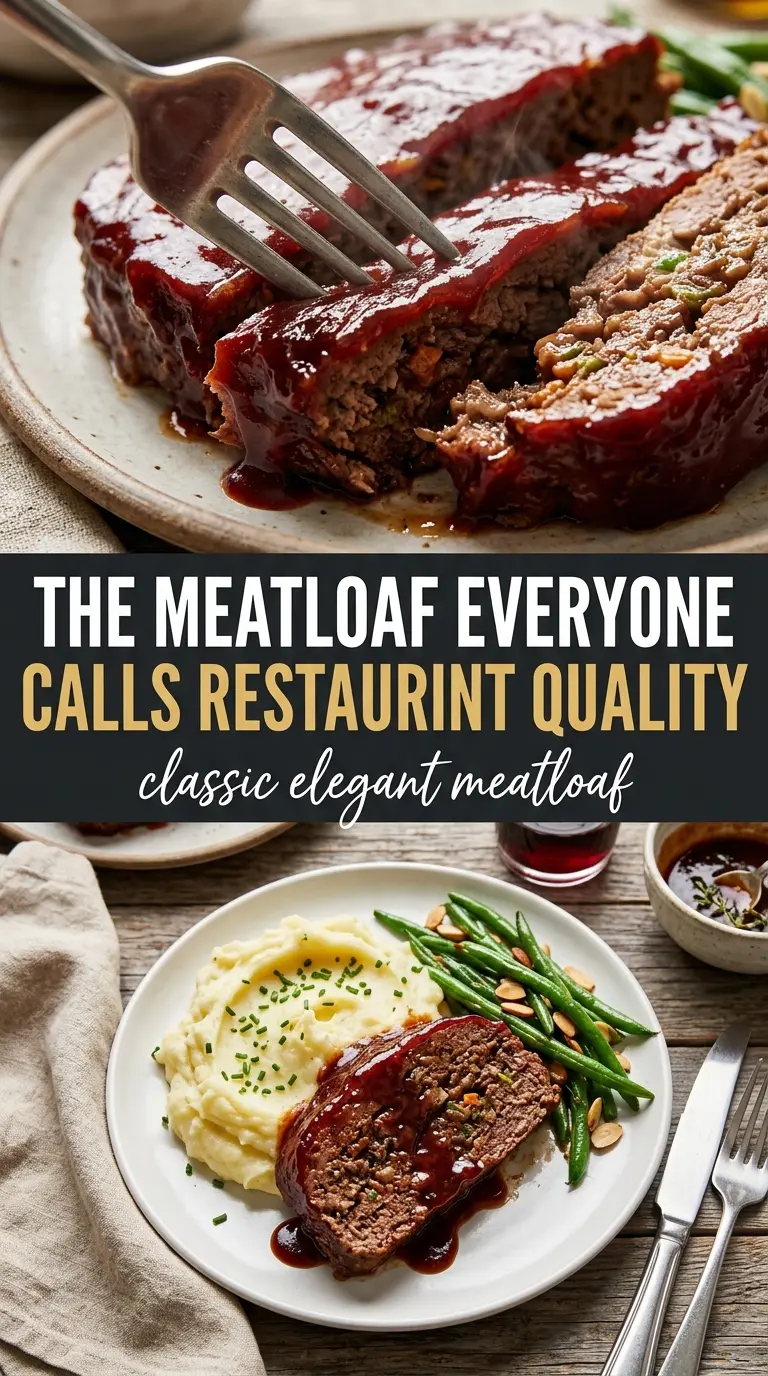
- Ground beef — This is the backbone of the flavor. Use beef with enough fat to stay juicy; extra-lean beef tends to bake up dry and tight.
- Ground veal or pork — This is what gives the loaf a softer, richer texture. Pork is the easiest swap if veal isn’t available, and it brings the same kind of roundness without making the meatloaf taste heavy.
- Plain dry breadcrumbs — These absorb the juices and keep the loaf from collapsing. Fresh breadcrumbs can work, but dry breadcrumbs give you more reliable structure because they soak up moisture at a steady pace.
- Dijon, Worcestershire, and thyme — This trio builds the savory backbone. Dijon sharpens the flavor, Worcestershire adds depth, and thyme keeps the loaf tasting layered instead of flat.
- Caramelized onions — These are not just flavoring. They bring sweetness, moisture, and a little softness to the crumb. If you rush them, you lose the deep flavor that makes this recipe stand out.
- Glaze — Ketchup gives you body, brown sugar adds stickiness, and cider vinegar keeps the topping from turning dull or candy-sweet. Brush it on generously so it can bake into a lacquered top instead of sitting in a thin layer.
Building the Loaf So It Bakes Evenly and Stays Tender
Cooking the onions first
Start with the onions and cook them until they’re deeply golden and sweet, not just softened. That step takes time, but it pays off in the finished loaf because the onions melt into the meat instead of tasting sharp or watery. If they go into the bowl too hot, they can begin to loosen the fat in the meat before the loaf even reaches the oven, so let them cool a bit first.
Mixing without overworking
Combine everything in a large bowl and use your hands to fold, not knead. The mixture should look evenly blended, but you should still be able to see the texture of the meat. If it starts to look paste-like, you’ve gone too far, and the loaf will bake up heavy. Stop when it clumps together cleanly.
Shaping the free-form loaf
Form a flat oval or rectangle on a parchment-lined baking sheet. A flatter shape cooks more evenly than a tall mound, which is important here because the center needs time to come up to temperature without drying out the edges. If the loaf is too thick, the outside will overcook before the middle is done.
Glazing and finishing the bake
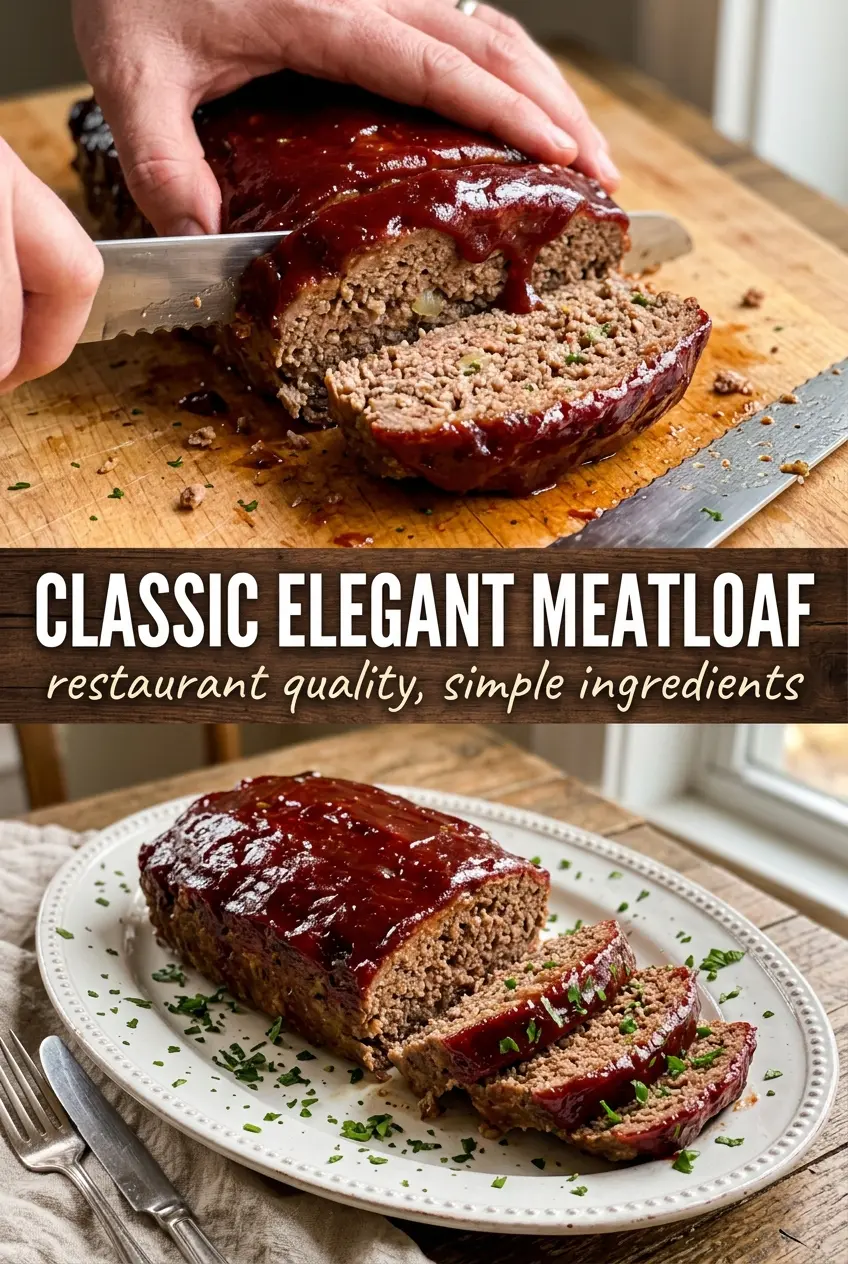
Brush the glaze over the top and sides before it goes into the oven so it can caramelize as it bakes. You want the surface shiny and deeply colored by the end, with some sticky spots at the edges. Pull it when the center reaches 160°F, then let it rest for 15 minutes. If you cut it too soon, the juices run out and the slices lose their shape.
Make It with Pork for a Richer Finish
Use all pork if you want a softer, richer meatloaf with a slightly sweeter finish. The texture will be looser than the beef-and-veal version, so don’t expect the same clean slice right away — the rest time matters even more.
Gluten-Free Version
Swap the breadcrumbs for a gluten-free plain breadcrumb blend or crushed gluten-free crackers. You need the same dry-to-wet balance, so don’t use a coarse breadcrumb that won’t absorb enough moisture.
Dairy-Free Friendly Without Losing the Texture
This recipe is already naturally dairy-free as written, which makes it a good main dish for mixed-diet tables. Keep the glaze as-is and the finished loaf still comes out glossy, savory, and sliceable.
Storage and Reheating
- Refrigerator: Store slices covered for up to 4 days. The texture firms up a little when chilled, which actually helps it reheat neatly.
- Freezer: It freezes well. Wrap individual slices or the whole cooled loaf tightly, then freeze for up to 3 months. Thaw overnight in the refrigerator for the best texture.
- Reheating: Reheat covered in a 300°F oven with a splash of broth or water nearby in the pan so it doesn’t dry out. The common mistake is blasting it in the microwave until the edges turn rubbery and the center goes dry.
Answers to the Questions Worth Asking
Ina Garten-Style Meatloaf with Caramelized Onion Ketchup Glaze
Ingredients
Equipment
Method
- Preheat the oven to 325°F.
- Combine ground beef, ground veal or pork, plain dry breadcrumbs, beaten extra-large eggs, Dijon mustard, Worcestershire sauce, chicken stock, fresh thyme, salt, and black pepper in a large bowl.
- Add the diced onions that have been sautéed until caramelized and fold together just until mixed.
- Shape the mixture into a flat, free-form loaf on a parchment-lined sheet pan for more even cooking.
- Mix ketchup, brown sugar, and cider vinegar for the glaze, then brush generously over the top and sides.
- Bake for 60–75 minutes at 325°F until the internal temperature reaches 160°F; the glaze should look deep amber and lacquered.
- Rest the meatloaf for 15 minutes before slicing so it holds its shape cleanly.