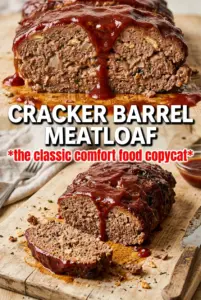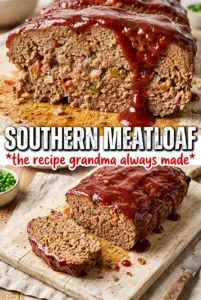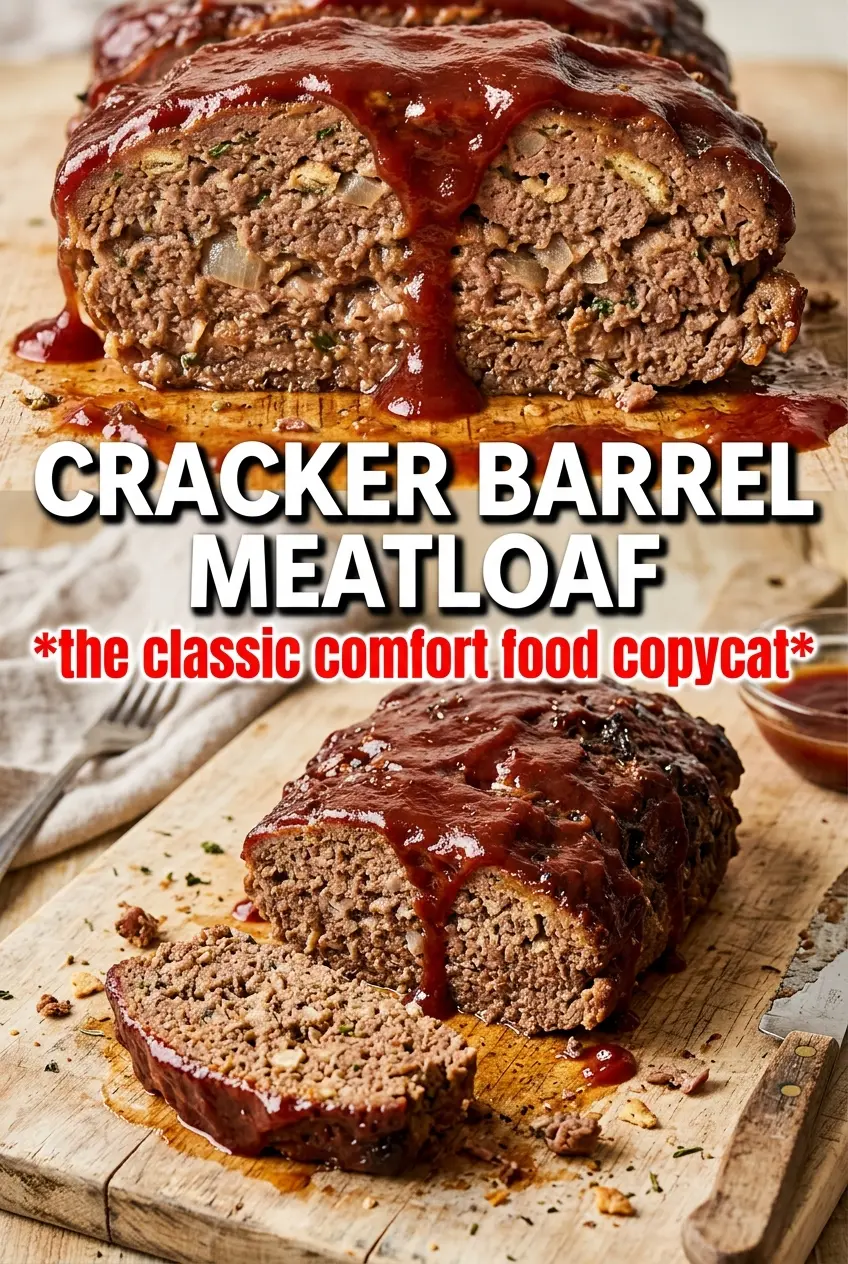
Cracker Barrel meatloaf comes out tender, sliceable, and packed with the kind of old-school comfort that keeps showing up on dinner tables for a reason. The loaf holds together cleanly, the peppers and onion melt into the beef without disappearing completely, and that sweet-tangy ketchup glaze bakes into a sticky top that clings to every slice.
What makes this version work is the balance. Ritz crumbs keep the texture soft without turning it bready, while the milk and eggs give the loaf enough moisture to stay juicy after a full bake. The chopped bell pepper is small enough to blend in but still leaves little pockets of flavor, and the glaze goes on in two stages so it thickens instead of sliding off the sides.
Below, I’ll walk through the part that matters most: how to mix meatloaf so it stays tender, not dense, plus a few smart swaps if you need to work with what’s already in the pantry.
The loaf held together perfectly and the glaze set up with that sticky finish I always want. I chopped the peppers fine like you said, and the slices were neat instead of falling apart.
Like this Cracker Barrel meatloaf? Save it for the nights when you want a tender loaf with that sweet ketchup glaze and classic Southern sides.
The Reason This Meatloaf Stays Tender Instead of Dense
A lot of meatloaf goes wrong because it gets packed like a casserole. Once the beef is overmixed, the proteins tighten up and you end up with a firm, crumbly brick instead of slices that hold together and still feel juicy. Here, the cracker crumbs and milk give the mixture enough structure that you don’t need to work it hard.
The other piece people miss is the pan. A loaf pan gives you that classic Cracker Barrel-style shape, but it also traps some of the fat and moisture so the meatloaf bakes up soft in the middle. If you want cleaner slices, let it rest before cutting; if you slice too early, the juices run out and the loaf will look dry even when it isn’t.
What Each Ingredient Is Actually Doing In This Loaf
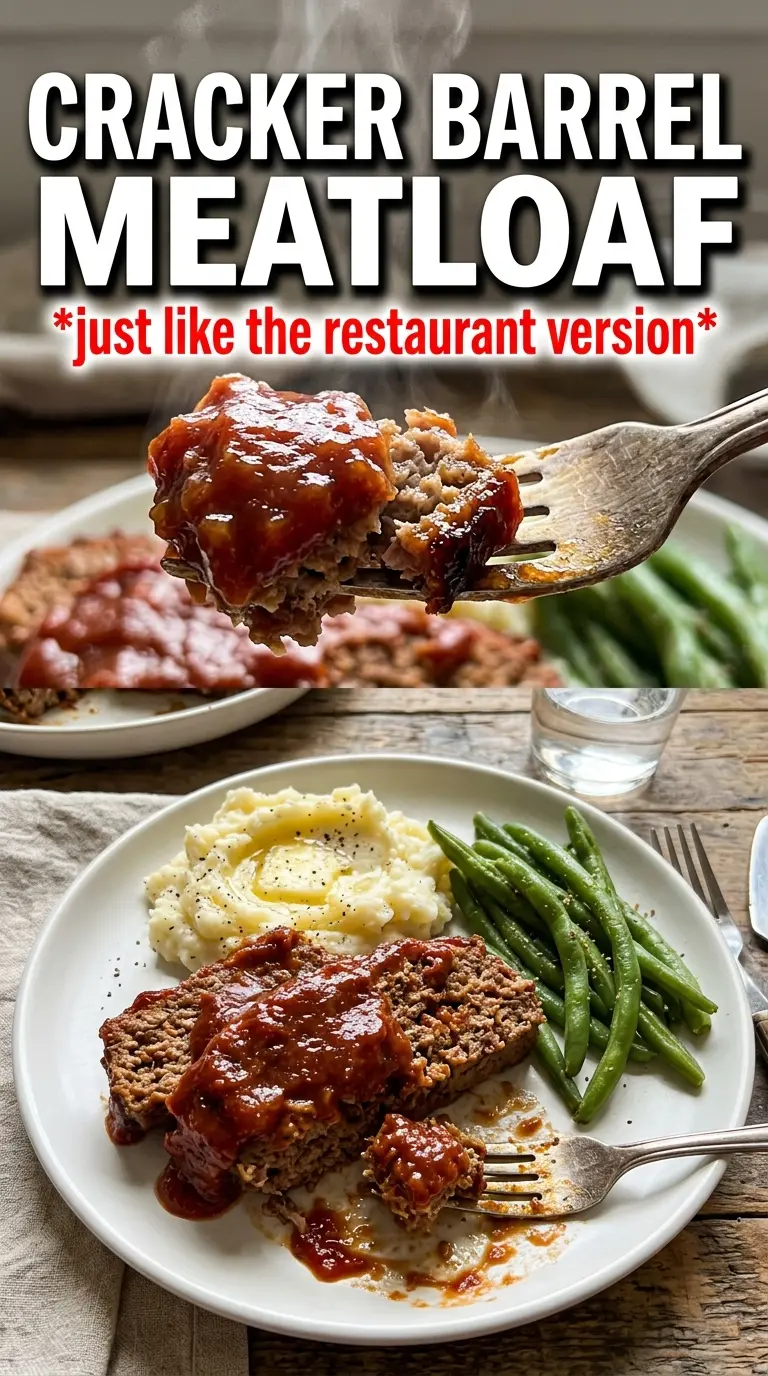
- Ground beef — Use an 80/20 blend if you can. That fat ratio keeps the loaf juicy and gives the glaze something to cling to. Leaner beef will still work, but the texture gets a little drier after the full bake.
- Ritz cracker crumbs — These do more than act as filler. They bring salt, fat, and a fine crumb that softens the texture without making the loaf heavy. Saltines can work in a pinch, but the flavor will be flatter.
- Milk and eggs — This is the binder that keeps the meatloaf tender. The milk hydrates the crumbs before baking, and the eggs help everything set into neat slices. If you skip either one, the loaf is much more likely to crack and crumble.
- Onion and bell peppers — Chop them fine so they disappear into the meat instead of creating pockets that make slicing messy. Fresh is best here; frozen peppers can release extra water and soften the texture. The red and green peppers give you both sweetness and that classic diner-style look.
- Worcestershire sauce — This is the backbone of the savory flavor. It adds depth that ketchup alone can’t give. There isn’t a perfect substitute, but soy sauce plus a splash of vinegar gets you close if that’s what you have.
- Ketchup, brown sugar, and mustard — The glaze should taste sweet, tangy, and a little sharp before it goes in the oven. Brown sugar helps it caramelize, and mustard keeps it from tasting one-note. Spread it in two layers so it stays glossy instead of baking into a thin stain on top.
Building the Loaf So It Bakes Like the Restaurant Version
Mix the base without overworking it
Combine the beef, crumbs, eggs, milk, vegetables, Worcestershire, garlic powder, salt, and pepper in a large bowl, then stop as soon as everything looks evenly distributed. A few streaks are fine at the beginning; the heat of your hands will finish the job as you press it into the pan. If you knead it like bread, the loaf gets tight and chewy.
Press it into the pan with even pressure
Pack the mixture into a greased 9×5 loaf pan and smooth the top so it bakes evenly. Don’t smash it down hard — just firm enough to remove big air pockets. Uneven packing creates odd gaps that can make the middle fall apart when you slice it.
Glaze in two stages
Mix the ketchup, brown sugar, and mustard, then spread half over the top before baking. The first layer settles into the surface and starts to caramelize, while the second layer goes on after 55 minutes to give you that sticky finish without burning. If you put it all on at once, the sugar can darken too fast and taste bitter.
Rest before slicing
Pull the loaf when the center hits 160°F, then let it sit for 10 minutes. That short rest lets the juices settle back into the meat instead of spilling onto the cutting board. If the loaf seems loose when it first comes out, that’s normal — it firms up as it cools.
How to Adapt This Meatloaf for Different Tables
Make it gluten-free
Use gluten-free cracker crumbs in place of the Ritz crumbs. Keep the amount the same so the texture stays soft and sliceable. You may lose a little of that buttery cracker flavor, but the loaf still holds together well.
Swap in ground turkey
Ground turkey works, but it needs the full amount of milk and crumbs to stay moist. The flavor is milder, so the Worcestershire and glaze matter even more. Watch the bake time closely, since turkey dries out faster once it passes temperature.
Add a little heat
A pinch of cayenne or a spoonful of hot sauce in the glaze gives the meatloaf a gentle kick without changing the classic flavor. Keep the amount small so it doesn’t overpower the ketchup-and-mustard balance.
Storage and Reheating
- Refrigerator: Store sliced or whole meatloaf covered for up to 4 days. The texture stays good, and the glaze often tastes even better the next day.
- Freezer: Freezes well. Wrap slices tightly and freeze for up to 3 months, or freeze the whole cooled loaf in a double layer of wrap and foil.
- Reheating: Reheat slices covered in a 325°F oven with a splash of broth or water until warmed through. The common mistake is microwaving it too long, which turns the edges dry before the center is hot.