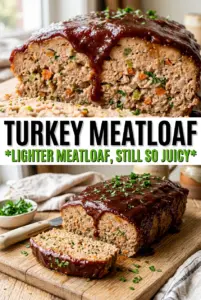
Turkey meatloaf earns its place when it stays tender all the way through and still slices cleanly without falling apart. The best version has a moist, herb-packed crumb, a savory center, and a tangy glaze that caramelizes on top instead of sliding off the loaf. That balance is what keeps this from tasting like a second-choice dinner.
The trick is building enough moisture into lean ground turkey without turning the loaf heavy or pasty. Grated onion, milk, eggs, and Worcestershire sauce all pull their weight here, while the breadcrumbs help the loaf hold together without tightening the texture. Turkey is more delicate than beef, so the pan matters too — it gives the loaf structure and helps it stay juicy.
Below, you’ll find the small details that keep turkey meatloaf from drying out, plus a few easy swaps if you need to work with what’s already in your kitchen.
The glaze got sticky and caramelized, and the loaf stayed moist even the next day. I grated the onion like you said and it made a huge difference in texture.
Save this turkey meatloaf for the nights when you want a moist loaf, a tangy ketchup glaze, and an easy dinner that slices beautifully.
The Moisture Problem Most Turkey Meatloaves Run Into
Lean turkey dries out fast, and that’s the reason so many turkey meatloaves turn crumbly or bland. The fix isn’t drowning it in sauce after the fact. It’s building moisture into the mixture before it goes in the oven, then baking it just until the center reaches 165°F.
Grated onion matters more than diced onion here because it melts into the loaf and seasons it from the inside without leaving chunky pockets that can make slicing awkward. The milk and eggs help the breadcrumbs hydrate, which keeps the texture tender instead of tight. If the mixture looks loose before baking, that’s a good sign — turkey meatloaf that starts out dense usually bakes up dry.
- Shape in a loaf pan for the juiciest result — Free-form meatloaf can work, but a pan helps turkey hold onto moisture and keeps the texture more even from edge to center.
- Don’t overmix the meat — Once the ingredients are combined, stop. Packing it too hard makes the finished loaf firm and springy instead of soft and sliceable.
- Use a thermometer, not the clock alone — Oven temps vary, and turkey goes from done to dry quickly. Pull it when the center hits 165°F.
What Each Ingredient Is Actually Doing in This Turkey Meatloaf
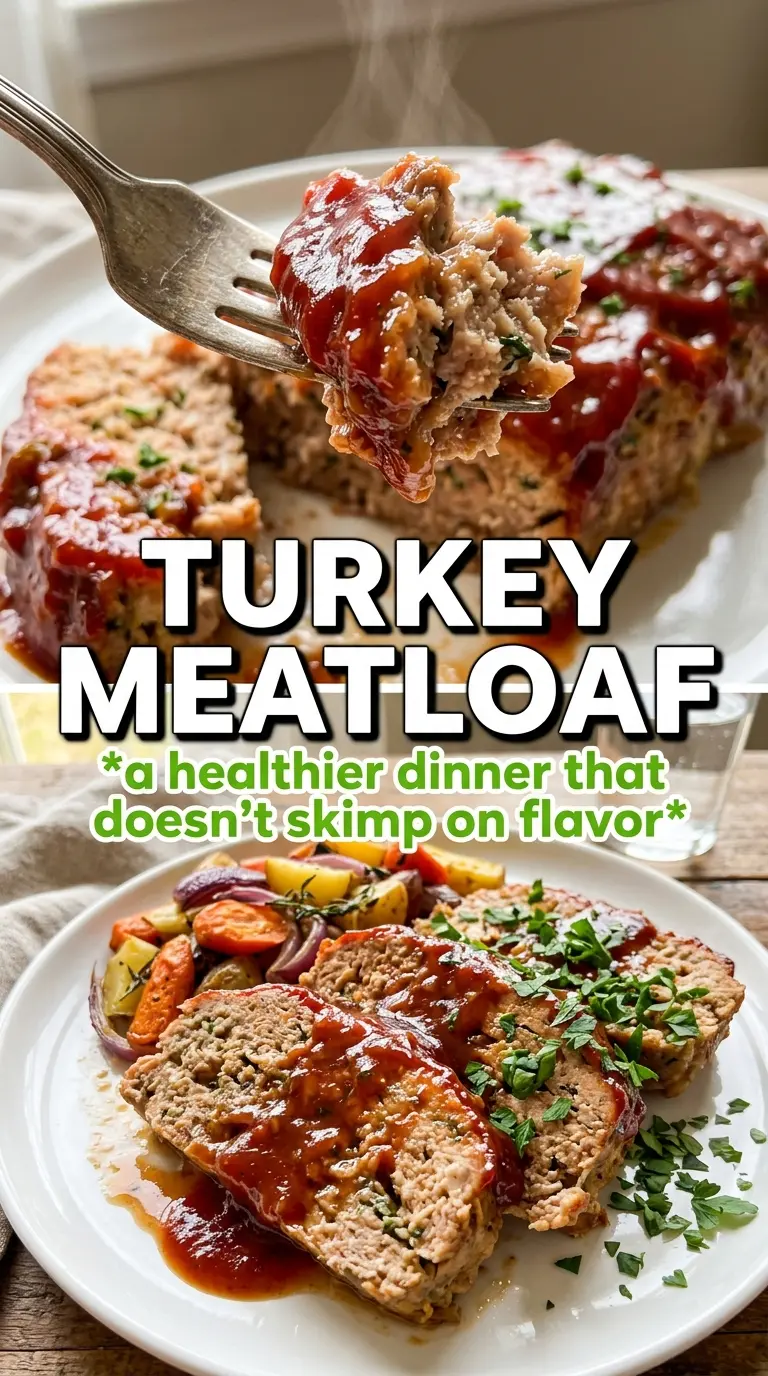
- Ground turkey — Use a mix that isn’t ultra-lean if you can. 93% lean gives you a better texture than the very leanest option, which can bake up a little dry.
- Breadcrumbs — These hold the loaf together and trap moisture. Plain or seasoned both work; if you use seasoned crumbs, ease up slightly on added salt.
- Grated onion — This is one of the biggest texture savers in the recipe. It disappears into the mixture and adds moisture in a way chopped onion can’t quite match.
- Whole milk — Milk softens the breadcrumbs and gives the loaf a more tender crumb. Lower-fat milk works, but whole milk gives the best cushion for lean turkey.
- Worcestershire sauce — It deepens the savory flavor and helps turkey taste seasoned all the way through. There isn’t a great substitute that brings the same balance of salt, tang, and umami.
- Ketchup, brown sugar, and Dijon — This glaze does more than taste good. The sugar helps it caramelize, while the Dijon keeps it from reading flat or overly sweet.
Building the Loaf So It Stays Tender After Baking
Mix the Base Without Packing It Down
Combine the ingredients until they’re just evenly distributed. The mixture should look cohesive but still soft. If you knead it like bread, the finished loaf turns dense and tight. A light hand gives the turkey room to stay tender.
Glaze Early, Then Glaze Again
Spread half the glaze over the loaf before it goes into the oven. That first layer starts building flavor immediately. Add the second layer at the 45-minute mark so it has time to caramelize without burning. If the sugar on top darkens too quickly, tent the loaf loosely with foil for the last stretch.
Rest Before You Slice
Let the meatloaf sit for 10 minutes after it comes out of the oven. That rest keeps the juices from running out the moment you cut into it. If you slice too soon, the center can look wetter than it really is and the loaf can fall apart at the edges.
How to Adapt This Turkey Meatloaf Without Losing the Good Part
Dairy-Free Version
Swap the whole milk for unsweetened plain oat milk or a similar neutral dairy-free milk. The loaf will still stay tender, though it may be a touch less rich. Don’t use a strongly flavored milk, because it can show up in the finished flavor.
Gluten-Free Meatloaf
Use gluten-free breadcrumbs in the same amount. The texture stays nearly identical if the crumbs are fine and dry. If they’re very coarse, give the mixture a few extra minutes to hydrate before shaping so the loaf doesn’t feel loose.
Make It a Little Richer
If you want a meatier, more old-school finish, use half ground turkey and half ground chicken or add a small handful of finely grated Parmesan to the mix. The loaf gets a little firmer and more savory, which works well if you plan to serve it with mashed potatoes.
Storage and Reheating
- Refrigerator: Store slices in an airtight container for up to 4 days. The loaf stays moist, and the glaze often tastes even better the next day.
- Freezer: Turkey meatloaf freezes well. Wrap individual slices or a whole cooled loaf tightly, then freeze for up to 3 months.
- Reheating: Reheat slices covered in a 325°F oven with a spoonful of water or extra glaze over the top. Microwaving works in a pinch, but short bursts are key or the turkey dries out fast.
Answers to the Questions Worth Asking
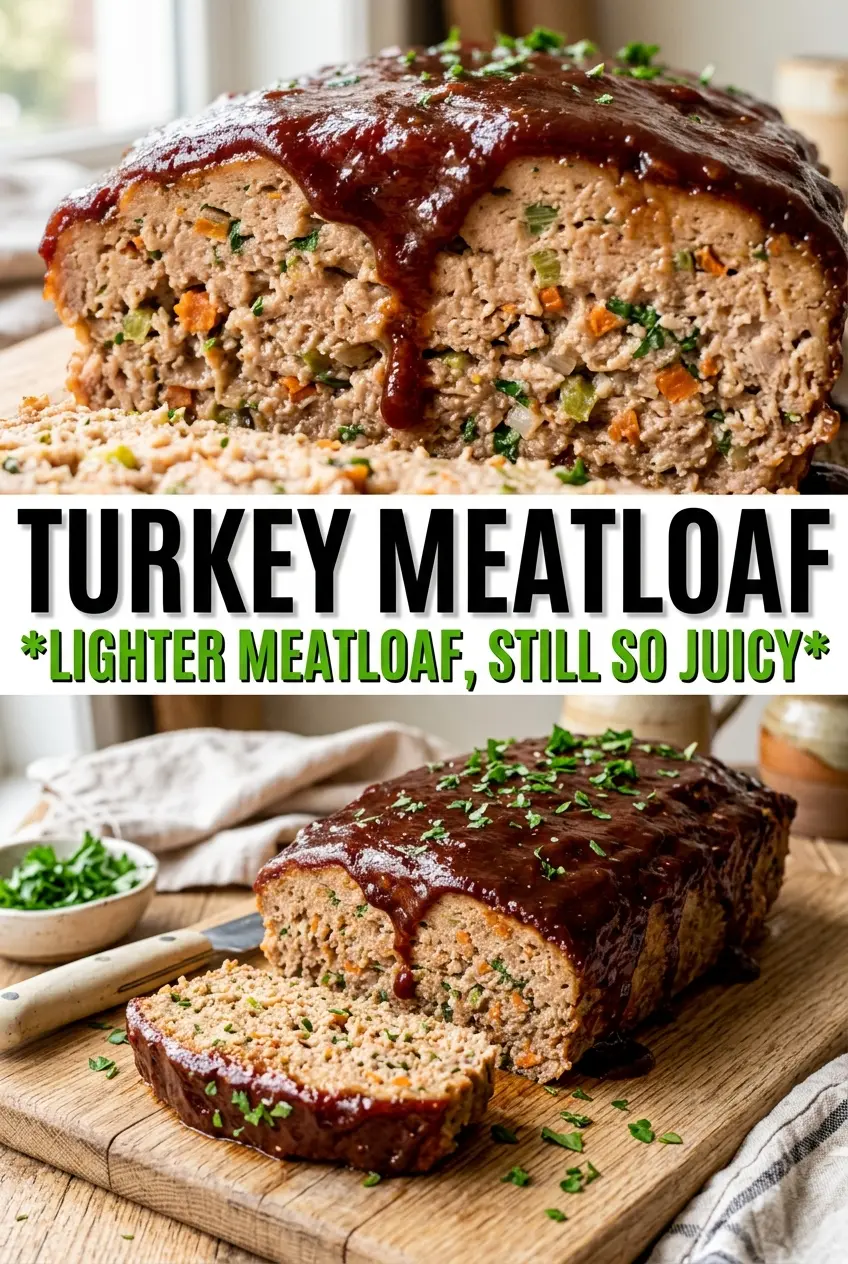
Turkey Meatloaf
Ingredients
Equipment
Method
- Preheat the oven to 350°F and grease a 9x5 loaf pan or line a baking sheet with parchment. Grease well so the meatloaf releases cleanly after baking.
- Combine ground turkey, breadcrumbs, eggs, whole milk, grated onion, minced garlic, Worcestershire sauce, Italian seasoning, dried thyme, chopped fresh parsley, salt, and pepper in a large bowl. Mix just until evenly combined so the loaf stays tender.
- Press the mixture into the loaf pan or shape free-form on the baking sheet. Staying in a pan helps the turkey retain moisture.
- Mix the ketchup, brown sugar, and Dijon mustard to make the glaze, then spread half over the top. The glaze will caramelize and form a glossy crust.
- Bake at 350°F for 55–65 minutes until the internal temperature reaches 165°F. At the 45-minute mark, spread the remaining glaze over the top so it caramelizes during the final minutes.
- Rest the meatloaf for 10 minutes before slicing. This lets juices redistribute so you get clean, moist slices.