Golden chicken breasts tucked into a silky Parmesan cream sauce with fresh lemon running through it is the kind of skillet dinner that disappears fast. The sauce clings to the chicken instead of pooling watery on the plate, and the bright citrus keeps the richness in check. It tastes like something you’d order at a cozy Italian-American restaurant, but it lands on the table in about half an hour.
The trick is building the sauce in the same pan after the chicken sears. Those browned bits at the bottom bring depth, and the lemon goes in near the end so it stays fresh instead of turning flat or bitter. Freshly grated Parmesan matters here too, because the pre-shredded kind doesn’t melt as smoothly and can leave the sauce grainy.
Below you’ll find the exact moment to add the cream, how to keep the sauce glossy, and a few smart ways to adapt the dish without losing that bright, creamy balance.
The sauce thickened up beautifully and stayed silky after I added the lemon at the end. My husband kept spooning extra sauce over the chicken and asked if I could put this in the weekly rotation.
Save this creamy Parmesan lemon chicken for a fast skillet dinner with a glossy lemon sauce and tender seared chicken.
The Secret to a Sauce That Stays Silky Instead of Turning Grainy
Most creamy chicken skillet sauces fail for one of two reasons: the heat is too high when the dairy goes in, or the cheese gets dumped in before the pan has settled down. This recipe avoids both. The cream goes into a pan that has already been deglazed, and the Parmesan is stirred in over a gentle simmer so it melts into the sauce instead of clumping.
The other piece that matters is the lemon. Add it after the cream has started to thicken, not at the beginning. Acid can make dairy act oddly if it hits too soon, and the sauce can go from smooth to slightly broken around the edges. When you add the lemon at the end, you get a clean bright finish without sacrificing texture.
What Each Ingredient Is Doing in the Skillet

- Chicken breasts — Boneless, skinless breasts give you a lean base that takes on the sauce well. If yours are thick in the middle, pound them to even thickness so they cook at the same rate and stay juicy instead of drying out on the edges.
- Freshly grated Parmesan — This is where the sauce gets its body and savory depth. A wedge you grate yourself melts much more smoothly than the shelf-stable bagged kind, which often has anti-caking agents that can make the sauce sandy.
- Heavy cream — Cream gives the sauce its plush texture and helps it hold together once the lemon goes in. Half-and-half will work in a pinch, but the sauce will be thinner and a little more delicate.
- Dry white wine or chicken broth — This deglazes the pan and lifts up the browned bits left from searing. Wine adds a little more complexity; broth keeps the dish family-friendly and still gives you enough liquid to build the sauce.
- Fresh lemon juice and zest — Juice brings the sharp brightness, while zest adds the floral lemon aroma that makes the dish taste fresh instead of just tangy. Use fresh lemons here; bottled juice tastes flat in a sauce this simple.
- Butter — Swirled in at the end, butter gives the sauce a glossy finish and softens the acidity. It also helps the sauce coat the chicken more evenly.
How to Build the Chicken and Sauce in the Right Order
Season and Sear for Color
Season the chicken generously on both sides, then sear it in hot olive oil until the outside turns deep golden and the meat releases easily from the pan. If it sticks, give it another minute; it usually means the crust hasn’t formed yet. You’re not cooking it through at this stage, just building flavor and getting a good base for the sauce.
Use the Pan Drippings
Once the chicken comes out, add the garlic and let it bloom just until fragrant, about 30 seconds. Pour in the wine or broth and scrape up every browned bit from the pan bottom. If the liquid reduces before the fond loosens, the heat is too high; lower it and keep scraping so that flavor ends up in the sauce instead of left behind.
Let the Cream Thicken Before the Lemon Goes In
Stir in the cream and Parmesan, then keep the sauce at a gentle simmer until it lightly coats a spoon. It should look glossy and smooth, not bubbling hard. Add the lemon juice and zest after the sauce has thickened, then finish with butter. Return the chicken to the skillet and spoon the sauce over the top so the meat picks up the flavor from the pan instead of sitting on the side.
Ways to Adjust It Without Losing the Good Part
Dairy-Free Version
Use full-fat canned coconut cream instead of heavy cream and replace the Parmesan with a dairy-free Parmesan-style alternative. The sauce will taste a little less savory and a touch sweeter, but the texture still turns lush if you simmer it gently and keep the heat low once the coconut cream goes in.
Gluten-Free by Default
This recipe is naturally gluten-free as written, as long as your broth is certified gluten-free. That makes it an easy skillet dinner when you want something creamy without needing flour to thicken the sauce.
Use Chicken Thighs Instead
Boneless thighs work well if you want richer meat and a little more forgiveness on the stovetop. They usually need a few extra minutes to cook through, but they stay tender even if you let them simmer in the sauce a bit longer.
Storage and Reheating
- Refrigerator: Store in an airtight container for up to 3 days. The sauce thickens as it chills, so it may look a little tighter the next day.
- Freezer: It can be frozen, but the cream sauce may separate a bit when thawed. For the best texture, freeze the chicken and sauce together only if you don’t mind whisking it back to life during reheating.
- Reheating: Warm it slowly in a skillet over low heat with a splash of broth or cream. High heat is what breaks a dairy sauce and makes the chicken tough.
Answers to the Questions Worth Asking
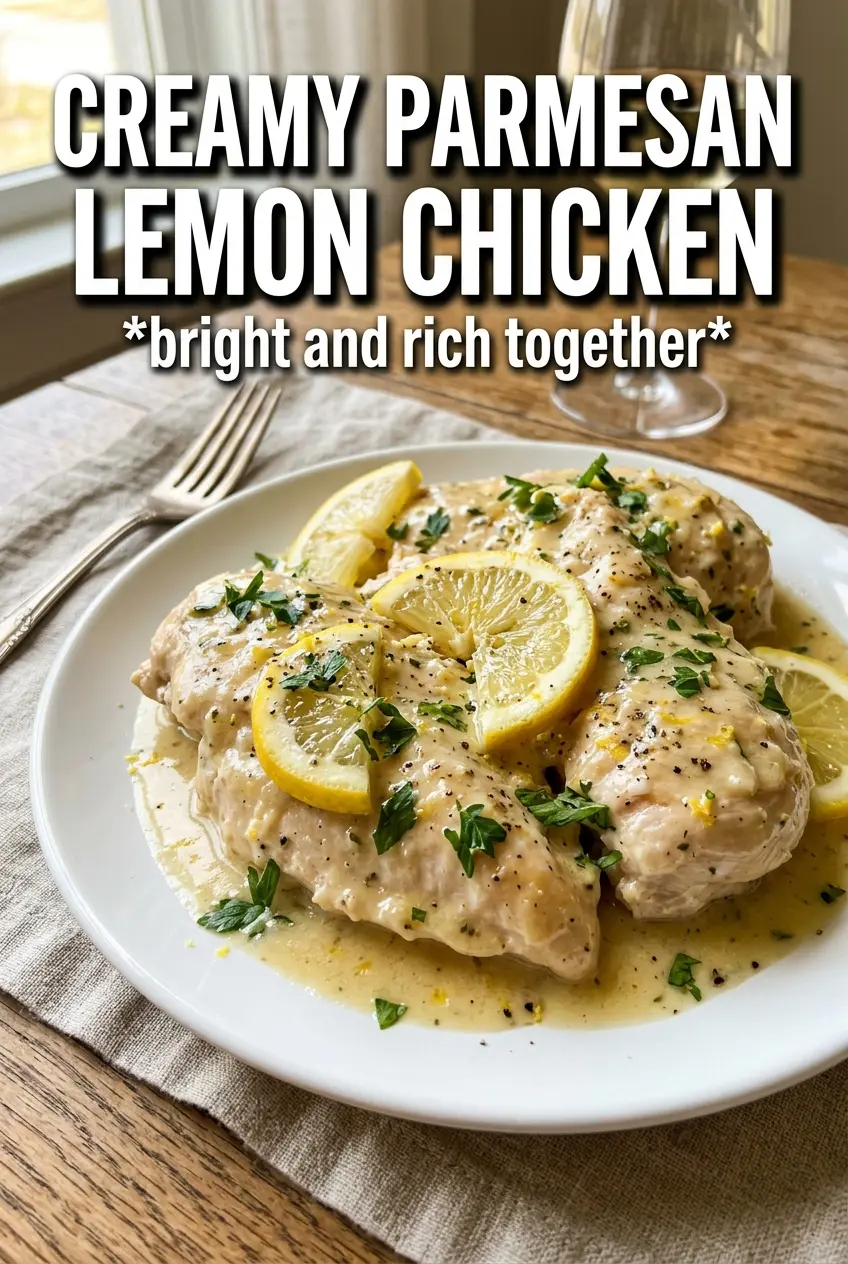
Creamy Parmesan Lemon Chicken
Ingredients
Equipment
Method
- Pat the chicken breasts dry and season generously on both sides with salt, pepper, garlic powder, and Italian seasoning.
- Heat olive oil in a large skillet over medium-high heat, then sear chicken for 5-6 minutes per side until golden and reaches 165°F internal temperature; remove to a plate.
- Add minced garlic to the skillet and cook for 30 seconds until fragrant.
- Pour in the white wine or chicken broth and deglaze, then simmer for 2 minutes to reduce slightly.
- Stir in heavy cream, Parmesan, lemon juice, and lemon zest; simmer for 4-5 minutes until the sauce thickens and looks glossy.
- Swirl in the butter until melted and the sauce is smooth and shiny.
- Return the chicken to the skillet, spoon sauce over each breast, and top with fresh parsley and lemon slices for garnish.