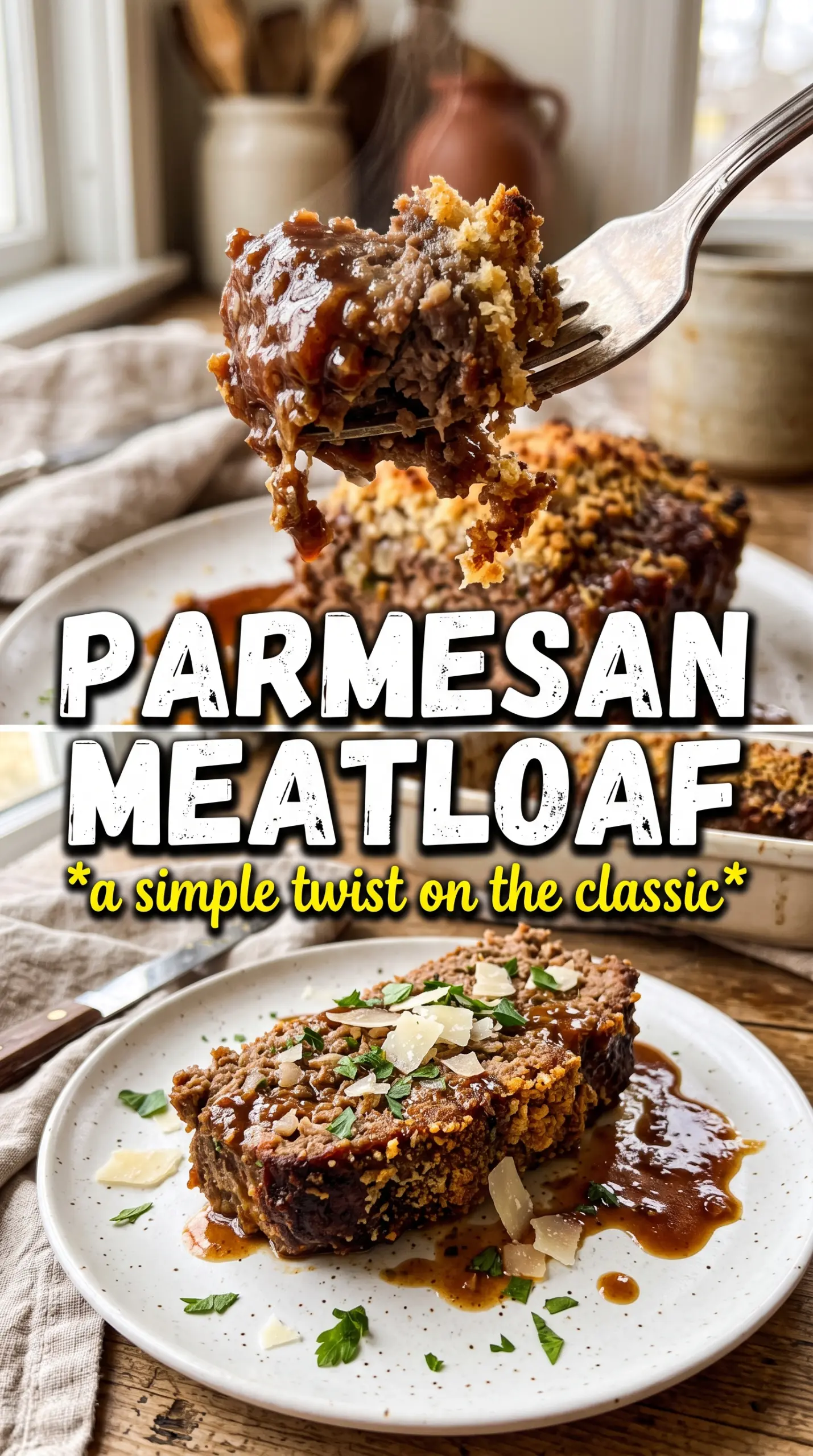
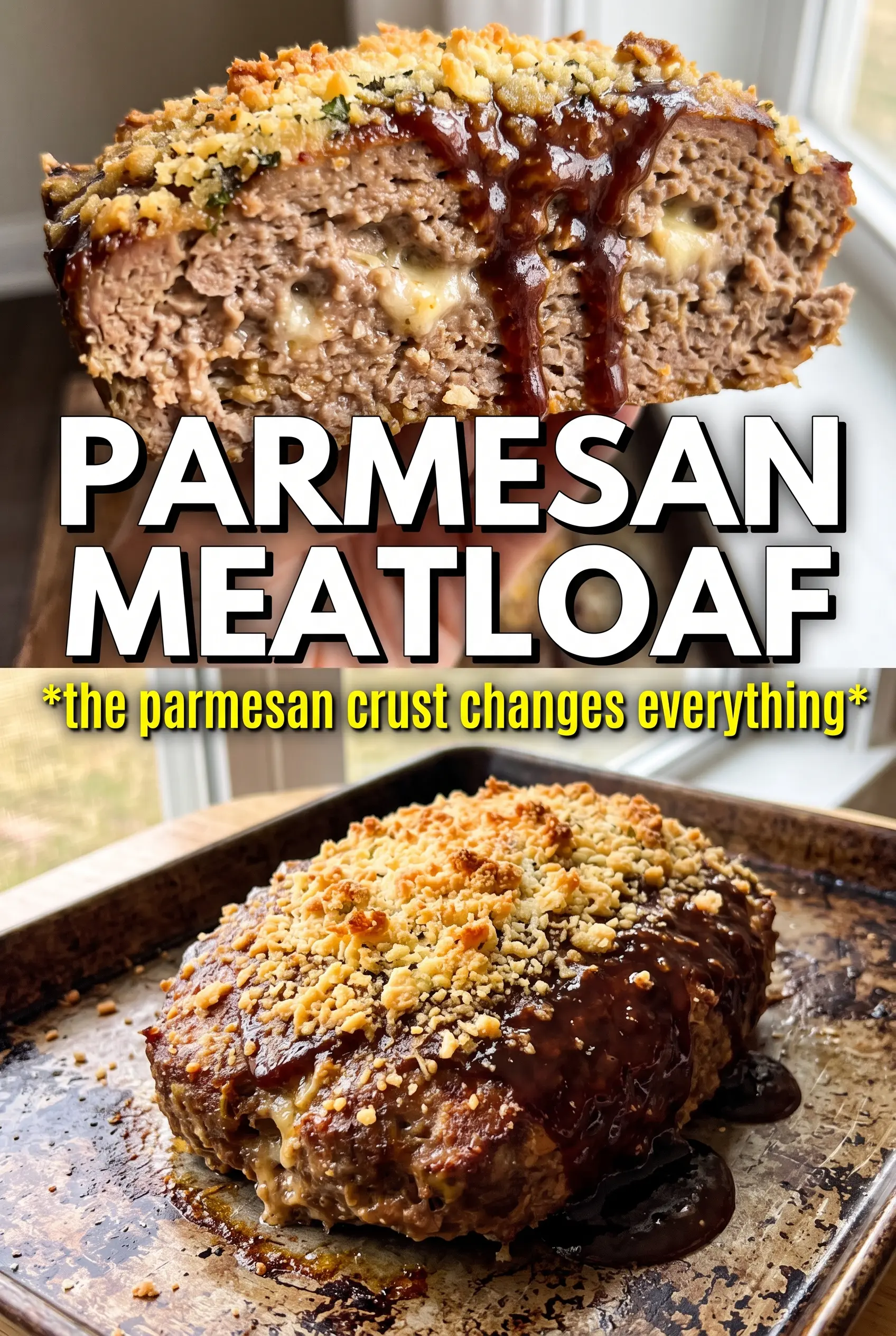
Parmesan meatloaf bakes up with a browned, cheesy crust and a tender center that slices cleanly instead of crumbling. The parmesan doesn’t just sit on top here; it seasons the whole loaf, so every bite tastes like beef, garlic, herbs, and that savory nutty edge parmesan brings when it hits the oven. The garlic butter brushed over the top gives you a glossy finish and keeps the loaf from drying out while the outside turns deep golden.
The trick is keeping the mixture just combined. Overmix it and the loaf turns dense; under-mix it and it won’t hold together when you slice it. Using a free-form loaf on a parchment-lined baking sheet also helps the edges brown better than a loaf pan ever will, which is exactly what you want when parmesan is part of the headline.
Below, I’m walking through the small details that make this version worth repeating, including the best way to mix the meat without packing it tight, how to tell when the loaf is done, and the variation I use when I want a little more herb flavor on top.
The parmesan melted into the meatloaf instead of making it greasy, and the garlic butter on top gave it the best crust. I baked mine right at 60 minutes and it sliced perfectly after the rest.
Save this garlic parmesan meatloaf for a night when you want a browned cheesy top and a juicy slice with almost no fuss.
The Mistake That Makes Meatloaf Dense Before It Ever Reaches the Oven
The biggest problem with meatloaf isn’t seasoning. It’s compression. Once you start squeezing the mixture into submission, the eggs and breadcrumbs can’t keep the texture light, and the finished loaf eats like a brick. This version stays tender because the ingredients are mixed just until the beef and parmesan are evenly distributed, then shaped without packing it tight.
The free-form loaf matters too. A loaf pan steams the sides and traps fat, while a baking sheet gives the outside direct heat and lets the parmesan on top brown instead of sinking into a soft lid. That means better texture, better color, and cleaner slices after the rest.
What Each Ingredient Is Actually Doing in This Loaf
- Ground beef — Use 80/20 if you can. You need enough fat for flavor and moisture, but not so much that the loaf turns greasy. Leaner beef works, but the texture gets a little drier unless you watch the bake time closely.
- Parmesan cheese — This is the ingredient that gives the loaf its savory backbone. Freshly grated parmesan melts more evenly and tastes sharper than the shelf-stable stuff, but either will work in a pinch. Save a handful for the top so you get that browned, lacy crust.
- Italian breadcrumbs — They hold the meatloaf together and keep the texture soft. If you only have plain breadcrumbs, add a little extra Italian seasoning to make up for the missing herb blend. Crushed crackers will work, but the crumb is a little richer and less meaty.
- Milk and eggs — These bind the loaf and keep it from drying out in the oven. The milk softens the breadcrumbs before baking, which helps the center stay tender instead of grainy. Don’t skip the resting time after baking or that moisture runs out onto the cutting board.
- Garlic, parsley, Worcestershire, and Italian seasoning — These build the meatloaf’s flavor from the inside instead of relying on sauce at the end. Fresh garlic gives the best punch here because it gets mellow and sweet as it bakes. If you use dried parsley, cut the amount in half and accept that it won’t look as fresh on top.
- Garlic butter brush — This is what gives the loaf that glossy, savory finish. The butter keeps the top from drying before the center is done, and the extra garlic and parsley make every slice taste finished, not just cooked.
How to Build the Loaf So the Center Stays Tender and the Top Browns
Mixing Without Overworking
Combine the ingredients with your hands or a fork until the mixture looks evenly blended, then stop. You’re aiming for a mixture that holds together when pressed, not a paste. If it starts to look smooth and compact, you’ve gone too far and the loaf will bake up tight. The beef should still look a little loose before shaping.
Shaping for Better Browning
Form a free-form loaf on a parchment-lined baking sheet and keep the shape fairly even so it cooks at the same rate from end to end. A mound that’s too tall will need extra time in the middle while the outside dries out. Press the extra parmesan onto the top gently so it sticks without sinking. That surface layer is what turns into the browned, cheesy lid everyone goes for first.
Watching for the Right Finish
Bake until the internal temperature reaches 160°F in the center. The top should be deeply golden, the edges should look set, and the loaf should feel firm when nudged with a spatula. Brush on the second round of garlic butter at the 40-minute mark so it has time to soak in and glaze the crust instead of just sitting on the surface. Let it rest for 10 minutes before slicing or the juices will run out too fast.
How to Adjust This Parmesan Meatloaf Without Losing the Good Part
Make it gluten-free with a breadcrumb swap
Use gluten-free Italian-style breadcrumbs or crushed gluten-free crackers in the same amount. The texture stays close to the original, though cracker-based versions can bake a little richer and softer. If your crumbs are very dry, add an extra tablespoon of milk so the loaf doesn’t feel crumbly.
Swap in ground turkey for a lighter loaf
Ground turkey works, but it needs the fat and moisture from the cheese, milk, and butter more than beef does. Use dark meat turkey if you can, and pull it from the oven as soon as it hits temperature so it doesn’t turn dry. The flavor is milder, so don’t skimp on the garlic and parmesan.
Add a little heat without changing the structure
A pinch of red pepper flakes or a little black pepper in the mix gives the loaf more bite without messing with the texture. Keep the amount light so the parmesan and garlic still lead. This works especially well if you’re serving it with mashed potatoes or pasta.
Storage and Reheating
- Refrigerator: Store slices in an airtight container for up to 4 days. The parmesan crust softens a bit, but the flavor stays strong.
- Freezer: This freezes well. Wrap individual slices tightly, then freeze for up to 3 months so you can thaw only what you need.
- Reheating: Warm slices covered in a 300°F oven with a splash of water or broth until heated through. The common mistake is microwaving too long, which squeezes the juices out and makes the edges rubbery.
Answers to the Questions Worth Asking
Parmesan Meatloaf
Ingredients
Equipment
Method
- Preheat the oven to 350°F and line a sheet pan with parchment for easy cleanup and no sticking. This sets the stage for even baking and browning.
- Combine the ground beef, parmesan cheese, breadcrumbs, eggs, whole milk, minced garlic, parsley, Italian seasoning, Worcestershire sauce, and salt and black pepper until just mixed. Stop mixing as soon as it comes together for tender slices.
- Shape the mixture into a free-form loaf on the lined sheet pan. Leave space around the loaf so the top can brown and the parmesan can crisp.
- Press extra parmesan on top and brush with half the garlic butter. The surface should look speckled and glossy before it goes into the oven.
- Bake for 55–65 minutes total, until the internal temperature reaches 160°F. The loaf should look deeply browned with melted cheese across the top.
- At the 40-minute mark, brush with the remaining garlic butter and return to the oven. Watch for the top to shine and turn more golden as it finishes baking.
- Rest the meatloaf for 10 minutes before slicing. The free-form shape helps more parmesan surface brown, so you’ll see extra golden edges inside.
- Slice and garnish with extra fresh parsley. Serve warm for the best melted-cheese texture.