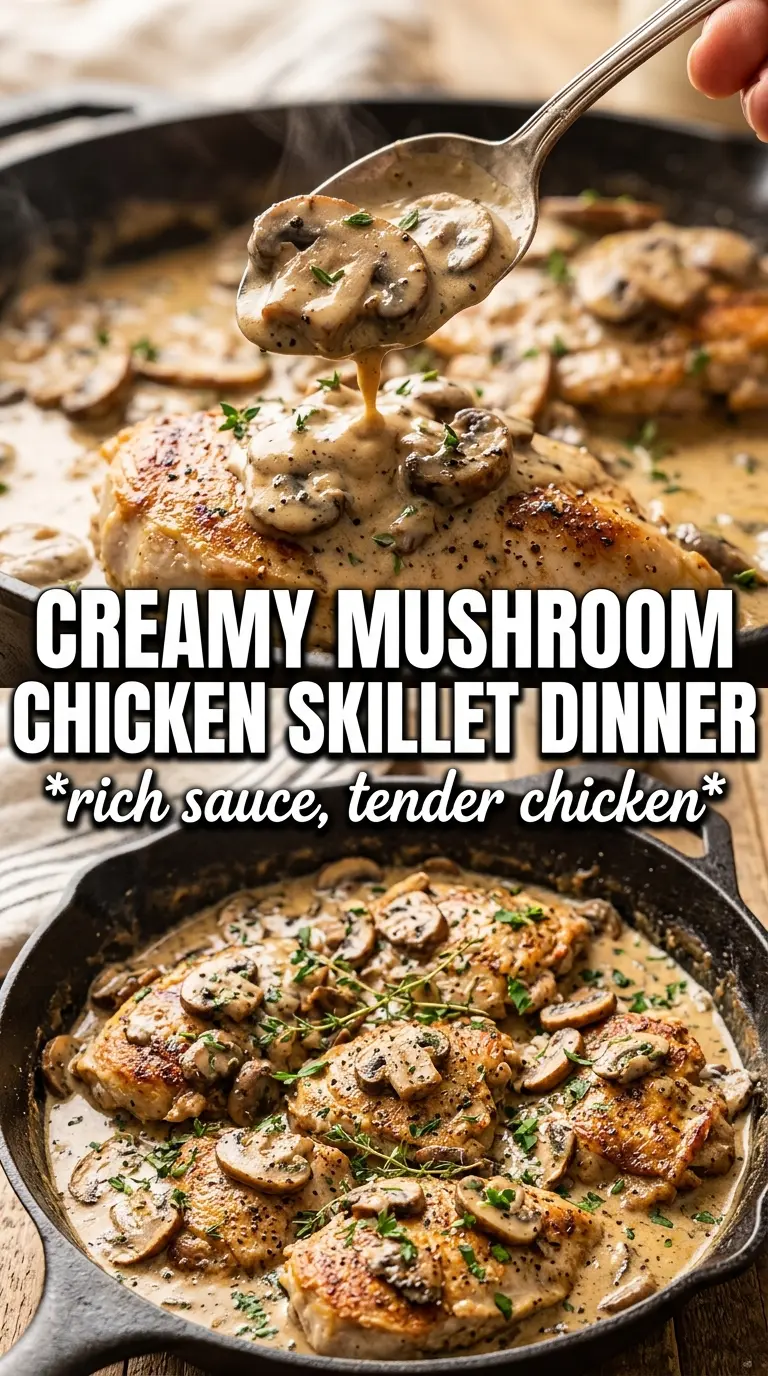
Golden seared chicken breasts tucked into a silky mushroom cream sauce have a way of making an ordinary dinner feel finished. The chicken stays juicy because it’s cooked hard and fast first, then brought back into the sauce at the end instead of simmering until it turns dry. The mushrooms pick up deep color in the pan before the cream goes in, which gives the sauce a richer, more savory base than a quick dump-and-stir version ever will.
The key here is building flavor in layers. First the chicken gets a proper sear, then the mushrooms cook long enough to lose their raw moisture and brown, and only then does the broth and cream go in. That order matters because watery mushrooms and underdeveloped fond are what usually leave mushroom chicken tasting flat. A little Parmesan thickens the sauce without making it stodgy, and thyme keeps the whole skillet from feeling heavy.
Below, I’ve included the cue that tells you the sauce is at the right thickness, the substitution that works if you only have button mushrooms, and a few ways to adapt the dish without losing that glossy skillet finish.
The sauce thickened up beautifully and clung to the chicken instead of running all over the plate. I let the mushrooms get dark before adding the cream, and that extra minute made the whole skillet taste like it came from a restaurant.
Save this creamy mushroom chicken for the nights when you want a skillet dinner with a thick Parmesan sauce and juicy seared chicken.
The Trick to Keeping the Chicken Juicy While the Sauce Gets Rich
The biggest mistake in creamy mushroom chicken is trying to finish the chicken in the sauce from the start. That sounds efficient, but it usually gives you pale mushrooms and chicken that cooks past the point of juiciness before the sauce ever has time to thicken. Sear the breasts first so they develop color, then pull them out and let the sauce come together on its own.
That separation does two useful things. It gives the mushrooms enough contact with the pan to brown instead of steam, and it keeps the chicken from overcooking while the cream reduces. Once the sauce is thick enough to coat a spoon, the chicken goes back in just long enough to warm through and pick up some of that sauce on the outside.
- Boneless skinless chicken breasts — These work best when they’re even in thickness. If one end is much thicker, pound it gently so the whole piece finishes at the same time instead of leaving you with a dry edge and an underdone center.
- Cremini mushrooms — They bring more flavor than white button mushrooms and brown more deeply in the pan. Button mushrooms still work, but they’ll taste lighter and a little less earthy.
- Heavy cream — This is what gives the sauce its body and keeps it from breaking when it simmers. Half-and-half can work in a pinch, but the sauce will be thinner and more delicate.
- Parmesan cheese — Freshly grated Parmesan melts into the sauce and helps it thicken. Pre-shredded cheese can turn grainy because of the anti-caking agents, so grate it yourself if you want a smooth finish.
What Each Ingredient Is Actually Doing in This Recipe
- Primary ingredient (the star) — Quality matters most. Choose the best you can find.
- Cooking medium (oil, butter, or broth) — This carries flavors and prevents dryness.
- Seasonings (salt, pepper, spices, herbs) — Layer flavors so nothing overpowers. Build depth gradually.
- Aromatics (garlic, onion, herbs) — Cook with fat to bloom flavors. Become the foundation.
- Supporting ingredients — Complement the main ingredient without overpowering it.
- Sauce or liquid (if applicable) — Brings flavors together. Balance richness with acid.
- Acid (lemon, vinegar, wine, or other) — Brightens and prevents flat-tasting results.
- Final finish (garnish, glaze, or sauce) — Prevents one-dimensional taste and adds visual appeal.
Building the Skillet in the Right Order
Season and Sear the Chicken
Pat the chicken dry before seasoning it, then give it a generous coat of salt, pepper, garlic powder, and onion powder. Drop it into hot oil and leave it alone until the first side releases easily and has a deep golden crust. If the chicken sticks hard, it’s not ready to turn yet. Pull it when the internal temperature reaches 165°F, then set it aside so it doesn’t keep cooking in the skillet.
Brown the Mushrooms Until They Lose Their Water
Add the butter to the same pan and let the mushrooms cook without crowding them. At first they’ll look dry and squeaky, then they’ll give up moisture, and only after that will they start taking on color. That browned stage is where the flavor is. If you rush this part, the mushrooms stay pale and the sauce tastes thin even after the cream goes in.
Let the Sauce Reduce Before the Chicken Returns
Stir in the garlic for just a minute, then pour in the broth and scrape up every browned bit from the bottom of the pan. Add the cream, Parmesan, thyme, and Italian seasoning, then let the sauce simmer until it lightly coats the back of a spoon. If it still looks loose, give it another minute or two; if it turns too thick, loosen it with a splash of broth. Return the chicken only after the sauce has some body, then spoon it over the top so the surface of the chicken takes on that glossy finish.
Use button mushrooms when that’s what you have
Button mushrooms work fine here, especially if you slice them a little thicker so they hold some texture. The sauce will still be creamy and savory, but you’ll lose a little of the deeper, woodsy flavor that cremini mushrooms bring.
Make it dairy-free without the same richness
Use olive oil instead of butter, swap the heavy cream for full-fat unsweetened coconut cream, and leave out the Parmesan. The sauce will still turn silky, but it will taste a little sweeter and less savory, so an extra pinch of salt helps keep it balanced.
Make it gluten-free with no other changes
This recipe is naturally gluten-free as written, as long as your chicken broth is certified gluten-free. The texture stays the same, so this is one of the easiest ways to serve the same skillet to everyone at the table.
Turn it into a mushroom and spinach skillet
Stir in a few handfuls of baby spinach at the very end and let it wilt into the hot sauce. The spinach adds color and a little freshness without changing the creamy base, but add it after the sauce thickens or it can water everything down.
Storage and Reheating
- Refrigerator: Store leftovers in an airtight container for up to 3 days. The sauce will thicken as it chills, which is normal.
- Freezer: Not my first choice for this dish. Cream sauces can separate after freezing, and the mushrooms soften more than I like.
- Reheating: Warm gently in a skillet over low heat with a splash of broth or cream. High heat is the mistake here — it tightens the chicken and can make the sauce break.
Questions I Get Asked About This Recipe
Creamy Mushroom Chicken
Ingredients
Equipment
Method
- Season chicken breasts generously on both sides with salt, pepper, garlic powder, and onion powder.
- Heat olive oil in a large skillet over medium-high heat and sear chicken for 5-6 minutes per side until golden, then remove when the internal temperature reaches 165°F.
- Melt butter in the same skillet, then cook sliced cremini mushrooms for 4-5 minutes until deeply golden.
- Add minced garlic and cook for 1 minute, stirring so it doesn’t brown too quickly.
- Pour in chicken broth and deglaze the pan, scraping up browned bits from the bottom.
- Stir in heavy cream, Parmesan cheese, dried thyme, and Italian seasoning, then simmer for 4-5 minutes until the sauce thickens.
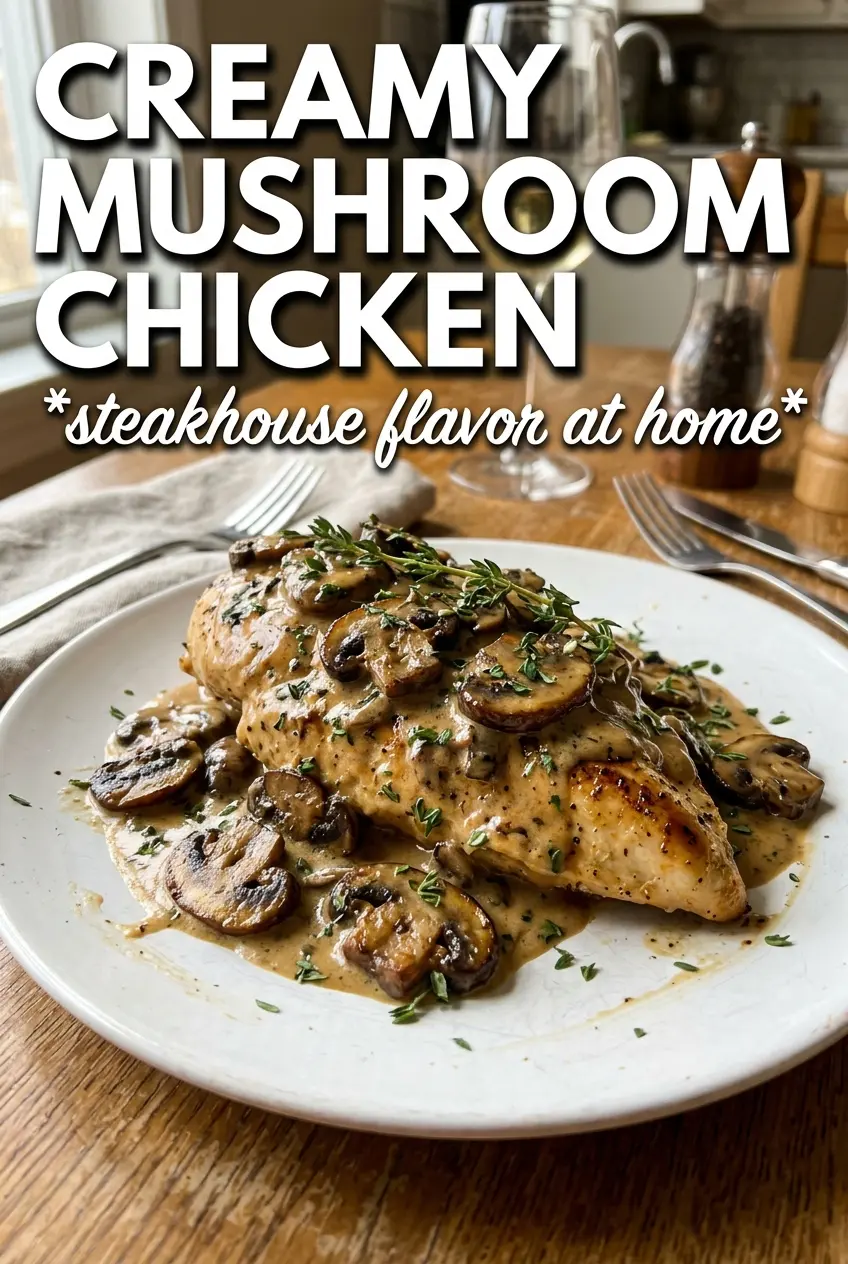
- Return chicken to the skillet and spoon mushroom cream sauce over each breast, letting it pool around the edges.
- Garnish with fresh thyme and parsley before serving.