Golden-seared chicken breasts in a Boursin cream sauce are the kind of dinner that looks like you spent all afternoon on it, even though the pan does most of the work. The sauce turns glossy and herb-speckled, clinging to the chicken instead of sliding off in a thin puddle, and that little bit of garlic from the cheese keeps it from tasting flat or heavy.
The key is building the sauce in the same skillet where the chicken browned. Those bits on the bottom are the backbone of the flavor, and a quick deglaze lifts them into the sauce before the cheese goes in. Boursin melts into a smoother, more stable sauce than plain cream cheese, especially when you add it after the broth has come up to a simmer instead of over hard heat.
Below you’ll find the timing that keeps the chicken juicy, the one step that keeps the sauce from turning grainy, and a few smart swaps if you want to make this with broth only or serve it over something other than potatoes.
The sauce thickened up beautifully and stayed silky even after I added the chicken back in. I served it over mashed potatoes and my husband kept saying the sauce was the best part.
Save this Boursin chicken for the nights when you want a silky garlic herb sauce with almost no extra cleanup.
The Reason the Sauce Stays Glossy Instead of Breaking
The mistake most people make with a cheese sauce like this is rushing the heat. Boursin already has fat and dairy built in, so it melts best when the pan is at a gentle simmer, not when the burner is blasting. If the sauce boils hard, the cream can turn greasy and the cheese can look slightly grainy instead of smooth.
The other thing that matters here is deglazing before you add the cheese. Once the garlic has softened and the wine or broth has loosened the browned bits, the pan is carrying flavor instead of just heat. That base keeps the sauce tasting layered, not like melted cheese floating in cream.
- Chicken breasts — Even thickness matters more than the cut itself. If one end is much thicker, pound it lightly so the meat cooks through before the outside dries out.
- Dry white wine or broth — Wine gives the sauce a sharper edge and lifts the richness. Broth works fine if that’s what you have, but use one with enough salt and body to replace the acidity wine brings.
- Boursin garlic and herb cheese — This is the backbone of the sauce. Plain cream cheese won’t taste the same, and it won’t bring the same herb-and-garlic lift, though it can work in a pinch if you add extra garlic and thyme.
- Heavy cream — This smooths the melted cheese and gives the sauce its silkier finish. Half-and-half will work, but the sauce will be thinner and a little less luxurious.
What Each Ingredient Is Actually Doing in This Recipe

- Primary ingredient (the star) — Quality matters most. Choose the best you can find.
- Cooking medium (oil, butter, or broth) — This carries flavors and prevents dryness.
- Seasonings (salt, pepper, spices, herbs) — Layer flavors so nothing overpowers. Build depth gradually.
- Aromatics (garlic, onion, herbs) — Cook with fat to bloom flavors. Become the foundation.
- Supporting ingredients — Complement the main ingredient without overpowering it.
- Sauce or liquid (if applicable) — Brings flavors together. Balance richness with acid.
- Acid (lemon, vinegar, wine, or other) — Brightens and prevents flat-tasting results.
- Final finish (garnish, glaze, or sauce) — Prevents one-dimensional taste and adds visual appeal.
How to Build the Pan Sauce Without Losing the Chicken
Searing the Chicken to a Deep Golden Crust
Season the chicken well before it hits the pan, then leave it alone long enough to brown. You want a crust that releases cleanly, not pale spots that have to be scraped off the skillet. If the chicken sticks when you try to turn it, it needs another minute. Pull it when the center reaches 165°F, then move it to a plate so it doesn’t overcook while you finish the sauce.
Softening the Garlic and Lifting the Fond
Add the garlic to the hot pan and stir just until it smells sweet, about 30 seconds. If it starts to color deeply, the sauce will pick up bitterness, so keep it moving. Pour in the wine or broth and scrape the bottom of the pan as it bubbles. That brown residue dissolves into the liquid and gives the sauce its depth.
Melting the Boursin into a Smooth Sauce
Lower the heat before the cheese goes in. Add the Boursin in chunks and stir until it melts completely into the broth, then pour in the cream and thyme. The sauce should look smooth and slightly loose at first, then thicken after a few minutes of gentle simmering. If it looks separated, the heat was too high, so pull the pan off the burner and stir until it comes back together.
Finishing the Chicken in the Sauce
Return the chicken to the skillet and spoon sauce over the top so every piece gets coated. Let it simmer only long enough to rewarm the chicken and let the sauce cling. If you cook it hard at this stage, the chicken tightens up and the sauce reduces too far. Fresh thyme at the end keeps the whole dish tasting bright instead of muted.
Ways to Adjust This Boursin Chicken for Your Table
Dairy-Free Version
Use a dairy-free cream cheese-style spread and unsweetened coconut cream or an oat-based cooking cream. The sauce won’t taste exactly like the original Boursin version, but you’ll still get a rich, herb-forward pan sauce if you keep the heat low and whisk until smooth.
No Wine, No Problem
Use chicken broth instead of wine and add a small squeeze of lemon at the end. You lose a little sharpness from the deglaze, but the lemon gives the sauce the bright edge it needs so the cream doesn’t taste heavy.
Turn It Into a Pasta Dinner
Slice the chicken and toss it with cooked pasta and a splash of the pasta water. The starchy water helps the sauce coat the noodles instead of sinking to the bottom of the bowl, which is the difference between a good pasta dinner and a greasy one.
Make It Gluten-Free
The base recipe is naturally gluten-free as long as your broth is certified gluten-free. Serve it with mashed potatoes, rice, or gluten-free pasta and you won’t need to change the method at all.
Storage and Reheating
- Refrigerator: Store leftovers in an airtight container for up to 3 days. The sauce will thicken as it chills.
- Freezer: It can be frozen, but the cream sauce may separate a bit when thawed. Freeze the chicken and sauce together only if you don’t mind whisking it back together during reheating.
- Reheating: Rewarm gently on the stovetop over low heat with a splash of broth. High heat is what usually breaks a cream sauce and dries out the chicken.
Answers to the Questions Worth Asking
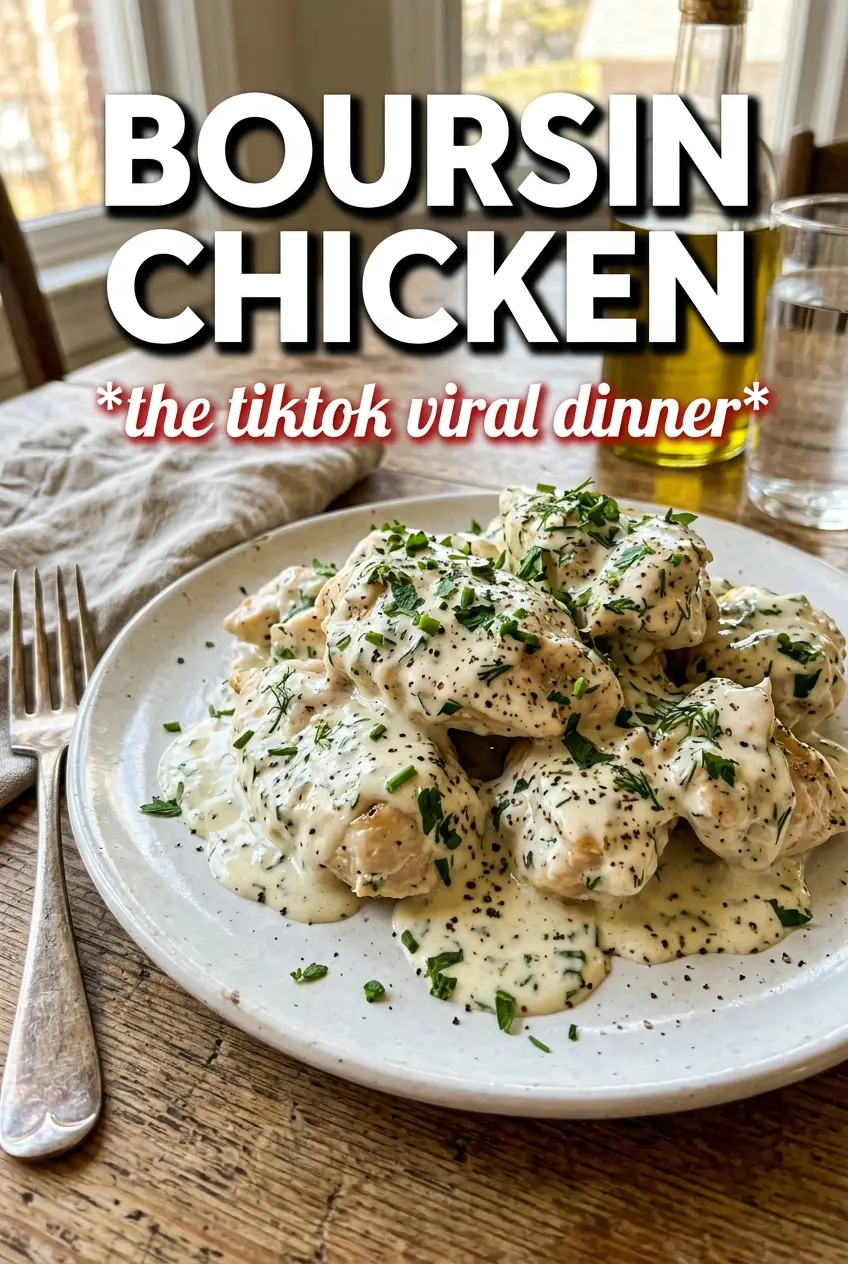
Boursin Chicken
Ingredients
Equipment
Method
- Season the chicken breasts with salt, pepper, and garlic powder to taste, then place them in a large skillet with olive oil over medium-high heat. Sear for 5-6 minutes per side until golden and the internal temperature reaches 165°F, then remove to a plate.
- Reduce the heat slightly and cook the minced garlic in the same pan for 30 seconds until fragrant. Deglaze with the white wine (or chicken broth) and cook for 2 minutes to reduce slightly, scraping up any browned bits.
- Pour in the chicken broth, bring it to a simmer, and add the Boursin garlic and herb cheese. Stir until completely melted and smooth, with no visible cheese lumps.
- Stir in the heavy cream and fresh thyme leaves, then simmer for 3-4 minutes until the sauce thickens slightly. Return the chicken to the pan and spoon the Boursin sauce over each breast.
- Garnish with fresh thyme and serve over mashed potatoes or pasta, letting the creamy sauce pool around the chicken.