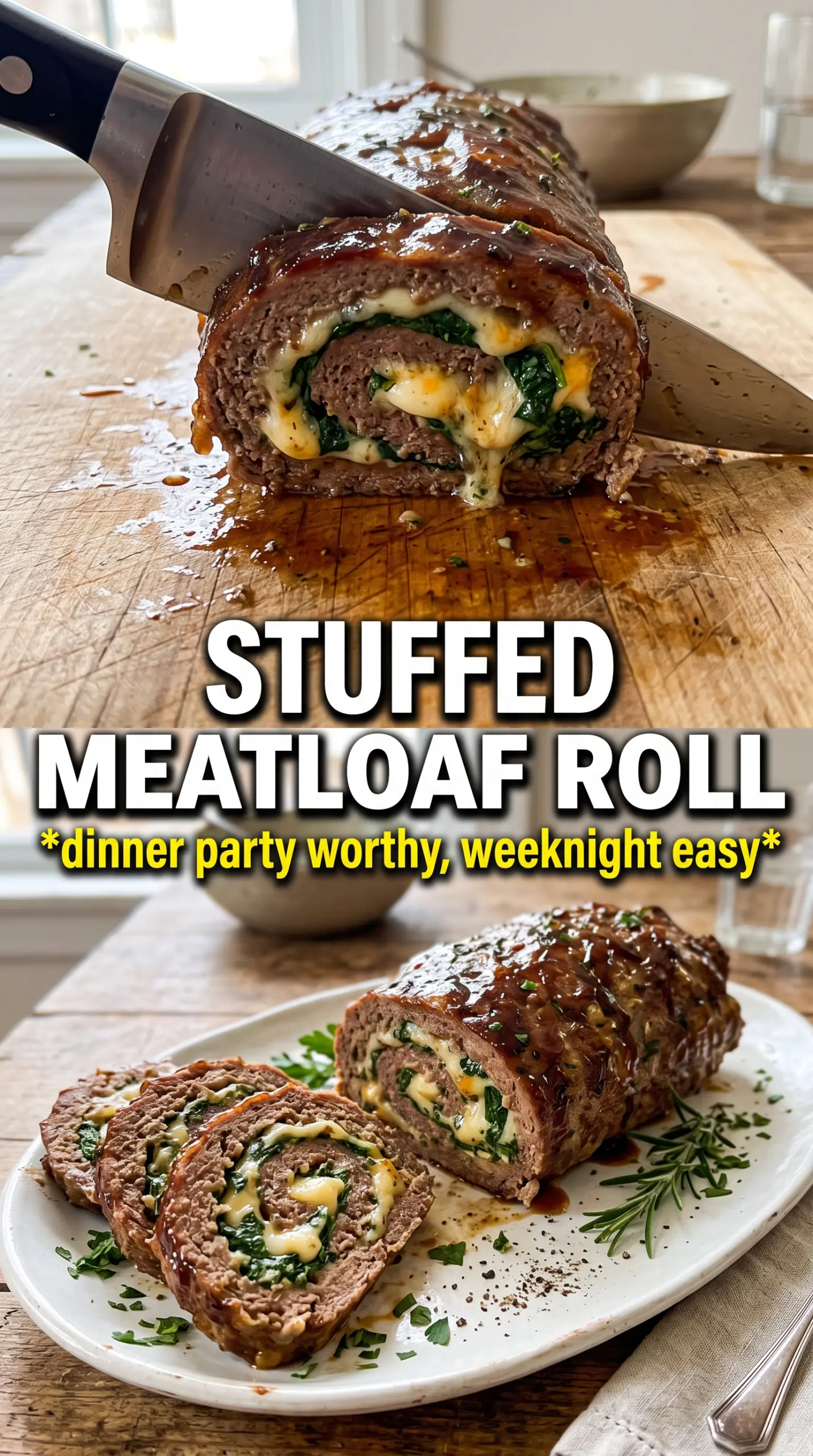
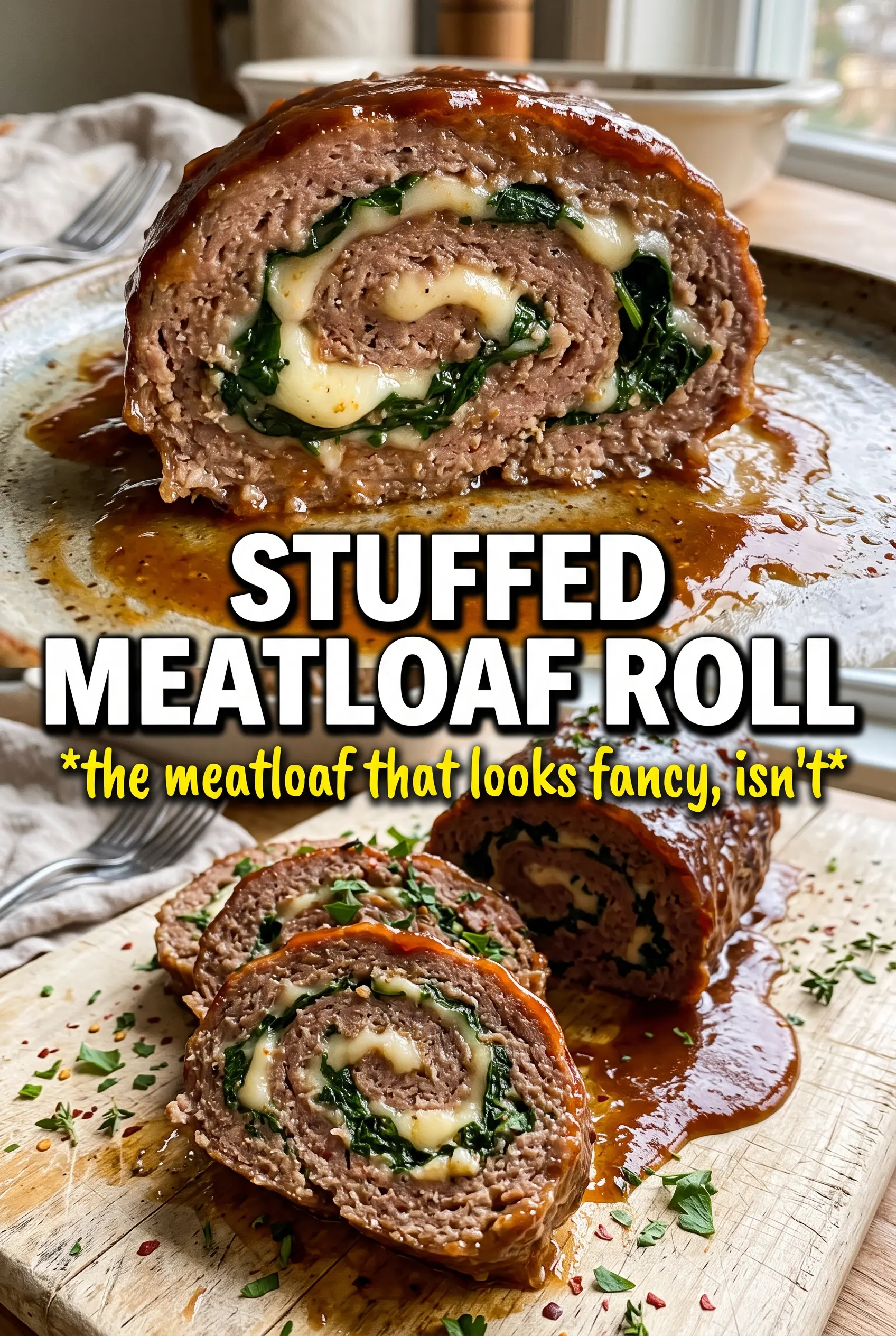
Stuffed meatloaf roll slices cleanly into those dramatic spirals everyone reaches for first, with melted cheese tucked between seasoned beef, sweet roasted peppers, and spinach that keeps the center from feeling heavy. The outside gets a savory, lacquered crust while the inside stays juicy and structured enough to hold its shape on the plate.
What makes this version work is the balance of moisture and restraint. The spinach is wilted and squeezed dry so it doesn’t leak into the meat, the roasted peppers are patted dry for the same reason, and the meat mixture gets pressed into a rectangle before rolling so the filling spreads evenly instead of bunching in the middle. That tight roll is what gives you the neat cross-section instead of a loose, crumbly loaf.
Below, I’ve included the small technique details that matter here: how to roll it without tearing, what to look for when it’s done, and a few smart swaps if you want to change the filling without losing the structure.
The roll held together beautifully and the center stayed juicy all the way through. I loved how the mozzarella and peppers made every slice look bakery-perfect, and the rest time kept the juices from running everywhere.
Save this stuffed meatloaf roll for the night you want a dramatic beef spiral with mozzarella, roasted peppers, and a clean slice every time.
The Part That Keeps a Stuffed Meatloaf Roll From Falling Apart
The biggest mistake with a stuffed meatloaf roll is packing the mixture too loose, then expecting it to behave like a casserole. It won’t. You need enough binder to hold the beef together, but not so much that it turns bready, and you need the filling dry enough that it doesn’t steam the center open as it bakes.
The other thing that matters is thickness. A 10×14-inch rectangle gives you enough surface area to create a full spiral without making the roll so thin that it tears. If the meat layer is uneven, the seam will split in the oven and the filling will push out the weaker side first.
- Breadcrumbs and milk — This pair softens the beef and keeps the texture tender. Italian breadcrumbs bring seasoning and a little structure; plain breadcrumbs work if that’s what you have, but add a pinch more Italian seasoning.
- Eggs — These are the glue. Two eggs are enough for the amount of meat here, and skipping them is the fastest way to get a crumbly roll that won’t slice cleanly.
- Roasted red peppers — Pat them dry after draining. Extra moisture here is what makes the filling slide instead of staying in a neat spiral.
- Spinach — Cook it down first, then squeeze it hard in a towel or with your hands. Raw spinach will collapse too much and leak water into the meat as it bakes.
- Provolone or mozzarella — Provolone gives a little more savory depth, while mozzarella melts softer and stretches more. Either one works, but sliced cheese is easier to layer than shredded because it stays where you put it.
What Each Ingredient Is Actually Doing in This Recipe
- Primary ingredient (the star) — Quality matters most. Choose the best you can find.
- Cooking medium (oil, butter, or broth) — This carries flavors and prevents dryness.
- Seasonings (salt, pepper, spices, herbs) — Layer flavors so nothing overpowers. Build depth gradually.
- Aromatics (garlic, onion, herbs) — Cook with fat to bloom flavors. Become the foundation.
- Supporting ingredients — Complement the main ingredient without overpowering it.
- Sauce or liquid (if applicable) — Brings flavors together. Balance richness with acid.
- Acid (lemon, vinegar, wine, or other) — Brightens and prevents flat-tasting results.
- Final finish (garnish, glaze, or sauce) — Prevents one-dimensional taste and adds visual appeal.
How to Roll the Meat So the Spiral Stays Tight
Mixing the Beef Without Making It Dense
Combine the meatloaf ingredients just until everything looks evenly distributed. The second you start kneading it like dough, the texture gets tight and springy instead of tender. A large sheet of plastic wrap underneath helps you press the mixture into shape without sticking, and it also gives you leverage when it’s time to roll.
Layering the Filling for a Clean Cross-Section
Leave a one-inch border around the edges so the cheese doesn’t ooze out the sides before the meat has a chance to set. Start with the cheese, then the peppers, then the spinach, which gives you the best chance of seeing each layer in the final slice. If the filling goes all the way to the edge, it will escape when you roll and you’ll lose that tight center spiral.
Sealing the Log Before It Hits the Oven
Use the plastic wrap to help you roll the meat tightly into a log, then pinch the ends closed as firmly as you can. The seam should be on the bottom in the baking dish so the loaf settles and seals itself as it bakes. Brush the glaze over the top after it’s in the dish; if you glaze before moving it, the roll gets slippery and harder to handle.
Knowing When It’s Done
Bake until the center reaches 160°F and the top looks deeply browned, not pale and wet. If the crust is set but the temperature still needs time, cover loosely with foil for the last stretch so the top doesn’t over-darken. Resting for 10 minutes matters here because the juices need a minute to settle before you cut into those slices.
How to Adapt This Stuffed Meatloaf Roll Without Losing the Shape
Gluten-Free Version
Swap the Italian breadcrumbs for a certified gluten-free breadcrumb blend. Keep the amount the same at first; if the mixture feels loose, let it sit for 5 minutes so the crumbs hydrate before shaping. The texture stays tender, though the finished slice may be a little less cohesive than the original.
Dairy-Free Option
Use unsweetened plain non-dairy milk in the meat mixture and swap in a dairy-free sliced meltable cheese. It won’t stretch quite like mozzarella, but it still gives you a creamy center and helps the filling stay distinct. Pick one that melts well, not a firm block-style cheese substitute.
Meatloaf Roll With More Italian Flavor
Add a spoonful of tomato paste and a little extra garlic to the beef mixture, then brush the top with marinara mixed with olive oil as written. That gives the loaf a stronger red-sauce character without making it wet. It pairs well with provolone because the sharper cheese stands up to the tomato.
Storage and Reheating
- Refrigerator: Store slices covered for up to 4 days. The loaf actually slices a little cleaner after it chills, though the cheese center firms up.
- Freezer: Freeze individual slices wrapped tightly, then place them in a freezer bag for up to 2 months. Thaw in the refrigerator before reheating so the center warms evenly.
- Reheating: Warm slices covered in a 325°F oven with a spoonful of marinara over the top, or reheat gently in the microwave at medium power. High heat dries out the beef and makes the cheese separate.
Answers to the Questions Worth Asking
Stuffed Meatloaf Roll
Ingredients
Equipment
Method
- Preheat oven to 350°F. Lightly grease a baking dish or sheet pan so the rolled meatloaf releases easily after baking.
- Mix all meatloaf ingredients until combined. Press the mixture into a 10x14 inch rectangle on a large sheet of plastic wrap, keeping the thickness even for a clean spiral.
- Layer cheese, roasted peppers, and wilted spinach over the meat, leaving a 1-inch border. Keep the filling close to the center so you get a full spiral through every slice.
- Roll tightly using the plastic wrap into a tight log, then seal the ends firmly. Use the wrap to keep the roll compact so it holds its shape during baking.
- Place seam-side down in a greased baking dish and brush the top with the marinara-olive oil glaze. Bake for 60–70 minutes, until the internal temperature reaches 160°F.
- Rest the stuffed meatloaf roll for 10 minutes before slicing. Cut into dramatic rounds to reveal the spiral of mozzarella, peppers, and spinach through the center.