Lasagna soup with bow tie pasta delivers all the comfort of baked lasagna in a spoonable, weeknight-friendly bowl. The broth turns rich and tomato-forward, the sausage adds body, and the farfalle gives you those little chewy edges that catch the cheese in every bite. It eats like a full meal, but it comes together fast enough that you don’t need to plan your whole evening around it.
The key is building the base in layers. Browning the sausage first gives you the savory foundation, then the tomato paste cooks for a minute or two so it loses that raw edge and deepens the broth. The bow tie pasta is a smart swap here, but it does absorb more liquid than lasagna noodles, so this pot needs a little more broth management than a standard soup.
Below, you’ll find the trick for keeping the pasta tender instead of bloated, plus a cheese dollop that melts into the hot soup instead of disappearing into it. That finishing step is what makes the bowl taste like lasagna instead of just tomato soup with pasta.
The broth got thick and cozy, and the bow ties held up without turning mushy. I added a splash more broth before serving and the ricotta-mozzarella topping melted right into the soup.
Save this lasagna soup with bow tie pasta for a fast, cheesy dinner that still tastes slow-simmered.
The Reason the Pasta Goes in Last
Most soup recipes fall apart here because the pasta goes into the pot too early and keeps drinking broth until the texture turns heavy. Farfalle has extra surface area and little folds that trap liquid, which makes it perfect for a lasagna-inspired bowl but also means you need to respect its appetite. Add it only after the broth is boiling and keep the simmer steady, not aggressive, so the pasta cooks through without breaking down.
The other place this recipe can go wrong is the cheese topping. If you stir the ricotta mixture into the entire pot, it disappears into the broth instead of giving you those creamy pockets on top. Spoon it into individual bowls and let the hot soup soften it just enough to swirl.
What Each Ingredient Is Doing in the Bowl
- Italian sausage — This brings the savory, seasoned backbone. Hot sausage adds a little heat, while mild keeps the soup calmer; either works. If you use turkey sausage, add a little extra olive oil because lean sausage doesn’t leave as much richness behind.
- Tomato paste — Don’t skip the short cook time here. When it hits the hot pot with the onion and garlic, it caramelizes slightly and gives the broth a deeper, more lasagna-like taste instead of a flat tomato note.
- Crushed tomatoes and diced tomatoes — The crushed tomatoes create body, and the diced tomatoes leave a bit of texture so the soup doesn’t eat like a smooth puree. If all you have is one kind, use it; the soup still works.
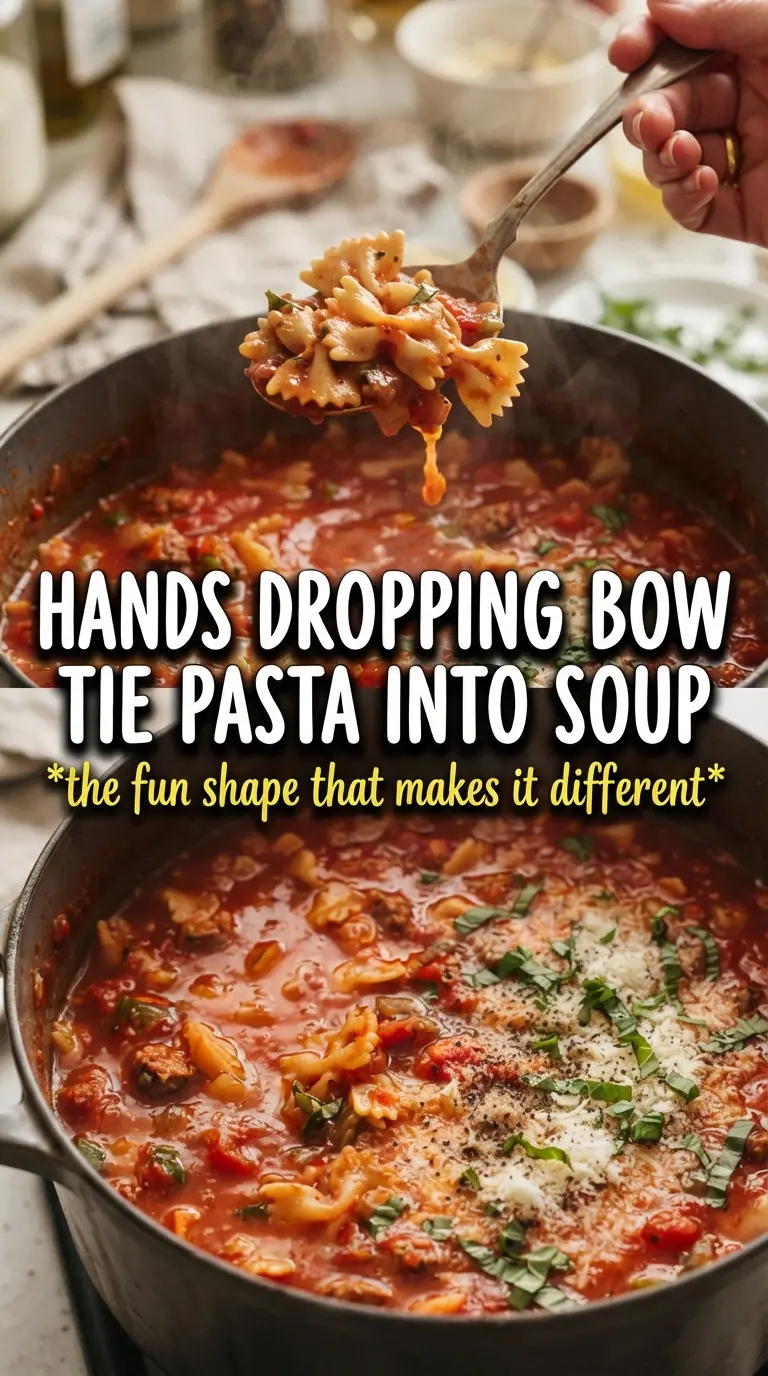
- Farfalle — Bow ties hold up better than delicate noodles and give the soup a hearty bite. They do soak up broth fast, so if the pot looks thicker after it sits, loosen it with a splash of extra broth before serving.
- Ricotta, mozzarella, parmesan, and basil — This topping is the lasagna part that makes the bowl feel finished. Use whole-milk ricotta if you want the creamiest spoonfuls, and shred the mozzarella yourself if you can, because pre-shredded cheese doesn’t melt as smoothly.
Building the Soup Without Losing the Texture
Browning the Sausage
Cook the sausage first until it’s deeply browned and the fat has rendered. Those browned bits at the bottom are the base of the soup, so don’t rush this part or crowd the pan so much that the sausage steams. Drain excess fat if the pot looks greasy, but leave a little behind for flavor.
Softening the Onion and Toasting the Tomato Paste
Once the onion goes in, cook it until it’s translucent and sweet at the edges. Garlic only needs a brief minute before the tomato paste joins the pot; if the garlic starts browning hard, the broth will taste bitter. Let the paste cook until it darkens a shade and smells concentrated, not raw.
Simmering the Broth
Add the tomatoes, broth, seasoning, basil, and red pepper flakes, then bring everything to a real boil before dropping the heat. A strong simmer is enough to blend the flavors, but a hard rolling boil can make the broth splashy and less controlled. Taste the broth before the pasta goes in; this is when you decide if it needs more salt.
Cooking the Farfalle and Finishing the Bowl
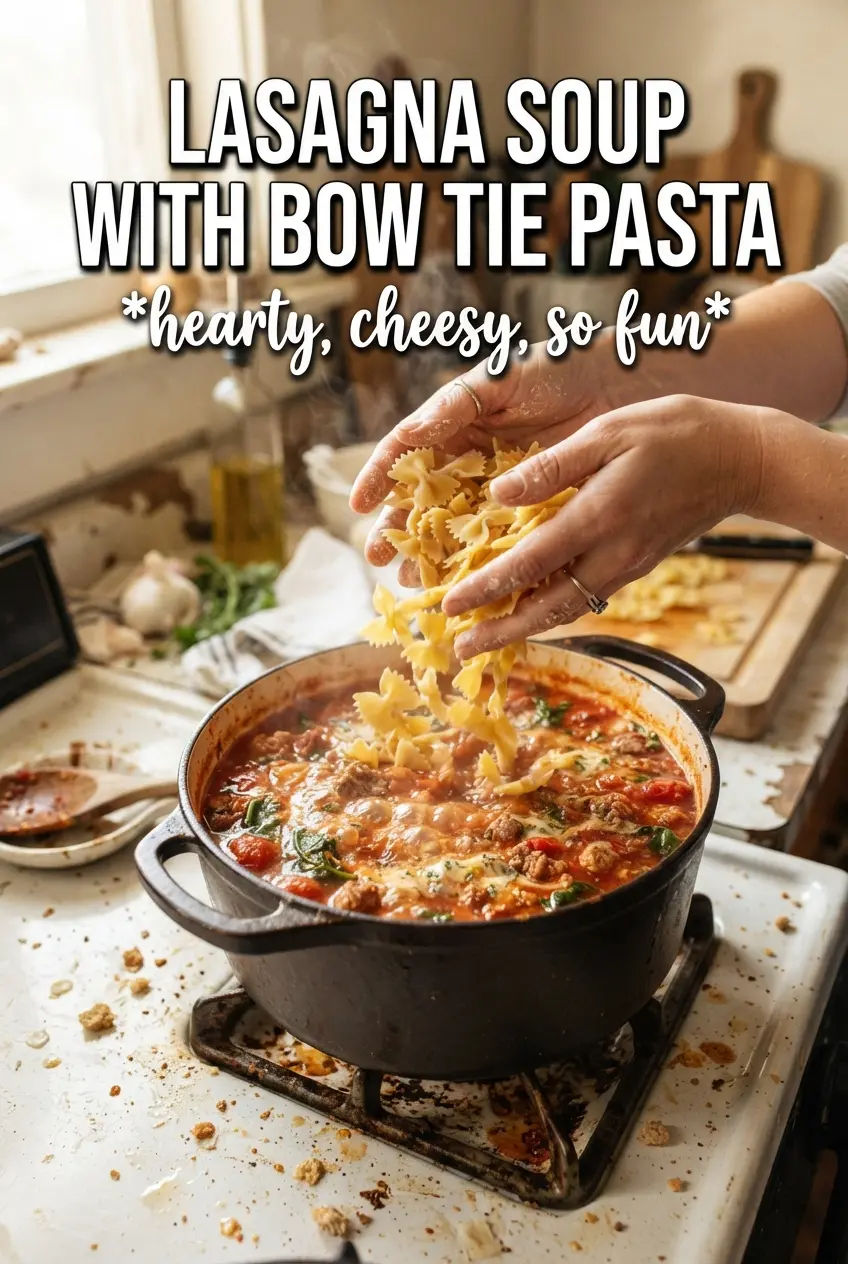
Stir in the pasta and cook until it’s al dente, usually just past the point where it’s tender but still has a little bite in the center. Pull the pot off the heat as soon as the pasta is ready, because it keeps softening in the hot broth. If the soup thickens too much while it sits, add broth a little at a time until it loosens to a spoonable consistency.
How to Adapt This for a Different Diet or a Bigger Batch
Gluten-Free Version
Swap the farfalle for a good gluten-free short pasta, but watch it closely because many GF pastas soften faster and can turn brittle if overcooked. Start checking a minute or two early and serve it right away.
Dairy-Free Finish
Use a dairy-free ricotta-style cheese or skip the dollop and finish with olive oil, basil, and a sprinkle of dairy-free parmesan. You lose the creamy lasagna effect, but the broth still carries the same sausage-and-tomato comfort.
Lighter Sausage Swap
Turkey or chicken sausage works well if you want a leaner pot, but add a touch more oil at the beginning so the onion doesn’t cook dry. The flavor stays solid, though the broth will taste a little less rich than it does with pork sausage.
Make It Ahead for Leftovers
If you know you’ll have leftovers, cook the pasta separately and add it to each bowl when serving. That keeps the noodles from soaking up all the broth overnight, which is the biggest reason soup turns into stew by day two.
Storage and Reheating
- Refrigerator: Store for up to 4 days. The pasta will continue to absorb broth, so expect a thicker soup the next day.
- Freezer: Freeze the soup without the pasta if you can. Pasta turns soft after freezing, so cook fresh noodles when you reheat.
- Reheating: Warm gently on the stovetop over medium-low heat with a splash of broth or water. Don’t blast it on high heat, or the pasta can go mushy and the broth can reduce too much before the center is hot.
Answers to the Questions Worth Asking
Lasagna Soup With Bow Tie Pasta
Ingredients
Equipment
Method
- Brown the Italian sausage in a large pot over medium-high heat until cooked through and browned, then drain excess fat. You should see no pink in the meat.
- Sauté the diced onion for 3 minutes, stirring until softened and slightly translucent. Reduce sticking by scraping browned bits from the pot.
- Add the minced garlic and tomato paste, then cook for 2 minutes. The mixture should look darker and smell fragrant.
- Add the crushed tomatoes, diced tomatoes, chicken broth, Italian seasoning, dried basil, and red pepper flakes, then bring the soup to a boil. Keep stirring until the seasonings are evenly distributed.
- Add the bow tie pasta and cook for 8-10 minutes until al dente. Look for tender pasta with a firm center.
- Season with salt and pepper to taste. Taste once near the end so you can adjust without over-salting.
- Mix ricotta, shredded mozzarella, and parmesan together with fresh basil. Stir until well combined into a thick, scoopable dollop.
- Ladle the lasagna soup into bowls and top each serving with a generous spoonful of the cheese dollop. The cheese should sit on top and soften slightly from the hot soup.
- If the soup thickens too much after the pasta cooks, add extra chicken broth. Add a splash at a time and stir until the consistency is ladleable.