Instant Pot chicken noodle soup lands with the kind of comfort that tastes like it simmered all afternoon, only it comes together on a weeknight. The broth turns deeply savory from raw chicken, aromatics, and herbs cooking under pressure, and the noodles finish in the pot so they soak up flavor instead of tasting like a separate add-in.
The key here is building everything except the noodles under pressure first. That gives the broth body without needing a separate stockpot or a long simmer. Then the chicken comes out shred-tender, the bay leaves are removed, and the noodles go in at the end where they can cook just enough to stay soft without falling apart.
Below, I’ve included the part that matters most: how to keep the noodles from getting mushy, what to swap if you’re out of one ingredient, and how to store leftovers without ending up with a pot of swollen pasta.
The broth was rich, the chicken shredded perfectly after pressure cooking, and the noodles held up even after a second bowl the next day.
Save this Instant Pot chicken noodle soup for the nights when you want shredded chicken, tender noodles, and a broth that tastes slow-cooked without the wait.
The Part That Stops the Noodles From Turning to Mush
The biggest mistake with Instant Pot chicken noodle soup is cooking the noodles under pressure with everything else. Egg noodles go from tender to bloated fast, and the sealed pot keeps pushing them past the point where they still have structure. That’s why this version cooks the chicken and vegetables first, then finishes with the noodles on Sauté.
That order gives you two things at once: a broth with real body from the pressure-cooked chicken and vegetables, and noodles that still feel like noodles when you eat them. If the broth looks a little thin right after the pressure cycle, that’s normal. The noodles thicken it as they cook, and the final simmer pulls everything together.
What Each Ingredient Is Actually Doing in the Pot

- Chicken breast — Raw chicken breast goes in whole so it stays juicy under pressure and shreds cleanly after cooking. If you use pre-cooked chicken, it’ll be dry by the time the noodles finish.
- Carrots, celery, and onion — These build the base of the broth and soften enough to taste like they were simmered for much longer than 15 minutes. Dice the onion finely so it nearly disappears into the soup.
- Garlic and dried herbs — Garlic, thyme, and parsley give the broth its classic chicken soup character without making it muddy. Fresh herbs work too, but dried herbs hold up especially well in the pressure cooker.
- Egg noodles — Use wide egg noodles if you want the most classic texture. If you swap in a different pasta, shorten or lengthen the Sauté time based on package directions and stop as soon as the noodles are just tender.
- Chicken broth — A good broth matters here because there isn’t a long simmer to deepen a bland one. Low-sodium broth is the safest choice so you can season at the end without overshooting the salt.
The Order That Gives You Tender Chicken and Noodles That Hold Up
Loading the Pot the Right Way
Add the chicken, vegetables, garlic, broth, herbs, and bay leaves to the Instant Pot in that order and seal it up. Nothing needs to be sautéed first because the pressure cooker does the heavy lifting here, and raw chicken releases flavor into the broth as it cooks. If your broth looks packed with vegetables, that’s fine; they will soften and settle down by the end.
Pressure Cooking and the Short Rest
Cook on High pressure for 15 minutes, then let the pot sit for 5 minutes before you release the rest. That short natural release keeps the chicken from tightening up and throwing off cloudy bits into the broth. If you quick release immediately, the soup will still work, but the chicken can be a little firmer and the broth can bubble aggressively.
Shredding and Finishing on Sauté
Lift out the chicken, shred it, and remove the bay leaves before you do anything else. Switch to Sauté, add the chicken back in, then stir in the egg noodles and cook just until tender, stirring often so they don’t clump or stick to the bottom. The noodles should look glossy and soft with a little chew left; once they’re fully swollen, stop the heat and season with salt, pepper, and parsley.
How to Adapt This Soup Without Losing What Makes It Work
Use chicken thighs for a richer broth
Boneless, skinless thighs give you a slightly deeper, fuller soup and stay forgiving if the pot runs a minute long. The texture is a little silkier than breast meat, and the broth often tastes a touch more savory.
Make it gluten-free with gluten-free noodles
Swap in a gluten-free egg-style noodle or a sturdy rice pasta and watch it closely on Sauté, since those noodles can go from firm to soft faster than wheat noodles. Pull the pot off the heat the moment they’re tender so they don’t break apart.
Add extra vegetables for a heartier bowl
Mushrooms, peas, or chopped spinach can go in during the noodle stage so they don’t cook down to nothing. Add delicate vegetables at the very end, not under pressure, or they’ll lose their color and texture.
Storage and Reheating
- Refrigerator: Store for up to 4 days. The noodles will absorb more broth, so expect the soup to thicken as it sits.
- Freezer: Freeze the broth, chicken, and vegetables without the noodles for the best texture. Add fresh noodles after thawing and reheating.
- Reheating: Warm gently on the stove or in the microwave with a splash of broth. Heavy boiling can split the noodles and make the chicken stringy.
Answers to the Questions Worth Asking
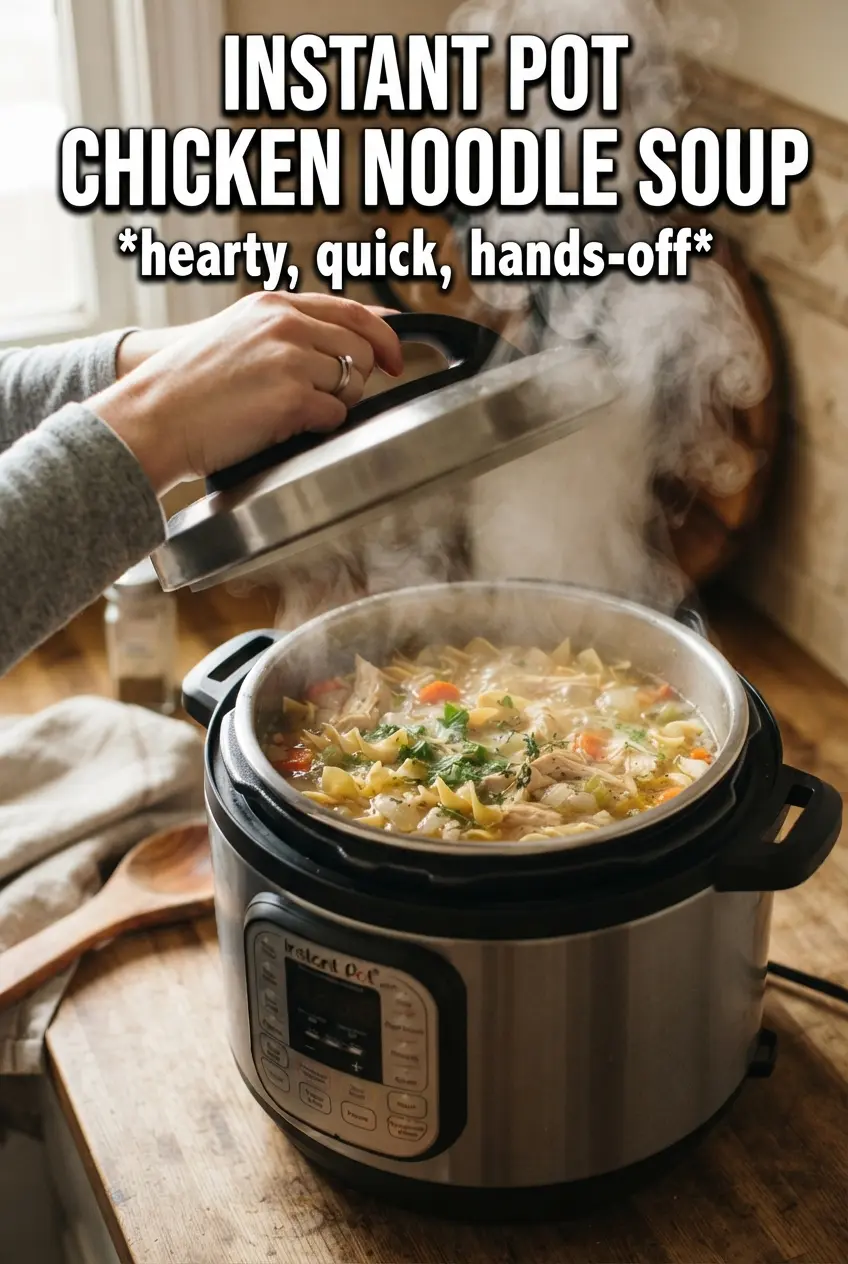
Instant Pot Chicken Noodle Soup
Ingredients
Equipment
Method
- Add chicken breast, carrots, celery, onion, garlic, chicken broth, dried thyme, dried parsley, garlic powder, and bay leaves to the Instant Pot.
- Seal the lid and pressure cook on High for 15 minutes.
- Let the pressure release naturally for 5 minutes, then quick release any remaining pressure.
- Remove the chicken, shred it, and remove the bay leaves from the pot.
- Set the Instant Pot to Sauté and return the shredded chicken to the pot.
- Add the egg noodles and cook on Sauté for 6-8 minutes, stirring often, until tender.
- Season with salt and pepper to taste.
- Garnish with fresh parsley and serve hot.