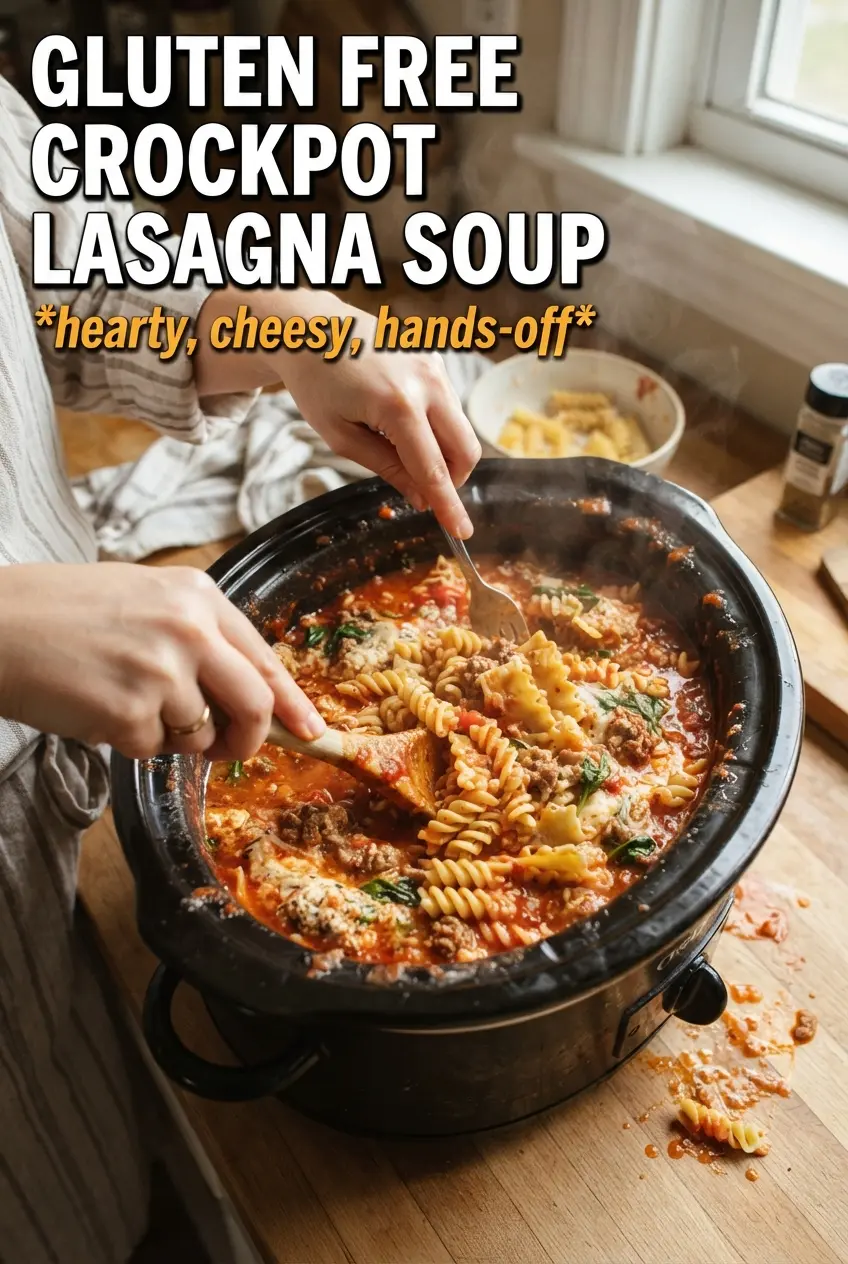
Gluten free Crockpot lasagna soup gives you all the comfort of lasagna without the layering, babysitting, or messy casserole dish. The broth turns rich and tomato-forward, the sausage seasons the whole pot from the start, and the broken gluten-free noodles soak up just enough flavor to taste like they belonged there all along. It’s the kind of dinner that lands in the bowl looking rustic and eats like something that took far more effort than it did.
The trick with this version is timing. Gluten-free pasta can go from tender to mushy fast, so it goes in near the end, not at the beginning. Browning the sausage first matters too, because the caramelized bits add depth that a slow cooker alone won’t build. A good tomato base, plenty of broth, and a final ricotta-mozzarella dollop are what make the whole pot taste finished instead of just cooked.
Below, you’ll find the part that keeps the noodles intact, the ingredient choices that matter most, and a few smart ways to adapt the soup without losing that lasagna-style comfort.
The broth got deep and savory, and the gluten-free noodles held up way better than I expected because I added them at the end like you said. The ricotta and mozzarella melted into the bowl and made it taste like lasagna without all the work.
Save this gluten free Crockpot lasagna soup for a low-effort dinner with tender pasta, savory sausage, and a creamy ricotta finish.
The Part That Keeps Gluten-Free Pasta From Turning Soft and Sad
The biggest mistake in slow cooker soup like this is treating gluten-free pasta the way you’d treat regular pasta. It doesn’t have the same cushion. If it sits in hot broth for hours, it loses its shape and turns gummy on the edges before the center is even done. That’s why the noodles go in only for the last 30 to 35 minutes, when the soup is already fully flavored and the pasta just needs to finish cooking.
The other thing that matters is heat management at the end. If your slow cooker runs hot, move it to high only for the pasta stage, then check early. You want the noodles tender but still intact, with a little bite left in the middle. By the time they’re perfect, the broth will have picked up starch and body, which gives the soup that thick, cozy spoonful you want from a lasagna-style bowl.
What Each Ingredient Is Doing in the Bowl

- Italian sausage — This is the backbone of the soup. Brown it first so you get savory bits in the pot, not just seasoned meat. Mild or hot both work; hot sausage gives the broth more edge.
- Crushed tomatoes and diced tomatoes — The crushed tomatoes build body, while the diced tomatoes give you texture and little bursts of tomato in the spoonful. If you only have one type, use what you’ve got, but the mix tastes fuller.
- Tomato paste — A couple of tablespoons deepen the broth and keep it from tasting flat. Let it cook with the other ingredients in the slow cooker so it loses that raw canned taste.
- Certified gluten-free broth — This is the liquid that ties everything together, and certification matters if you’re cooking for someone with celiac disease or serious intolerance. Regular broth can be a hidden source of gluten.
- Gluten-free lasagna noodles or GF penne — Broken lasagna noodles give the most classic feel, but GF penne is easier to manage and just as good here. Add either toward the end and stir gently so the pieces don’t clump.
- Ricotta, mozzarella, parmesan, and basil — The cheese mixture brings the lasagna part of lasagna soup. Ricotta adds creaminess, mozzarella melts into the hot broth, parmesan sharpens it, and basil keeps the finish bright.
Building the Soup So the Pasta and Broth Finish at the Same Time
Browning the Sausage First
Cook the sausage until it’s fully browned and no pink remains, then drain the excess fat if there’s a lot in the pan. That first browning step gives the soup a deeper, meatier base than just dumping raw sausage into the Crockpot. If you skip it, the broth tastes softer and less layered, and the sausage can break into dull little grains instead of staying pleasantly crumbled.
Letting the Slow Cooker Do the Tomato Work
Add the onion, garlic, tomatoes, broth, tomato paste, Italian seasoning, basil, and red pepper flakes with the sausage, then let the slow cooker handle the long simmer. After a few hours, the onion will disappear into the broth and the garlic will mellow out. If the lid is opened too often, the cook time stretches out and the tomatoes never quite get that unified, stew-like flavor.
Adding the Gluten-Free Pasta at the End
Stir in the broken noodles during the last 30 to 35 minutes, then check them early and often. Gluten-free pasta varies a lot by brand, and some types need less time than the package says once they’re in hot soup. If the broth looks a little thicker after the pasta goes in, that’s a good sign; it means the soup is developing body instead of staying thin.
Finishing With the Cheese Dollop
Mix the ricotta, mozzarella, parmesan, and basil just before serving, then spoon a generous mound into each bowl. The heat from the soup softens the mixture and turns it creamy without fully dissolving it. That contrast matters. If you stir the cheese straight into the whole pot, it disappears into the broth and you lose the lasagna-like finish.
How to Adapt This When You Need a Different Version
Dairy-Free Bowl With the Same Hearty Base
Skip the ricotta-mozzarella topping and finish with a drizzle of olive oil and a sprinkle of dairy-free parmesan-style cheese if you like. The soup itself stays rich because the sausage and tomatoes do the heavy lifting, but you’ll lose the creamy lasagna finish that makes each bowl taste extra full.
Vegetarian Version That Still Tastes Substantial
Swap the sausage for browned mushrooms and a can of drained white beans, then use vegetable broth instead of chicken broth. You won’t get the same savory depth from the meat, so add an extra pinch of Italian seasoning and a little more tomato paste to keep the broth from tasting thin.
Extra-Thick, Almost Casserole-Style Soup
Use only 3 1/2 cups broth and add the pasta a few minutes earlier so the soup thickens more as it sits. This version eats more like a spoonable lasagna filling, which is great if you want a heartier bowl, but it will tighten up fast as it rests.
Storage and Reheating
- Refrigerator: Store for up to 4 days. The noodles will keep soaking up broth, so the soup gets thicker each day.
- Freezer: Freeze the tomato-and-sausage base without the pasta or cheese topping for up to 3 months. Gluten-free noodles soften too much after freezing, so add fresh pasta when you reheat.
- Reheating: Warm gently on the stove or in the microwave with a splash of broth to loosen it. If you reheat it hard and fast, the pasta can break down and the broth can reduce too far.
Answers to the Questions Worth Asking
Gluten Free Crockpot Lasagna Soup
Ingredients
Equipment
Method
- Brown the Italian sausage in a cast iron skillet over medium-high heat until cooked through, then drain off excess fat and set aside briefly. You should see browned bits on the meat and no pink remaining.
- Add the browned sausage to the crockpot along with the diced onion and minced garlic. Stir briefly so the onion and garlic are coated in the drippings.
- Pour in the crushed tomatoes and diced tomatoes, then add the chicken broth, tomato paste, Italian seasoning, dried basil, and red pepper flakes. Make sure everything is evenly combined for consistent flavor.
- Cook on Low for 5-7 hours, or High for 2.5-3 hours. The broth should look simmering and well developed by the end.
- In the last 30-35 minutes, add the broken gluten-free lasagna noodles or GF penne. Increase to High if needed so the pasta cooks through on schedule.
- Cook until the GF pasta is tender, checking frequently because GF pasta can overcook. Stop as soon as it’s just tender—some slight firmness is okay.
- Season with salt and pepper to taste and stir well. Taste and adjust so the tomato broth is balanced.
- Mix ricotta, shredded mozzarella, and parmesan to form a thick cheese dollop. It should hold together well enough to sit on the soup.
- Serve the soup in bowls and top each serving with a generous dollop of the cheese mixture. Add fresh basil on top so it looks bright and melts slightly from the hot broth.