High protein lasagna soup has the same comforting pull as a baked pan of lasagna, but it comes together in one pot and lands on the table in far less time. The broth is rich and tomato-y, the noodles soften into the soup instead of baking into a casserole, and the cottage cheese topping melts into a creamy layer that tastes much closer to ricotta than you’d expect. It eats like a full meal, not a starter.
The trick is building flavor in stages. Browning the turkey first gives you a savory base, then tomato paste gets cooked long enough to lose that raw edge before the broth goes in. The white beans quietly thicken the soup and add extra protein without making it heavy, and the broken noodles release just enough starch to give the broth body without turning it gluey.
Below you’ll find the little details that keep the soup from tasting flat or turning mushy, plus a few useful swaps if you want to work with what’s in your kitchen.
The broth had that deep lasagna taste, and the cottage cheese topping turned creamy instead of grainy after I blended it. Even my picky eater went back for a second bowl.
Love this creamy, high protein lasagna soup with broken noodles and cottage cheese topping? Save it to Pinterest for an easy one-pot dinner that tastes like comfort food.
The Part That Keeps Lasagna Soup from Turning Bland
Lasagna soup can taste flat when everything goes into the pot at once. This version avoids that by building the base in layers: first the turkey for savoriness, then the tomato paste for depth, then the herbs and broth once the bottom of the pot has picked up some color. That extra minute or two of cooking on the tomato paste matters more than people think. It takes away the tinny, raw tomato flavor and gives the broth that slow-cooked taste.
The other place people run into trouble is the noodles. If they boil too hard or sit in the soup too long, they swell and break down. A steady simmer keeps them tender without shredding, and stopping the cook as soon as they’re done keeps the broth from getting overly starchy.
- Lean ground turkey or chicken — Use one with enough fat to brown well, but not so much that the soup feels greasy. If your meat is extra lean, a small splash of olive oil in the pot helps it cook with a better sear.
- Tomato paste — This is the fast route to deeper flavor. Cook it until it darkens slightly and starts sticking to the bottom a little before you add liquid.
- Broken lasagna noodles — Wide noodles give you the right chewy, layered texture. Break them into rough pieces; neat little squares disappear into the broth too neatly and don’t eat like lasagna.
- White beans — They thicken the soup and add body. Cannellini beans are the softest and most neutral, while great northern beans hold their shape a little more.
What the Cheese Topping Is Doing Here
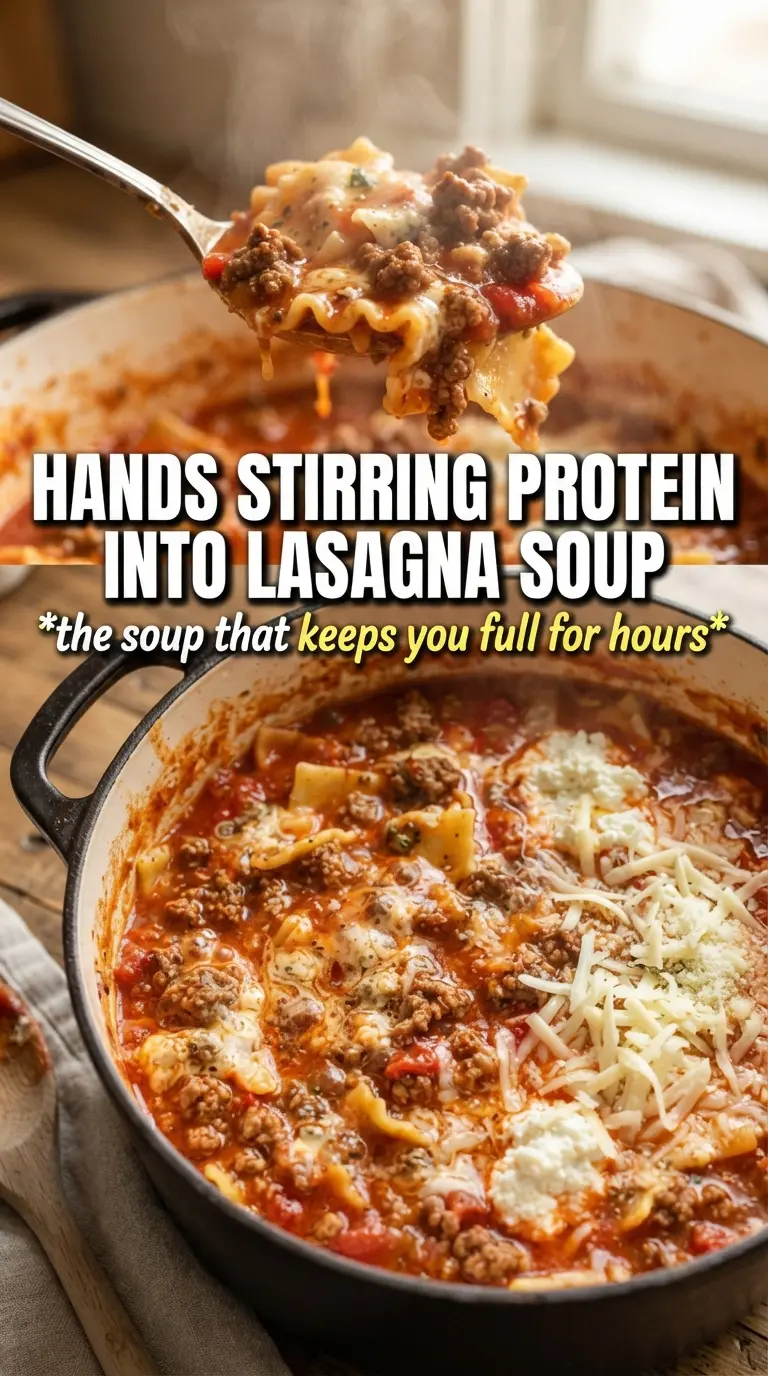
The topping is what makes this taste like lasagna instead of just tomato soup with pasta. Blending the cottage cheese smooth is the key move, because straight cottage cheese can look curdled or grainy when it lands on hot soup. Once it’s blended, it turns into a creamy spoonful that melts into the broth alongside the mozzarella and parmesan.
Part-skim mozzarella gives you that stretchy, milky finish without making the bowl heavy. Parmesan adds the salty edge that lasagna needs. If you skip the blend step or use the topping cold from the fridge, it won’t disappear into the soup as gracefully.
- Cottage cheese — This is the protein booster, and blending it is nonnegotiable if you want a smooth topping. Use full-fat if you want a richer finish; low-fat works too and still blends well.
- Part-skim mozzarella — It melts cleanly and gives you that familiar lasagna pull. Fresh mozzarella is wetter and can make the topping loose, so the shredded low-moisture kind works best here.
- Parmesan — A little goes a long way. Freshly grated parmesan brings more flavor than the pre-shredded kind, which can taste dull in a soup this bold.
The Simmer That Gives You Tender Noodles, Not Mush
Brown the meat and build the base
Cook the turkey in a large pot over medium-high heat and break it up as it browns. You want some real color on the meat, not just pale crumbles, because that browning carries into the broth. If the pot looks dry, let the meat sit untouched for a minute before stirring so it can actually sear instead of steam.
Cook out the tomato paste
Add the onion and cook it until it softens, then stir in the garlic just long enough to smell it. Tomato paste needs a full minute or two in the hot pot before you add the liquid. When it darkens from bright red to a deeper brick color, it’s ready; if you rush this, the soup tastes sharp instead of rounded.
Simmer the noodles and beans gently
Once the broth, tomatoes, and herbs go in, bring everything to a boil, then drop it to a steady simmer before adding the noodles. The soup should bubble lightly, not rage, or the noodles will tear apart before they’re tender. Add the beans with the pasta so they warm through and help the broth thicken a little as the noodles cook.
Finish with the cheese bowl topping
Blend the cottage cheese until completely smooth, then stir in the mozzarella and parmesan. Ladle the soup into bowls first, then spoon the cheese mixture on top so it softens without disappearing into the pot. If you stir the cheese into the whole batch, it can turn the soup cloudy and muddle the texture.
How to Adapt This When You Want It Lighter, Creamier, or Meatless
Swap the turkey for chicken
Ground chicken works cleanly here and keeps the soup light, but it has a milder flavor than turkey. If you use chicken, lean harder on the tomato paste and parmesan so the broth still tastes robust.
Make it gluten-free
Use gluten-free lasagna noodles and cook them just until tender, since they can go soft faster than wheat noodles. Check the broth label too, because that’s usually where hidden gluten sneaks in.
Turn up the creaminess
Stir a few spoonfuls of the blended cottage cheese mixture into each bowl just before serving if you want a thicker, richer finish. Don’t add it to the whole pot on the stove; dairy can look broken when it’s heated hard for too long.
Make it vegetarian
Skip the meat and use vegetable broth, then add an extra can of beans for body. The soup will still taste rich if you brown the onion well and let the tomato paste cook down properly.
Storage and Reheating
- Refrigerator: Store for up to 4 days. The noodles will keep soaking up broth, so it gets thicker by the next day.
- Freezer: Freeze the soup without the noodles if you can, because pasta softens a lot after thawing. If the noodles are already in there, it will still freeze, but the texture won’t be as good.
- Reheating: Warm gently on the stove over medium-low with a splash of broth or water. Don’t boil it hard, or the noodles will break down and the dairy topping can separate if you stir it in too soon.
Answers to the Questions Worth Asking
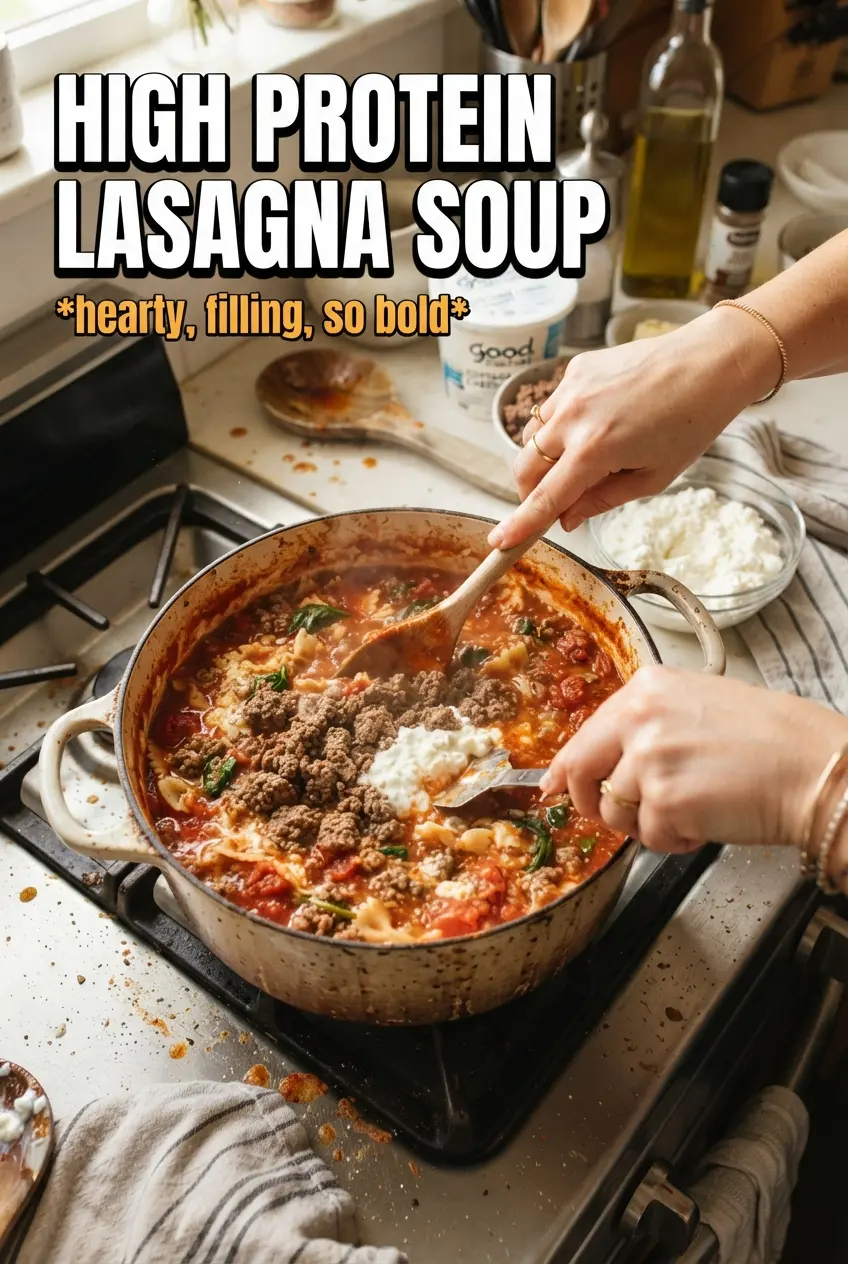
High Protein Lasagna Soup
Ingredients
Equipment
Method
- Brown the ground turkey in a large pot over medium-high heat, breaking it up, until no longer pink, then drain excess fat.
- Sauté the diced onion in the same pot for 4 minutes, stirring occasionally, until softened.
- Add the minced garlic and cook for 1 minute, stirring, until fragrant.
- Stir in the tomato paste and cook for 1-2 minutes, scraping up browned bits so the paste darkens slightly.
- Add the crushed tomatoes, chicken broth, Italian seasoning, dried oregano, and red pepper flakes, then bring to a boil.
- Add the broken lasagna noodles and drained white beans to the pot.
- Simmer for 10-12 minutes, stirring occasionally, until the noodles are tender and the broth thickens slightly.
- Season with salt and pepper to taste.
- Blend the cottage cheese until smooth, then mix in the mozzarella and parmesan until combined.
- Ladle the soup into bowls and top each serving with the cheese mixture so it melts from the hot soup.