Chicken noodle soup with homemade broth tastes fuller, cleaner, and more comforting than the version made from boxed stock. The broth has a deep golden color and a round chicken flavor that clings to every noodle, and the vegetables keep their shape instead of turning bland and tired. When it’s done right, the bowl feels like the kind of soup that fixes a long day without needing much else on the table.
The difference comes from starting with chicken pieces, cold water, and a long, gentle simmer. That slow heat pulls out flavor and body without making the broth cloudy and harsh. A splash of apple cider vinegar helps coax more goodness from the bones, and skimming the foam early keeps the finished broth tasting clean. Fresh vegetables and wide egg noodles go in later so they stay distinct instead of disintegrating.
Below, I’ll show you how to build the broth with enough structure to hold up to noodles, how to keep the chicken from drying out, and what to do if you want to make it ahead.
The broth came out rich and golden, and the noodles held up instead of getting mushy. I used the chicken from the pot for the soup, and it tasted like it had simmered all afternoon.
Save this chicken noodle soup with homemade broth for the night you want a deep, golden soup that tastes like it simmered all day.
The Step That Makes Homemade Broth Taste Deep, Not Flat
The broth is where this soup either becomes memorable or stays ordinary. If you rush it, you’ll get something salty and thin; if you simmer it gently, you get body, color, and a clean chicken taste that coats the spoon. Cold water matters because it gives the pot time to pull flavor from the bones before the exterior of the chicken tightens up. A hard boil works against you here by making the broth cloudy and muddling the flavor.
The apple cider vinegar isn’t there for tang you can taste. It quietly helps pull collagen and minerals from the chicken pieces, which gives the broth a softer mouthfeel once it’s strained. Skimming the foam in the first stretch of simmering matters too, because that’s where a lot of the gray, unsettled bits collect. That little bit of attention is what separates a broth that tastes homemade from one that just tastes watery.
What Each Ingredient Is Doing in This Bowl

- Chicken pieces — Back, necks, and a whole chicken all work, but the bones and connective tissue are what give the broth its body. If you use a whole chicken, pull the meat off after simmering and save it for the soup.
- Apple cider vinegar — You won’t taste it in the finished broth, but it helps the pot extract more from the chicken bones. Lemon is sharper and can throw the balance off here, so vinegar is the better choice.
- Wide egg noodles — These hold up well in a broth-based soup and give the bowl that classic comfort-food feel. If you swap in thinner noodles, cut the simmer time and serve right away so they don’t turn soft.
- Fresh parsley — Add it at the end so it stays bright and fresh instead of fading into the broth. Dried parsley won’t give you the same lift, so this is one spot where fresh matters.
Building the Soup So the Noodles Stay Tender
Start with a Gentle, Foamy Simmer
Bring everything for the broth just to a boil, then drop the heat until the surface barely moves. In the first few minutes, foam will rise; skim it off so the broth stays clear and tastes clean. Once the broth settles into a steady simmer, let it work for 1 1/2 to 2 hours until the liquid tastes rounded and the chicken looks fully cooked through. If it boils hard the whole time, the broth turns murky and the fat emulsifies in a way that muddies the finish.
Strain, Salt, and Rebuild the Soup Base
Strain the broth into a clean pot and season it before moving on, because the vegetables and noodles will pull salt out of the liquid as they cook. If the broth tastes a little shy at this stage, it will taste flat after the noodles go in. Add the fresh carrots, celery, and onion to the simmering broth and cook them until the onion loses its raw bite and the carrots just start to soften. That gives the soup layers instead of one soft, all-the-same texture.
Cook the Noodles Only Until They’re Just Done
Egg noodles go in near the end and need only 6 to 8 minutes. Pull the pot off the heat when they’re tender but still have a little bite, because they keep soaking up broth even after the burner is off. If the soup sits too long on heat with the noodles in it, the broth gets absorbed and the noodles swell past the point you want. This is the stage where timing matters most.
Finish with Chicken and Parsley
Stir in the shredded chicken and parsley after the noodles are cooked so the meat stays moist and the herbs stay fresh. Taste the soup one last time and season generously with salt and pepper, because a broth-heavy soup always needs a final adjustment at the end. If the chicken came from the broth pot, use it right away before it dries out. A finished bowl should taste balanced, aromatic, and full without feeling heavy.
How to Adapt This Soup Without Losing What Makes It Good
Gluten-Free Version
Swap the egg noodles for a gluten-free noodle that holds its shape in broth, and cook it separately if the package says it gets fragile. Gluten-free pasta can turn soft fast in a long simmer, so keeping it apart until serving gives you a much better texture.
Use a Rotisserie Chicken Shortcut
If you don’t have raw chicken pieces for broth, use store-bought stock and a rotisserie chicken for the meat. You’ll lose some of the deep homemade body, but the soup still works well if you simmer the vegetables long enough to build flavor and season the broth more assertively.
Vegetable-Forward Version
For a lighter bowl, reduce the chicken and add more celery, carrots, and onion, then finish with a little extra parsley. The broth won’t have the same gelatin-rich body, so it helps to simmer it a little longer with the bones if you have them, or add a splash more oil or butter at the end for roundness.
Storage and Reheating
- Refrigerator: Store for up to 4 days. The noodles will keep absorbing broth, so expect the soup to thicken as it sits.
- Freezer: Freeze the broth and chicken without noodles for the best texture. Egg noodles turn soft after thawing, so cook a fresh batch when you reheat.
- Reheating: Warm gently over medium-low heat until steaming, not boiling. If the soup was stored with noodles, add a splash of water or broth before reheating so the pot doesn’t turn dry and starchy.
Answers to the Questions Worth Asking
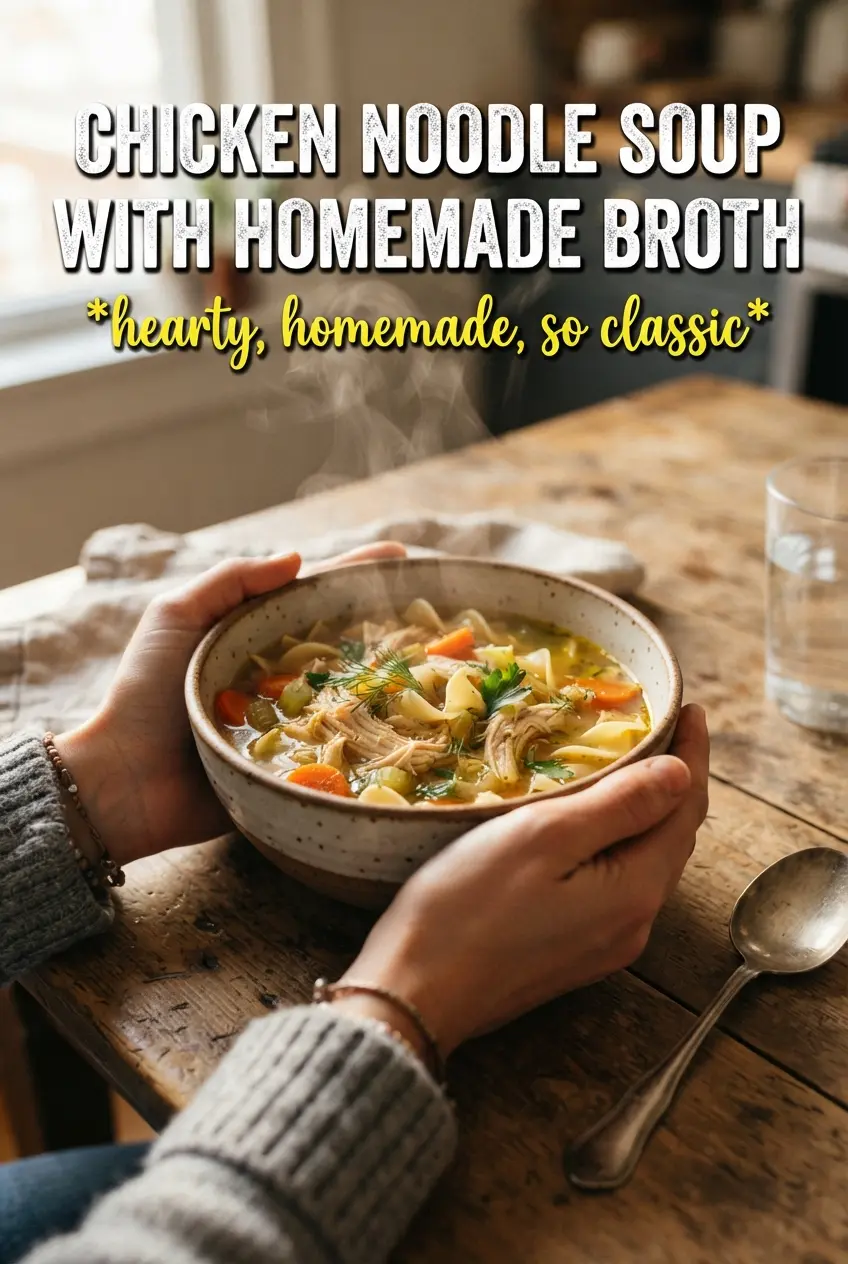
Chicken Noodle Soup With Homemade Broth
Ingredients
Equipment
Method
- Combine the chicken pieces, carrots, celery, onion, garlic, bay leaves, apple cider vinegar, and cold water in a large pot. Heat over high until boiling, then skim off the foam.
- Reduce the heat to a steady simmer and cook for 1.5-2 hours, keeping the liquid gently moving. The broth should look visibly richer and more golden as it simmers.
- Strain the broth into the same pot, then season with salt. Reserve any shredded chicken from the bones for the soup.
- Bring the strained broth back to a simmer, then add the fresh sliced carrots, celery, and diced onion. Watch for bubbles around the edges before proceeding.
- Cook for 10 minutes, stirring occasionally to keep the vegetables from sticking. The vegetables should start to soften but still hold some bite.
- Add the wide egg noodles and cook for 6-8 minutes, until tender. Look for noodles that are fully cooked with no chalky center.
- Stir in the reserved shredded chicken and fresh parsley, then season generously with salt and black pepper. The final soup should smell bright and taste balanced.