Homestyle chicken noodle soup earns its place in the rotation because the broth tastes like it had all day to build depth, even when it didn’t. The noodles stay tender without turning mushy, the chicken shreds into soft chunks, and the vegetables keep enough bite to give every spoonful some life. It’s the kind of soup that settles in fast and still tastes clean, not heavy.
The difference here is starting with a whole chicken or bone-in pieces and letting the broth simmer until the meat is fall-apart tender. That gives you flavor from the bones, skin, and connective tissue that boneless broth can’t match. The whole carrots, celery, onion, garlic, bay leaves, and peppercorns do their job in the pot, then get strained out so the finished soup stays clear and focused instead of muddy.
Below, I’ll walk through the one part that matters most: keeping the broth rich without overcooking the noodles. I’ve also included a few smart swaps and the storage details that matter when you want leftovers that still taste like soup, not starch.
The broth turned out deep and golden, and the noodles stayed perfectly cooked even after I reheated a bowl the next day. My kitchen smelled amazing the whole time.
Save this homestyle chicken noodle soup for the days when you want a deep golden broth, tender chicken, and noodles that stay comforting from the first bowl to the last.
The Broth Tastes Thin When You Rush the First Simmer
The biggest mistake in chicken noodle soup is treating the broth like a background step. It isn’t. The first simmer is where the body of the soup gets built, and it needs time for the chicken to give up flavor and for the aromatics to soften the edges of the broth without taking over. A hard boil turns the broth cloudy and can toughen the meat before the soup has a chance to become rich.
Skim the foam once the pot comes to a boil, then drop the heat so the surface stays at a gentle burble. That slow movement is what keeps the broth clean and lets the chicken turn tender enough to shred easily. If you boil it aggressively, the meat can dry out on the outside while the broth stays flat. Gentle heat is what gives you that deep, homemade taste.
What Each Ingredient Is Doing in the Pot

- Whole chicken or bone-in pieces — This is the engine of the soup. Bones, skin, and connective tissue give the broth body that boneless chicken broth can’t match. If you only have bone-in thighs or breasts, use them; just know a whole chicken gives the most complete flavor.
- Whole carrots, celery, onion, garlic, bay leaves, and peppercorns — These go into the broth whole on purpose, then get strained out. They season the stock from the inside without leaving a chopped-vegetable texture behind. The whole pieces are there for extraction, not for eating.
- Sliced carrots, celery, diced onion, and remaining garlic — These go in later so the finished soup still has recognizable vegetables with some texture. If they simmer from the beginning, they’ll collapse before the noodles are done.
- Wide egg noodles — Wide noodles hold up better than thinner pasta in a broth-heavy soup. They catch the broth without disappearing. If you need a gluten-free version, use sturdy gluten-free pasta and cook it just until tender, then serve right away because it softens faster.
- Fresh dill — Add it at the end so it stays bright. If it goes in too early, it dulls and disappears into the broth. Fresh parsley can work in a pinch, but dill gives this soup its clean, unmistakable finish.
Building the Soup in the Right Order
Starting the Broth
Put the whole chicken, whole carrots, whole celery, onion, garlic, bay leaves, peppercorns, and water in the pot and bring it to a boil only to get things moving. As soon as you see foam rise, skim it off, then reduce the heat. The surface should look lively but not aggressive. If the pot keeps raging, the broth will turn cloudy and the meat will tighten up.
Straining and Shredding
Once the chicken is very tender, lift it out and strain the broth through a fine sieve. Throw away the cooked vegetables and peppercorns; they’ve already done their job. Shred the chicken while it’s warm enough to handle, pulling off the skin and bones. If the meat is still clinging to the bones in big stubborn pieces, it needs a few more minutes in the broth.
Cooking the Vegetables and Noodles
Bring the strained broth back to a simmer before adding the sliced carrots, celery, diced onion, and remaining garlic. Let them cook until they lose the raw edge but still have a little structure. Then add the noodles and shredded chicken together. The noodles should be cooked at a gentle simmer, not a full boil, or they’ll break down and cloud the soup.
Finishing with Dill and Seasoning
Stir in the dill at the very end, then season with salt and pepper until the broth tastes complete. The soup should taste rounded, not just salty. If it tastes flat, it usually needs more salt than more herbs. Let it sit for a minute before serving so the noodles absorb a little of the broth instead of only floating in it.
How to Adjust This Soup Without Losing What Makes It Good
Use rotisserie chicken when time matters
Skip the long simmer and start with a good store-bought rotisserie chicken plus a flavorful chicken stock. You’ll lose some of the deep broth body from cooking the bones yourself, but you’ll gain speed. Simmer the carrots, celery, onion, and garlic in the stock long enough to soften and let the herbs finish the soup.
Make it gluten-free with the right noodle swap
Use a sturdy gluten-free pasta made for soups, not a delicate rice noodle. Some gluten-free noodles soften quickly and can turn grainy if they sit in hot broth too long, so cook them just until done and serve the soup right away. If you expect leftovers, store the noodles separately.
Add extra vegetables without muddying the broth
Mushrooms, peas, or chopped spinach all work, but add them near the end so they stay distinct. Heavier vegetables like parsnips can go in with the carrots and celery. The key is not crowding the pot so the broth still tastes clean and chicken-forward.
Storage and Reheating
- Refrigerator: Store for up to 4 days. The noodles will keep soaking up broth, so expect the soup to thicken as it sits.
- Freezer: The broth and chicken freeze well, but the noodles don’t. Freeze the soup without noodles if you can, then cook fresh noodles when you reheat.
- Reheating: Warm gently over medium-low heat until steaming, adding a splash of water or broth if needed. A hard boil will turn the noodles soft and break the chicken apart more than you want.
Questions I Get Asked About This Soup
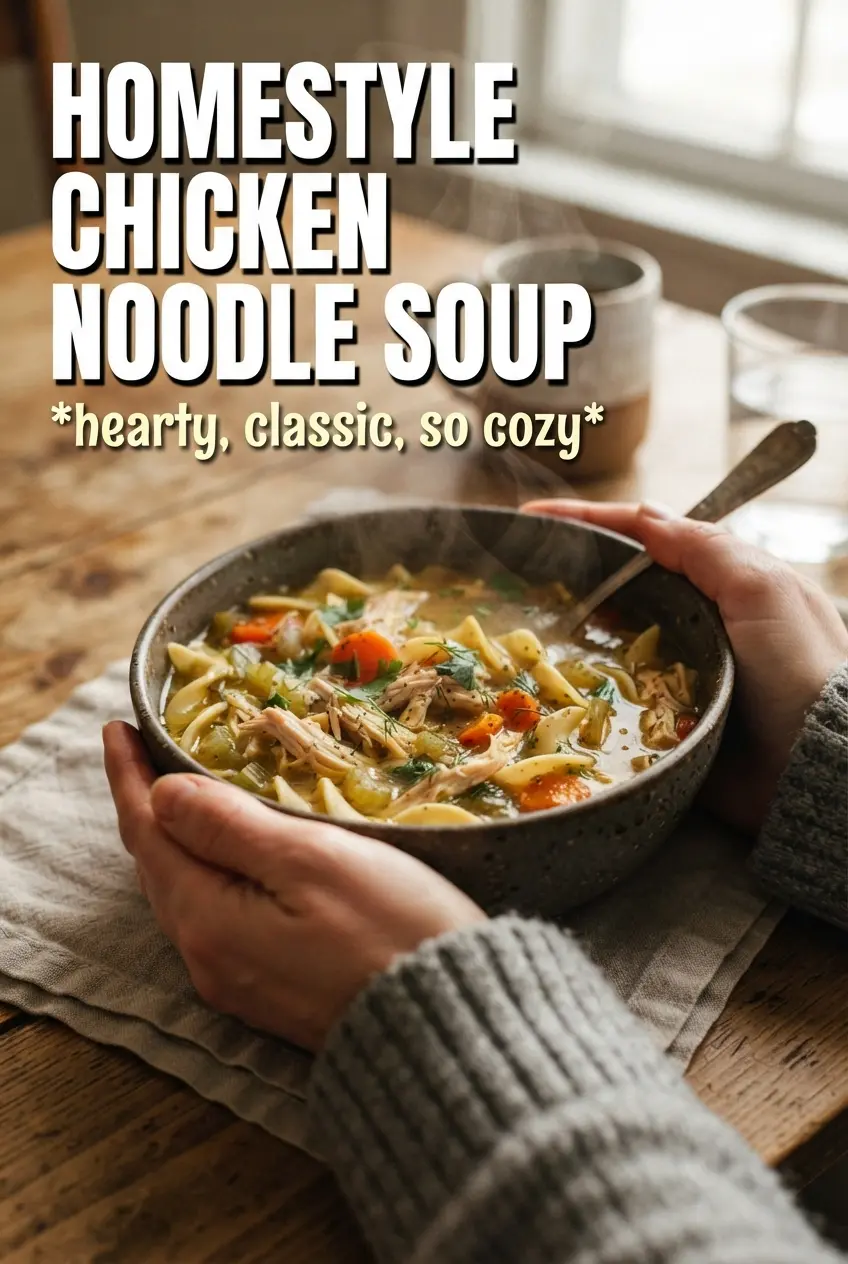
Homestyle Chicken Noodle Soup
Ingredients
Equipment
Method
- Place the whole chicken, 2 whole carrots, 2 whole celery stalks, whole onion, 4 garlic cloves, bay leaves, peppercorns, dried thyme, and 10 cups water in a large Dutch oven.
- Bring to a boil, skim off foam, then reduce heat to a gentle simmer and cook 45-60 minutes until the chicken is very tender.
- Strain the broth, discard the vegetables and peppercorns, and shred the chicken meat into bite-size pieces.
- Return the broth to the pot and bring it to a simmer.
- Add the sliced carrots, sliced celery, diced onion, and remaining garlic, then simmer 10 minutes.
- Add the wide egg noodles and the shredded chicken, then cook 6-8 minutes until the noodles are tender.
- Stir in the fresh dill and season generously with salt and pepper to taste.