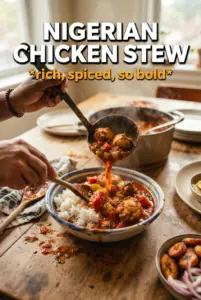
Nigerian chicken stew lands with that deep, slow-cooked tomato-pepper richness that clings to rice and coats every piece of chicken in a glossy red-orange sauce. The best versions taste layered, not flat: sweet tomatoes, sharp onions, pepper heat, and that unmistakable cooked-down savoriness that only happens when the sauce is allowed to fry properly.
What makes this version work is the order. The chicken gets seasoned first so it carries flavor all the way through, then the pepper base is cooked long enough for the raw tomato edge to disappear and the oil to separate on top. That step matters more than anything else here. If you rush it, the stew tastes thin and sharp instead of round and full.
Below you’ll find the cue I watch for when the sauce is ready, plus a few practical swaps and storage notes for making it work on a busy weeknight without losing that classic depth.
The sauce cooked down exactly the way you described, and when the oil rose to the top I knew it was ready. The chicken stayed juicy and the stew was even better the next day over rice.
Save this Nigerian chicken stew for the night when you want deep tomato-pepper flavor and golden chicken over steaming rice.
The Step Most People Rush in Nigerian Chicken Stew
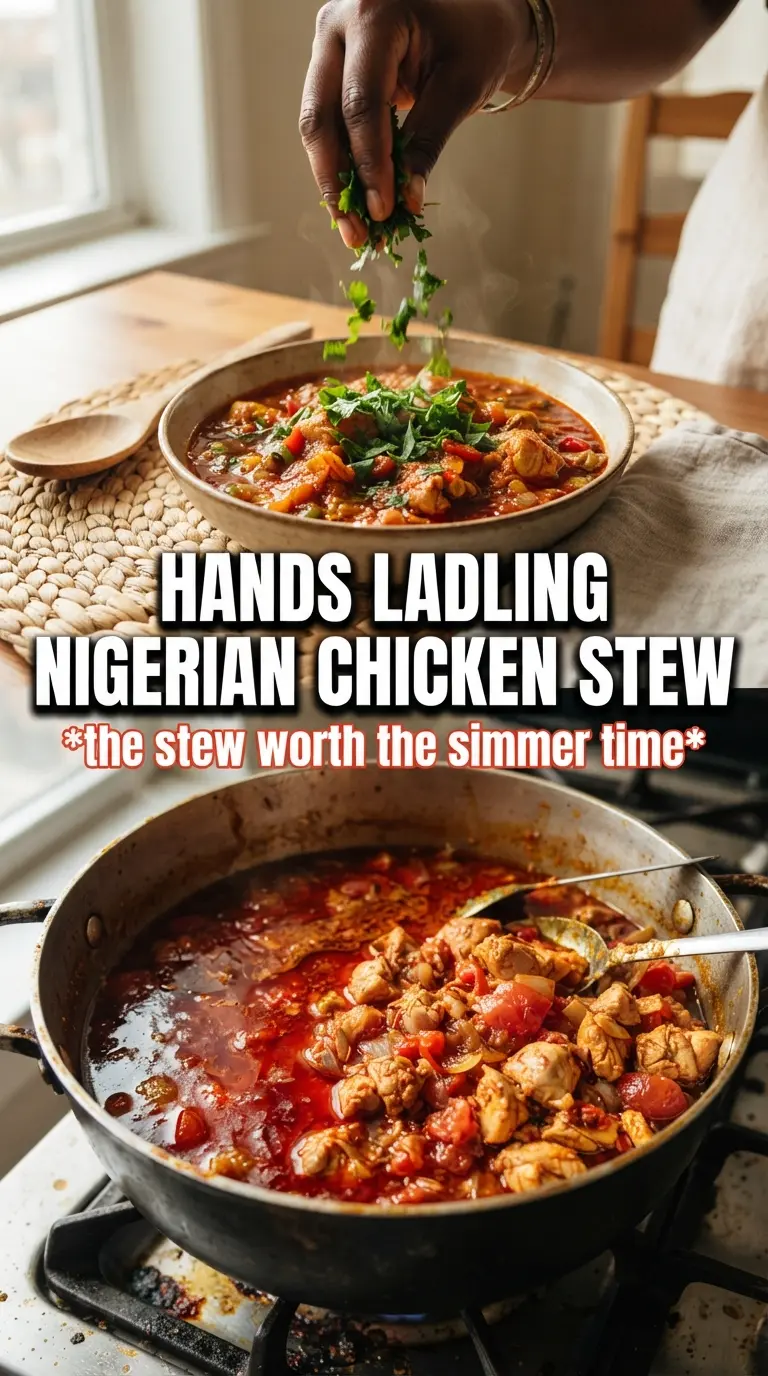
The biggest mistake with this stew is treating the pepper base like a quick sauce. It isn’t. The blended tomatoes, bell peppers, scotch bonnet, and onion need time in the oil until the raw edge disappears and the sauce darkens from bright red to a deeper brick color. That change isn’t cosmetic. It’s the difference between a stew that tastes cooked through and one that tastes like blended vegetables sitting in a pot.
You’ll know it’s ready when the sauce starts to look glossy and the oil separates and pools at the edges or floats on top. Stir often enough to keep the bottom from scorching, but not so constantly that the sauce never gets a chance to fry. If the heat is too high, the tomatoes can catch before they cook down; if it’s too low, the sauce will stew in its own liquid and stay flat.
What Each Ingredient Is Actually Doing in This Dish
- Chicken pieces with bone-in — Bone-in chicken holds up better during the final simmer and gives the stew more body. Thighs and drumsticks stay juicier than breast, and they won’t dry out while the sauce finishes cooking.
- Plum tomatoes — These bring the sweetness and bulk of the stew. Canned plum tomatoes work well because they’re consistent, but if yours taste extra acidic, the longer frying time matters even more.
- Red bell peppers — They soften the tomato flavor and give the stew its signature color and sweetness. Don’t swap in green peppers if you want the classic taste; they bring a sharper, more vegetal edge.
- Scotch bonnet or habanero — This is the heat and aroma engine. Start with one pepper if you’re unsure, because the flavor should be lively, not punishing. You can always add heat at the table.
- Onion, garlic, thyme, and curry powder — The onion gets divided because part of it seasons the chicken and part of it goes into the sauce. Thyme and curry powder give the stew its warm background note, and garlic deepens the savory base without turning it into a garlic-forward dish.
- Bouillon — This adds a quick savory backbone that helps the sauce taste finished. If you’re using stock powder instead, keep the salt light until the end so the stew doesn’t get too salty after reduction.
Building the Sauce and Finishing the Chicken
Seasoning the Chicken First
Grate part of the onion into the chicken so it disappears into the meat rather than sitting on top of it. Mix in thyme, curry powder, bouillon, salt, and pepper, then let it sit for at least 30 minutes so the seasoning has time to settle in. If you skip the rest time, the chicken still works, but the flavor stays mostly on the surface.
Frying or Baking Until Golden
Cook the chicken until it’s golden and mostly done before it goes into the stew. That step builds flavor and keeps the chicken from shedding too much liquid into the sauce later. If you’re baking, aim for color on the outside, not a fully finished bird; the simmer in the sauce will take care of the rest.
Cooking Down the Pepper Base
Blend the tomatoes, bell peppers, scotch bonnet, and the remaining onion until smooth, then fry that puree in oil over medium-high heat. Stir frequently and keep scraping the bottom so the sauce doesn’t catch while the water cooks off. When the sauce darkens, thickens, and the oil rises, the sharpness is gone and the flavor turns round and concentrated.
Bringing Everything Together
Add the chicken to the cooked sauce and let it simmer until the meat is fully tender and coated. This last simmer lets the chicken absorb the sauce instead of sitting beside it. Taste near the end and adjust salt only after the sauce has reduced, because the seasoning changes a lot once the liquid cooks off.
How to Adapt This for Heat, Time, and Dietary Needs
Lower-Heat Version
Use one scotch bonnet or habanero instead of two, and remove the seeds if you want a gentler burn. You’ll still get the pepper aroma and warmth without the kind of heat that takes over the whole pot.
Dairy-Free and Naturally Gluten-Free
This recipe already fits both needs as written, as long as your bouillon or stock powder is certified gluten-free. The stew gets its body from the cooked-down tomatoes and peppers, so you don’t need any dairy to make it taste rich.
Use Chicken Thighs Only
If you want the juiciest result, use all thighs or a thigh-and-drumstick mix. White meat can work, but it dries out faster during the final simmer and doesn’t hold onto the stew as well.
Make It Ahead
The stew tastes even deeper the next day because the sauce has time to settle. You can cook the pepper base and fry the chicken ahead, then combine and simmer when you’re ready to serve.
Storage and Reheating
- Refrigerator: Store for up to 4 days. The sauce will thicken as it chills, and the flavor gets deeper.
- Freezer: It freezes well for up to 2 months. Cool it completely first and freeze in portions for easier reheating.
- Reheating: Warm it gently on the stove over medium-low heat with a splash of water if needed. High heat can make the sauce stick and can dry out the chicken before the center is hot.
Answers to the Questions Worth Asking
Nigerian Chicken Stew
Ingredients
Equipment
Method
- Grate half the onion and season the chicken with grated onion, thyme, curry powder, bouillon, salt, and pepper, then marinate for 30 minutes.
- Fry or oven-bake the chicken until golden and mostly cooked through, then set aside.
- Blend the plum tomatoes, red bell peppers, scotch bonnet or habanero peppers, and the remaining onion until smooth.
- Heat 1/2 cup oil in a large pot over medium-high heat and carefully fry the blended pepper sauce for 30-40 minutes, stirring frequently.
- Continue cooking until the sauce is deeply cooked and darkened and you see oil float on top.
- Add the fried chicken to the pot and coat it in the sauce, then simmer for 15-20 minutes.
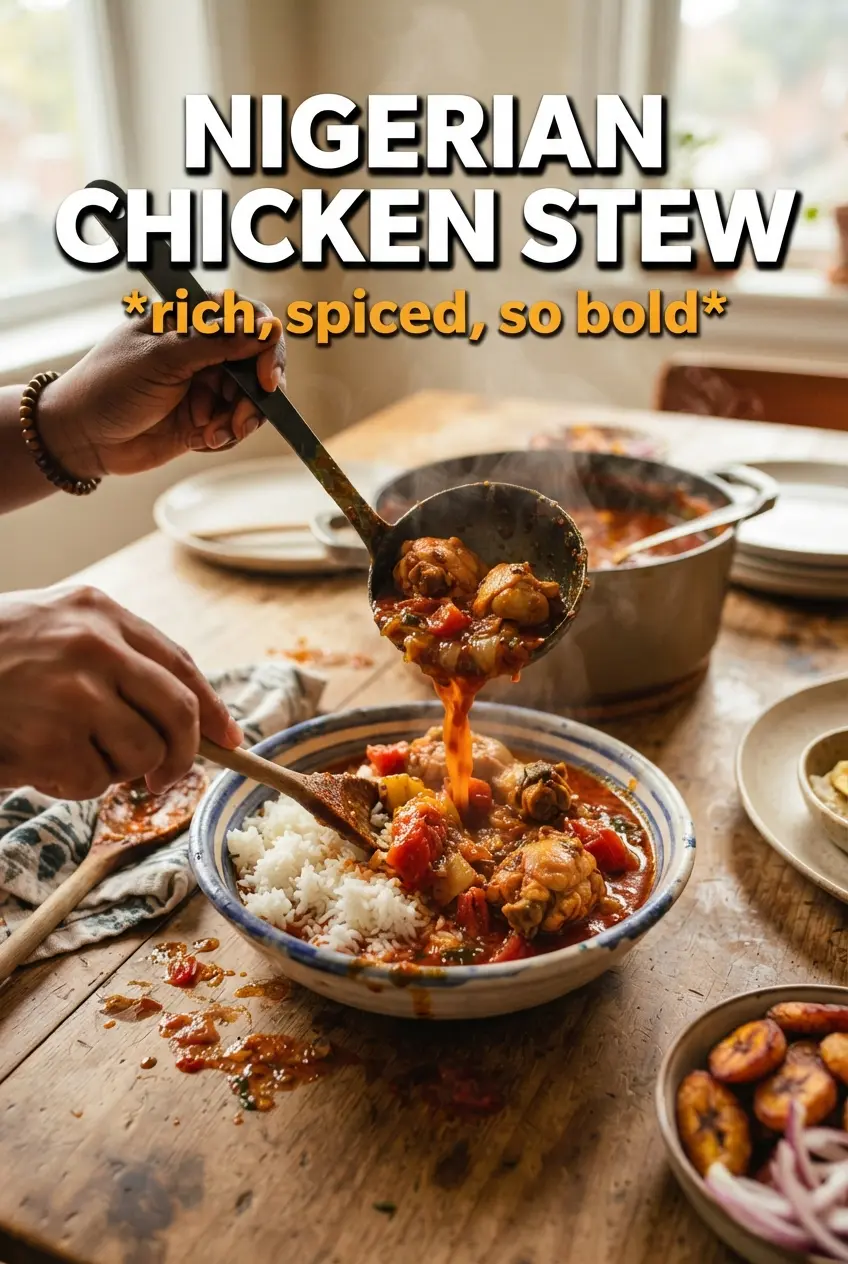
- Taste and adjust seasoning with salt and pepper, then serve over steamed rice and top with fresh parsley.