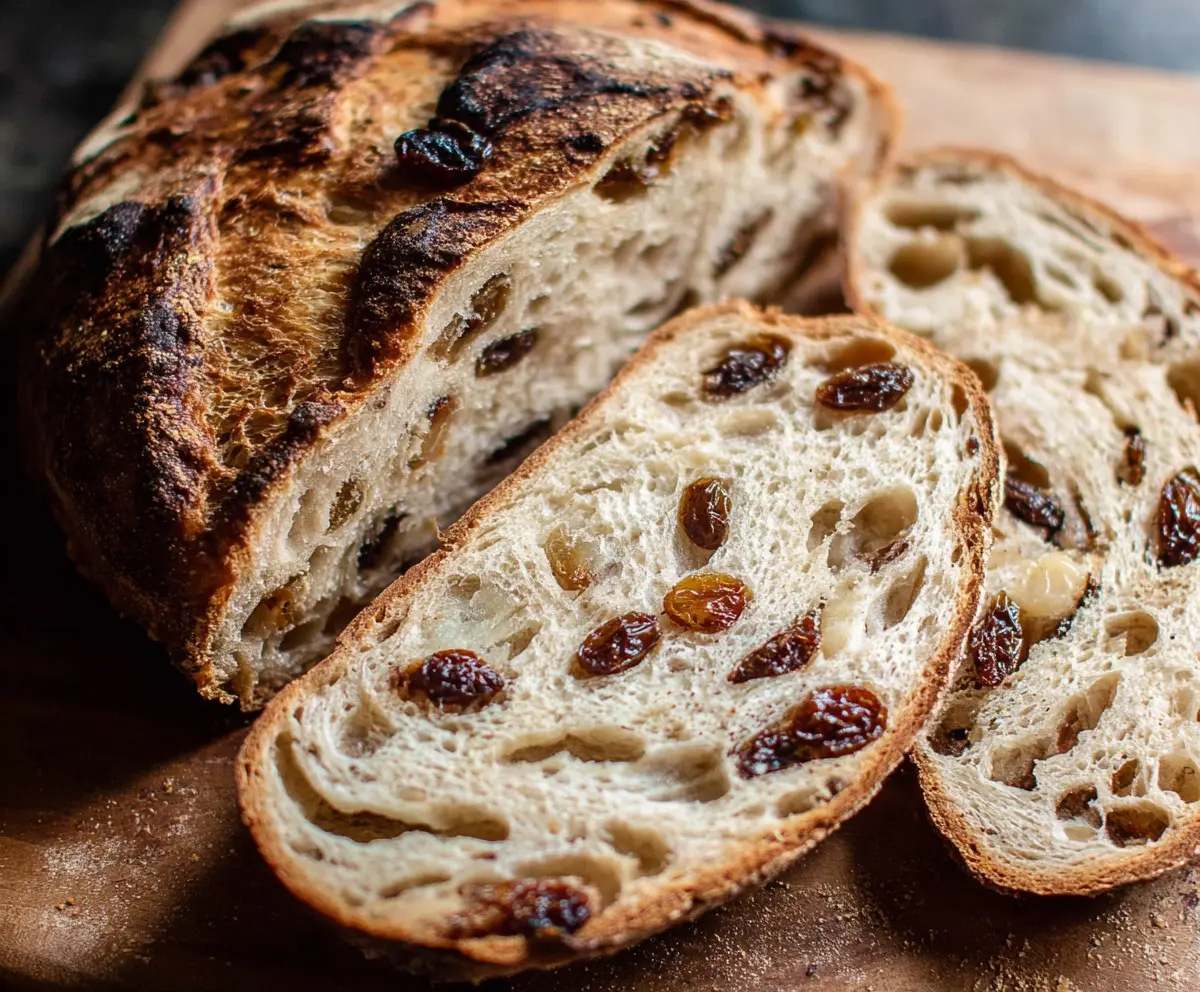
This Cinnamon Raisin Sourdough Bread brings together the tasty flavors of cinnamon, sweet raisins, and a bit of tang from the sourdough. It’s like a warm hug in loaf form!
I love to toast it for breakfast with a little butter—yum! It’s perfect for a cozy morning or a delightful snack. Your kitchen will smell amazing while it bakes! 😊
Key Ingredients & Substitutions
Bread Flour: This is the backbone of your bread with high protein content for gluten development. If you’re out, you can use all-purpose flour, but the texture will be softer. You might want to decrease water slightly if you do this.
Sourdough Starter: Make sure your starter is active and bubbly for best results. If you don’t have a starter, you could use store-bought yeast, adjusting the proofing times, but the flavor will differ.
Raisins: You can use golden or dark raisins, depending on your taste. Dried cranberries or currants can be nice replacements if you’re looking for something different.
Cinnamon: Always a favorite in this bread, but you can switch it up with nutmeg or pumpkin spice for a unique twist! Just use the same amount.
Honey/Maple Syrup: This adds sweetness. If you wish to skip it, the bread will still be delicious, though! Brown sugar could also work well as a substitute.
How Do I Get My Bread to Rise Properly?
Getting a good rise is crucial for a light and airy bread. The key is in two main stages: fermentation and proofing.
- During bulk fermentation, let the dough rest while performing stretch and folds. This not only strengthens gluten but also creates air bubbles that help with rising.
- For proofing, watch the dough—not the clock! It should feel puffy and increase in size, but it doesn’t have to double. If you let it rise too long, it may overproof.
Using a warm spot can help speed up this process. A good tip is to preheat your oven to the lowest setting for a minute, then turn it off and place the covered dough inside. Just ensure it’s not too hot to avoid cooking the dough!
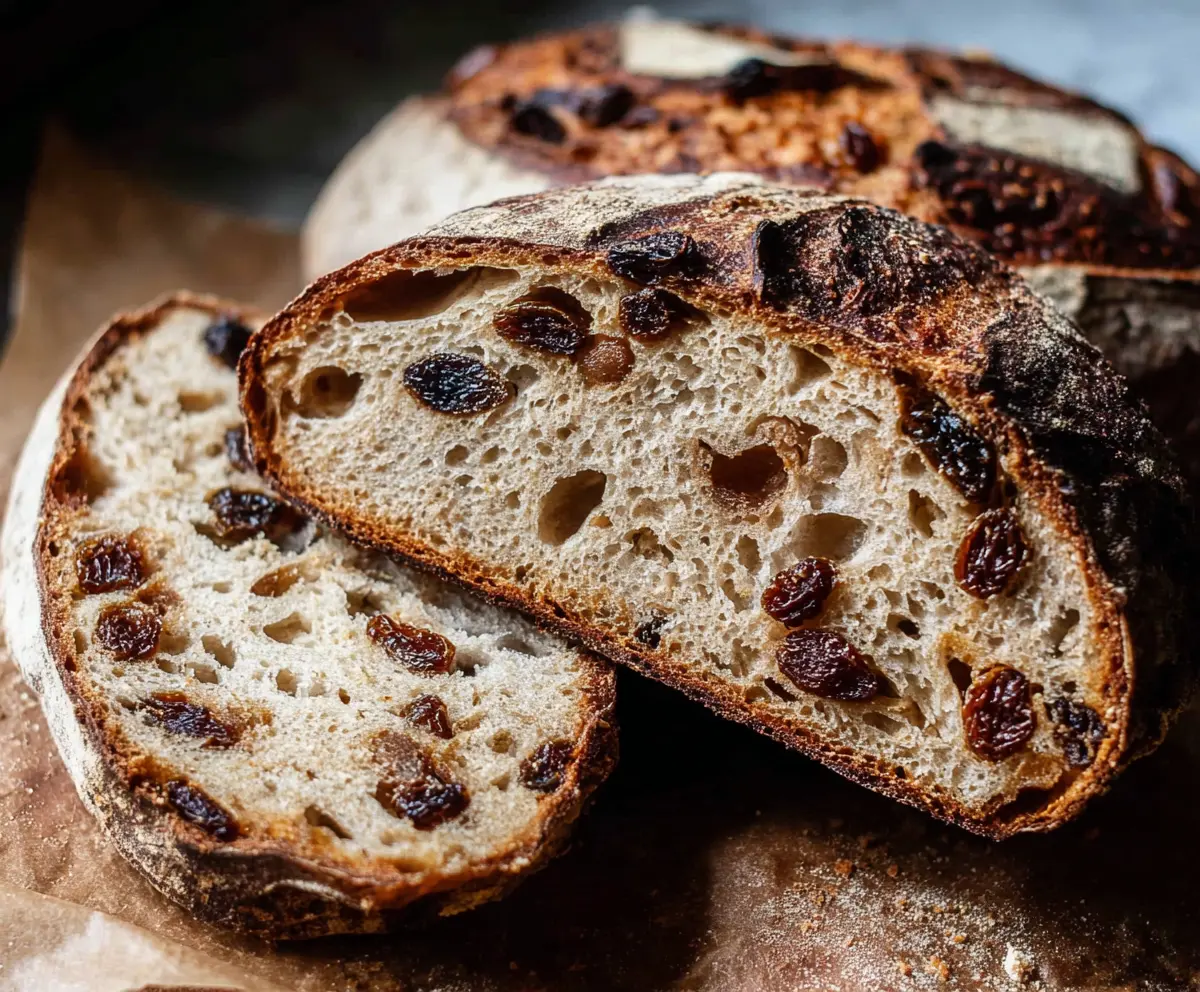
Cinnamon Raisin Sourdough Bread
Ingredients You’ll Need:
- 500g bread flour
- 350g water (about 70% hydration)
- 100g active sourdough starter (100% hydration)
- 10g salt
- 100g raisins (golden or regular)
- 1.5 tbsp ground cinnamon
- 1 tbsp honey or maple syrup (optional, to enhance sweetness)
- Additional flour for dusting
How Much Time Will You Need?
This recipe takes about 30 minutes of active preparation time, plus 3-4 hours for bulk fermentation and 2-3 hours for proofing. You can also let the dough refrigerate overnight for a slower rise, which enhances flavor. Baking takes around 40-50 minutes. In total, expect the whole process to be about 6-8 hours, including resting times.
Step-by-Step Instructions:
1. Prepare Raisins:
If your raisins are dry, soak them in warm water for about 15 minutes. Drain the water and pat the raisins dry with a clean towel. This will help plump them up and make them sweeter in the bread.
2. Mix Dough:
In a large mixing bowl, combine the bread flour, water, and sourdough starter. Mix the ingredients together until it forms a shaggy, cohesive dough. Cover the bowl with a cloth or plastic wrap and let it autolyse (rest) for 30 minutes. This step helps with gluten development.
3. Add Salt and Cinnamon:
After the autolyse period, sprinkle the salt and ground cinnamon over the dough. If you want some sweetness, add the honey or maple syrup. Mix everything well until thoroughly incorporated; you can use your hands for this!
4. Add Raisins:
Carefully knead the raisins into the dough by folding them in gently. Make sure they are evenly distributed throughout without crushing them.
5. Bulk Fermentation with Stretch & Folds:
Cover the bowl with a damp towel or plastic wrap to prevent it from drying out. Over the next 3-4 hours, perform 3-4 sets of stretch and folds every 30-45 minutes. To do this, grab one side of the dough, stretch it up, and fold it over to the other side. This develops gluten, which is essential for the bread’s structure.
6. Shape the Dough:
Once the bulk fermentation is done, lightly sprinkle flour on a work surface and your hands to prevent sticking. Turn the dough out onto the floured surface and gently shape it into a tight round boule (ball). Place it seam side up in a well-floured banneton or a bowl lined with a kitchen cloth.
7. Proof:
Cover the shaped dough and let it proof at room temperature for 2-3 hours. The dough should feel puffy and increase in size, though it will not double. Alternatively, for more flavor, let it proof in the refrigerator overnight.
8. Preheat Oven:
About 30 minutes before you plan to bake the bread, place a Dutch oven or a heavy covered pot inside your oven and preheat it to 450°F (230°C). This helps create steam during baking which gives the bread a great rise.
9. Bake:
When ready to bake, carefully turn the dough out onto a piece of parchment paper. Use a sharp knife or a razor blade to score the top of the dough. This allows the bread to expand while baking. Transfer the dough with the parchment into the preheated Dutch oven, cover with the lid, and bake for 20 minutes.
10. Remove Lid & Finish Baking:
After 20 minutes, take off the lid and continue to bake the bread for another 20-25 minutes until the crust turns a deep golden brown and is crisp to the touch.
11. Cool:
Once baked, carefully remove the bread from the Dutch oven and cool it completely on a wire rack. This allows the crumb inside to set properly before slicing.
Enjoy your homemade Cinnamon Raisin Sourdough Bread toasted with butter, cream cheese, or your favorite spread! It’s a delightful treat that’s sure to impress! 🍞✨
Can I Use Instant Yeast Instead of Sourdough Starter?
While you can use instant yeast, the flavor and texture will differ. If you choose this option, use about 2-3g of instant yeast and adjust the water and fermentation times accordingly. You’ll want to let the dough rise until it doubles in size, which will take less time than with a sourdough starter.
How Should I Store Leftover Bread?
To store any leftover bread, wrap it tightly in plastic wrap or place it in an airtight container. It will stay fresh at room temperature for about 2-3 days. For longer storage, you can slice it and freeze it in a freezer bag. Just toast or thaw slices as needed!
Can I Add Other Ingredients to This Bread?
Absolutely! Feel free to experiment by adding nuts (like walnuts or pecans), or even spices like nutmeg or cardamom for a different flavor profile. Just keep in mind that too many add-ins can affect the dough’s hydration and kneading process, so adjust accordingly.
What If My Dough Doesn’t Rise?
If your dough isn’t rising, it could be due to an inactive sourdough starter or the environment being too cold. Make sure your starter is bubbly and active before using it. If your dough isn’t rising during proofing, try placing it in a warmer area, like an oven that’s been turned off but is still warm, to encourage a better rise.