Sticky, charred Grilled Huli Huli Chicken earns its place on the grill because the glaze cooks down into a lacquer instead of staying thin and sugary. The outside turns deep mahogany with those little blackened edges that taste like smoke and caramel, while the chicken underneath stays juicy from the long soak in the marinade.
The balance matters here. Soy sauce brings salt and depth, brown sugar gives the glaze its shine, pineapple juice adds acidity and fruitiness, and a little sesame oil keeps the whole thing from tasting flat. The trick is to reserve part of the marinade before the chicken goes in, then baste with that clean portion as you grill so you get layers of flavor without any worry about cross-contamination.
Below, I’ve included the details that make this style of grilling work in real life: how to keep the glaze from burning before the chicken cooks through, which cut gives you the juiciest result, and the simple adjustments I use when I want to make it ahead or stretch it for a bigger cookout.
The chicken turned out sticky and caramelized without burning, and the marinade thickened up on the grill instead of dripping off. The pineapple and ginger gave it that sweet-savory balance I was hoping for.
Save this Grilled Huli Huli Chicken for the nights when you want sticky island-style barbecue with charred edges and a glossy pineapple-soy glaze.
The Marinade Needs to Be Bold Before It Hits the Grill
Huli huli chicken can go bland fast if the marinade is timid, because grilling dulls flavor before it builds it. This version leans on soy sauce, brown sugar, pineapple juice, ginger, and garlic to create a glaze that tastes complete after it reduces on the chicken, not before.
The other common mistake is treating the marinade like a sauce from the start. It isn’t. Once raw chicken has touched it, that bowl is for marinating only, which is why reserving half a cup before the chicken goes in matters. That clean portion becomes your basting glaze and gives you that sticky finish without muddying the flavor.
- Chicken thighs or legs — Dark meat stays juicier over medium grill heat and forgives a little overcooking better than breast meat. If you use mixed pieces, put the larger legs on first and keep the thighs where the heat is steadier.
- Soy sauce — This is the salt and backbone of the glaze. Use regular soy sauce for balanced seasoning; low-sodium works too, but the final glaze will taste a little softer.
- Brown sugar — This helps the marinade cling and caramelize. Dark brown sugar gives a deeper molasses note, while light brown sugar keeps it a little brighter.
- Pineapple juice — It brings the tropical sweetness and a little acid that helps the marinade taste lively. Use canned pineapple juice if that’s what you have; fresh works too, but don’t use a lot more or the flavor can get sharp and the glaze can over-brown too quickly.
- Fresh ginger and garlic — Fresh is worth it here because they cut through the sweetness and keep the chicken tasting savory. Powdered versions won’t give the same bite or aroma.
- Sherry or chicken broth — Sherry adds a little depth, while broth keeps the glaze more neutral. Either one loosens the marinade enough to baste well without making it watery.
Turning and Basting So the Glaze Stays Sticky, Not Burnt
Building the Marinade
Whisk the soy sauce, brown sugar, ketchup, pineapple juice, sherry, ginger, garlic, and sesame oil until the sugar looks mostly dissolved. The mixture doesn’t need to be perfectly smooth, but the sugar should be broken down enough that it won’t sit in gritty bits at the bottom. Reserve half a cup before adding the chicken, because that clean portion is what you’ll brush on later. If you skip that step, you either waste good glaze or you end up basting with raw marinade, which is a bad trade.
Marinating for Flavor, Not Mushy Chicken
Add the chicken and turn it until every piece is coated, then chill it for 2 to 8 hours. Less than 2 hours and the flavor stays on the surface; much longer than 8 and the pineapple juice starts to work the meat too hard, especially if the pieces are small. The chicken should look deeply seasoned, not pale with a few spots of sauce clinging to it. Pull it from the fridge about 20 minutes before grilling so the chill comes off and the pieces cook more evenly.
Grilling and Flipping
Grill over medium heat, not high. High heat burns the sugar before the chicken cooks through, and then you’re left with bitter edges instead of a glossy crust. Turn the pieces often, the whole point of huli huli is that constant movement, and brush on the reserved marinade during the last stretch of cooking so it has time to thicken without scorching. The chicken is ready when the thickest part reaches 165°F and the outside looks lacquered and sticky with charred spots, not blackened patches.
Use Chicken Thighs for the Juiciest Result
Thighs stay tender even if the grill runs a little hot or the pieces cook unevenly. Legs work well too and bring good flavor, but boneless, skinless thighs are the easiest way to keep the meat succulent while still getting a sticky exterior.
Make It Dairy-Free and Gluten-Free
This recipe is naturally dairy-free. For gluten-free results, use tamari or a certified gluten-free soy sauce in place of regular soy sauce. The texture and glaze stay the same, but the salt level can vary a bit, so taste the reserved marinade before basting if your substitute runs salty.
Swap the Grill for the Oven When Needed
If you don’t have a grill, bake the chicken on a rack set over a sheet pan at 400°F, then broil it for the last minute or two to get the edges caramelized. You won’t get the same smoky char, but you’ll still get the sticky glaze and the sweet-savory balance that makes the dish work.
Making It for a Crowd
This scales well because the marinade formula stays balanced. Double the batch and grill in waves so the sugar in the glaze doesn’t sit on the fire long enough to burn; keep finished pieces tented loosely with foil while the rest cook.
Storage and Reheating
- Refrigerator: Store leftovers for up to 4 days. The glaze will thicken and the charred edges will soften a little, but the flavor stays strong.
- Freezer: It freezes well for up to 2 months if you wrap the chicken tightly and store it in an airtight container. Freeze in portions so you can thaw only what you need.
- Reheating: Warm it covered in a 300°F oven with a splash of water or extra reserved sauce until heated through. The most common mistake is blasting it in the microwave, which turns the glaze sticky in all the wrong ways and dries out the meat.
Answers to the Questions Worth Asking
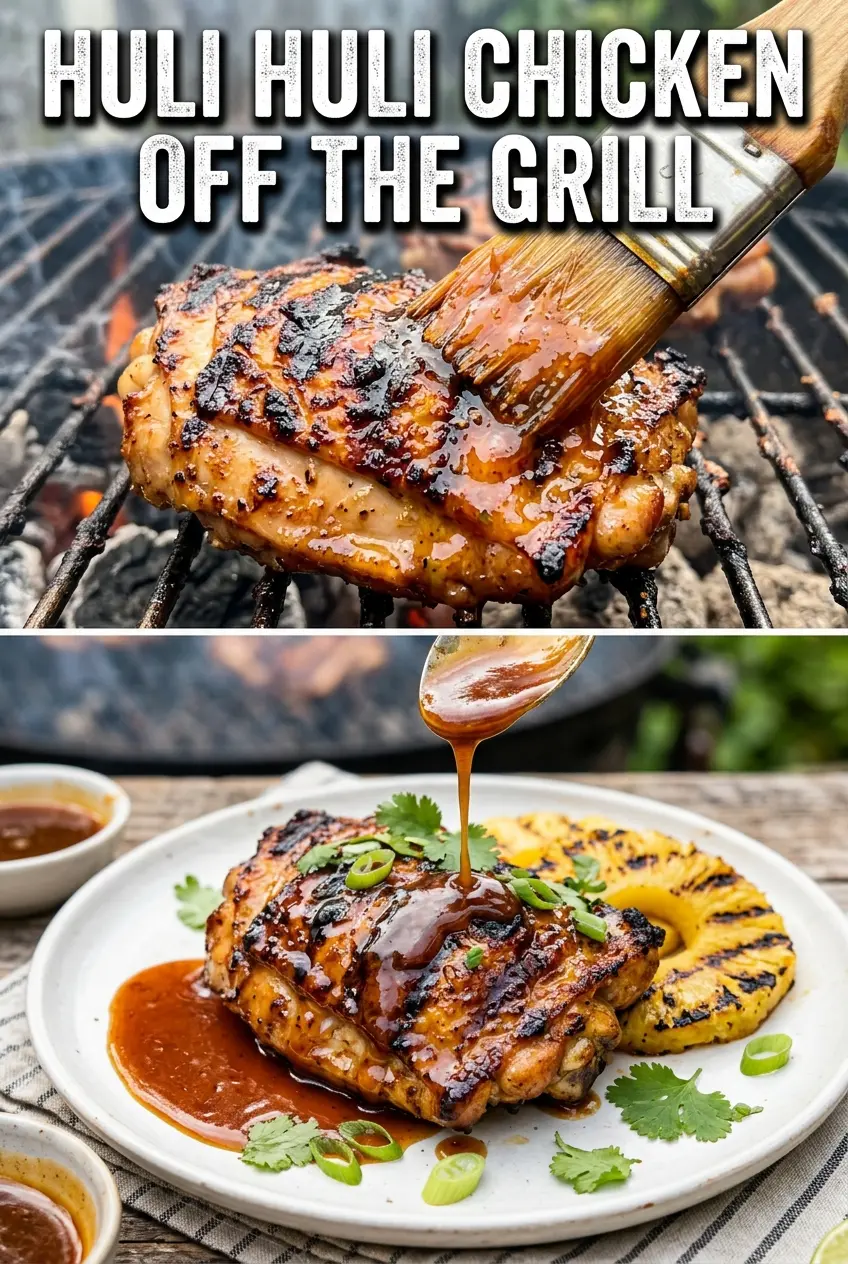
Grilled Huli Huli Chicken
Ingredients
Method
- Whisk together soy sauce, brown sugar, ketchup, pineapple juice, sherry, ginger, garlic, and sesame oil until the sugar dissolves and the mixture looks smooth and glossy.
- Reserve 1/2 cup marinade for basting so you have enough to brush on the chicken while it grills.
- Marinate chicken for 2-8 hours in the refrigerator, turning once if possible so the thighs get evenly coated.
- Preheat the grill to medium heat, then place the chicken on the grate and close the lid.
- Turn (huli) the chicken frequently and baste with the reserved marinade as it starts to char and look sticky at the edges.
- Continue grilling for 25-30 minutes total until the internal temperature reaches 165°F and the glaze is caramelized, charred, and glossy.