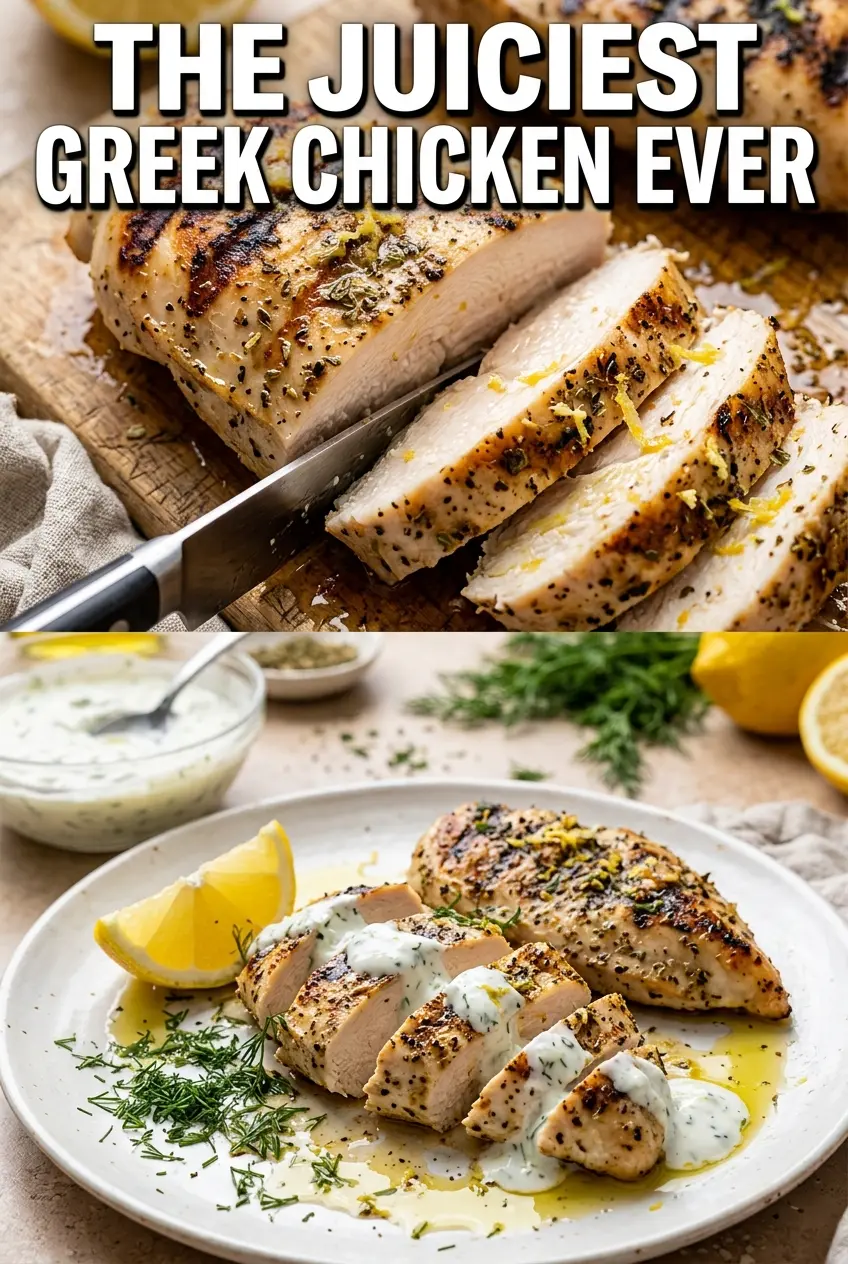
Tender, lemony Greek chicken gets its staying power from a marinade that seasons all the way through the meat instead of just coating the outside. The edges pick up a little char on the grill, the center stays juicy, and the whole thing tastes bright from the lemon and oregano without turning sharp or sour. It’s the kind of main dish that earns repeat status because it works with almost anything on the table.
The trick is balance. Olive oil carries the herbs and helps the chicken brown, while lemon juice and zest bring that classic Greek lift without needing a long ingredient list. Garlic and oregano do the heavy lifting, but the real difference comes from giving the marinade enough time to penetrate the meat. Rush that part and you’ll still get dinner; give it a few hours and you get chicken that tastes seasoned all the way through.
Below, you’ll find the small details that keep the chicken juicy on the grill, plus a few smart swaps if you need to work with what’s in the kitchen.
The chicken was juicy all the way through, and the lemon oregano marinade caramelized just enough on the grill without drying out the edges. I left it in for about 8 hours and the flavor was spot on.
Like this lemon oregano chicken? Save it to Pinterest for grilled dinners when you want juicy meat and big Greek flavor with almost no fuss.
The Marinade Time That Keeps Greek Chicken Juicy Instead of Bland
Chicken can take on a lot of flavor on the surface and still taste flat in the middle if the marinade doesn’t have enough time to work. Lemon juice brings brightness, but it also starts to change the texture of the meat if you leave it too long, which is why the sweet spot here is hours, not days. Four to eight hours gives you the best balance: seasoned through, still tender, still meaty.
The other mistake is grilling too hot. Medium-high heat should give you clear grill marks and a deep golden exterior, not blackened edges before the center catches up. If the chicken is browning too fast, move it to a cooler part of the grill and let it finish there. That little adjustment keeps the outside from drying out while the inside reaches 165°F.
- Marinade duration — Enough time matters more than piling on extra lemon. Overnight works, but past 24 hours the acid can make the texture a little soft on the surface.
- Oil — Olive oil is doing more than adding flavor. It helps carry the garlic and herbs, and it protects the chicken from sticking and drying out on the grill.
- Lemon zest — Don’t skip it. Juice gives sharpness, but zest carries the fragrant citrus aroma that makes the chicken taste distinctly Greek.
- Fresh oregano — Fresh gives the cleanest, brightest herb flavor. Dried oregano works fine; use less, because dried herbs hit harder than fresh ones.
What Each Ingredient Is Actually Doing in This Dish

- Chicken pieces — Bone-in pieces stay juicier on the grill, but boneless thighs or breasts work if you adjust the cook time. Thighs are the easiest swap because they stay moist even if the heat runs a little hot.
- Olive oil — Use a decent olive oil here, since it’s one of the main flavors you’ll taste. It softens the sharpness of the lemon and helps the seasoning cling to the chicken.
- Lemon juice and zest — Juice seasons and tenderizes, while zest gives the marinade its aroma. If you only use juice, the chicken tastes more acidic than herbal.
- Garlic, oregano, and thyme — This is the Greek backbone of the dish. Fresh oregano gives the best lift, but dried thyme adds that earthy note that keeps the marinade from tasting one-dimensional.
- Salt and pepper — Salt does the quiet work of pulling flavor into the meat. Pepper adds a little edge and keeps the marinade from tasting too soft or one-note.
Grilling the Chicken So It Stays Juicy All the Way Through
Whisking the Marinade
Start by whisking the oil, lemon juice, zest, garlic, oregano, thyme, salt, and pepper until the marinade looks slightly thickened and evenly mixed. You want the garlic and herbs suspended through the oil, not sitting in separate streaks. If the mixture looks broken, keep whisking for another few seconds; the oil and acid should come together enough to coat the chicken evenly.
Letting the Chicken Marinate
Coat the chicken thoroughly and refrigerate it for at least 4 hours. A shallow dish works, but a zip-top bag lets the marinade touch every side more evenly. If the chicken looks pale and only lightly seasoned after a short rest, that’s normal; the flavor builds during the marinating time, not in the first few minutes.
Grilling to the Right Temperature
Preheat the grill to medium-high and place the chicken on clean grates. Let it sear before moving it, since trying to lift it too early usually means sticking and torn skin or torn meat. Cook until the internal temperature hits 165°F in the thickest part, then pull it off right away so the residual heat doesn’t push it past juicy.
The Rest Before Serving
Let the chicken rest for 5 minutes before cutting in. That pause keeps the juices from running out onto the cutting board the second you slice it. If the meat looks slightly glossy and springs back when pressed, it’s ready to serve.
How to Adapt This for a Different Pan, a Different Diet, or a Bigger Crowd
Dairy-Free and Naturally Gluten-Free
This recipe already fits both of those needs without any extra work. The flavor comes from the marinade, not from a creamy sauce or breading, so you don’t lose anything by keeping it as written.
Boneless Thighs or Breasts Instead of Mixed Pieces
Boneless thighs stay the juiciest and are the easiest to cook evenly. Boneless breasts work too, but they cook faster and dry out sooner, so pull them as soon as they reach 165°F and don’t let them sit on the grill a minute longer than needed.
Oven-Baked Instead of Grilled
Bake the marinated chicken on a lined sheet pan at 425°F until it reaches temperature and the edges are lightly browned. You’ll lose the smoky grill char, but you’ll still get bright lemon-herb flavor and a tender interior.
Storage and Reheating
- Refrigerator: Store leftovers in an airtight container for up to 4 days. The flavor stays strong, though the grilled edges soften a bit.
- Freezer: Cooked chicken freezes well for up to 2 months. Slice it first so it reheats more evenly and doesn’t dry out in the middle.
- Reheating: Reheat gently in a covered skillet over low heat or in a 300°F oven until warmed through. High heat is what turns juicy grilled chicken stringy and dry.
Answers to the Questions Worth Asking
Juicy Greek Chicken
Ingredients
Equipment
Method
- Whisk olive oil, lemon juice, lemon zest, minced garlic, oregano, dried thyme, salt, and black pepper until evenly combined, about 30 to 60 seconds.
- Add chicken pieces to a container and pour marinade over them, turning to coat; marinate for 4 to 24 hours in the refrigerator.
- Preheat the grill to medium-high and place chicken on the grate, grilling until internal temperature reaches 165°F, turning once for even browning.
- Transfer chicken to a plate and rest for 5 minutes before serving to help juices redistribute.