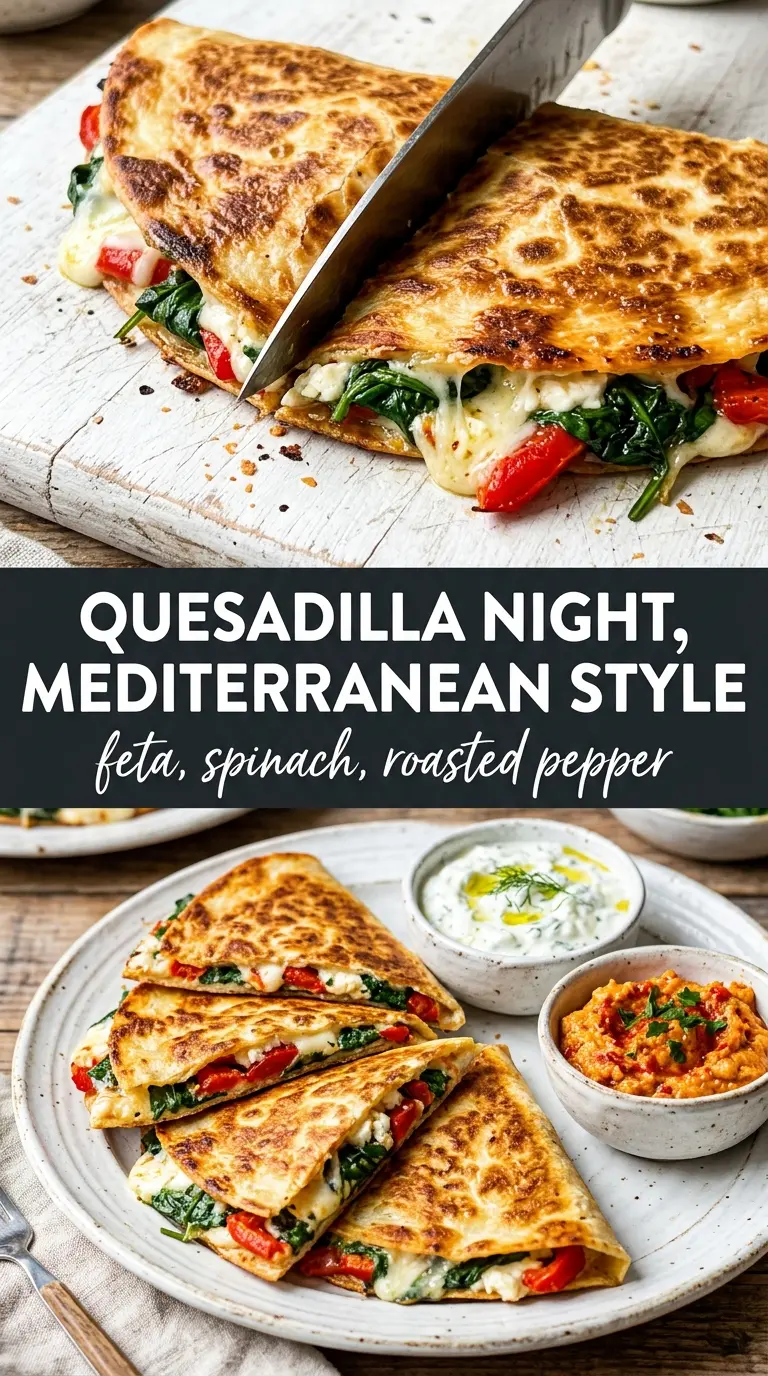
Golden, crisp tortillas with a melted feta-and-mozzarella center are exactly what make these Mediterranean quesadillas worth putting on repeat. The edges shatter a little when you bite in, then you hit the salty cheese, soft spinach, briny olives, and sweet sun-dried tomatoes all at once. It’s the kind of quick dinner that feels a lot more thoughtful than the effort it takes.
What makes this version work is the balance. Mozzarella gives you the stretch, feta brings the tang, and the spinach cooks down just enough without turning watery if you keep the filling layered over the cheese. The sun-dried tomatoes and olives add enough salt and punch that you don’t need a heavy sauce inside the tortilla, which keeps the quesadilla crisp instead of soggy.
Below, I’ll walk through the small details that matter most: how to keep the tortillas crisp, how to avoid a greasy skillet, and which swaps still hold the filling together. If you’ve had quesadillas fall apart on you before, this one is built to avoid that.
The feta melted into the mozzarella just enough to hold everything together, and the tortilla stayed crisp instead of getting greasy. My husband said the tzatziki was the perfect finish.
Love these crispy Mediterranean quesadillas with feta, spinach, and sun-dried tomatoes? Save them to Pinterest for a fast meatless dinner that still feels special.
The Trick to Keeping the Tortilla Crisp Instead of Soggy
The biggest mistake with filled quesadillas is loading all the moisture into the tortilla before the cheese has a chance to protect it. Here, the mozzarella and feta sit under the vegetables, which creates a little barrier as they melt. That keeps the spinach and tomatoes from steaming the tortilla from the inside out.
Medium heat matters more than high heat. Too much heat browns the outside before the cheese softens, and then you end up with a brittle shell and cold filling. Give each side three to four minutes and wait for that deep golden color before flipping.
What Each Ingredient Is Actually Doing in This Recipe
- Primary ingredient (the star) — Quality matters most. Choose the best you can find.
- Cooking medium (oil, butter, or broth) — This carries flavors and prevents dryness.
- Seasonings (salt, pepper, spices, herbs) — Layer flavors so nothing overpowers. Build depth gradually.
- Aromatics (garlic, onion, herbs) — Cook with fat to bloom flavors. Become the foundation.
- Supporting ingredients — Complement the main ingredient without overpowering it.
- Sauce or liquid (if applicable) — Brings flavors together. Balance richness with acid.
- Acid (lemon, vinegar, wine, or other) — Brightens and prevents flat-tasting results.
- Final finish (garnish, glaze, or sauce) — Prevents one-dimensional taste and adds visual appeal.
What the Cheese and Briny Add-Ins Are Doing Here
- Mozzarella — This is the melt that holds everything together. Use low-moisture shredded mozzarella for the best stretch; fresh mozzarella can leak too much liquid and make the tortilla soft.
- Feta — Feta gives the quesadilla its salty, tangy backbone. A block you crumble yourself usually tastes better and melts a little more evenly than pre-crumbled feta, which is often drier.
- Sun-dried tomatoes in oil — These bring concentrated sweetness and chew. Drain them well before chopping so the oil doesn’t pool in the pan.
- Kalamata olives — They add the briny, savory edge that makes the filling taste Mediterranean instead of just cheesy with greens. Slice them thin so you get flavor in every bite without big slippery pieces.
- Fresh basil and oregano — The basil brightens the filling at the end, while the oregano gives the quesadilla that familiar Greek-inspired note. Dried oregano works better here than fresh because it stands up to the heat.
How to Build and Flip Them Without Losing the Filling
Starting with the Cheese Layer
Spread the mozzarella and feta over one half of each tortilla first. The cheese helps anchor the spinach, tomatoes, olives, and onion so the filling doesn’t slide when you fold it. Leave a small border around the edge so melted cheese doesn’t glue the tortilla shut before you’re ready to flip.
Keeping the Pan at the Right Heat
Use a skillet warmed over medium heat, not a hot pan. If the tortilla starts browning in under a minute, the heat is too high and the cheese won’t melt fully before the outside burns. You want a steady sizzle, not an aggressive one.
Getting the Golden Finish
Brush the outside lightly with olive oil before it hits the pan. That thin coat is what gives you the crisp, blistered surface without making the tortilla greasy. Flip once when the first side is deeply golden and the quesadilla feels a little firmer when you press the top with a spatula.
Make It Spicier with Pepperoncini or Chili Flakes
If you want a little heat, add a few sliced pepperoncini or a pinch of red pepper flakes before folding. That gives the filling a sharper edge without changing the structure of the quesadilla. Don’t add a wet hot sauce inside; it can thin the filling and soften the tortilla.
Make It Dairy-Free
Use a good melting dairy-free mozzarella-style shred and skip the feta, then add a little extra oregano and a few more olives to replace the salt and punch. The texture won’t be as creamy, but the quesadilla will still crisp well if you keep the filling light.
Swap the Tortillas for Gluten-Free Corn Tortillas
Small corn tortillas work if you want a gluten-free version, but they’re more fragile and need to be cooked one at a time with a very light hand. They’ll taste more toasty and less chewy than flour tortillas, and they won’t fold as easily, so treat them like smaller quesadilla halves rather than full-size folds.
Turn Them Into Party Wedges
For appetizers, cook the quesadillas as written, then slice them into smaller wedges and serve with tzatziki on the side. They hold up best when cut after resting for a minute, which keeps the cheese from spilling out the moment the knife goes in.
Storage and Reheating
- Refrigerator: Store leftovers in an airtight container for up to 3 days. The tortilla softens a bit, but the filling stays flavorful.
- Freezer: Freezing isn’t ideal because the spinach and tomatoes release moisture when thawed, which makes the tortilla soggy.
- Reheating: Reheat in a dry skillet over medium-low heat until the outside crisps again and the center is hot. The microwave will make the tortilla rubbery and soften the filling too much.
Questions I Get Asked About This Recipe

Mediterranean Quesadillas
Ingredients
Equipment
Method
- Heat a large skillet over medium heat until hot, about 1-2 minutes, so it can crisp tortillas quickly.
- Spread mozzarella and feta over half of each tortilla, letting the cheese cover the surface evenly so it melts into a cohesive filling.
- Layer spinach, sun-dried tomatoes, olives, red onion, and basil over the cheese, distributing the toppings so each bite has a mix.
- Sprinkle dried oregano over the filling for an even herby finish.
- Fold each tortilla in half, pressing lightly so the edges contact and the fillings stay put.
- Brush the outside lightly with olive oil, creating a golden, crisp crust in the pan.
- Cook quesadillas one at a time in the skillet for 3-4 minutes per side at medium heat until golden and crispy and the cheese is melted.
- Slice each quesadilla into wedges so the melted feta and mozzarella pull slightly at the cut edges.
- Serve with tzatziki for dipping.