
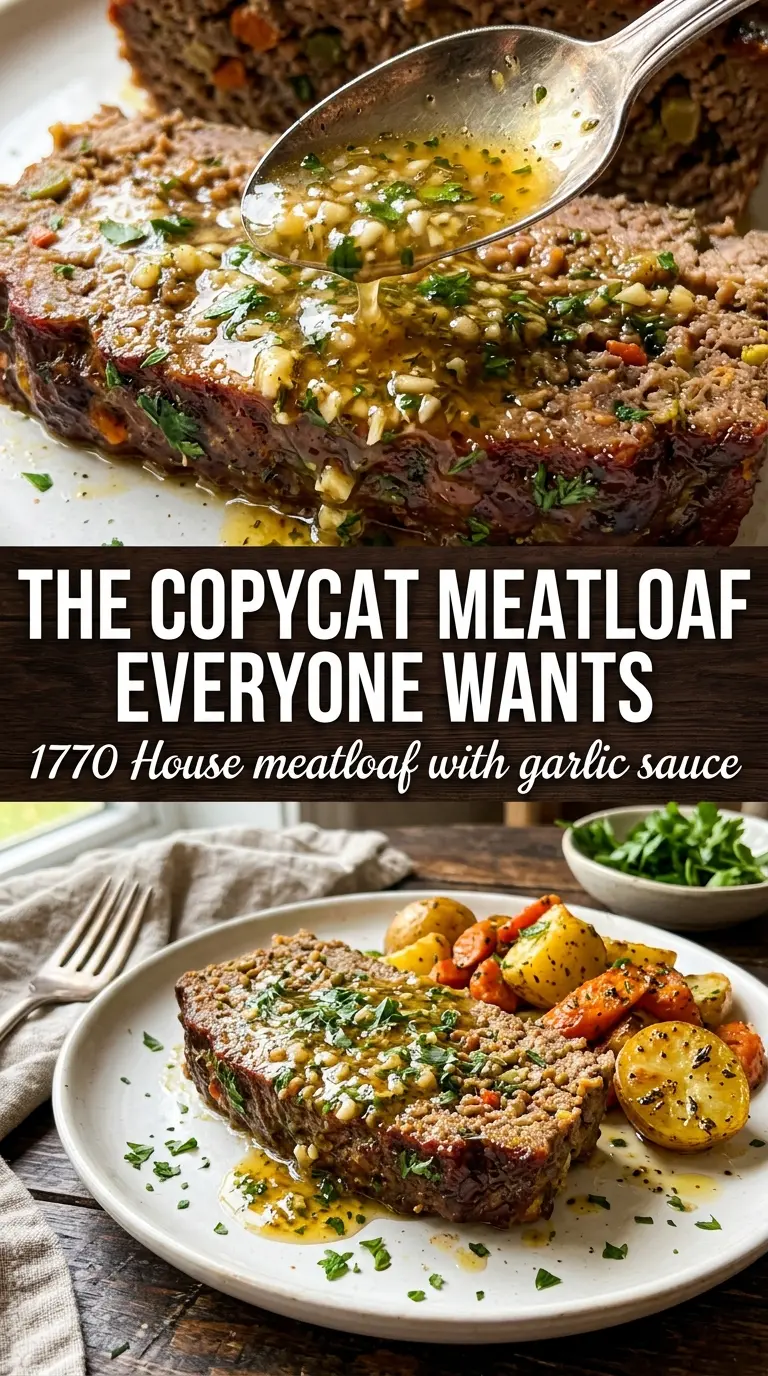
What sets this meatloaf apart is the crust. The outside turns deeply browned and savory while the inside stays tender and sliceable, not tight or dry. The garlic sauce on top brings it into restaurant territory, with roasted garlic folded into cream so every slice gets a little richness without drowning out the beef.
The trick is in the mix and the shape. Squeezed breadcrumb crumbs keep the loaf light, sautéed onion adds sweetness without crunch, and a free-form loaf on a sheet pan gives you more caramelized surface than a pan loaf ever will. The pork helps with juiciness, while the Dijon and Worcestershire give the meat a deeper, more seasoned taste than salt alone can manage.
Below, I’m walking through the part that matters most: how to keep the loaf tender, how to roast the garlic so the sauce stays smooth, and what to do if you want to make this ahead without losing that fresh-from-the-oven texture.
The loaf held together beautifully and sliced clean after resting. The roasted garlic sauce was the best part — smooth, not heavy, and it made the meatloaf taste like something from a good bistro.
Save this 1770 House Meatloaf with Garlic Sauce for the nights when you want a caramelized loaf and silky roasted garlic cream sauce in one pan dinner.
The Reason This Meatloaf Slices Clean Instead of Crumbling
A meatloaf falls apart for two reasons: it’s too lean, or it gets overmixed. This version avoids both. The 80/20 beef and pork give you enough fat to stay juicy, while the soaked breadcrumbs act like a soft binder instead of turning the loaf into a dense brick.
The other detail that matters is the free-form shape. Baking it on a parchment-lined sheet pan exposes more of the surface to dry oven heat, which means a better crust and less steaming than a loaf pan would give you. That crust helps the slices hold together once you cut in.
- Don’t skip the milk-soaked breadcrumbs. They’re what keeps the meatloaf tender. Dry breadcrumbs won’t hydrate evenly, and the loaf can turn tight.
- Sauté the onion first. Raw onion leaves you with little sharp bits in the finished loaf. Cooking it first softens the texture and sweetens the flavor.
- Mix only until combined. Once the meat starts to look uniform, stop. Overworking it makes the proteins tighten up and gives you a dense slice.
- Rest before cutting. Those 10 minutes let the juices settle so they stay in the loaf instead of running all over the board.
What the Beef, Pork, and Roasted Garlic Are Each Doing Here
- Ground beef (80/20) — This is the backbone of the loaf. The fat content matters because lean beef dries out fast at this bake time, and there’s no sauce inside the loaf to rescue it.
- Ground pork — Pork brings softness and a little natural sweetness. If you don’t have it, you can use all beef, but the loaf will be a touch firmer and less rich.
- Breadcrumbs and milk — This soaked mixture is what keeps the texture plush. If you only have plain breadcrumbs, give them the full five minutes in milk and squeeze out any excess before mixing so the loaf doesn’t turn soggy.
- Roasted garlic — Fresh garlic in the loaf gives a sharp edge, but roasted garlic in the sauce turns mellow, almost sweet, and blends into the cream without bitterness. That contrast is what makes the sauce taste special.
- Dijon and Worcestershire — These are small amounts, but they add depth the way salt alone can’t. Dijon brightens the beef, and Worcestershire brings that savory, steakhouse note that makes people ask what’s in it.
Getting the Loaf and Sauce to Finish at the Same Time
Softening the Breadcrumb Base
Start by soaking the breadcrumbs in milk for the full five minutes. They should look swollen and pasty, not soupy. If there’s a lot of liquid left after soaking, squeeze it out lightly so the mixture doesn’t turn loose. This step is what keeps the final loaf tender instead of dry and compact.
Mixing Without Packing It Down
Add the beef, pork, onion, garlic, eggs, seasoning, and soaked crumbs to a bowl and mix just until you no longer see streaks of egg or pockets of breadcrumbs. A light hand matters here. If you knead it like dough, the loaf bakes up rubbery and heavy. The mixture should hold together when you shape it, but it shouldn’t feel pasty.
Baking for a Deep Brown Crust
Shape the loaf into a free-form oval on parchment and bake at 325°F until the center reaches 160°F, usually 60 to 70 minutes. You’re looking for a dark, caramelized exterior that feels set when you tap it, not a pale steamed surface. If the top is browning too quickly before the center is done, tent it loosely with foil for the last stretch of baking.
Roasting and Blending the Garlic Sauce
Once the garlic is roasted, squeeze the cloves into a saucepan with broth and cream and simmer for about 5 minutes. The garlic should melt into the liquid and smell sweet, not sharp. Stir in the butter off the heat, then blend until smooth. If the sauce looks broken or grainy, the heat was too high after the cream went in, so pull it off the burner and blend gently until it comes back together.
How to Adapt This Meatloaf When You Need a Different Result
Make It Dairy-Free
Swap the milk in the breadcrumb soak for unsweetened oat milk or plain almond milk, and replace the butter in the sauce with a dairy-free butter alternative. The loaf texture stays close to the original, though the sauce will be a little less plush than the cream version.
Go All Beef for a Firmer Slice
Use 2 1/2 pounds of 80/20 ground beef in place of the beef and pork. The result is a little meatier and less soft, which some people like for sandwiches the next day. Keep the breadcrumb soak in place so the loaf doesn’t dry out.
Skip the Cream Sauce and Serve It Simply
If you want a lighter plate, spoon the roasted garlic and broth together after blending and stop before adding cream. You’ll get a thinner, savory garlic gravy with more roasted garlic bite and less richness.
Storage and Reheating
- Refrigerator: Store sliced meatloaf in an airtight container for up to 4 days. The texture stays moist, and the flavor deepens a little by day two.
- Freezer: Freeze the baked loaf in slices or as a whole wrapped tightly in foil and placed in a freezer bag for up to 3 months. Freeze the sauce separately, since cream sauces can loosen when thawed.
- Reheating: Reheat covered in a 300°F oven with a splash of broth or water until warmed through. Don’t blast it in the microwave on high or the edges will turn dry before the center is hot.