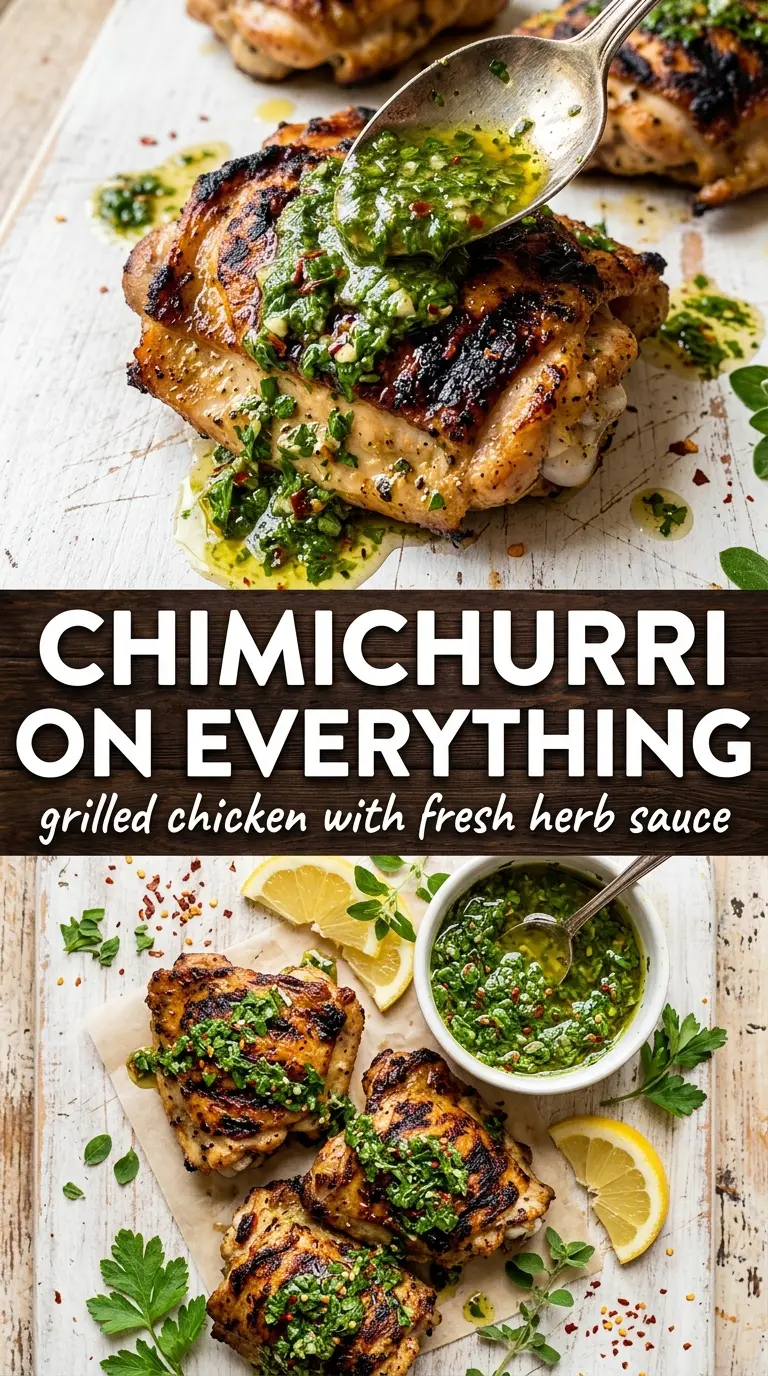
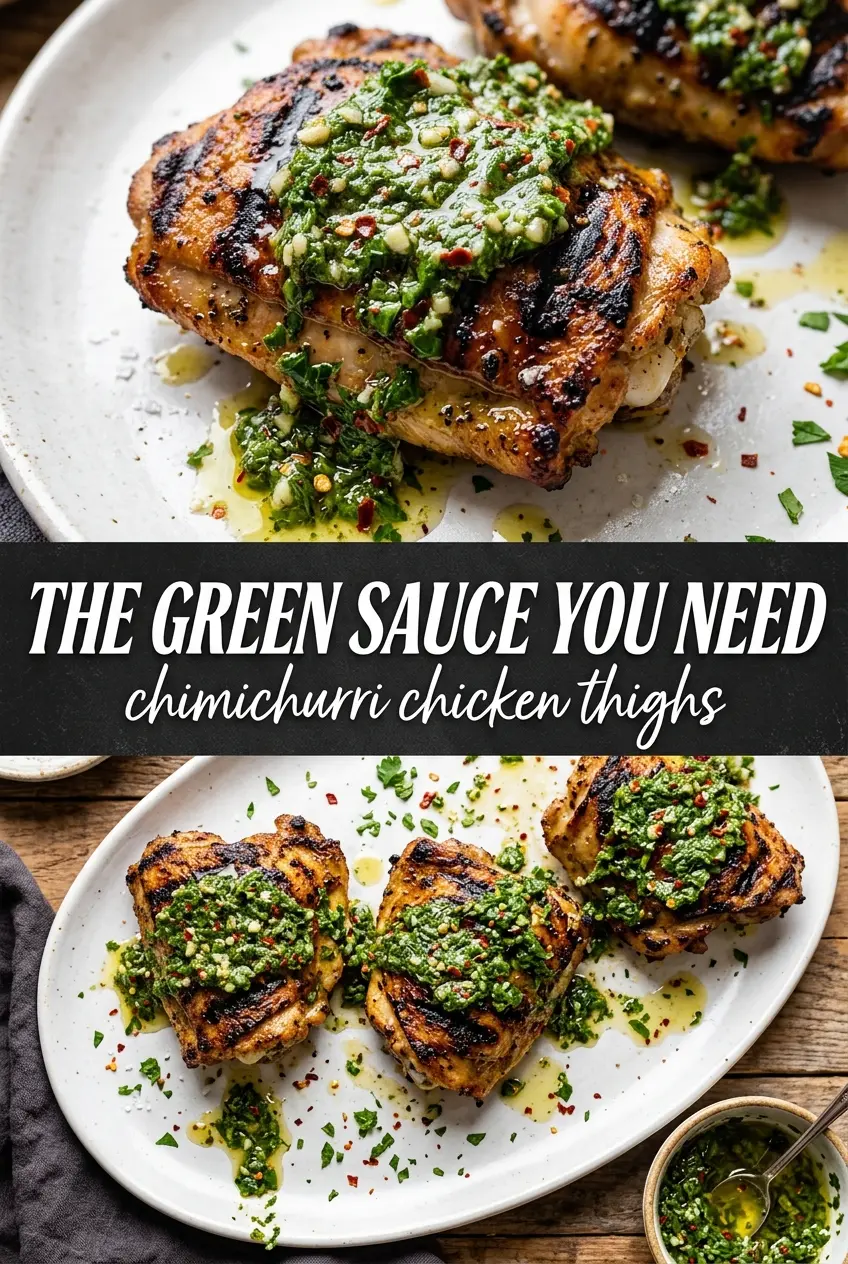
Golden, charred chicken thighs and a bright herb sauce are a combination that earns repeat requests fast. The skin turns crisp where it hits the grill, while the chimichurri slides into every crack and caramelized edge, giving each bite a sharp, garlicky lift that keeps the chicken from ever tasting heavy.
What makes this version work is the split use of the sauce. Half goes onto the chicken before grilling, where the oil and herbs help season the meat and encourage color; the rest stays clean for serving, so you still get that fresh, punchy finish at the table. Bone-in, skin-on thighs matter here because they stay juicy over direct heat and give you enough fat to build real flavor on the grill.
Below, I’ve included the cue that matters most when grilling these thighs, plus a few swaps that make the recipe easier to adapt without losing the crisp skin and vibrant sauce.
The chimichurri stayed bright after grilling, and the skin turned crisp without burning. I used the reserved sauce at the end like you said, and the chicken had way more flavor than my usual grilled thighs.
Keep this chimichurri chicken thighs recipe handy for crisp-skinned grilled chicken with a fresh herb sauce that stays bold, not muddy.
The Marinade Trick That Keeps Chimichurri Bright After Grilling
Chimichurri can go flat fast if you treat it like a sauce that needs to cook. The fix is to divide it before it ever touches the chicken. Half works as a marinade, where the oil and garlic can season the meat and help the skin pick up color; the other half stays raw and fresh for finishing, which is where the herb flavor really lives.
The other thing that matters is heat management. Chicken thighs need enough time over medium-high heat to render the skin and crisp it, but not so much that the herbs on the surface scorch into bitterness. If the grill runs too hot, move the thighs to a cooler spot after the first sear and let them finish more gently.
- Bone-in, skin-on chicken thighs — These give you the juiciest result and the best chance at crisp skin. Boneless thighs will cook faster, but they won’t give you the same rendered, crackly finish.
- Fresh flat-leaf parsley — This is the backbone of the sauce. Curly parsley works in a pinch, but flat-leaf has a cleaner, greener flavor and blends more smoothly.
- Cilantro — It adds a soft, citrusy edge that rounds out the parsley. If you don’t like cilantro, replace it with more parsley, but the sauce will taste a little less layered.
- Red wine vinegar — This keeps the chimichurri sharp enough to cut through the chicken skin. Lemon juice can stand in, but it reads brighter and less earthy than vinegar.
- Smoked paprika — This isn’t just seasoning; it helps echo the grill flavor even before the chicken hits the grates. Use sweet paprika if that’s what you have, but you lose some depth.
What Each Ingredient Is Actually Doing in This Chicken Dish
- Chicken (pat dry for browning) — Room temperature cooks more evenly. Even pieces ensure uniform doneness.
- Oil or butter (the browning medium) — High-heat oil essential for proper searing. Creates pan flavor.
- Seasonings (salt, pepper, spices) — Apply generously. Chicken carries the entire flavor profile.
- Aromatics (garlic, ginger, herbs) — Cook with fat to bloom flavors. Become the foundation.
- Sauce or braising liquid (if using) — This keeps chicken moist. Balance richness with acid.
- Vegetables (if using) — Layer by cooking time so everything finishes together.
- Acid (vinegar, wine, lime, or pineapple) — This brightens and prevents one-dimensional flavor.
- Proper doneness (165°F internal temperature) — Use thermometer for accuracy. Overcooked is dry.
How to Get the Skin Crispy Without Burning the Herbs
Build the Chimichurri First
Blend the parsley, cilantro, garlic, olive oil, vinegar, oregano, and red pepper flakes until the sauce is mostly smooth but still has a little texture. You want it spoonable, not pureed into a paste, because a little body helps it cling to the chicken. Season it after blending, since the herbs and vinegar sharpen up once they sit. Split it right away so the serving portion stays fresh and vivid.
Season and Marinate the Thighs
Pat the chicken dry before seasoning it. Wet skin steams, and steamed skin never turns crisp. Coat the thighs with salt, pepper, garlic powder, smoked paprika, and just enough of the chimichurri to lightly coat the surface, then let them sit for 30 minutes. If you leave them drowning in sauce, the herbs on the skin can darken before the chicken finishes cooking.
Grill Hard, Then Finish Steady
Preheat the grill to medium-high and oil the grates well. Start the thighs skin-side down and leave them alone until the skin releases easily and turns deep golden with some char at the edges, about 7 to 8 minutes. Flip and cook the second side until the thickest part reaches 165°F, usually 12 to 15 minutes more. If flare-ups start licking the skin, move the chicken to a cooler spot instead of chasing it around the grill.
Rest and Sauce at the End
Let the chicken rest for 5 minutes before serving. That short rest keeps the juices inside the meat instead of running onto the cutting board. Spoon the reserved chimichurri over the top just before serving so it stays bright and herbaceous. The sauce should pool around the thighs and soak into the crisp skin without dulling it.
How to Adapt These Chimichurri Chicken Thighs for Your Table
Dairy-Free and Naturally Gluten-Free
This recipe is already built to work without dairy or gluten, which is part of why it’s such a useful weeknight main. Just keep an eye on store-bought spice blends if you swap them in, since some include fillers or anti-caking agents you don’t need here.
Use Boneless Thighs If You Want Faster Cooking
Boneless, skinless thighs will grill in less time and still taste great with the chimichurri. You’ll lose the crispy skin and some of the built-in richness, so watch them closely and pull them as soon as they hit 165°F.
Swap the Grill for a Cast-Iron Pan
A hot cast-iron skillet gives you a deep, even crust when grilling isn’t an option. Start skin-side down and let the fat render slowly; if the pan is too hot at the start, the skin will burn before the fat has time to crisp it.
Storage and Reheating
- Refrigerator: Store leftovers in an airtight container for up to 4 days. The skin softens a little, but the flavor stays strong.
- Freezer: The chicken freezes well for up to 2 months, though the chimichurri loses some of its fresh color. Freeze the chicken and sauce separately if you can.
- Reheating: Reheat the chicken in a 350°F oven until warmed through. Skip the microwave if you want to keep the skin from turning rubbery, and add fresh chimichurri only after reheating.
Questions I Get Asked About This Recipe
Chimichurri Chicken Thighs
Ingredients
Equipment
Method
- Blend fresh flat-leaf parsley, fresh cilantro, garlic, olive oil, and red wine vinegar in a food processor until mostly smooth but still textured, about 20-30 seconds.
- Add dried oregano and red pepper flakes, then blend briefly to combine.
- Season the chimichurri with salt and pepper to taste, then divide it in half.
- Season bone-in skin-on chicken thighs with salt, pepper, garlic powder, and smoked paprika to taste.
- Brush the chicken thighs with half the chimichurri, then marinate for 30 minutes.
- Preheat the grill to medium-high and oil the grates to prevent sticking.
- Grill chicken skin-side down for 7-8 minutes until the skin is crispy and golden with visible char marks.
- Flip the chicken and grill for another 12-15 minutes until the internal temperature reaches 165°F.
- Rest the chicken for 5 minutes to let juices settle.
- Plate the chicken and drizzle the reserved chimichurri generously over the top so it pools and seeps into the charred skin.
- Serve with extra chimichurri on the side.