Ripe peaches turn this fruit salad into something that tastes pulled from the best part of the produce stand: juicy, fragrant, and bright enough to wake up everything else in the bowl. The honey-lime dressing doesn’t drown the fruit. It just glosses it, nudges the sweetness, and gives the berries and watermelon a clean, fresh finish that keeps every bite tasting like itself.
The trick here is keeping the dressing light and adding it only after the fruit is cut and ready. Peaches can get soft fast, and berries bruise if you toss too hard, so the goal is a gentle coating, not a mash. A short chill helps the juices settle together without turning the salad watery, which is what separates a crisp, glossy bowl from a soggy one.
Below, I’ve included the little details that matter most: how to choose peaches that hold their shape, what the lime zest is doing in the dressing, and how to make a few smart swaps without losing the balance of the salad.
The honey-lime dressing coated everything without making it watery, and the peaches stayed juicy instead of turning mushy after the chill time.
Save this peach fruit salad for when you want a glossy honey-lime bowl that stays fresh, bright, and full of texture.
The Reason Peach Salads Turn Mushy Before Dessert Ever Happens
Fruit salad fails for one simple reason: the fruit is either too soft, or it sits in dressing too long before serving. Peaches bring a lot of perfume and juice, but they also bruise easily once sliced. That means this salad works best when the fruit is ripe enough to taste sweet on its own, but still firm enough to hold a clean edge in the bowl.
The other thing that matters is restraint with the dressing. Honey, lime juice, and zest should coat the fruit, not pool under it. If you toss aggressively, raspberries break down first and the whole bowl starts looking tired. A short chill gives the fruit time to mingle without draining all of the life out of it.
What Each Ingredient Is Actually Doing In This Bowl
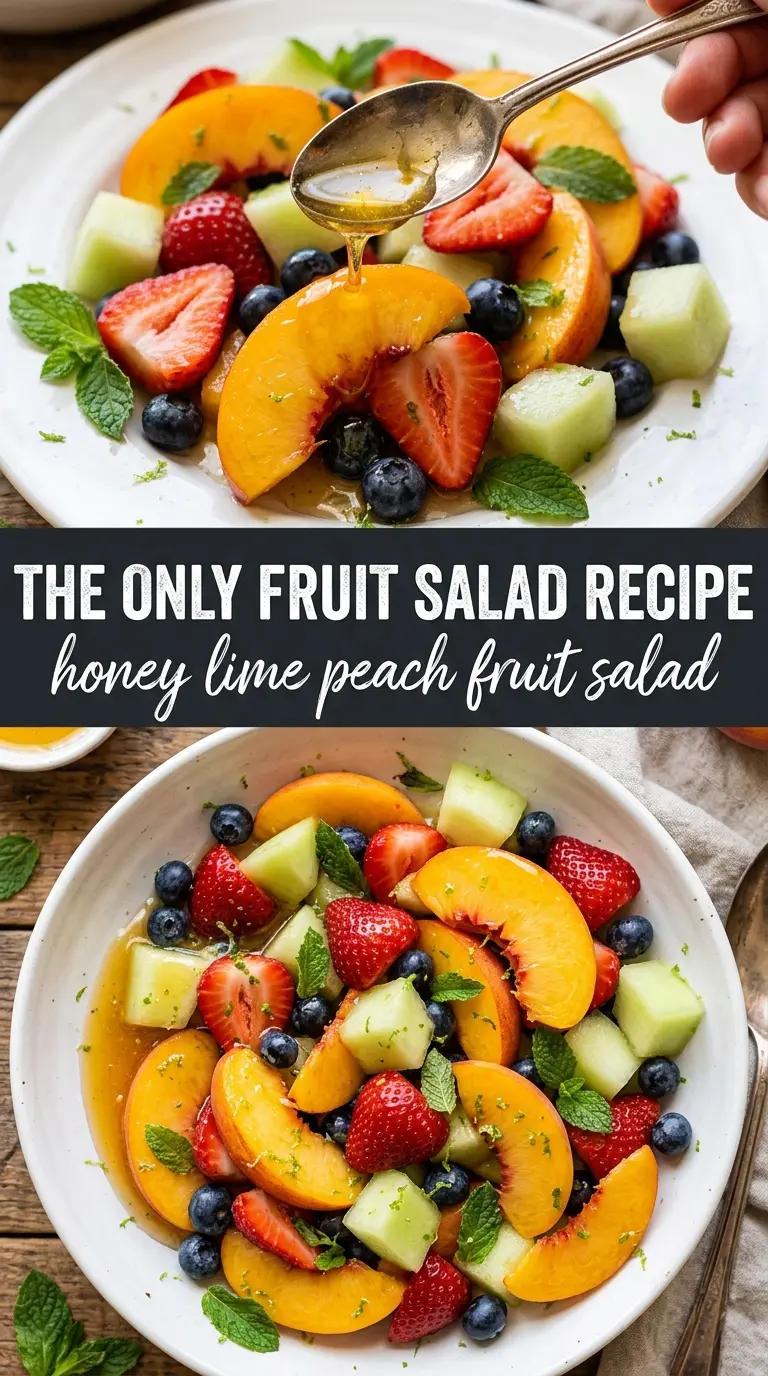
- Peaches — Use ripe but still slightly firm peaches. They should smell fragrant and give just a little at the stem end. Overripe peaches collapse once you add the dressing, and underripe ones taste flat no matter how good the glaze is.
- Blueberries, raspberries, and strawberries — This mix gives you different textures and keeps the salad from tasting one-note. Blueberries hold their shape, strawberries bring sweetness and body, and raspberries soften the bowl with tart juice. If raspberries are very delicate, add them last and fold them in once or twice only.
- Watermelon — Watermelon adds cool, juicy contrast and makes the salad feel lighter. Cut it into bite-size cubes so it matches the peaches and doesn’t turn the bowl sloppy. If your melon is extra watery, pat the cut pieces lightly with paper towels before mixing.
- Honey — Honey gives the dressing body, not just sweetness. It helps the lime cling to the fruit instead of running straight to the bottom. If your peaches are peak-ripe, you may need less honey than the ingredient list suggests.
- Lime juice and zest — The juice sharpens the sweetness, and the zest brings the citrus aroma that makes the whole salad smell fresh the second you toss it. Fresh lime matters here; bottled juice tastes dull and can flatten the fruit. Zest the lime before juicing it so you don’t fight the fruit later.
- Vanilla — Just a little softens the sharpness of the lime and makes the peaches taste rounder. It should not read as vanilla flavor in the finished bowl. Think of it as the quiet background note that ties the dressing together.
- Mint — Add it at the end so it stays bright and doesn’t wilt into the salad. Tear larger leaves by hand if they’re big; that releases the aroma without bruising the herbs into dark flecks.
How To Toss Fruit Salad Without Crushing The Good Parts
Build the Bowl in the Right Order
Start with the peaches, blueberries, strawberries, and watermelon in a large bowl so you’ve got room to move without smashing anything. If you add the dressing before the fruit is combined, the softer berries get overwhelmed and break apart. A wide bowl gives you the gentlest toss and keeps the fruit looking clean when it hits the table.
Whisk the Honey-Lime Dressing Until It Turns Glossy
Whisk the honey, lime juice, lime zest, and vanilla until the honey disappears and the mixture looks smooth, not streaky. If the honey clings to the bottom of the bowl, it hasn’t fully loosened yet, and you’ll end up with pockets of sweetness instead of an even coating. A quick minute of whisking is enough; you’re looking for a loose, pourable dressing.
Fold, Don’t Stir Hard
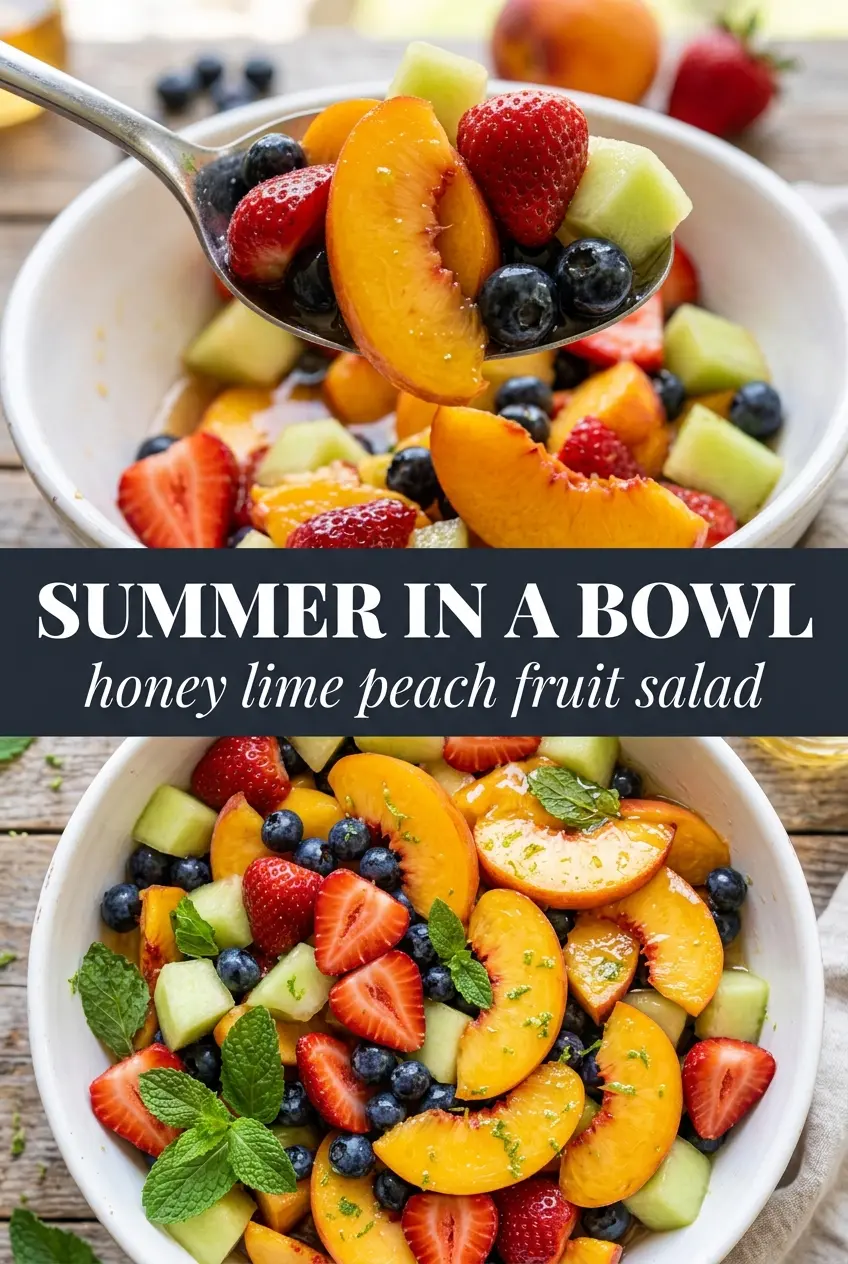
Drizzle the dressing over the fruit and lift from the bottom with a big spoon or spatula. Hard stirring breaks raspberries first, then strawberries, then the salad starts to look watery before it ever chills. Stop as soon as every piece has a light sheen. You want the fruit dressed, not drowned.
Chill Briefly, Then Finish With Mint
Let the salad rest in the refrigerator for about 20 minutes so the flavors settle and the dressing lightly perfumes the fruit. Any longer than that, and the cut fruit starts releasing too much juice, especially if your peaches were very ripe. Add the mint right before serving so it stays bright and aromatic instead of fading into the bowl.
How To Adjust This Peach Fruit Salad Without Losing Its Balance
Make It Dairy-Free and Naturally Gluten-Free
This recipe already fits both of those needs as written. That’s part of why it works so well for cookouts and potlucks — the dressing stays bright and simple, and there’s nothing heavy enough to compete with the fruit. Just keep an eye on any add-ins or toppings if you serve it alongside a larger spread.
Swap the Honey for Maple Syrup
Maple syrup works if you want a deeper, less floral sweetness. Use the same amount, but expect the dressing to taste a little rounder and less bright. If you go this route, the vanilla becomes more noticeable, which is a nice match with peaches.
Turn It Into a Bigger Crowd Salad
For a party, double everything and keep the fruit and dressing separate until about 20 to 30 minutes before serving. That keeps the peaches from softening too early and gives you a fresher-looking bowl. If you want a stronger aroma, add a few extra torn mint leaves right at the end instead of increasing the lime.
Use Stone Fruit Instead of Watermelon
Nectarines, plums, or apricots can stand in for the watermelon if you want a denser fruit salad with more stone-fruit character. Keep the pieces roughly the same size as the peaches so the bowl eats evenly. The result is less juicy and more plush, which works nicely if you’re serving this next to grilled food.
Storage and Reheating
- Refrigerator: Store leftovers in an airtight container for up to 2 days. The fruit will soften and release more juice, but it still tastes good chilled.
- Freezer: Don’t freeze this salad. The fruit turns mushy and watery once thawed, and the peaches lose the texture that makes this recipe work.
- Reheating: No reheating needed. Serve it straight from the fridge, and if there’s a lot of liquid at the bottom, give it one gentle toss before spooning it into bowls.
Answers to the Questions Worth Asking
Peach Fruit Salad
Ingredients
Method
- Slice the peaches and place them in a large serving bowl with the blueberries, raspberries, strawberries, and cubed watermelon.
- Gently toss the fruit just until the peach slices and berries are evenly distributed through the bowl.
- Whisk together honey, fresh lime juice, lime zest, and vanilla extract until smooth.
- Drizzle the honey-lime dressing over the fruit and gently toss until every piece is lightly coated, with a glossy sheen.
- Taste and add more honey or lime juice as desired for a sweeter or more citrus-forward balance.
- Refrigerate the salad for 20 minutes so the flavors meld and the fruit chills through.
- Garnish with fresh mint leaves just before serving for bright, fresh color and aroma.