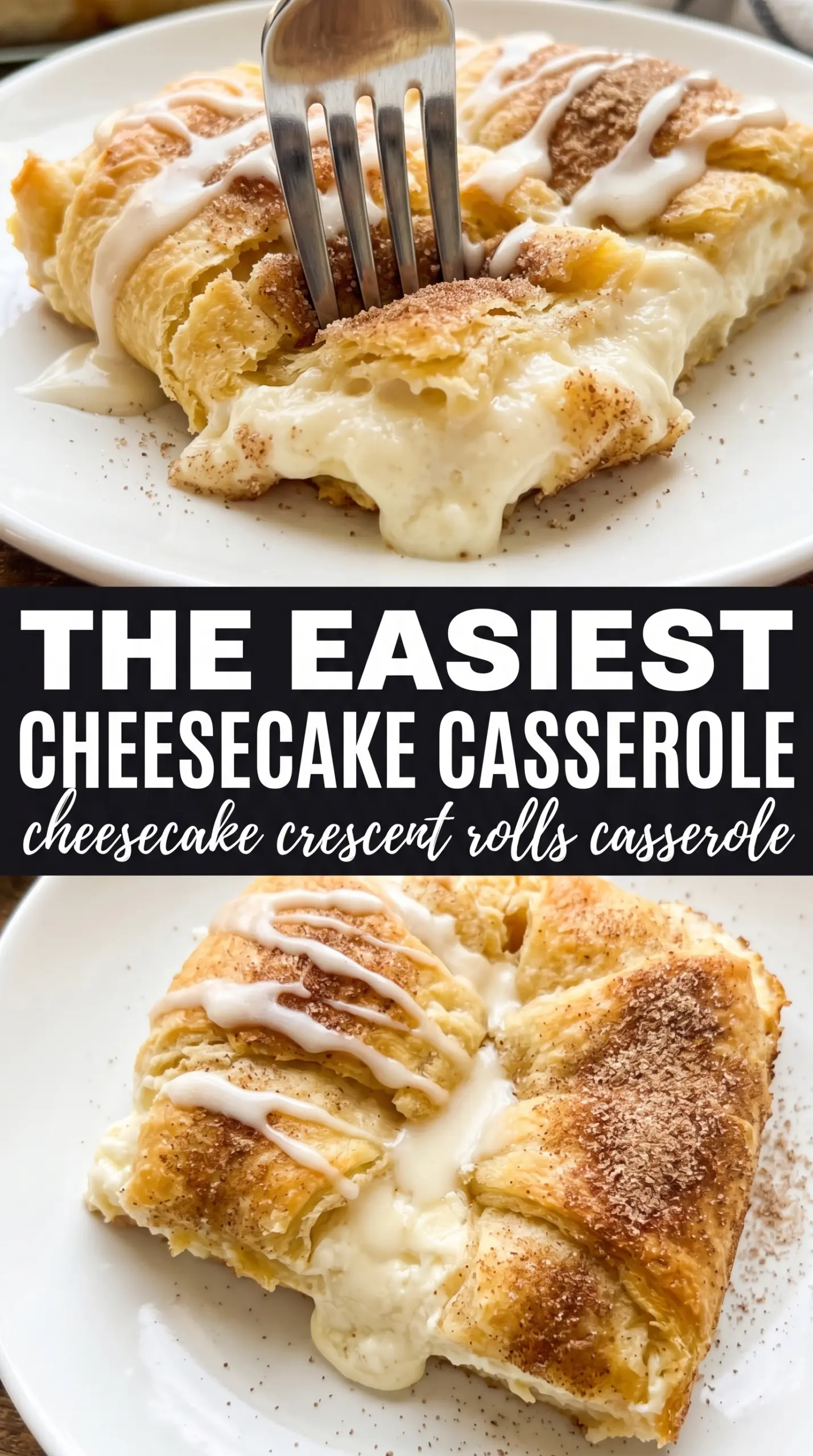
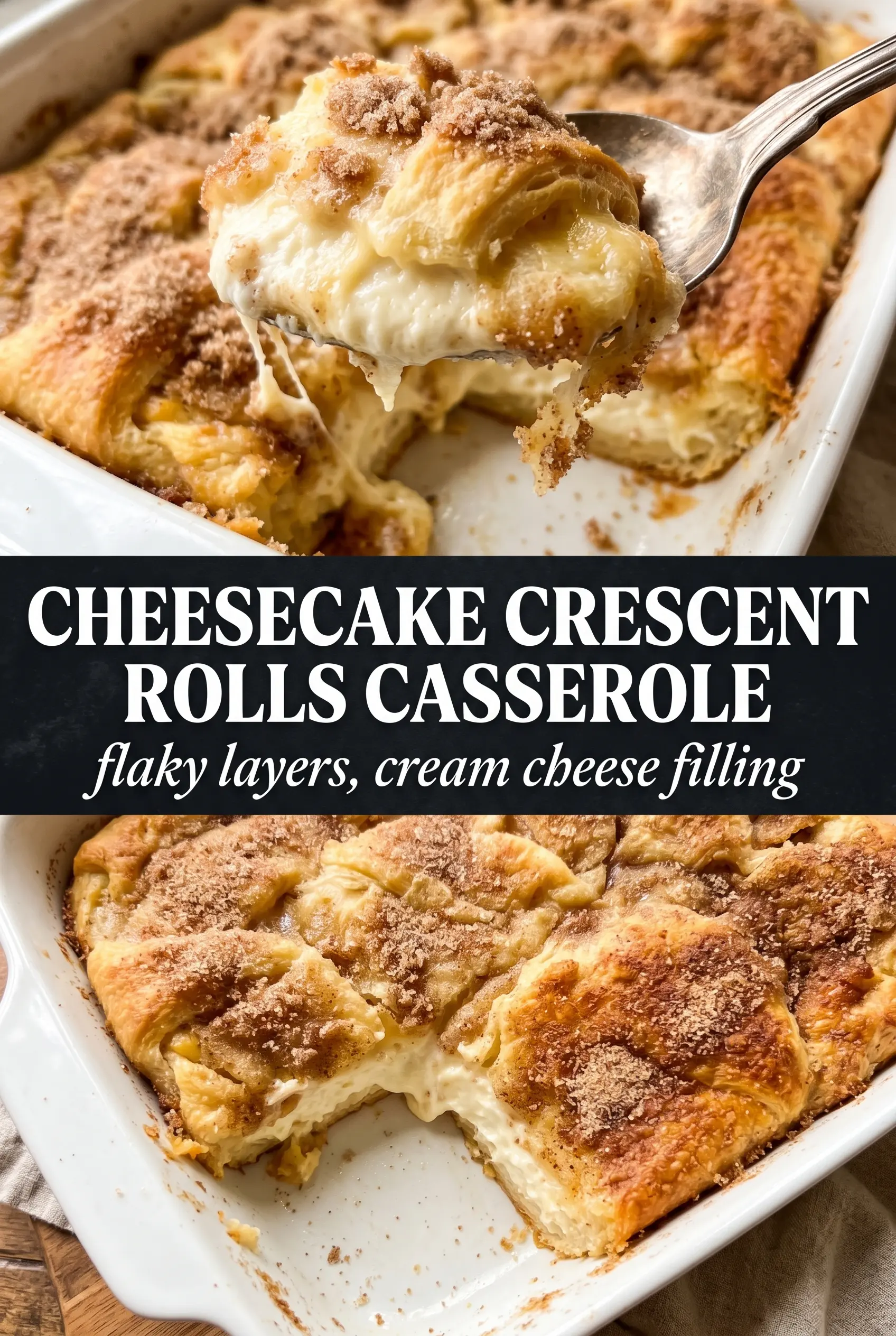
Golden, flaky crescent dough wrapped around a thick layer of sweet cream cheese is the kind of breakfast casserole that disappears fast. The top bakes into a caramelized cinnamon-sugar crust, while the center stays soft and creamy, so every square gives you crisp edges, tender pastry, and a cheesecake-like filling in one bite.
The trick here is using crescent dough for both the bottom and the top, then sealing the seams well so the filling stays put. Softened cream cheese matters, too. If it’s even a little lumpy when you mix it, those lumps will still be there after baking, and the filling won’t slice cleanly. The butter goes over the top before the cinnamon sugar, which helps the crust turn deeply golden and gives the topping that faintly sticky, bakery-style finish.
Below, I’ve included the one detail that keeps the filling from sliding apart, plus a few smart swaps for making this casserole your own. If you’ve ever wanted a shortcut version of cheesecake bars that works for breakfast, brunch, or dessert, this one earns its place.
The cream cheese layer baked up smooth and set perfectly, and the cinnamon sugar top turned crisp instead of soggy. I cut it after 15 minutes and it held together in neat squares.
Like this cheesecake crescent rolls casserole? Save it for the mornings when you want a flaky cinnamon-sugar top and a smooth cream cheese layer without the work of a full cheesecake.
The Seam You Can’t Leave Loose
Crescent dough looks forgiving, but the seams are what decide whether this bakes up like a neat casserole or leaks filling into the pan. Press the perforations together firmly on both layers, especially around the edges where the cream cheese has the easiest path out. If the bottom layer has gaps, the filling can thin out underneath and the slices will slump when you cut them.
The other place people run into trouble is overbaking. You want the top deeply golden and the center set, not puffed and dry. A little jiggle in the middle is fine when it comes out of the oven; it firms up as it cools, and that short rest is what gives you clean squares instead of a gooey middle that runs everywhere.
What the Cream Cheese and Butter Are Each Doing Here
- Crescent roll dough — This is the shortcut that gives you the tender, layered pastry base and top. Store-bought dough is exactly what belongs here; homemade dough would bake up too bready for the quick, casserole-style texture.
- Cream cheese — Use the full-fat block style, softened all the way through. Tub cream cheese is softer and can bake up looser, which makes the center less clean and less sliceable.
- Granulated sugar — Some goes into the filling for a cheesecake-like sweetness, and the rest goes on top with cinnamon to build that crackly crust. Brown sugar can work on top, but it makes the finish a little stickier and darker.
- Butter — This is what helps the cinnamon sugar melt into the top instead of sitting in dry patches. Melt it fully and pour it evenly so every bite gets that caramelized finish.
- Vanilla extract — It rounds out the cream cheese and keeps the filling from tasting flat. Use real vanilla if you have it; this is one of those places where the flavor shows up clearly.
Building the Layers Without Squeezing Out the Filling
Pressing in the Bottom Crust
Unroll the first can of dough and press it into the pan without stretching it thin. Stretching makes the dough spring back and pull away from the corners later, which gives the filling a place to slide. Pinch every seam together so the bottom acts like one sheet. A lightly greased 9×13 dish helps the pastry release cleanly after baking.
Mixing the Filling Until It’s Smooth
Beat the cream cheese, sugar, and vanilla until the mixture turns glossy and completely smooth. If the cream cheese is still cold, you’ll see little soft lumps that never fully disappear. Spread the filling all the way to the edges in an even layer, but don’t mound it in the center or the top crust will buckle.
Finishing With Butter and Cinnamon Sugar
Lay the second dough layer over the filling and press the seams together again. Pour the melted butter evenly over the top, then shower on the cinnamon sugar so it covers the surface in a thin, even coat. If you dump the sugar in one spot, you’ll get a burnt patch there and pale dough elsewhere. Bake until the top is deep golden and the filling doesn’t look loose in the middle.
Three Ways to Change the Pan Without Losing the Good Part
Strawberry cheesecake version
Spread a thin layer of strawberry jam over the bottom dough before adding the cream cheese filling. It adds fruit and tang without making the casserole wet, but use a light hand or the layers can slip.
Gluten-free option
This recipe only works with a gluten-free crescent-style dough that bakes and layers similarly, so choose one that rolls out instead of a batter-style substitute. The filling itself is naturally gluten-free, but the texture of the crust depends on the dough behaving like pastry.
Less-sweet brunch version
Cut the sugar in the filling by 2 tablespoons and use a lighter hand on the topping. You’ll get a more breakfast-forward casserole with a little less candy-like finish, which works well beside fresh fruit or savory dishes.
Storage and Reheating
- Refrigerator: Store covered for up to 4 days. The top softens a bit, but the filling stays creamy.
- Freezer: Freeze squares individually wrapped for up to 2 months. Thaw in the refrigerator so the pastry doesn’t turn soggy.
- Reheating: Warm in a 300°F oven for about 10 minutes or until just heated through. The microwave will make the pastry soft, so use it only if you don’t mind losing the crisp top.
Answers to the Questions Worth Asking
Cheesecake Crescent Rolls Casserole
Ingredients
Equipment
Method
- Preheat the oven to 350°F and grease a 9x13 baking dish so the crescent layers bake evenly.
- Unroll one can of crescent roll dough and press it into the bottom of the prepared dish, pressing seams together to seal and prevent gaps.
- Beat cream cheese, 1 cup sugar, and vanilla until completely smooth, then spread evenly over the dough layer so the edges bake creamy.
- Unroll the second can of crescent roll dough and lay it over the cream cheese filling, pressing seams together to seal for a cohesive casserole.
- Pour melted butter evenly over the top so it soaks into the pastry surfaces as it heats.
- Mix 1/2 cup sugar and cinnamon together and sprinkle generously over the butter for a caramelizing crust.
- Bake for 28-32 minutes at 350°F until the top is deep golden and the filling is set; you should see cream cheese set around the edges.
- Cool for 15 minutes before cutting into squares so the filling firms up cleanly.