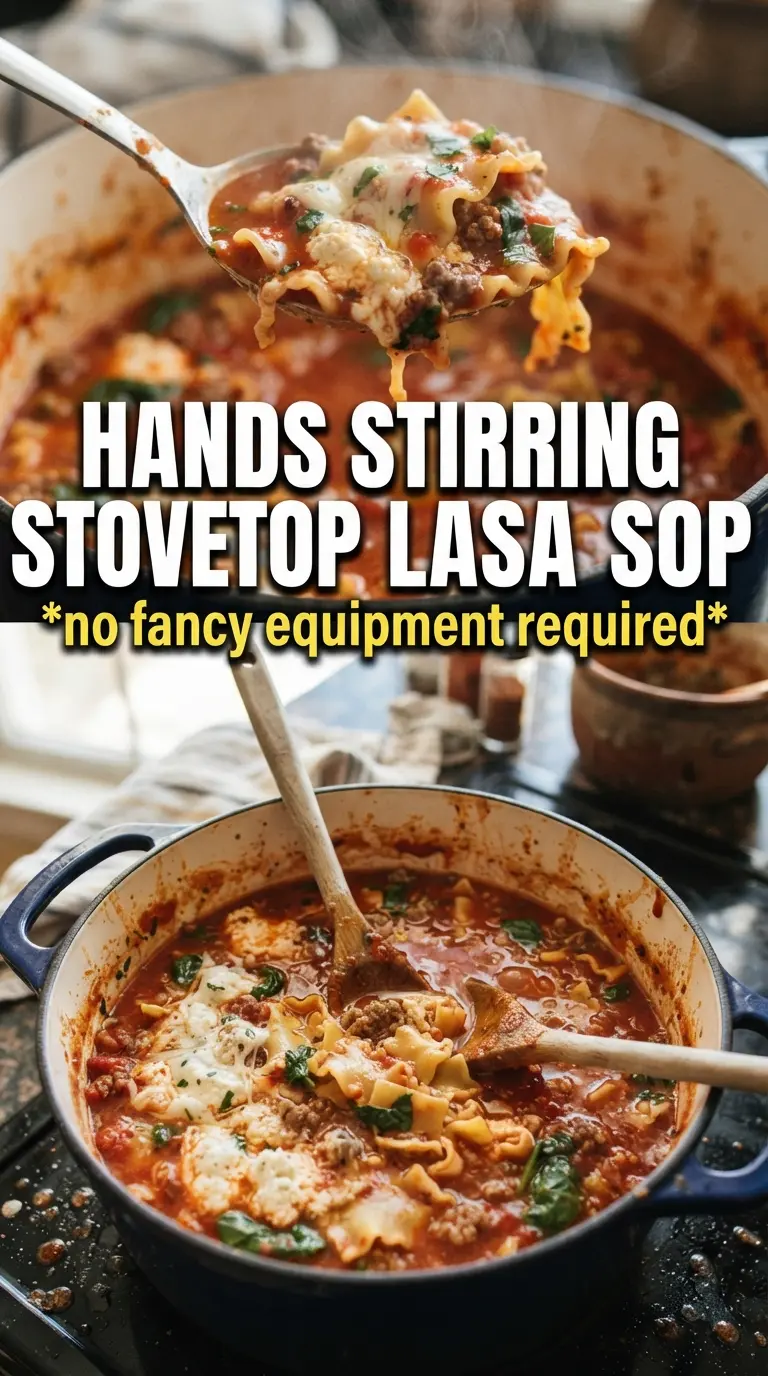
Stovetop lasagna soup brings all the comfort of a bubbling pan of lasagna into one pot, and it lands with the kind of rich, savory broth that makes people go back for a second bowl before the table is cleared. The sausage seasons the whole pot from the start, the tomatoes cook down into something deep and layered, and the broken noodles give you that familiar lasagna bite without any layering, baking, or waiting around.
This version works because the tomato paste gets cooked long enough to lose its raw edge, and the noodles go in only after the soup is at a real boil. That keeps the broth from turning muddy and keeps the pasta from going mushy. The cheese dollop on top does more than make it look good — it melts into the hot soup and gives you the creamy, tangy finish lasagna needs.
Below, I’m walking through the little details that keep the noodles tender, the broth balanced, and the cheese topping thick enough to hold its shape until it hits the bowl.
The broth got rich fast, and the noodles were perfectly tender after about 11 minutes. I loved how the ricotta-mozzarella topping melted into little creamy pockets instead of disappearing.
Love this stovetop lasagna soup with its quick broth and creamy cheese topping? Save it to Pinterest for the nights when you want lasagna flavor in under 30 minutes.
The Trick to Keeping the Noodles Tender Instead of Bloated
The biggest mistake in pasta soup is letting the noodles sit in a rolling boil for too long. Lasagna noodles are thicker and flatter than most pasta, so they keep absorbing broth even after the pot comes off the heat. That means they need a short, steady simmer and immediate serving once they turn tender at the center but still hold their shape.
Cooking the sausage first matters for more than flavor. It leaves behind a little fat and browned bits that give the broth depth before any tomato goes in. Then the tomato paste cooks with the onion and garlic long enough to darken slightly, which takes the sharp edge off and makes the soup taste like it simmered far longer than 25 minutes.
- Italian sausage — Use the kind with good seasoning already built in. Mild gives you a balanced bowl, hot adds more kick, and if your sausage is very lean, keep a spoonful of fat in the pot for flavor.
- Tomato paste — This is what gives the broth that thick, almost slow-cooked body. Let it cook for a minute or two with the onions and garlic so it loses the raw, metallic taste.
- Broken lasagna noodles — Break them into rough 2-inch pieces so they’re easy to eat with a spoon. Don’t use oven-ready noodles here; they soften differently and can turn gummy in soup.
- Ricotta, mozzarella, and parmesan — The mix gives you creaminess, stretch, and salt all at once. Whole-milk ricotta makes the dollop plush, while part-skim mozzarella can work if that’s what you have.
Building the Broth Before the Pasta Goes In
- Crushed tomatoes and fire-roasted diced tomatoes — The crushed tomatoes give the soup its body, while the fire-roasted tomatoes bring a little charred sweetness that keeps the broth from tasting flat. If you only have crushed tomatoes, the soup still works, but it will taste a little cleaner and less smoky.
- Chicken or beef broth — Beef broth makes the soup taste deeper and more like classic lasagna, while chicken broth keeps it lighter. Either one works; use low-sodium if you want more control over the final seasoning.
- Italian seasoning, basil, oregano, and red pepper flakes — These herbs build the familiar lasagna flavor fast. The red pepper flakes don’t make it hot-hot; they just wake up the tomato broth and keep it from tasting one-note.
Getting the Pot to the Table Without Losing the Texture
Brown the Sausage First
Start with a hot Dutch oven and break the sausage into small crumbles as it cooks. You want browned edges, not pale steam, because that browning gives the broth its base flavor. Drain off excess fat if the sausage leaves more than a thin coating, but don’t wipe the pot clean.
Cook the Aromatics and Paste
Add the onion and cook until it softens and turns translucent, then stir in the garlic and tomato paste. The paste should darken a shade and smell a little sweet, not raw. If the garlic starts to brown too fast, lower the heat right away; burnt garlic will carry through the whole soup.
Simmer the Tomatoes, Then Add the Noodles
Pour in the tomatoes and broth, stir in the herbs, and bring the pot to a full boil before the noodles go in. That boil matters because the noodles need active heat at the start to soften evenly. Once they’re in, reduce to a steady simmer and stir often so the pieces don’t stick together or settle on the bottom.
Finish With the Cheese Dollop
Mix the ricotta, mozzarella, parmesan, and chopped basil just before serving so the cheese stays thick and fluffy. Spoon it onto hot soup right as it hits the bowl; the heat loosens it just enough to melt into creamy pockets without disappearing. If the soup sits too long, the noodles keep drinking broth, so serve it as soon as the pasta is tender.
How to Adapt This for a Lighter Bowl or a Bigger Batch
Make It Gluten-Free
Use a sturdy gluten-free lasagna noodle and check the broth label for hidden gluten. Gluten-free pasta softens faster than wheat pasta, so start checking a minute or two early and pull the pot the second it’s tender.
Use Ground Turkey Instead of Sausage
Ground turkey makes the soup lighter, but it loses the built-in seasoning that sausage brings. Add an extra pinch of fennel or Italian seasoning, and keep a little olive oil in the pot so the broth still tastes rounded instead of flat.
Make It Dairy-Free
Skip the ricotta-mozzarella dollop and top each bowl with a drizzle of good olive oil and chopped basil instead. You lose the creamy lasagna finish, but the soup stays rich and satisfying because the sausage and tomatoes carry the flavor.
Storage and Reheating
- Refrigerator: Store the soup for up to 4 days. The noodles will keep absorbing broth, so expect a thicker texture the next day.
- Freezer: Freeze the soup without the noodles and cheese dollop for the best texture. Pasta gets soft and grainy after freezing, so add fresh noodles when you reheat if you want the cleanest result.
- Reheating: Warm gently on the stove over medium-low heat with a splash of broth or water. High heat can break the tomato broth and overcook the noodles fast.
Answers to the Questions Worth Asking

Stovetop Lasagna Soup
Ingredients
Equipment
Method
- Heat a large Dutch oven over medium-high heat, then add the Italian sausage and brown while crumbling until cooked through; drain off excess fat.
- Add the diced onion and cook for 3 minutes, stirring, until softened; stir in the minced garlic and tomato paste and cook for 1–2 minutes.
- Pour in the crushed tomatoes, fire-roasted diced tomatoes, and broth, then stir in Italian seasoning, dried basil, dried oregano, and red pepper flakes.
- Bring the mixture to a full boil over high heat, then add the broken lasagna noodle pieces.
- Reduce to a steady simmer and cook for 10–12 minutes, stirring often, until the noodles are just tender.
- Season the soup with salt and pepper to taste, then serve immediately topped with a dollop of ricotta-mozzarella-parmesan and fresh basil.