Beef lasagna soup gives you all the comfort of a baked pan of lasagna without waiting for layers to bake or a casserole dish to cool. The broth turns rich and tomato-forward, the broken noodles soak up just enough flavor, and the cheese dollop melts into the bowl in a way that makes every spoonful taste finished. It’s the kind of meal that lands hard on a weeknight because it feels hearty without asking much from you.
What makes this version work is the order of the pot. Browning the beef first builds a deep base, then the onion, garlic, and tomato paste cook in the same pot so nothing gets wasted. Tomato paste needs that minute or two in the fat and drippings to lose its raw edge, and the noodles go in only after the broth is boiling so they cook through without turning gummy.
Below, I’ve added the little details that keep the soup from getting dull or thick in the wrong way, plus a few smart swaps if you need to work with what’s in the pantry.
The broth had that deep lasagna flavor without tasting flat, and the noodles stayed tender instead of falling apart. I added the cheese dollop right before serving and it melted into the soup perfectly.
Like this beef lasagna soup? Save it to Pinterest for the nights when you want a rich tomato broth, tender noodles, and a melty ricotta topping.
The Broth Tastes Flat If You Skip the Tomato Paste Step
The biggest mistake with soup versions of lasagna is treating the broth like a shortcut. If the beef never gets browned properly, and if the tomato paste goes straight into liquid without a minute of cooking, the whole pot tastes thin and a little raw. Cooking the paste with the onion and garlic gives it a deeper, sweeter edge that reads more like slow-cooked sauce than plain tomato soup.
Another thing that matters here is timing the noodles. They should simmer in the broth after it comes to a boil, not before. If they sit in the pot too long, they break down and cloud the soup; if they go in too early, they can drink up too much liquid and turn the texture heavy instead of brothy.
What the Cheese Dollop Is Doing in This Bowl
- Lean ground beef — This gives you the savory base without dumping a lot of grease into the soup. If you use beef with more fat, drain it well after browning or the broth can taste oily.
- Tomato paste — This is the quiet flavor builder. It deepens the broth in a way crushed tomatoes alone can’t, and a short cook in the pot keeps it from tasting sharp.
- Crushed tomatoes plus diced tomatoes — The crushed tomatoes make the broth thick and cohesive, while the diced tomatoes leave little soft bites of tomato in the spoon. If you only have crushed tomatoes, the soup will still work; it’ll just be smoother and a little less rustic.
- Broken lasagna noodles — These give you the lasagna feel without any layering. Break them into uneven pieces so some stay wide and ribbon-like while others sink into the broth and make each bowl feel a little different.
- Ricotta, mozzarella, parmesan, and basil — This topping is the lasagna part you shouldn’t skip. Ricotta makes it creamy, mozzarella melts into stretchy pockets, parmesan sharpens the whole bowl, and basil keeps the finish from tasting heavy.
Building the Soup So the Noodles Stay Tender
Brown the Beef First
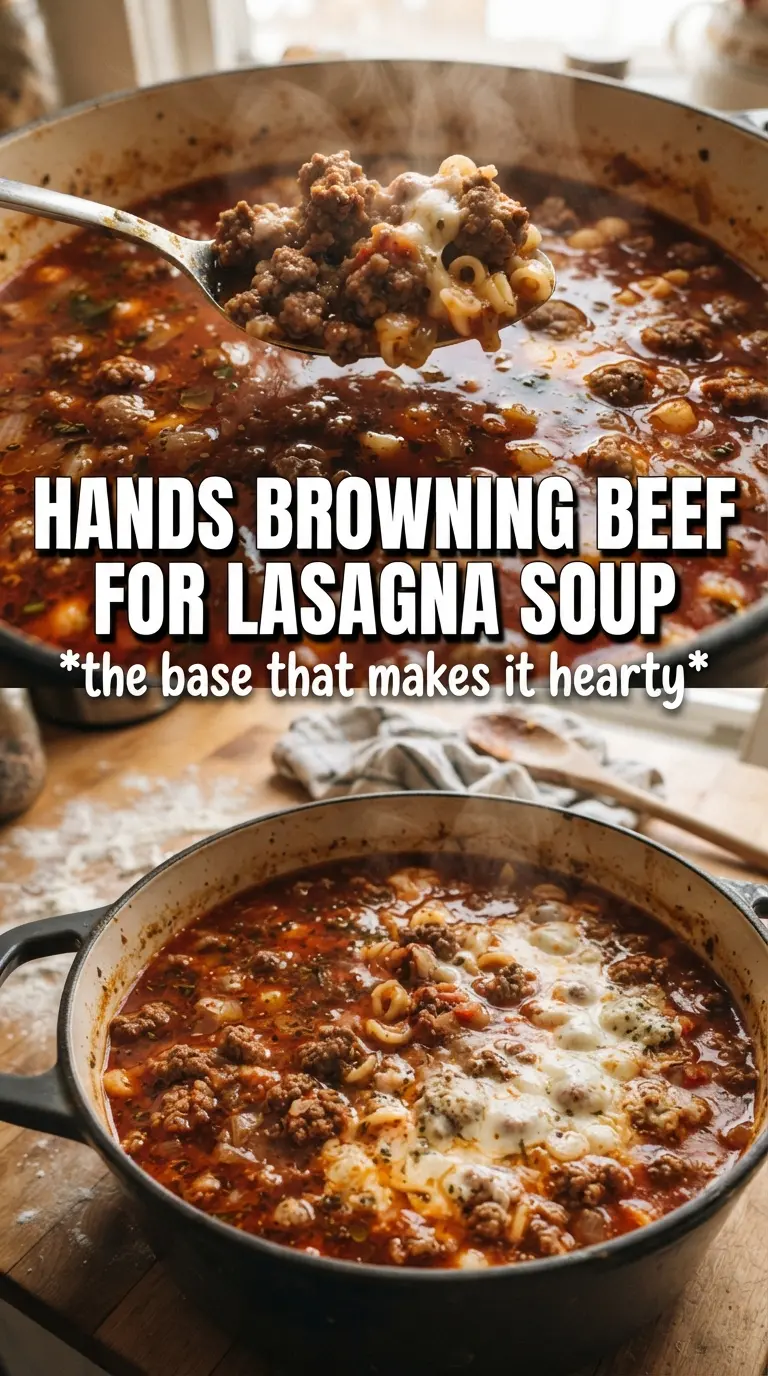
Cook the ground beef in a large pot until it loses its pink color and picks up some browned bits on the bottom. Those bits matter; they turn into part of the broth once the tomatoes and stock go in. If there’s a lot of fat in the pot, drain it before you move on so the soup doesn’t turn greasy.
Cook the Onion and Tomato Paste Together
Add the diced onion to the same pot and cook it until softened, then stir in the garlic and tomato paste. The onion should turn translucent, not browned, and the tomato paste needs about two minutes to darken a shade and smell sweeter. If you rush this stage, the finished soup tastes flatter and less layered.
Simmer the Broth Before the Noodles Go In
Pour in the tomatoes, broth, and seasonings, then bring everything to a boil before adding the broken noodles. Once the noodles are in, lower the heat and let the soup simmer until they’re tender but still hold their shape. Stir every so often so the noodles don’t stick to the bottom of the pot or clump together as they soften.
Finish With the Cheese Dollop at the Table
Mix the ricotta, mozzarella, parmesan, and basil right before serving, then spoon a generous mound into each bowl. The hot soup will soften it without fully dissolving it, which gives you those creamy pockets that make this dish taste like lasagna instead of plain beef noodle soup. Season with salt at the end so you can judge the broth after the noodles and cheese are in play.
How to Adapt This Beef Lasagna Soup Without Losing the Point
Use ground turkey instead of beef
Ground turkey works if you want a lighter bowl, but it needs more help in the flavor department. Keep the tomato paste step, and don’t skip the parmesan in the topping because turkey on its own can taste a little lean and plain compared with beef.
Make it gluten-free
Use a gluten-free lasagna noodle that holds up in soup, and check your broth label before you start. Gluten-free pasta can soften faster than wheat pasta, so start tasting a minute or two early and pull the pot as soon as the noodles are tender.
Make it dairy-free
Skip the ricotta-mozzarella topping and serve the soup with a spoonful of dairy-free cream cheese or a cashew-based ricotta if you have one. The soup itself is naturally dairy-free, so the bowl still tastes rich as long as you keep the broth well seasoned.
Make it ahead for a busy night
If you’re cooking ahead, make the soup base without the noodles and store the cheese mixture separately. Add freshly cooked noodles when you reheat, or cook the noodles directly in the pot just before serving so they stay firm and don’t soak up all the broth overnight.
Storage and Reheating
- Refrigerator: Store for up to 4 days. The noodles will keep soaking up broth, so expect the soup to thicken.
- Freezer: The soup base freezes well, but the noodles don’t. Freeze the broth and beef without pasta, then cook fresh noodles when you reheat.
- Reheating: Warm gently on the stove over medium-low heat with a splash of broth or water. High heat can make the noodles break apart and can tighten the tomato base too much.
Answers to the Questions Worth Asking

Beef Lasagna Soup
Ingredients
Equipment
Method
- Brown the lean ground beef in a large pot over medium-high heat until cooked through, then drain the fat. You should see crumbled beef browning with some rendered juices disappearing, about 5–7 minutes.
- Sauté the onion in the same pot for 4 minutes until softened. Add the garlic and tomato paste and cook for 2 more minutes, stirring until fragrant and darker.
- Add the crushed tomatoes, diced tomatoes, beef broth, Italian seasoning, dried basil, dried oregano, red pepper flakes, and black pepper to the pot and bring to a boil. The surface should show steady bubbling across the entire pot within 3–5 minutes.
- Add the broken lasagna noodles, then reduce heat to a gentle simmer. Simmer for 10–12 minutes, stirring occasionally, until noodles are tender and the soup thickens slightly.
- Season with salt to taste and stir occasionally to prevent the noodles from sticking. The soup should taste balanced with visible noodle pieces throughout.
- Mix the ricotta, shredded mozzarella, and parmesan into a thick, spoonable dollop. Serve each bowl with a very generous spoonful and top with fresh basil.