Deep, slow-cooked French onion soup is all about the onions doing the heavy lifting. When the broth tastes rich and the top turns into a bubbling cap of Gruyere and bread, it lands with that classic mix of sweet, savory, and deeply satisfying. The long onion cook gives the soup its body before the broth even goes in, which is why this version tastes layered instead of flat.
The trick is patience at the stove. The onions need time to collapse, then deepen from pale gold to a dark, jammy brown without scorching. Once the wine goes in, those browned bits come off the pot and turn into the backbone of the soup. A good broth matters here, but it’s the caramelized onions plus the cheese-topped bread that make the whole bowl feel complete.
Below, I’ve included the small details that keep the onions from burning, the soup from tasting thin, and the cheese from sliding off the bread instead of broiling into a proper crust.
The onions took a while, but they turned sweet and silky instead of bitter, and the broth had that deep restaurant-style taste once I added the wine and thyme. The cheese crust stayed on top instead of sinking, which my husband noticed right away.
Save this French Onion Soup for the night when you want caramelized onions, glossy broth, and a bubbling Gruyere lid.
The Long Onion Cook Is the Whole Soup
French onion soup falls apart when the onions rush. If they stay pale, the broth tastes thin and one-note no matter how good your stock is. You want a slow transformation: the onions soften first, then release their moisture, then slowly turn sweet and brown as the water cooks off and the sugars concentrate.
The biggest mistake is cranking the heat to speed things up. That gives you scorched onion edges before the pot’s bottom has a chance to develop the deep brown fond you need. Keep the heat at medium and stir often enough to catch the early signs of sticking. If the onions start to grab the pan hard, add a splash of water and keep going; that little bit of steam buys you time without resetting the caramelization.
What the Onions, Wine, and Cheese Each Bring to the Bowl

- Yellow onions — These are the backbone of the soup because they get sweet and silky when cooked low and slow. White onions work in a pinch, but they don’t give quite the same depth. Slice them evenly so they caramelize at the same pace instead of leaving a mix of mushy and underdone pieces.
- Dry white wine or sherry — This is the deglazing step that lifts the browned bits from the pot and turns them into flavor. A dry wine keeps the soup balanced; something sweet will make it taste muddled. If you don’t want to cook with wine, use a splash of extra broth plus a teaspoon of white wine vinegar at the end for brightness, though the result won’t be as rounded.
- Beef broth — This gives the soup its classic savory base. Use the best broth you can find because there isn’t much else here to hide behind. If your broth tastes flat, a little extra salt and Worcestershire help, but the broth still needs to taste good on its own.
- Gruyere — Gruyere melts into that stretchy, browned topping everyone wants in a proper bowl of French onion soup. Parmesan adds sharper, saltier edges, but Gruyere is the cheese that gives you the lush melt. Shred it yourself if you can; pre-shredded cheese often melts less smoothly.
How to Build the Soup So the Cheese Top Stays Put
Caramelizing the onions
Melt the butter with the olive oil first, then add the onions and salt. The salt helps draw out moisture early, which keeps the onions from browning too fast on the outside while staying raw inside. Stir every 10 to 15 minutes and scrape the pot as the onions move from translucent to golden to deep amber. If the bottom starts to darken too aggressively, lower the heat and add a spoonful of water so the fond loosens instead of burning.
Deglazing with wine
Once the onions are deeply golden and smell sweet, pour in the wine and scrape the bottom of the pot while it sizzles. The wine should reduce for a few minutes until it no longer smells sharp. If you skip this reduction, the soup can taste harsh and boozy instead of rich. This is the moment where the caramelized onions and broth start to become one thing.
Simmering the broth
Add the broth, thyme, bay leaf, and Worcestershire, then let the soup simmer long enough for the flavors to knit together. Twenty minutes is enough here because the onions already did the long work; this stage is about seasoning and balance, not more caramelization. Pull out the thyme and bay leaf before serving. Taste at the end and salt carefully, since the cheese on top will add plenty of salt later.
Broiling the bread and cheese
Ladle the soup into oven-safe crocks and float the toasted bread on top before adding the cheese. Toasting the bread first matters because soggy bread sinks and disappears under the cheese instead of holding the cap in place. Broil just until the cheese melts, bubbles, and picks up browned spots. If you walk away for even a minute, the cheese can go from golden to bitter fast.
How to Adapt French Onion Soup Without Losing the Classic Feel
Make it vegetarian
Swap the beef broth for a rich vegetable broth, then add a little extra Worcestershire-style depth only if your version is vegetarian-friendly. The soup will still be deeply oniony, but it won’t have quite the same beefy backbone. A splash of soy sauce or tamari can help replace some of that savory weight.
Skip the wine
Use extra broth plus a small splash of cider vinegar or white wine vinegar at the end to wake up the flavors. You’ll lose some of the roundness that wine gives the pot, but the soup will still taste balanced if the onions are properly caramelized. Keep the vinegar subtle; you want brightness, not tang.
Use a different cheese blend
Swiss cheese or a mix of Swiss and mozzarella will melt well if Gruyere isn’t in the budget, though the flavor will be milder and less nutty. Parmesan still helps with browning and salt, so keep it in the mix if you can. Avoid cheese that oils out too quickly, or the topping will turn greasy instead of creamy.
Storage and Reheating
- Refrigerator: Store the soup without the bread and cheese topping for up to 4 days. The flavor often gets even better overnight.
- Freezer: The onion broth freezes well for up to 3 months. Freeze it before adding the bread and cheese, since those parts don’t thaw well.
- Reheating: Warm the soup gently on the stove until steaming, then ladle into crocks and add fresh toasted bread and cheese before broiling. If you reheat it hard, the onions can get stringy and the broth can taste dull.
Questions I Get Asked About This Recipe
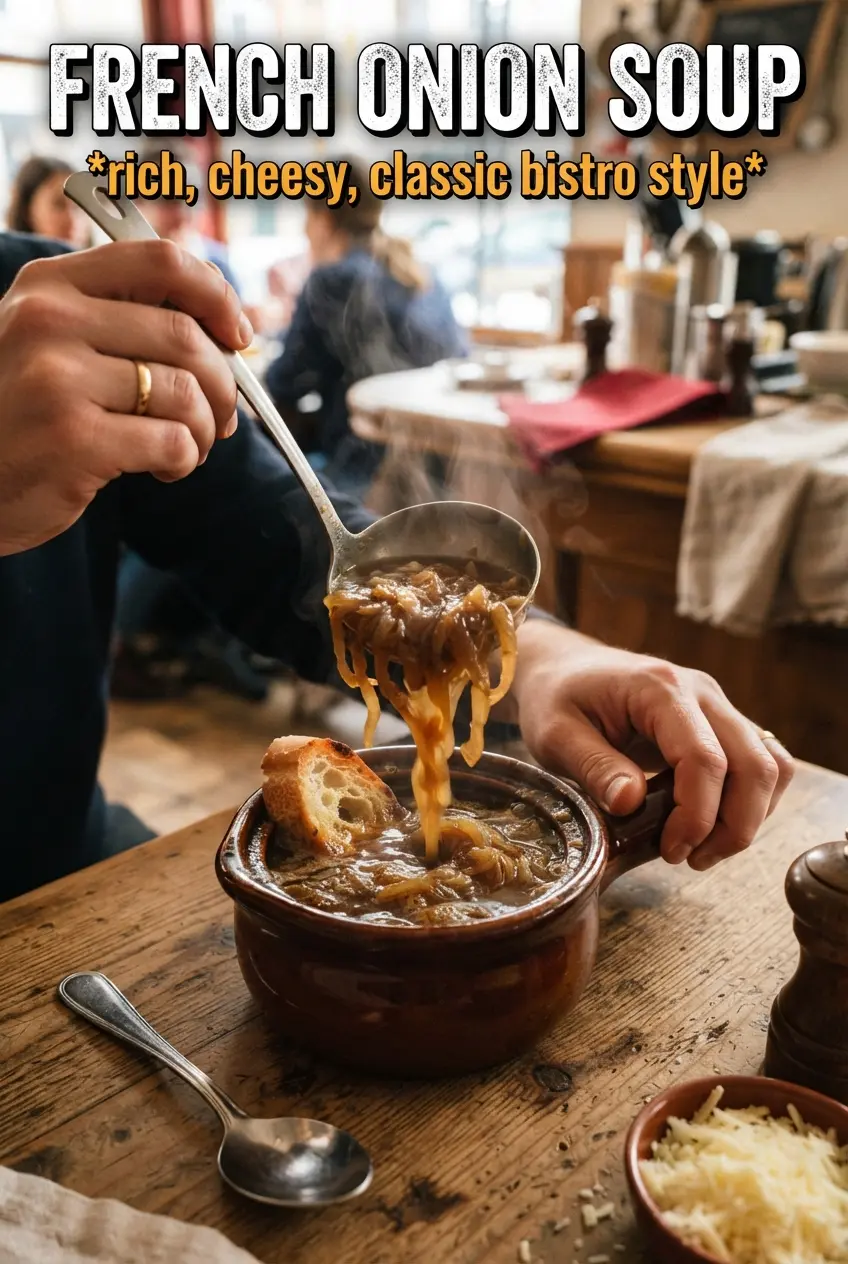
French Onion Soup
Ingredients
Equipment
Method
- Melt the butter with the olive oil in a large heavy pot over medium heat, then add the onions and 1/2 teaspoon salt.
- Cook the onions for 60-70 minutes over medium heat, stirring every 10-15 minutes, until deeply golden, jammy, and caramelized.
- Deglaze with the wine (or sherry) and cook for 3 minutes, scraping up all browned bits.
- Add the beef broth, thyme, bay leaf, and Worcestershire sauce, then simmer for 20 minutes.
- Remove the thyme and bay leaf, then season the soup with salt and pepper to taste.
- Ladle the soup into oven-safe crocks, then float the toasted baguette slices on top.
- Pile the Gruyère and Parmesan over the bread, then broil for 3-4 minutes until melted and bubbly and visibly golden at the edges.