Slow cooker chicken stew turns into the kind of dinner that fills the kitchen with the smell of thyme, garlic, and simmered onions long before it’s ready. The broth thickens into a golden gravy, the chicken turns fall-apart tender, and the potatoes soak up all that savory flavor without losing their shape. It’s hearty in the best way, with enough body to eat from a bowl and enough warmth to want crusty bread alongside it.
This version works because the vegetables go in first, right under the chicken, so they soften in the broth instead of going mushy on top. Bone-in chicken thighs bring more flavor than boneless pieces and stay moist through the long cook, which matters in a slow cooker. A little tomato paste deepens the stew without making it taste tomato-forward, and the cornstarch slurry at the end gives you that spoon-coating texture that makes stew feel finished.
Below you’ll find the trick for keeping the gravy from going thin, plus a few smart swaps and storage notes that make this stew easy to work into a real weeknight rotation.
The broth turned into a thick gravy after that last 20 minutes, and the chicken shredded apart without any effort. I added the parsley at the end and it made the whole pot taste brighter.
Love the thick gravy and tender chicken in this slow cooker chicken stew? Save it to Pinterest for the nights when you want a no-fuss bowl of comfort with almost no hands-on time.
The Reason This Stew Stays Thick Instead of Watery
The difference between a stew that tastes rich and one that tastes like soup is how you handle the liquid. Chicken thighs, potatoes, and carrots all give off a little moisture as they cook, so the broth has to start with enough body to absorb that extra liquid. The cream of chicken soup and tomato paste do that work early, then the cornstarch slurry finishes the job at the end when the stew has fully developed its flavor.
The other thing that matters is leaving the chicken on top of the vegetables instead of stirring everything together at the start. That keeps the pieces from breaking apart too soon and gives the root vegetables a chance to soften evenly in the broth below. If your stew ever comes out thin, it’s usually because it didn’t cook long enough for the broth to concentrate or the slurry was added too early and lost its thickening power.
What Each Ingredient Is Doing in the Pot
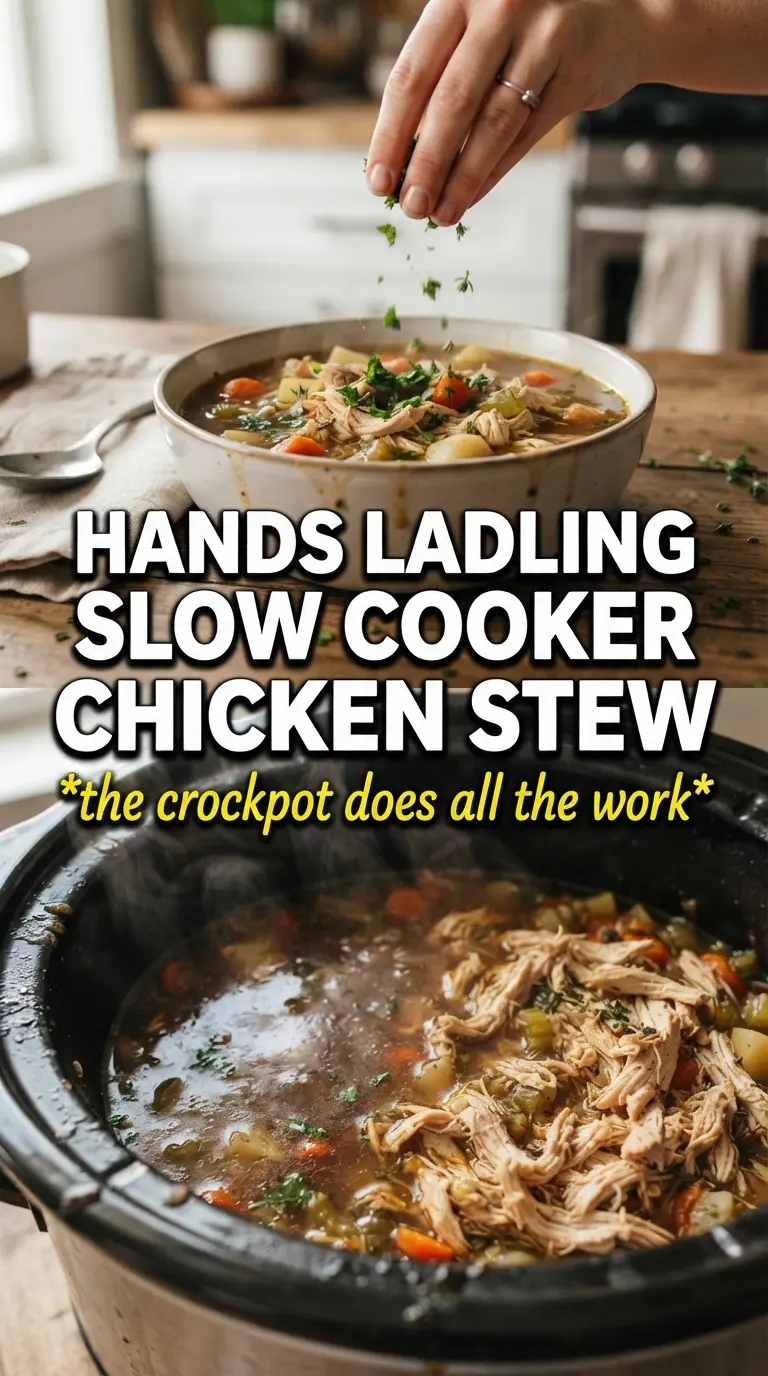
- Bone-in chicken thighs — These bring more flavor than boneless chicken and stay juicy through a long slow cook. Once the meat is tender, you can shred it right off the bones, which gives the stew a better texture than diced breast meat.
- Baby potatoes — Waxy potatoes hold their shape better than russets, which tend to fall apart and cloud the broth. Halving them gives you tender centers without turning the stew grainy.
- Chicken broth and cream of chicken soup — This is the base of the stew’s body. The broth adds volume, but the soup gives it a creamy, seasoned backbone that keeps the finished stew from tasting flat. If you don’t use canned soup, you’ll need another thick, seasoned base to replace what it provides.
- Tomato paste — You won’t taste tomato in a strong way, but it deepens the color and makes the broth taste like it cooked all day. A small amount is enough; more would push the stew in a different direction.
- Thyme, rosemary, and bay leaf — These are the herbs that make the stew taste like stew. Fresh thyme works too, but dried herbs hold up well in the slow cooker and stay evenly distributed in the broth.
- Cornstarch slurry — This is what turns the broth into gravy at the end. Mix it with cold water first, then stir it in only after the chicken is shredded and the stew has had time to meld.
Building the Slow Cooker Stew So the Chicken Stays Tender
Start with the vegetables on the bottom
The potatoes, carrots, celery, and onion go in first because they need direct contact with the liquid. They act like a rack for the chicken and keep the meat from sitting in one dense pocket at the top. If you pile the chicken in before the vegetables, the bottom layer can overcook while the top stays underdone.
Layer the chicken and seasoning without over-stirring
Set the thighs over the vegetables, then add the garlic, broth, cream of chicken soup, tomato paste, thyme, rosemary, and bay leaf. The soup and tomato paste should be stirred into the broth as much as possible, but don’t worry if the mixture looks uneven at first — it evens out as it cooks. Keeping the chicken mostly undisturbed helps it stay intact until shredding time.
Cook until the thighs give up easily
On Low, the stew needs 6 to 8 hours; on High, it needs 3 to 4. The chicken is ready when it pulls apart with almost no effort and the potatoes can be pierced cleanly with a fork. If the thighs still feel bouncy or tight, they need more time, not more heat.
Thicken at the end, not the beginning
Remove the chicken and bay leaf, then stir in the cornstarch slurry and cook on High for about 20 minutes. That last burst of heat activates the thickener without breaking the vegetables down. If you add the slurry too early, the stew can stay thin because it spends too long simmering after the starch has been added.
Make It Dairy-Free
Use a dairy-free condensed cream-style soup or replace it with a thick cashew cream base. The stew will still be rich, but the flavor will be a little less savory and a little more neutral, so the thyme and rosemary matter even more.
Swap the Chicken
Boneless thighs work if that’s what you have, but they cook faster and can dry out a little sooner, so start checking early. Chicken breasts can be used, though they’ll be less forgiving and won’t give the stew the same deep, rich flavor.
Make It Gluten-Free
Use a certified gluten-free cream soup and broth, then keep the cornstarch slurry as written. That gives you the same thick finish without relying on flour-based thickeners.
How to Stretch It for a Bigger Crowd
Add another potato or two, an extra carrot, and one more cup of broth if you want a looser, more soup-like result. Keep the seasoning in balance, though, because the herbs and soup base can get muddy if the pot gets too full without enough salt at the end.
Storage and Reheating
- Refrigerator: Store for up to 4 days. The stew thickens as it chills, so expect a firmer texture after it’s cold.
- Freezer: It freezes well for up to 3 months. Cool it completely first, then freeze in portions; the potatoes may soften a bit after thawing, but the flavor holds up.
- Reheating: Reheat gently on the stovetop over medium-low or in the microwave in short bursts, stirring in a splash of broth if needed. Don’t boil it hard or the chicken can dry out and the thickened gravy can turn pasty.
Questions I Get Asked About This Recipe
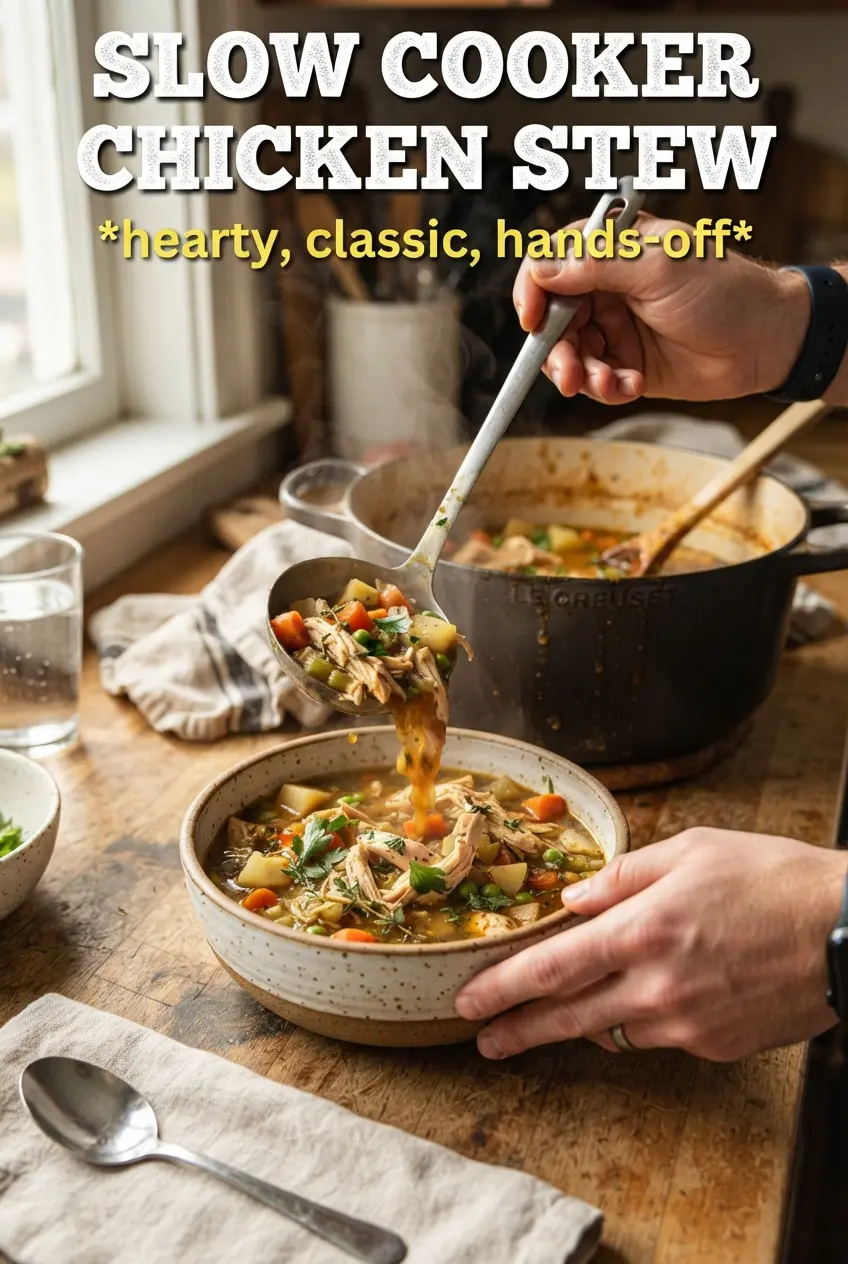
Slow Cooker Chicken Stew
Ingredients
Equipment
Method
- Add baby potatoes, carrots, celery, and onion to the bottom of the slow cooker in an even layer with cut sides facing down where possible.
- Nestle bone-in chicken thighs on top of the vegetables so they contact the bottom for even cooking; tuck garlic around the chicken.
- Pour chicken broth and add cream of chicken soup and tomato paste, then sprinkle in dried thyme, dried rosemary, and bay leaf.
- Cover and cook on LOW for 6-8 hours until the chicken is very tender and the vegetables are softened.
- Carefully remove chicken thighs, discard skin and bones, and shred the meat back into the stew.
- Remove the bay leaf, then stir cornstarch slurry (cornstarch mixed with water) into the hot stew to prevent lumps.
- Switch to High and cook for 20 minutes, stirring occasionally, until the gravy thickens and clings to the chicken and vegetables.
- Season with salt and pepper to taste, then garnish with fresh parsley before serving.