Clear, savory broth, tender chicken, and a bowlful that actually keeps you full is what makes this soup worth making on repeat. The chickpeas add body and extra protein without turning the broth heavy, and the lemon at the end keeps the whole pot tasting bright instead of dull and flat. It lands somewhere between classic chicken noodle soup and a sturdier dinner soup that eats like a meal.
The trick is building flavor in layers without overcooking the noodles. The vegetables soften first, the chicken gets just enough heat to stay juicy, and the broth simmers long enough to taste rounded before the chickpeas and noodles go in. That order matters. If the noodles sit in the pot too long, they soak up broth and go mushy, so this version keeps them tender and the soup brothy.
Below you’ll find the exact timing that keeps the chicken from drying out, plus the small finishing step that makes the broth taste clean and fresh. There’s also a simple swap if you want to use what you already have in the pantry.
The broth tasted clean and the chickpeas made it much more filling than regular chicken noodle soup. I loved that the noodles stayed firm instead of turning to mush after sitting for dinner.
Save this high protein chicken noodle soup for the nights when you want a filling broth, tender chicken, and a bowl that still feels light.
The Reason the Broth Stays Light Instead of Cloudy and Heavy
This soup works because it respects the order of operations. The chicken browns briefly before the broth goes in, which gives you more flavor without overcooking the meat. The chickpeas come later, after the broth has already developed its base, so they add substance without turning the whole pot starchy or muddy.
The other thing that matters is the finish. Lemon juice at the end wakes up the broth and keeps the soup tasting clean. If you add it too early, the brightness fades during the simmer. That last-minute acid is what makes the bowl taste finished instead of just cooked.
What Each Ingredient Is Doing in the Pot
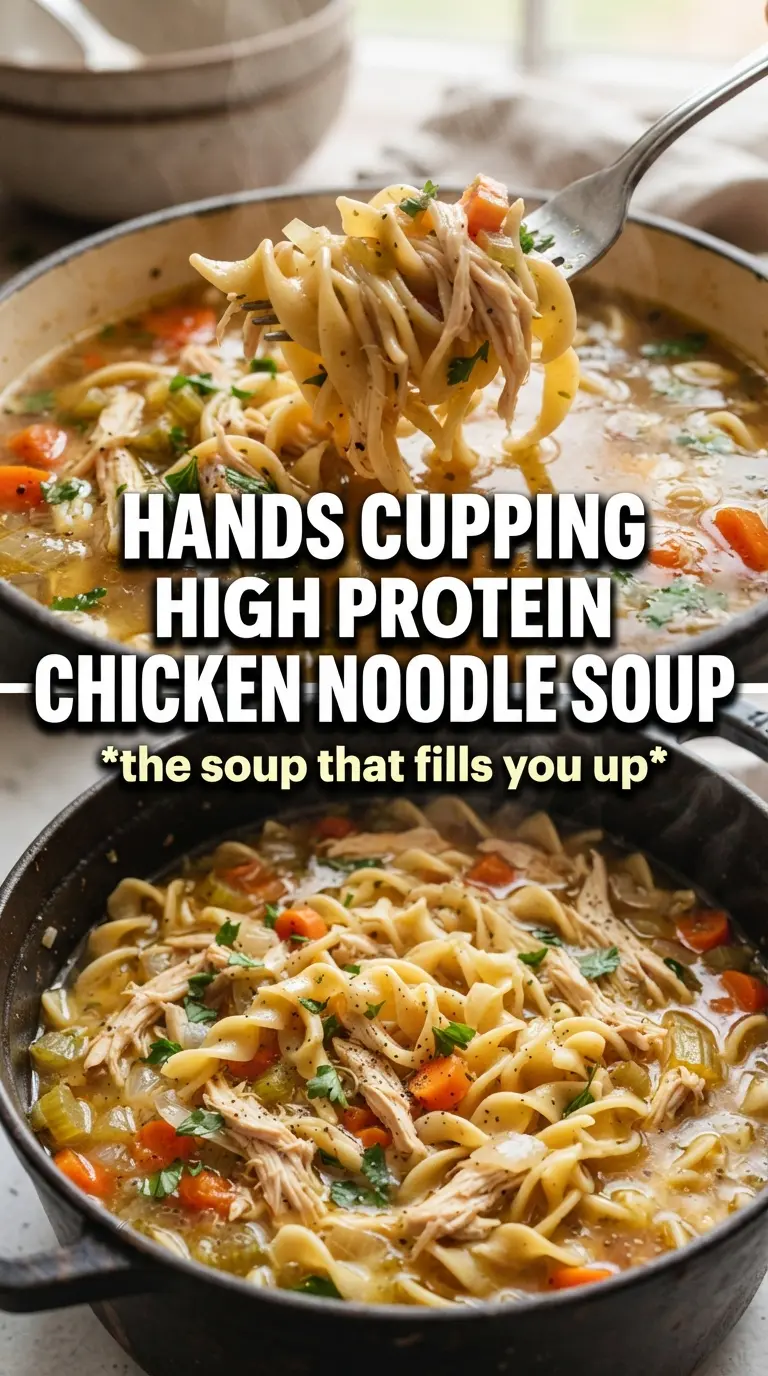
- Chicken breast — Diced chicken breast cooks quickly and keeps this soup lean while still giving it plenty of protein. Cut it into even pieces so it stays tender and finishes at the same time.
- Chickpeas — These are the ingredient that makes the soup feel substantial. They also hold their shape better than beans that go soft fast, so they’re a smart pantry swap when you want more body in the bowl.
- Chicken broth — Use a broth you actually like tasting on its own. Since the ingredient list is short, the broth does a lot of the flavor work here.
- Egg noodles — Whole wheat or high-protein noodles help keep the texture sturdy and the meal more filling. If you use regular egg noodles, pull the pot off the heat as soon as they’re tender so they don’t swell and go soft.
- Lemon juice — This doesn’t make the soup taste lemony; it sharpens the broth. Add it at the end so the flavor stays fresh.
Building the Soup in the Right Order
Sweating the Vegetables First
Start with the onion, carrots, and celery in hot olive oil and cook them until the onion turns translucent and the carrots lose their raw edge. This is where the soup gets its base flavor, so don’t rush it. If the pot looks dry before the vegetables soften, lower the heat instead of adding more oil. You want them softened, not browned.
Cooking the Chicken Without Drying It Out
Add the garlic for just a minute, then the chicken. Cook it only until the outside loses its pink color and takes on a light golden edge. The chicken will finish in the broth, so this stage is about building flavor, not fully cooking the meat. If you leave it in the pan too long, it turns firm before the simmer even starts.
Letting the Broth Simmer and Flavors Blend
Pour in the broth, thyme, and parsley, then bring everything to a boil before lowering it to a steady simmer. That simmer should be gentle, not a rolling bubble that shakes the pot hard. Fifteen minutes is enough to cook the chicken through and let the broth take on the flavor of the vegetables. If the broth looks oily on top, skim it lightly before adding the chickpeas.
Adding the Noodles at the End
Stir in the chickpeas and noodles once the chicken is cooked and the broth tastes developed. Keep the heat moderate and cook just until the noodles are tender with a little chew in the center. This is the stage most people overdo. Noodles keep absorbing liquid after the heat goes off, so stop early if you want the soup brothy the next day.
Finishing With Lemon and Parsley
Take the pot off the heat before stirring in the lemon juice. Then taste and season with salt and pepper until the broth tastes bright and balanced, not flat. Fresh parsley on top gives you one more clean herbal note and keeps the bowl from looking heavy. If the soup tastes dull, it usually needs salt, not more lemon.
How to Adapt It When You Need a Different Bowl
Gluten-Free Version
Swap in gluten-free noodles and check your broth label before you start. Gluten-free pasta softens faster than wheat noodles, so cook it just until barely tender and serve right away for the best texture.
Dairy-Free and Naturally Creamy Without Cream
This recipe is already dairy-free as written, and the chickpeas give it a little more body without changing the clean broth. If you want it thicker, mash a small handful of chickpeas against the side of the pot before adding the noodles.
Using Rotisserie Chicken
If you already have cooked chicken, skip the browning step and add it after the broth has simmered with the vegetables. This shortens the cook time and keeps the chicken tender, since it only needs to warm through instead of cooking from raw.
Make-Ahead Storage and Reheating
- Refrigerator: Store for up to 4 days. The noodles will keep soaking up broth, so expect the soup to thicken a bit.
- Freezer: Freeze the soup without the noodles for the best texture. Add freshly cooked noodles when reheating, because frozen noodles turn soft and grainy.
- Reheating: Warm it gently on the stove over medium-low heat until hot. If it’s too thick, add a splash of broth or water before serving so the noodles don’t keep absorbing liquid in the pot.
Questions I Get Asked About This Soup
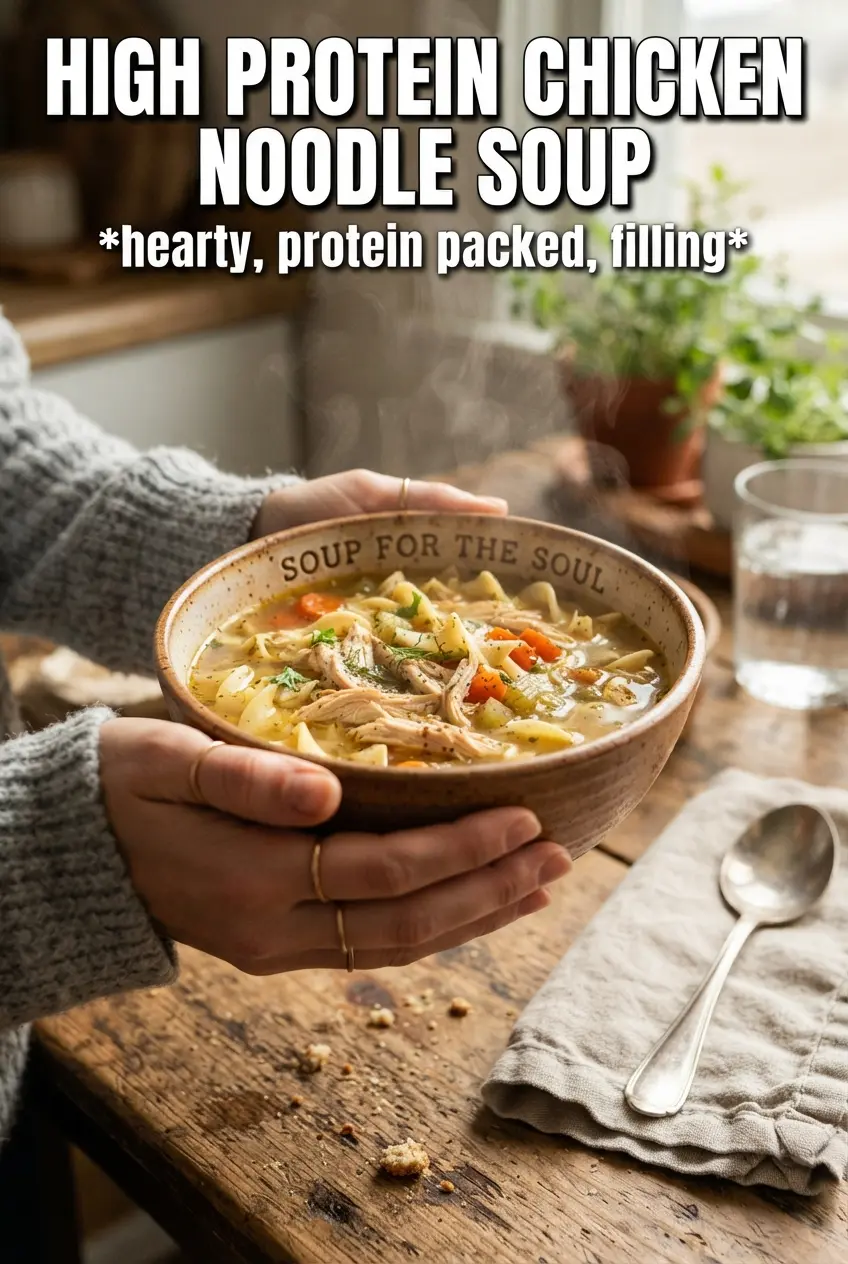
High Protein Chicken Noodle Soup
Ingredients
Equipment
Method
- Heat the olive oil in a large pot over medium heat, then sauté the onion, carrots, and celery for 5 minutes until they soften and look slightly glossy.
- Add the garlic and cook for 1 minute, stirring constantly, until fragrant and just starting to turn light golden.
- Add the diced chicken to the pot and cook for 4 minutes, stirring occasionally, until the chicken is lightly browned.
- Add the chicken broth, dried thyme, and dried parsley, then bring to a boil—watch for rolling bubbles across the surface.
- Reduce to a simmer and cook for 15 minutes, keeping small bubbles steady and the broth flavorful.
- Stir in the chickpeas and high-protein or whole wheat egg noodles, then cook for 6-8 minutes until the noodles are tender.
- Stir in the lemon juice, then season with salt and pepper to taste until balanced and aromatic.
- Garnish with fresh parsley for garnish right before serving for a fresh, green finish.