Chicken noodle and wild rice soup lands in that sweet spot between comforting and substantial. The broth turns silky and golden, the wild rice stays pleasantly chewy, and the egg noodles give it the kind of heartiness that makes a bowl feel like dinner instead of a starter. It’s the sort of soup people go back to for seconds without thinking about it.
What makes this version work is the order. The chicken and wild rice simmer first so the grain has time to soften and the broth can pick up all that flavor. Then the roux gets whisked in separately before the cream, which keeps the soup from turning thin or grainy. That extra minute of attention gives you a broth that clings to the noodles instead of sliding off them.
Below, I’ve included the small details that matter most: when to shred the chicken, why the noodles go in at the end, and how to keep the soup from turning starchy if you need to hold it a little longer.
The broth turned creamy without feeling heavy, and the wild rice stayed chewy even after reheating the next day. My husband kept saying it tasted like a restaurant soup, but better because the noodles held up.
Love the creamy broth, chewy wild rice, and tender chicken? Save this soup for a cozy dinner that reheats beautifully.
The Trick to Keeping the Broth Creamy Without Turning the Soup Heavy
The roux is the part that keeps this soup from feeling watery, but it has to be handled gently. If you dump raw flour straight into the pot, you’ll get little lumps that never fully disappear. Cooking the flour in butter first gives it a chance to lose that raw taste, and whisking in hot broth before adding it back to the soup helps it blend smoothly.
The other place people lose control is the cream. Add it after the roux is dissolved and the heat is low, not at a hard boil. High heat can make the cream look split or greasy, especially once the noodles start releasing starch. The goal here is a broth that looks velvety and coats the spoon, not a thick paste.
- Wild rice blend — A blend cooks faster than true wild rice and gives you that nutty chew without needing an hour on the stove. If you use straight wild rice, expect a longer simmer and more broth loss.
- Chicken breast — Breast stays tender in a soup like this as long as you don’t overcook it. Shred it as soon as it’s cooked through so it doesn’t dry out while the rice finishes.
- Egg noodles — These go in at the end because they drink up liquid fast. If they sit in the pot too long, they’ll take over the soup and turn soft.
- Heavy cream — This gives the broth its body. Half-and-half works in a pinch, but the soup will be a little lighter and less rich.
What Each Ingredient Is Doing in the Pot
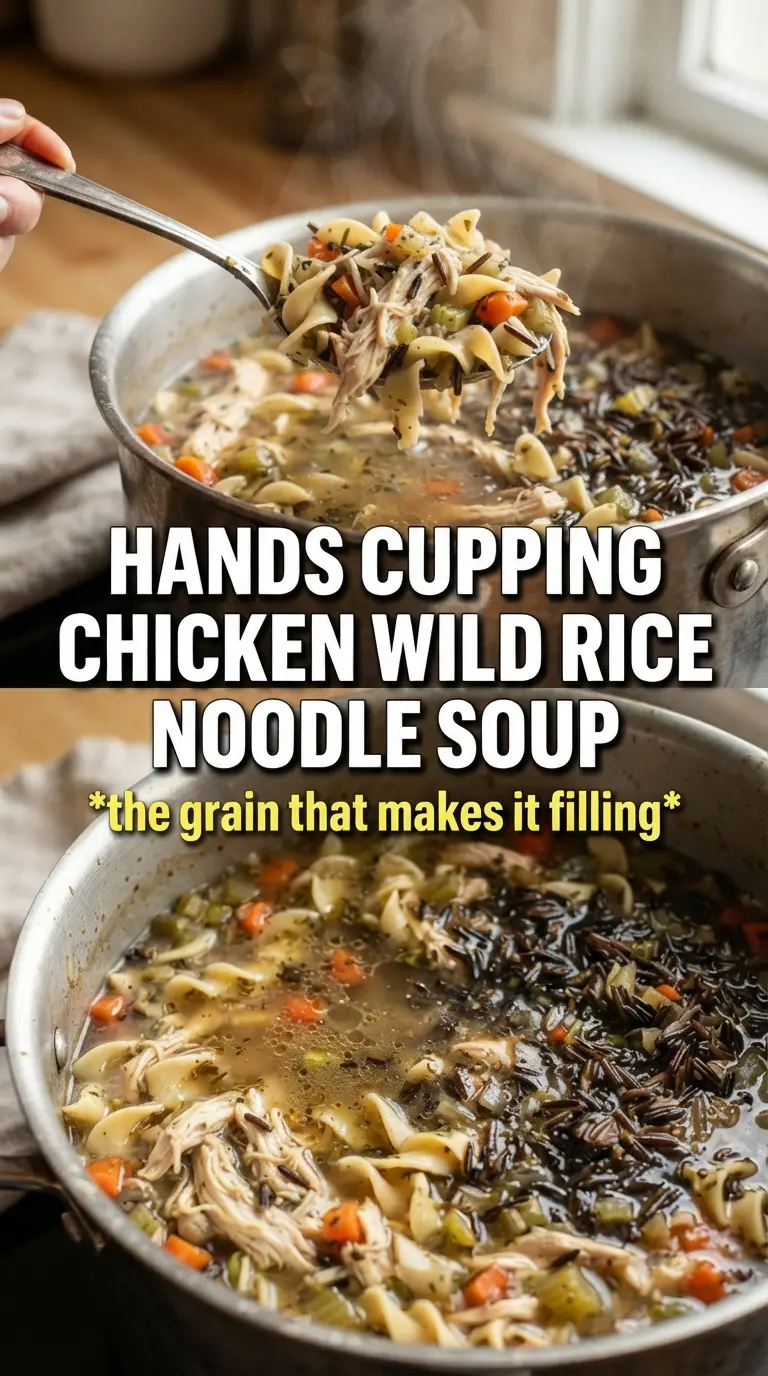
Chicken broth forms the base, so use one you’d actually want to sip. A bland broth gives you a flat soup no matter how good the rest of the ingredients are.
Carrots, celery, onion, and garlic build the backbone of the flavor. Dice the onion small so it melts into the broth, and slice the carrots and celery evenly so they soften at the same pace.
Thyme and parsley bring that classic chicken-soup feel without making it taste dusty or over-seasoned. Dried herbs work fine here because they have time to bloom in the broth.
Butter and flour create the roux that thickens the soup. Don’t rush this part; a minute or two of cooking keeps the finished soup smooth and keeps the flour from tasting raw.
Building the Soup in the Right Order
Starting with the Longest-Cooking Ingredients
Put the chicken, wild rice, vegetables, broth, and dried herbs in the pot first and let them simmer together until the rice is nearly tender. That gives the rice enough time to cook through without falling apart, and it lets the chicken poach gently instead of tightening up. The pot should stay at a steady simmer, not a rolling boil, or the broth can turn cloudy and the chicken can get stringy.
Shredding the Chicken While It’s Still Juicy
Pull the chicken out as soon as it’s cooked through and easy to shred. If it stays in the pot while the rice finishes, it keeps cooking and loses moisture. Shred it into medium pieces so it holds onto the broth instead of disappearing into the soup.
Making the Roux and Finishing with Cream
Melt the butter in a separate pan, whisk in the flour, and cook it just until it smells nutty and looks a shade deeper in color. Whisk in one cup of the hot broth until smooth, then stir that mixture back into the soup. Once the broth has thickened, lower the heat and stir in the cream; that’s the point where the soup turns silky instead of thin.
Adding the Noodles at the End
Egg noodles only need a few minutes, so they go in last. Let them cook until just tender, because they’ll keep softening in the hot soup even after the burner is off. If the soup sits awhile, the noodles will keep absorbing liquid, so add a splash of broth when reheating if it looks thicker than you want.
How to Adapt This Soup When You Need a Different Version
Make It Dairy-Free
Skip the butter and cream, then use olive oil for the roux and an unsweetened plain oat milk or canned coconut milk for body. Oat milk keeps the flavor closer to the original, while coconut milk adds a faint sweetness that changes the soup more noticeably.
Use Rotisserie Chicken Instead
Shred about 3 to 4 cups of cooked rotisserie chicken and stir it in after the wild rice is nearly tender. This shortens the cooking time and gives the soup a deeper roasted chicken flavor, but you’ll lose the gentle poached texture from cooking it in the broth.
Make It Gluten-Free
Use a gluten-free flour blend for the roux and swap in gluten-free noodles. Some blends thicken a little faster than all-purpose flour, so whisk carefully and add the broth gradually until the mixture is smooth.
Turn It Into a Thicker Stew-Style Soup
Let the finished soup simmer for a few extra minutes before adding the noodles, or increase the roux slightly if you want a thicker bowl. The texture gets heartier, but the noodles will absorb more liquid, so plan on adding a little extra broth when serving leftovers.
Storage and Reheating
- Refrigerator: Store for up to 4 days. The noodles will continue soaking up broth, so the soup thickens as it sits.
- Freezer: It freezes, but the noodles soften after thawing. For best texture, freeze the soup before adding the noodles, then cook fresh noodles when you reheat it.
- Reheating: Warm it gently over low heat and add a splash of broth if needed. A hard boil can make the cream separate and turn the noodles mushy.
Answers to the Questions Worth Asking

Chicken Noodle and Wild Rice Soup
Ingredients
Equipment
Method
- In a Dutch oven, add chicken breast, wild rice blend, chicken broth, carrots, celery, onion, garlic, dried thyme, and dried parsley. Bring to a gentle simmer over medium-high, then reduce to low and simmer for 30 minutes until the wild rice is nearly tender.
- Remove the chicken from the pot, let it cool briefly, and shred it. Return the shredded chicken to the pot and stir to combine, keeping the broth at a low simmer.
- In a small saucepan, melt the butter over medium heat. Whisk in the flour and cook for 1-2 minutes, stirring constantly until it smells lightly toasted.
- Slowly whisk the roux with 1 cup of the hot broth until completely smooth. Stir the thickened mixture back into the Dutch oven until the broth looks glossy and evenly combined.
- Stir in the heavy cream and bring the soup back to a gentle simmer. Add the egg noodles and cook for 6-8 minutes until tender, stirring occasionally so the noodles don’t clump.
- Taste the soup and season with salt and pepper to taste. Keep at a low simmer just until seasoned throughout, then serve with a ladle and visible chunks of chicken, carrots, celery, and wild rice.