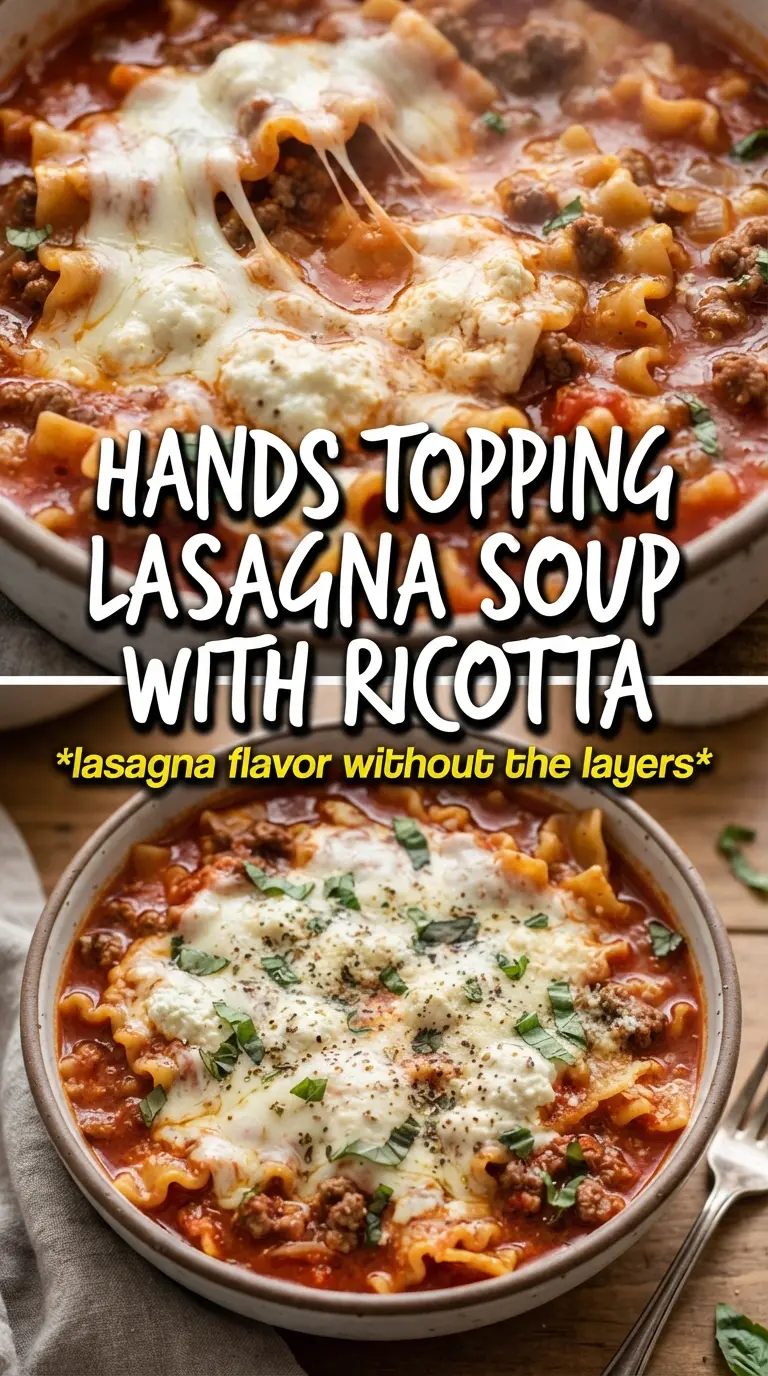
Lasagna soup gives you all the comfort of the classic baked dish, but in a bowl that comes together fast enough for a weeknight. The broth turns rich and tomato-heavy, the sausage adds depth, and the broken noodles soak up just enough flavor without going soft if you catch them at the right moment. The best part is the cheese dollop melting into the center and turning every spoonful into something creamy, tangy, and a little indulgent.
What makes this version work is layering the flavor in the pot instead of relying on one big simmer at the end. Browning the sausage first builds a savory base, then the tomato paste cooks long enough to lose that raw edge before the broth goes in. That small step gives the soup a fuller, more rounded taste. The noodles are added near the end so they stay pleasantly tender instead of falling apart.
Below, I’ve included the little details that matter most: how to keep the broth balanced, when to add the pasta, and how to adjust the richness if you want it a little lighter or extra hearty.
The broth was rich without being heavy, and the noodles stayed perfectly tender because I added them right at the end. The ricotta topping melted into the soup and made it taste like baked lasagna in a bowl.
Love the rich tomato broth and cheesy ricotta topping? Save this lasagna soup for the night you want baked pasta comfort without the oven.
The Trick to Keeping the Noodles Tender, Not Mushy
The noodles are the point where lasagna soup usually goes sideways. If they simmer too long, they swell up and turn soft enough to blur into the broth. Add them only after the tomatoes and broth have had a chance to meld, then watch for the texture to go from firm to just tender, with a little bite still left in the center.
The tomato paste matters more than it looks like it should. Cooking it briefly in the pot deepens the flavor and keeps the soup from tasting flat. That step also helps the broth feel thicker and more cohesive, which is what makes the final bowl taste like lasagna instead of tomato soup with pasta in it.
- Italian sausage — This carries the savory backbone of the soup. Mild or hot both work, but sausage with good seasoning saves you from having to build as much flavor from scratch.
- Tomato paste — A minute or two in the pot changes everything. Skip that step and the broth can taste a little one-note.
- Broken lasagna noodles — Regular lasagna noodles give the right shape and chew. Don’t use very thin pasta here; it disappears too quickly.
- Ricotta-mozzarella mixture — This is what makes the bowl taste like lasagna instead of a standard tomato soup. Fresh basil in the cheese mixture keeps it bright against the rich broth.
What Each Ingredient Is Doing in the Bowl
The broth starts with crushed tomatoes for body and diced tomatoes for a little texture. That combination gives you a soup that feels full without turning into puree. If you only use diced tomatoes, the broth can feel too thin; if you only use crushed, it can lean a little flat.
Chicken broth gives a lighter finish, while beef broth makes the whole pot taste deeper and more savory. Either one works. Use whichever you keep on hand, but choose a low-sodium version if you want control over the final seasoning. The cheese mixture should be thick enough to hold its shape on a spoon, so don’t let the ricotta sit out too long before serving or it can loosen more than you want.
Building the Soup in the Right Order
Brown the Sausage First
Cook the sausage over medium-high heat until it loses its pink color and picks up a little color on the edges. That browning is where the flavor starts, and those stuck bits on the bottom of the pot are useful later. Drain excess fat if the sausage releases a lot, but leave a thin coating behind so the onion has something to cook in.
Cook Down the Tomato Paste
Add the tomato paste after the onion and garlic have softened, then stir it around until it darkens slightly and smells less sharp. This step takes only a minute or two, but it changes the sauce from raw and tinny to deep and round. If you rush it, the soup can taste like canned tomatoes with seasoning instead of a cooked sauce.
Simmer the Noodles at the End
Once the broth and tomatoes are in, bring everything to a boil before adding the broken noodles. Keep the simmer steady, not aggressive, so the pasta cooks evenly without collapsing. Start tasting around 10 minutes; you want tender noodles with enough structure to stand up to the cheese on top.
Finish with the Cheese Dollop
Mix the ricotta, mozzarella, parmesan, and basil just before serving so it stays thick and spoonable. Ladle the soup into bowls first, then add a generous dollop to the center where the heat will soften it. If you stir it all in the pot, the cheese disappears into the broth instead of giving you that lasagna-style finish.
How to Adapt This for a Lighter Pot or a Bigger Pasta Craving
Make It Lighter with Turkey Sausage
Swap in turkey Italian sausage for a leaner soup that still keeps the same seasoning profile. You may need a little extra olive oil in the pot because turkey sausage gives off less fat, and that fat is what helps the onion and tomato paste cook cleanly.
Make It Gluten-Free with Gluten-Free Pasta
Use sturdy gluten-free pasta, but watch it closely because some brands go from tender to fragile fast. If the soup will sit before serving, cook the pasta separately and add it to each bowl so it doesn’t swell and break apart in the broth.
Add More Vegetables Without Losing the Lasagna Feel
A handful of chopped spinach or diced zucchini can go in near the end without changing the character of the dish. Add tender vegetables only long enough to heat through so they don’t turn bland and watery.
Storage and Reheating
- Refrigerator: Store the soup for up to 4 days. The noodles will keep absorbing broth, so the texture gets thicker as it sits.
- Freezer: Freeze the soup without the noodles for the best texture. Pasta turns soft after thawing, so add fresh noodles when you reheat.
- Reheating: Warm it gently on the stove over medium-low heat, adding a splash of broth if needed. High heat can push the noodles from tender to bloated fast.
Answers to the Questions Worth Asking

Lasagna Soup
Ingredients
Equipment
Method
- Brown Italian sausage in a large pot over medium-high heat, breaking it into crumbles, then drain excess fat.
- Sauté onion in the same pot for 4 minutes, stirring, until softened.
- Add garlic and cook for 1 minute, stirring, until fragrant.
- Stir in tomato paste and cook for 1-2 minutes until it darkens slightly.
- Add crushed tomatoes, diced tomatoes, broth, Italian seasoning, dried basil, and red pepper flakes, then bring the mixture to a boil.
- Add broken lasagna noodles and simmer for 10-12 minutes, until noodles are tender and the broth slightly thickens.
- Season with salt and pepper to taste.
- Mix ricotta, shredded mozzarella, parmesan, and fresh basil together until combined.
- Ladle soup into bowls and top each with a generous dollop of the cheese mixture so it melts into the center.