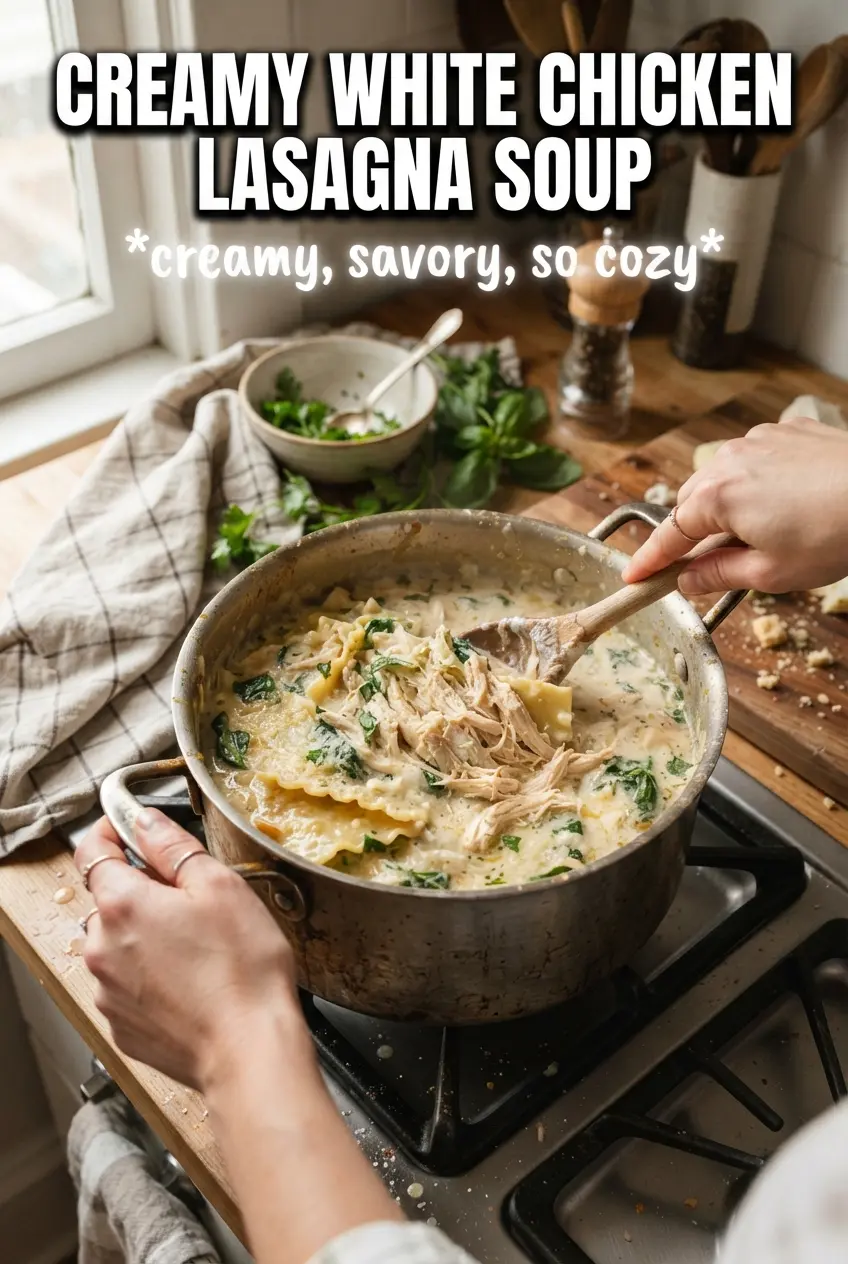
Silky, cozy, and full of the same comfort you want from a baked lasagna, this white chicken lasagna soup lands in the bowl with a rich cream broth, tender noodles, and shredded chicken in every spoonful. The ricotta-mozzarella dollop melts into the hot soup and gives each bite that lasagna feeling without turning on the oven.
What makes this version work is the order. The flour gets cooked in butter first, which keeps the broth from tasting raw and gives the cream a little structure instead of leaving it thin. Cream cheese and parmesan go in near the end, after the noodles are tender, so the soup stays smooth and doesn’t turn grainy or overly thick while the pasta cooks.
Below, I’ve laid out the spots where people usually rush or overheat the pot, plus a few smart swaps if you need to adjust what’s in your fridge. The cheese dollop is worth the extra bowl and spoon.
The broth turned out creamy without getting heavy, and the noodles stayed tender even after I added the chicken and spinach. That ricotta dollop on top made it taste like lasagna in a bowl.
Save this creamy white chicken lasagna soup for the nights when you want rich, cheesy comfort without baking a pan of lasagna.
The One Mistake That Makes Creamy Soup Turn Gluey
The problem with a soup like this isn’t the dairy. It’s heat. If the broth is boiling when the cream cheese and parmesan go in, the texture can turn grainy or slightly broken, especially once the noodles have released starch into the pot. Keep the simmer gentle and steady, then add the rich ingredients after the pasta is tender.
The other place people trip up is timing. Broken lasagna noodles need enough simmer time to soften fully, but not so much that they collapse into mush and drink up every bit of liquid. You want the soup to still look loose in the pot before the cheese goes in, because it thickens as it sits.
- Butter and flour — this is the base that gives the broth body. Cook the flour for a minute or two so it loses that raw taste and starts acting like a light roux.
- Heavy cream — this brings the silky finish. Half-and-half will work in a pinch, but the soup will be thinner and a little less luxurious.
- Cream cheese — it helps the broth emulsify and gives the soup that white lasagna richness. Soften it first so it melts in without stubborn little lumps.
- Parmesan — fresh-grated melts smoother and tastes cleaner than the pre-shredded stuff, which can make the soup a little sandy.
What Each Ingredient Is Actually Doing in This Recipe

- Primary ingredient (the star) — Quality matters most. Choose the best you can find.
- Cooking medium (oil, butter, or broth) — This carries flavors and prevents dryness.
- Seasonings (salt, pepper, spices, herbs) — Layer flavors so nothing overpowers. Build depth gradually.
- Aromatics (garlic, onion, herbs) — Cook with fat to bloom flavors. Become the foundation.
- Supporting ingredients — Complement the main ingredient without overpowering it.
- Sauce or liquid (if applicable) — Brings flavors together. Balance richness with acid.
- Acid (lemon, vinegar, wine, or other) — Brightens and prevents flat-tasting results.
- Final finish (garnish, glaze, or sauce) — Prevents one-dimensional taste and adds visual appeal.
Building the Soup in the Right Order
Softening the Onion and Garlic
Start by cooking the onion in butter until it turns translucent and smells sweet, not browned. Garlic only needs about a minute; once it turns golden and fragrant, move on right away so it doesn’t taste bitter. This first layer sets up the whole pot, so don’t rush it, but don’t let it color too deeply either.
Thickening the Broth Before the Dairy Goes In
Whisk the flour into the butter and onion mixture until it looks paste-like, then slowly stream in the broth and cream while whisking. That gradual addition keeps the base smooth instead of lumpy. Bring it to a gentle simmer, not a rolling boil, because aggressive heat can make the cream separate later.
Cooking the Noodles Without Overdoing Them
Add the broken lasagna noodles and let them cook until they’re tender but still have a little bite in the center. Stir every few minutes so they don’t clump together at the bottom of the pot. If the soup gets too thick before the noodles are done, add a splash of broth rather than turning up the heat.
Finishing With Cheese, Chicken, and Spinach
Stir in the cream cheese and parmesan off the hottest part of the burner if your stove runs strong. Once the soup turns smooth, add the shredded chicken and spinach and cook just until the greens wilt. The soup should look creamy and full, not stiff, because it will keep thickening as it rests.
How to Adapt This When You Need a Different Bowl of Soup
Make it gluten-free
Use a gluten-free lasagna noodle or another sturdy gluten-free pasta shape and cook it just until tender. The soup base itself is easy to keep gluten-free as long as your broth is labeled that way, but the pasta will soften faster than regular noodles, so keep an eye on the pot.
Make it lighter without losing the creamy feel
Swap half the heavy cream for whole milk, then keep the cream cheese and parmesan in place for richness. The broth won’t coat the spoon as heavily, but it still tastes satisfying. Don’t replace all of the cream with milk unless you’re okay with a thinner finish.
Use rotisserie chicken
Rotisserie chicken works well here and saves a step. Add it at the end just long enough to warm through, since it’s already cooked and can dry out if it sits in the simmer too long.
Make it vegetarian
Swap the chicken broth for a good vegetable broth and leave out the chicken. The soup still has enough body from the cream, noodles, and cheeses to feel complete, though the flavor will be a little softer and less savory than the original.
Storage and Reheating
- Refrigerator: Store for up to 4 days. The noodles will keep absorbing liquid, so expect the soup to thicken.
- Freezer: It freezes, but the dairy and noodles both change a bit. Freeze without the noodles if you want the best texture, then cook fresh noodles when you reheat.
- Reheating: Warm it slowly on the stove over low heat with a splash of broth or water. High heat can split the cream and overcook the noodles before the center gets hot.
Questions I Get Asked About This Recipe
Creamy White Chicken Lasagna Soup
Ingredients
Equipment
Method
- Melt the butter in a large pot over medium heat, then sauté the diced onion for 4 minutes until softened.
- Add the minced garlic and cook for 1 minute, stirring constantly so it doesn’t brown.
- Whisk in the flour and cook for 1-2 minutes to remove the raw taste.
- Gradually add the chicken broth and heavy cream, whisking until smooth.
- Stir in Italian seasoning, garlic powder, and nutmeg, then bring the mixture to a simmer.
- Add the broken lasagna noodles and simmer for 10-12 minutes, stirring occasionally, until tender.
- Stir in the softened cream cheese and Parmesan until smooth, then add the shredded chicken and baby spinach.
- Cook for 2 minutes until the spinach wilts, then season with salt and pepper to taste.
- Mix the ricotta and shredded mozzarella to create the cheese dollop.
- Serve each bowl with a very generous spoonful of the cheese dollop and fresh basil on top.