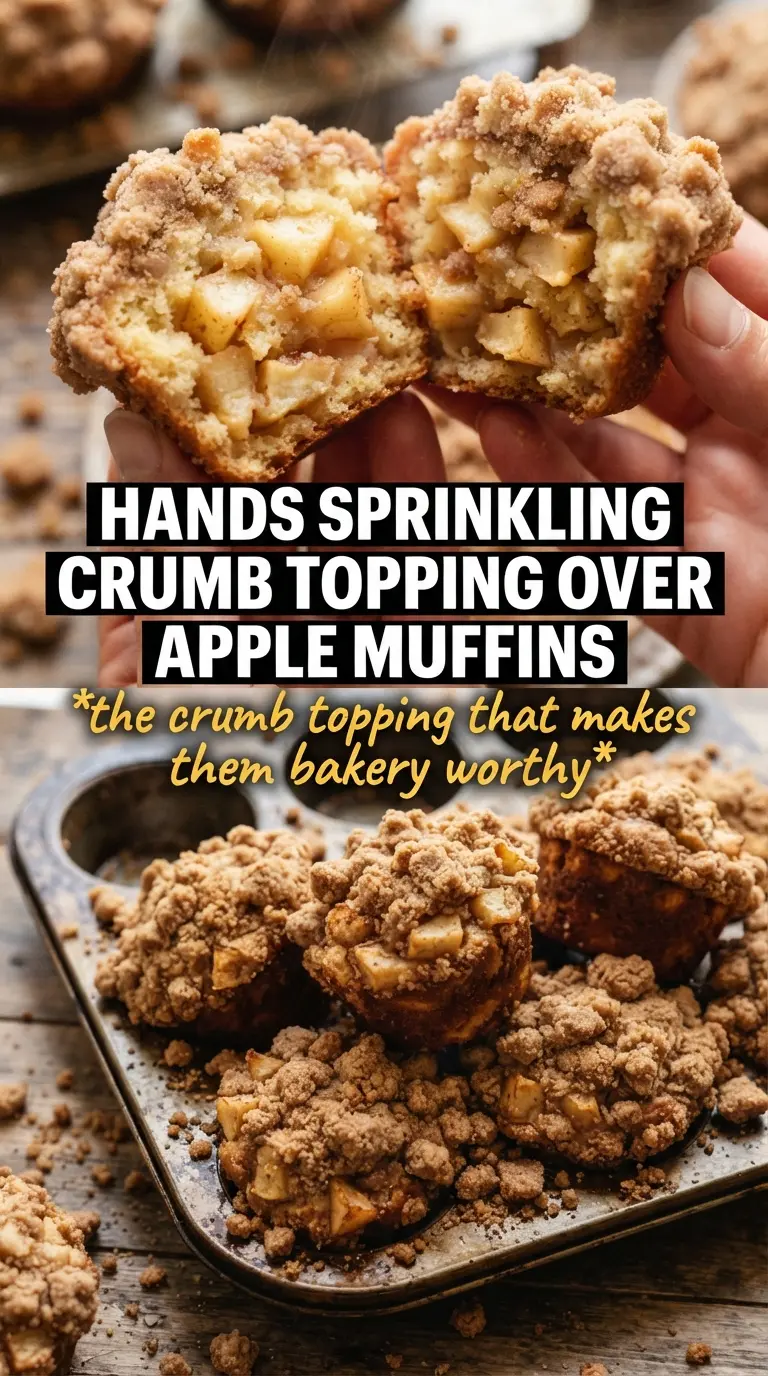
Apple Crumble Muffins bake up with tall domes, a soft, cinnamon-scented crumb, and a buttery oat topping that stays crisp instead of melting into the batter. The diced apples keep every bite moist and give the muffins little pockets of fresh fruit flavor, so they taste like breakfast and dessert in the same hand-held package.
What makes these work is the balance between melted butter in the batter for tenderness and cold butter in the crumble for texture. The yogurt helps the crumb stay soft without turning heavy, and the apples are diced small enough to bake through without making the batter soggy. That combination gives you muffins that rise well, hold together, and still taste homemade in the best way.
Below, I’ve added the one trick that keeps the crumble from disappearing into the tops, plus a few smart swaps if you need to use sour cream, different apples, or make these ahead for the week.
The oat topping stayed crisp and the muffins were still moist the next morning. I used tart apples and the cinnamon came through without overpowering the fruit.
Love the tall domes and buttery oat crumble? Save these Apple Crumble Muffins for a breakfast bake with real apple flavor and a crisp topping.
The Crumble Needs Cold Butter, Not Just More Flour
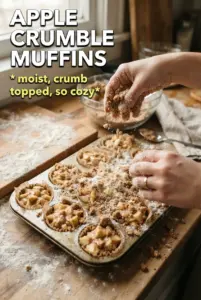
The topping is what keeps these muffins from feeling plain, but it only works if the butter stays cold long enough to bake into little rough crumbs. If you mix it until smooth, you lose the texture and end up with a paste that sinks into the batter. The goal is a shaggy, clumpy mixture that looks a little uneven before it goes into the fridge.
That chill time matters more than people think. Cold crumble holds its shape long enough to brown on top instead of disappearing into the muffin as it rises. If your topping starts to look soft while you’re scooping the batter, slide it back into the fridge for a few minutes before using it.
- Rolled oats — These give the topping its nubby, toasted texture. Quick oats soften too much and lose some of that crumble look, so use rolled oats if you want the best finish.
- Brown sugar — This brings moisture and a deeper caramel note to both the topping and the muffin itself. Packed brown sugar matters here because the extra molasses helps the tops brown beautifully.
- Greek yogurt or sour cream — Either one keeps the crumb tender and adds enough acidity to help the baking soda do its job. Full-fat versions give the best texture, but plain yogurt works too if that’s what you have.
What Each Ingredient Is Actually Doing in This Recipe
- Primary ingredient (the star) — Quality matters most. Choose the best you can find.
- Cooking medium (oil, butter, or broth) — This carries flavors and prevents dryness.
- Seasonings (salt, pepper, spices, herbs) — Layer flavors so nothing overpowers. Build depth gradually.
- Aromatics (garlic, onion, herbs) — Cook with fat to bloom flavors. Become the foundation.
- Supporting ingredients — Complement the main ingredient without overpowering it.
- Sauce or liquid (if applicable) — Brings flavors together. Balance richness with acid.
- Acid (lemon, vinegar, wine, or other) — Brightens and prevents flat-tasting results.
- Final finish (garnish, glaze, or sauce) — Prevents one-dimensional taste and adds visual appeal.
What Each Ingredient Is Doing in the Muffin Batter
- All-purpose flour — This gives the muffins structure without making them tough. If you swap in a portion of whole wheat flour, expect a denser, more rustic crumb and a slightly nuttier taste.
- Melted butter — Melted butter makes the crumb rich and keeps the mixing easy, which is important because you don’t want to overwork the batter. It also gives these muffins a softer bite than oil would.
- Apples — Finely diced apples distribute through the batter better than large chunks, which keeps every muffin balanced and prevents soggy pockets. Firmer apples like Honeycrisp, Gala, or Granny Smith hold up best in the oven.
- Cinnamon and nutmeg — Cinnamon carries the main warm spice note, while nutmeg quietly rounds it out. The nutmeg is subtle, but it keeps the muffins from tasting flat.
Keep the Batter Loose and the Apples Small
Mix the Crumble First
Start with the topping so it has time to chill while you make the batter. Cut the cold butter into the oat mixture until the pieces look like coarse pebbles and damp sand mixed together. That uneven texture is what bakes into crisp little clusters. If it looks greasy or pasty, the butter warmed too much and the topping won’t hold its shape.
Build the Wet and Dry Separately
Whisk the dry ingredients together first so the baking powder, baking soda, and spices are evenly distributed. In the wet bowl, whisk the melted butter with the sugar, eggs, yogurt, milk, and vanilla until the mixture looks smooth and glossy. The batter may look a little thicker than you expect once the flour goes in, and that’s fine. Thick muffin batter helps the tops rise instead of spreading flat.
Fold, Don’t Beat
Add the dry ingredients to the wet and stir only until you stop seeing streaks of flour. A few small lumps are better than overmixing, which makes muffins tough. Fold in the diced apples at the end so they stay intact and don’t bleed too much moisture into the batter. If the batter starts to look gummy, stop immediately.
Bake Until the Tops Spring Back
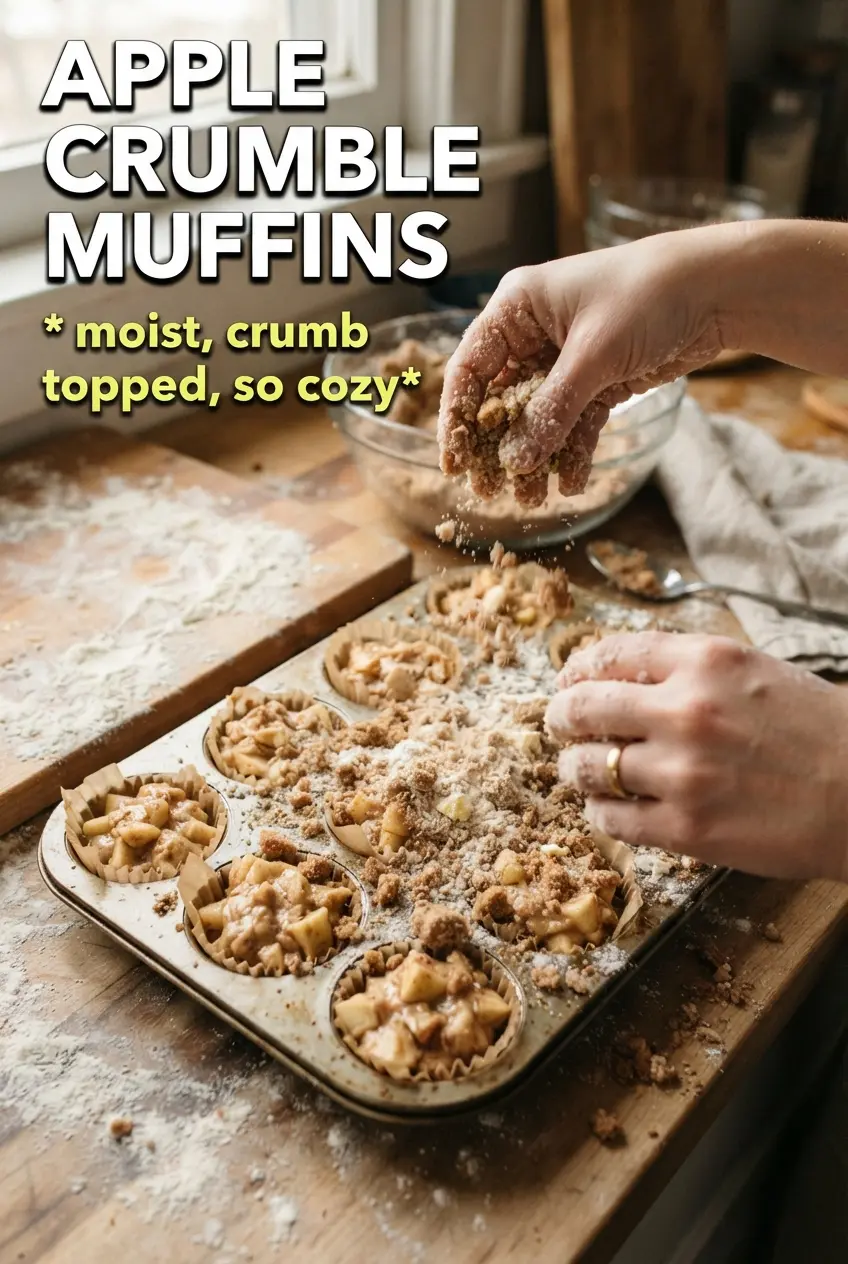
Fill the cups about three-quarters full, then pile the crumble on generously. Bake at 375°F until the tops are deeply golden and a toothpick comes out clean, usually 20 to 22 minutes. The centers should feel set when you touch the tops lightly, but they shouldn’t be dry. Let them sit in the pan for a few minutes before moving them so the crumble has time to firm up.
Three Ways to Adapt These Apple Crumble Muffins
Dairy-Free Version
Use dairy-free butter in both the batter and crumble, and swap in a plain unsweetened plant-based yogurt. The muffins will still be tender, but the topping may be a touch less rich and a little more delicate, so keep an eye on it near the end of baking.
Gluten-Free Swap
A good 1:1 gluten-free flour blend can replace the all-purpose flour in the muffin batter and the topping. The crumb will be a little more delicate, so let the muffins cool before pulling them from the pan. The flavor stays right in line, but the texture is softer and a bit less springy.
Different Apple, Different Result
Granny Smith gives the brightest flavor and keeps the muffins from tasting too sweet. Honeycrisp or Gala make them softer and sweeter. If your apples are very juicy, pat the diced fruit dry with a paper towel before folding it in so the batter doesn’t turn heavy.
Storage and Reheating
- Refrigerator: Store in an airtight container for up to 4 days. The crumble softens a bit, but the muffins stay moist.
- Freezer: These freeze well. Wrap individually and freeze for up to 2 months, then thaw at room temperature or overnight in the fridge.
- Reheating: Warm in a 300°F oven for 6 to 8 minutes or microwave briefly just until heated through. Don’t overheat them or the crumb turns dry and the topping loses its texture.
Answers to the Questions Worth Asking
Apple Crumble Muffins
Ingredients
Equipment
Method
- Preheat oven to 375F and line a 12-cup muffin tin with liners if desired, so the muffins bake evenly from the start.
- For oat crumble topping, mix rolled oats, flour, brown sugar, and cinnamon; cut in cold cubed butter until clumpy.
- Refrigerate the crumble while you mix the batter to keep the topping crisp and thick.
- In a large bowl, whisk all-purpose flour, baking powder, baking soda, cinnamon, nutmeg, and salt.
- In another bowl, whisk melted butter, brown sugar, eggs, Greek yogurt or sour cream, whole milk, and vanilla until smooth.
- Fold the flour mixture into the wet mixture until just combined; fold in diced apples to keep the batter tender.
- Fill muffin cups about 3/4 full with batter so they dome as they bake.
- Top each muffin generously with the chilled oat crumble for a crisp, golden finish.
- Bake for 20-22 minutes at 375F until a toothpick comes out clean and the tops are golden-brown.