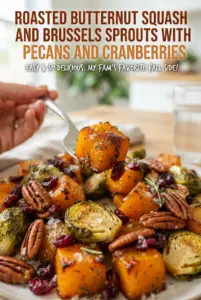
Caramelized butternut squash and crisp-edged Brussels sprouts make one of those side dishes that disappears faster than the main course. The squash turns soft and sweet at the edges, the sprouts pick up a roasted, nutty bite, and the cranberries and pecans bring just enough contrast to keep every forkful interesting. A quick maple-balsamic toss at the end ties everything together without making the vegetables soggy.
What makes this version work is the order. The vegetables roast first on a hot sheet pan so they can brown instead of steam, and the maple-balsamic goes on after roasting, not before. That keeps the sugar from burning and lets the glaze cling to the vegetables instead of disappearing into the pan. Toasted pecans stay crisp this way, too, which matters more than it sounds like when you want some texture in every bite.
Below, I’m walking through the little details that matter here: how to cut the squash so it cooks evenly with the Brussels sprouts, when to toss the pan, and how to keep the final mix bright instead of heavy. If you’ve ever had a roasted vegetable side turn soft and flat, this one fixes that problem.
The squash got those caramelized edges I was hoping for, and the Brussels sprouts stayed crisp instead of going soft. The maple-balsamic was just enough to pull everything together without making it sweet.
Save this roasted butternut squash and Brussels sprouts recipe for a caramelized side with pecans, cranberries, and maple-balsamic.
The Reason These Vegetables Caramelize Instead of Steam
The biggest mistake with roasted vegetables is crowding the pan. When the squash and Brussels sprouts sit in a thick layer, they release moisture and end up soft before they ever get a chance to brown. A hot oven and a wide sheet pan give them enough contact with the metal to develop those dark, crisp edges that make this dish work.
The other detail that matters is cutting everything to a similar size. The squash should be in generous cubes, and the Brussels sprouts should be halved through the stem so they hold together. If the pieces are too small, they dry out before the centers turn tender. If they’re too large, the outsides brown before the inside is ready.
- Roast at 425°F so the vegetables start caramelizing quickly.
- Use a large sheet pan, not a baking dish, so moisture can escape.
- Toss halfway through roasting to expose fresh surfaces to the heat.
- Add the maple-balsamic after roasting so the glaze stays glossy, not burnt.
What Each Ingredient Is Doing in the Pan
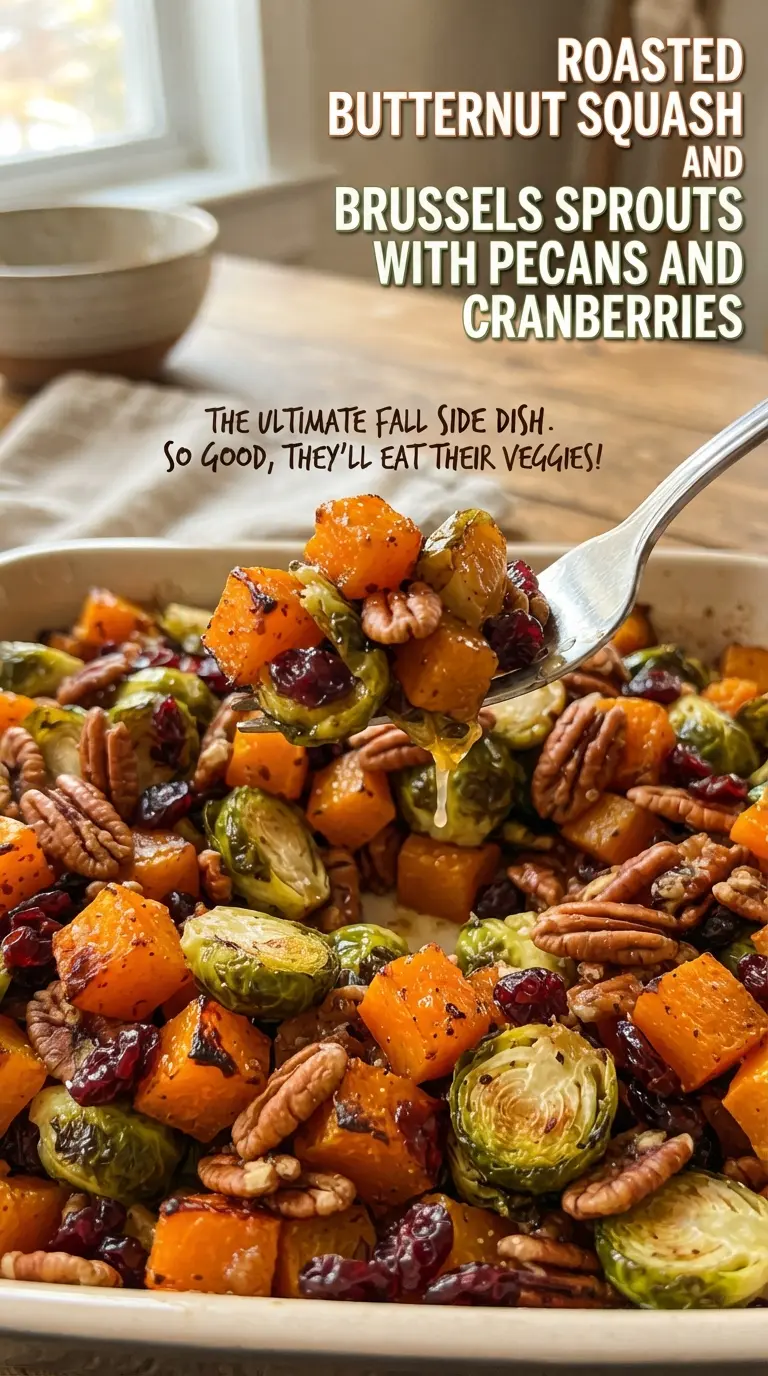
- Butternut squash — This brings sweetness and a soft, creamy center after roasting. Fresh squash gives the best texture here; pre-cut squash works fine, but choose pieces that aren’t wet or unevenly trimmed.
- Brussels sprouts — These add the savory edge that keeps the dish from leaning too sweet. Halve them through the core so the leaves stay attached and the cut side can caramelize on the pan.
- Olive oil — You need enough to coat every surface lightly. Too little oil gives you dry spots and uneven browning, while too much leaves the vegetables greasy instead of crisp-edged.
- Maple syrup and balsamic vinegar — This is the finish that makes the dish taste polished. The maple adds gloss and roundness, while the balsamic cuts through the sweetness; whisk them together before tossing so the coating is even.
- Pecans — Toasted pecans bring crunch and a buttery note. If yours aren’t already toasted, warm them in a dry skillet for a few minutes before adding them, or they’ll taste flat next to the roasted vegetables.
- Dried cranberries — These add little bursts of tartness that wake up the whole dish. Add them at the end so they stay plump instead of tightening up in the oven.
Getting the Roast and the Finish in the Right Order
Coating the Vegetables Evenly
Toss the squash and Brussels sprouts with the oil, salt, and pepper until every cut surface looks lightly slicked. Dry patches brown unevenly, and the seasoning won’t distribute well if the vegetables are piled onto the pan without mixing first. Spread them out in a single layer and keep the cut sides facing down where you can; that’s where the best color starts.
Roasting Until the Edges Brown
Slide the pan into a hot oven and leave it alone until the bottoms take on deep golden spots. Halfway through, use a spatula to turn everything so new surfaces hit the pan. If the vegetables still look pale at 25 minutes, give them a few more minutes rather than pulling them early; under-roasted squash tastes dull and the Brussels sprouts lose their edge.
Glazing Without Softening the Crunch
Whisk the maple syrup and balsamic vinegar together, then toss them with the hot vegetables right before serving. The heat helps the glaze coat every piece, but the vegetables are already cooked, so they won’t absorb so much liquid that they go limp. Fold in the cranberries and pecans last so the nuts stay crisp and the fruit stays chewy.
How to Adapt This Side Dish Without Losing the Texture
Make It Vegan-Friendly and Naturally Dairy-Free
The recipe already fits a dairy-free table as written, so nothing needs to change there. That’s useful because the maple-balsamic glaze and olive oil bring all the richness you need without butter or cheese getting in the way of the vegetables.
Swap the Pecans for Another Crunch
Walnuts or pepitas both work if that’s what you have. Walnuts taste a little earthier and softer, while pepitas keep a cleaner crunch. Just toast whichever nut or seed you use so it stands up to the sweet glaze.
Use Honey Instead of Maple Syrup
Honey gives a slightly sharper sweetness and a thicker glaze. Use the same amount, but whisk it well with the balsamic so it coats smoothly. The flavor shifts a little warmer and floral, which is nice if you want a less maple-forward finish.
Storage and Reheating
- Refrigerator: Store leftovers in an airtight container for up to 4 days. The pecans will soften a bit, but the flavor holds up well.
- Freezer: The roasted vegetables can be frozen, but the texture changes and the Brussels sprouts lose some crispness. Freeze without the pecans if you can, then add fresh toasted nuts after reheating.
- Reheating: Warm on a sheet pan in a 375°F oven until hot. The oven brings back more texture than the microwave, which tends to make the sprouts soft and the squash mushy.
Answers to the Questions Worth Asking
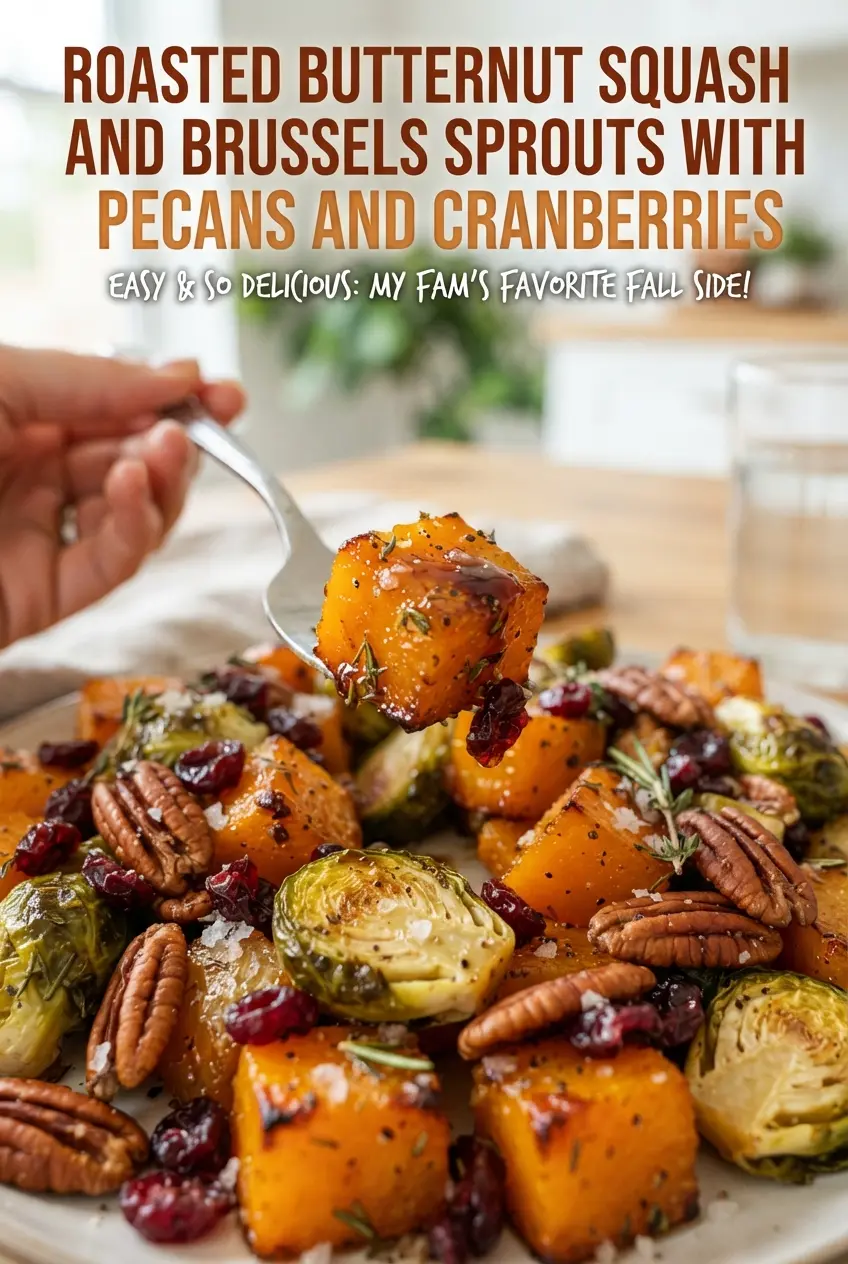
Roasted Butternut Squash and Brussels Sprouts with Pecans and Cranberries
Ingredients
Equipment
Method
- Preheat oven to 425F and place a large sheet pan inside while it heats.
- Toss butternut squash and Brussels sprouts with olive oil, salt, and black pepper on the hot sheet pan, spreading into an even layer with cut sides down.
- Roast 25-30 minutes, tossing halfway, until tender and caramelized, with browned edges on the squash and sprouts.
- Whisk maple syrup and balsamic vinegar together until smooth.
- Toss roasted butternut squash and Brussels sprouts with the maple balsamic mixture, dried cranberries, and toasted pecans until evenly coated.
- Serve warm straight from the pan so the cranberries soften slightly and the pecans stay crisp.