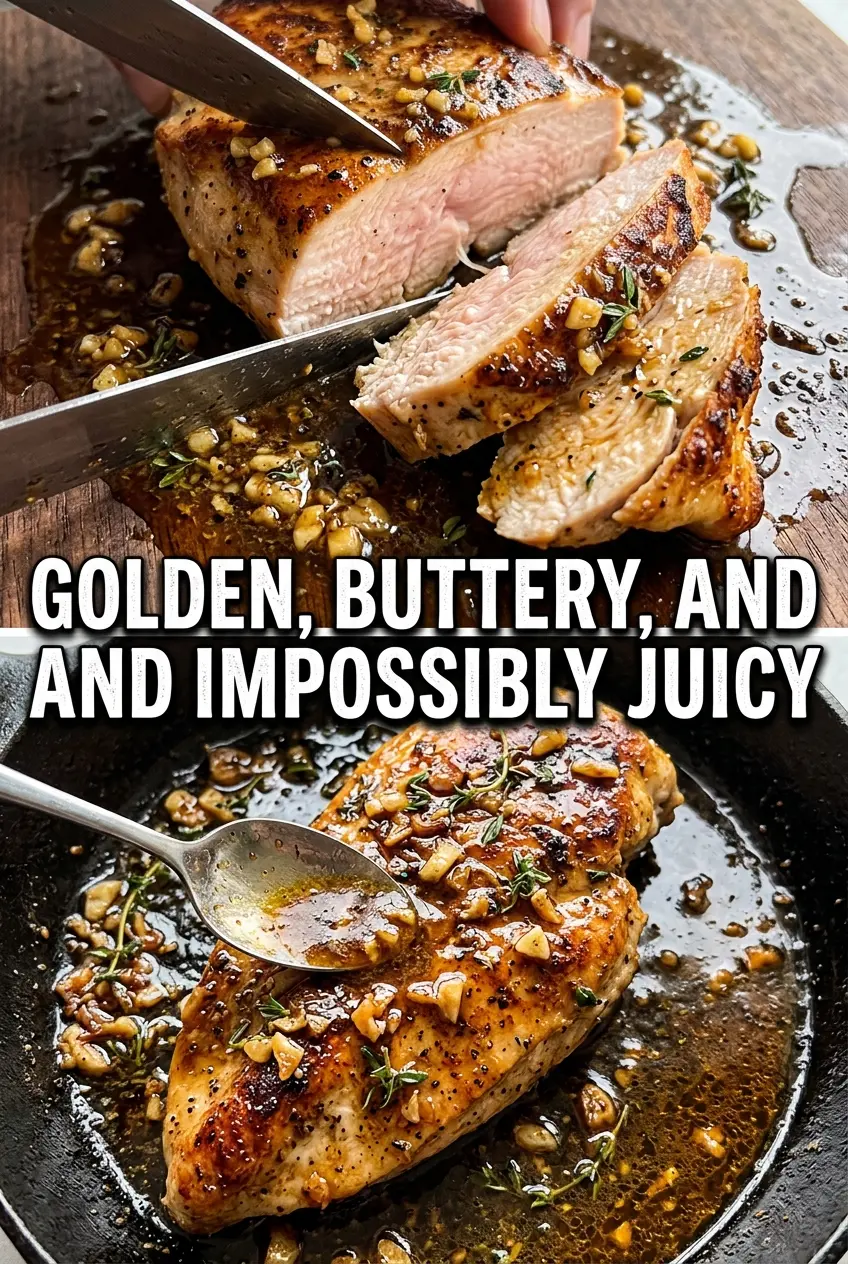
Golden chicken breasts in garlic butter sauce earn a permanent spot on the dinner rotation because they hit the table looking restaurant-worthy without turning dinner into a project. The chicken sears into a deep, savory crust, then finishes in a pan sauce that tastes rich and bright at the same time. The garlic stays visible and fragrant instead of disappearing into the butter, which gives every bite a little pop of sharpness.
This version works because the chicken is seared first and the sauce is built in the same skillet. Those browned bits on the bottom are the backbone of the sauce, so the broth goes in while the pan is still warm enough to lift them cleanly. A little lemon juice at the end keeps the butter from feeling heavy, and fresh parsley gives the whole dish a clean finish.
Below you’ll find the exact timing that keeps the chicken juicy, plus the small heat-control details that keep the garlic from turning bitter. If you’ve ever had a butter sauce go greasy or a chicken breast dry out before the center was done, this method fixes both.
The sauce clung to the chicken instead of pooling at the bottom, and the garlic stayed mellow and buttery. I served it with bread for the pan sauce and my husband asked if we could put this in the weekly rotation.
Save this Garlic Butter Chicken for nights when you want a crisp sear, a glossy garlic sauce, and dinner in one skillet.
The part that keeps the garlic from tasting harsh
The mistake most people make here is cooking the garlic too hard, too fast. Garlic butter sounds forgiving, but minced garlic burns in a hurry once the chicken comes out and the skillet is still hot. Pull the pan off the highest heat before the butter and garlic go in, then let the garlic bloom gently until it smells sweet and nutty, not sharp.
The other place this dish can go sideways is the broth step. You want enough liquid to dissolve the browned bits and loosen the sauce, but not so much that you wash away the buttery base. A quick simmer reduces it just enough to turn glossy.
- Chicken breasts — Boneless breasts work because they sear cleanly and stay quick-cooking. If yours are very thick, pound them to an even thickness so the outside doesn’t overcook before the center reaches 165°F.
- Butter — This is the body of the sauce, so use real butter here. There isn’t a substitute that gives the same richness or gloss, though ghee can handle higher heat if you want a slightly nuttier finish.
- Garlic — Fresh minced garlic matters. Jarred garlic can work in a pinch, but it cooks less evenly and tends to taste flatter in a sauce this simple.
- Chicken broth — Use a broth you don’t mind tasting on its own. Low-sodium broth gives you better control, especially once the pan juices and butter reduce together.
- Lemon juice — This is the small final lift that keeps the sauce from reading heavy. Add it a little at a time at the end so the sauce stays balanced instead of becoming sharp.
How to get a deep sear before the sauce goes in
Seasoning and preheating
Salt and pepper the chicken generously on both sides, then let it sit while the skillet heats so the seasoning starts working immediately. The pan should be hot enough that the oil shimmers as soon as it goes in, but not smoking hard. If the chicken hits a lukewarm pan, it steams first and you lose the crust you’re after.
Building the crust
Lay the chicken in the skillet and leave it alone for 6 to 7 minutes per side. Don’t nudge it around while it’s searing; the crust needs uninterrupted contact with the pan to turn deeply golden and release cleanly. When it’s ready to flip, it should move without sticking and the edges will look opaque halfway up the sides.
Making the garlic butter pan sauce
After the chicken comes out, lower the heat before the butter goes in. Add the garlic and cook just until fragrant, about 1 to 2 minutes, then pour in the broth and scrape the skillet well. The sauce should bubble gently and smell savory, not aggressively garlicky or browned.
Finishing the chicken in the sauce
Return the chicken to the pan and spoon the sauce over the top until the meat is coated and heated through. Add the lemon juice and parsley right at the end so they stay bright. If the sauce seems thin, let it simmer for another minute; if it looks greasy, the heat was too high and a brief off-heat rest usually brings it back together.
How to adapt the skillet without losing the good part
Use chicken thighs for a richer, more forgiving result
Boneless thighs stay juicier than breasts and handle a little extra cooking time without drying out. They also release more flavorful drippings into the pan, which makes the sauce taste deeper, though the final dish will be a little less clean and lean.
Make it dairy-free with olive oil and a smaller broth reduction
Swap the butter for extra olive oil and simmer the broth a touch longer so the sauce still feels cohesive. You won’t get the same velvety finish, but the garlic, lemon, and thyme still carry the dish well.
Keep it gluten-free without changing the method
This recipe is naturally gluten-free as long as your broth is certified gluten-free. The technique stays the same, and the sauce thickens from reduction instead of flour, which is one reason it works so well.
Add mushrooms or spinach for a fuller pan dinner
Cook sliced mushrooms after the chicken comes out, before the garlic, so they can brown first instead of steaming. Spinach should go in at the very end and only needs a minute to wilt into the sauce.
Storage and Reheating
- Refrigerator: Store leftovers in an airtight container for up to 3 days. The sauce will tighten as it chills, but the flavor holds up well.
- Freezer: It freezes, though the butter sauce can separate a bit when thawed. Freeze in a shallow container for up to 2 months if needed, then rewarm gently and stir well.
- Reheating: Reheat over low heat in a covered skillet with a splash of broth or water. High heat is the fastest way to dry out the chicken and break the sauce.
Answers to the questions worth asking
Garlic Butter Chicken
Ingredients
Equipment
Method
- Season the chicken breasts generously with salt and pepper to coat evenly.
- Heat the olive oil in a large skillet over medium-high heat and sear the chicken for 6-7 minutes per side until golden and cooked through to 165°F.
- Remove the chicken and set aside on a plate while you make the sauce.
- Reduce the heat to medium, then add the butter and garlic to the skillet and cook for 1-2 minutes until fragrant and lightly sizzling.
- Add the chicken broth and dried thyme, scraping up any browned bits from the bottom of the pan, then simmer for 2-3 minutes.
- Return the chicken to the pan, spoon the sauce over the top so it swims in the garlic butter.
- Add lemon juice and chopped parsley, then serve immediately.