Grilled Vietnamese lemongrass chicken lands on the plate with charred edges, juicy thighs, and that unmistakable mix of citrusy lemongrass, garlic, and fish sauce that keeps pulling you back for another bite. The brown sugar in the marinade doesn’t make it sweet in a heavy way; it helps the chicken take on a deep, sticky caramelization on the grill.
Boneless thighs are the right cut here because they stay tender even with a hot fire and a long marinade. Lemongrass needs to be minced finely enough that its flavor spreads through the chicken instead of sitting in hard little fibers, and the marinade works best when it has time to do its job overnight or at least for several hours. A quick grill, a short rest, and a pile of herbs and lime finish the whole dish with the freshness it needs.
Below, I’ve included the small details that matter most: how to handle lemongrass so it actually flavors the chicken, what to watch for on the grill, and a few smart ways to adapt the recipe without losing what makes it work.
The chicken picked up the lemongrass flavor all the way through, and the grill gave it those crisp, caramelized edges without drying it out. I served it over rice with herbs and lime, and the bowl was scraped clean.
Save this grilled Vietnamese lemongrass chicken for the nights when you want smoky char, juicy thighs, and a fast rice bowl that tastes restaurant-worthy.
The Part That Keeps Lemongrass Chicken From Tasting Flat
The biggest mistake with this dish is treating lemongrass like a background flavor. It isn’t. If it’s left in big, fibrous pieces, the chicken can taste vaguely citrusy in spots and plain everywhere else. Mince the tender inner stalks as finely as you can so the marinade coats every surface and the flavor has a chance to sink into the meat during the rest.
Fish sauce and brown sugar do more than season the chicken. Fish sauce brings salt and depth, while sugar helps the surface caramelize instead of drying out over the fire. If you rush the marinade, the chicken will still cook, but it won’t have the layered savory-sweet edge that makes this version worth repeating.
What Each Ingredient Is Actually Doing in This Marinade

- Chicken thighs — Boneless thighs stay juicy over high heat and forgive a longer marinade. Chicken breast can work, but it cooks faster and dries out more easily, so the grill time has to be shorter and watched closely.
- Lemongrass — This is the signature ingredient, and the tender inner portion matters most. Trim away the dry outer layers and mince the soft part finely; big pieces won’t distribute well and can feel stringy on the plate.
- Fish sauce — This gives the marinade its savory backbone. There isn’t a substitute that tastes identical, but in a pinch you can use soy sauce plus a tiny pinch of salt; the result is cleaner and less complex, but still workable.
- Brown sugar — It doesn’t just sweeten the chicken; it helps the surface blister and brown. White sugar works if that’s what you have, though the flavor will be a little less rounded.
- Garlic and shallot — These build the aromatic base and keep the marinade from tasting one-note. Mince them finely so they cling to the chicken instead of burning off in the grill grates.
- Soy sauce and black pepper — Soy sauce deepens the salty edge, while black pepper adds a warm bite that shows up after the char. Use standard soy sauce, not sweet soy, or the marinade can turn too heavy.
How to Get the Char Without Drying Out the Chicken
Mixing the Marinade
Stir the lemongrass, fish sauce, brown sugar, oil, garlic, shallot, soy sauce, and pepper until the sugar looks mostly dissolved. The mixture should smell sharp, savory, and bright all at once. If the sugar sits in gritty pockets, it won’t coat the chicken evenly, and those spots can brown too fast on the grill.
Letting the Chicken Marinate
Coat the chicken thighs thoroughly and refrigerate them for at least 4 hours, with overnight giving you the best flavor. Longer than 24 hours is too much for the texture, especially with all the salt in the marinade. The chicken should look glossy and slightly darker when it’s ready to cook.
Grilling Over Medium-High Heat
Preheat the grill before the chicken goes on. You want a hot grate that sears quickly and leaves those dark grill marks without turning the sugars in the marinade into burnt spots. Grill the thighs for 6 to 7 minutes per side, and if the flames flare, move the chicken to a cooler spot instead of chasing it around the grill.
Resting and Serving
Let the chicken rest for a few minutes before slicing. That short pause keeps the juices in the meat instead of on the cutting board. Serve it with rice, plenty of fresh herbs, and lime wedges so each bite can get a hit of acid and freshness right at the table.
How to Adapt This for Different Diets and Busy Weeks
Use chicken breasts instead of thighs
Chicken breast works if that’s what you have, but it needs a shorter grill time and a closer eye. Pull it off as soon as it reaches doneness so it stays juicy, and slice it thinner for serving.
Make it gluten-free
Swap the soy sauce for a certified gluten-free tamari or gluten-free soy sauce. The marinade still tastes balanced and savory, and you won’t lose the caramelized finish on the grill.
Skip the grill and use a broiler
If you don’t have access to an outdoor grill, broil the chicken on a lined sheet pan close to the heat source. You’ll still get good browning, though you’ll miss a little of the smoky edge from live fire.
Make it ahead for bowls and meal prep
Marinate the chicken the night before, grill it the next day, and slice it after it cools slightly. It holds up well in rice bowls with herbs, cucumber, and lime, which makes leftovers feel planned instead of repetitive.
Storage and Reheating
- Refrigerator: Store leftovers in an airtight container for up to 4 days. The flavor stays good, and the chicken is especially useful for rice bowls and salads.
- Freezer: The cooked chicken freezes well for up to 2 months. Slice it first or freeze it in portions so it thaws evenly.
- Reheating: Warm it gently in a skillet over low heat with a splash of water, or microwave it in short bursts. High heat dries out the thighs and makes the edges tough instead of juicy.
Answers to the Questions Worth Asking
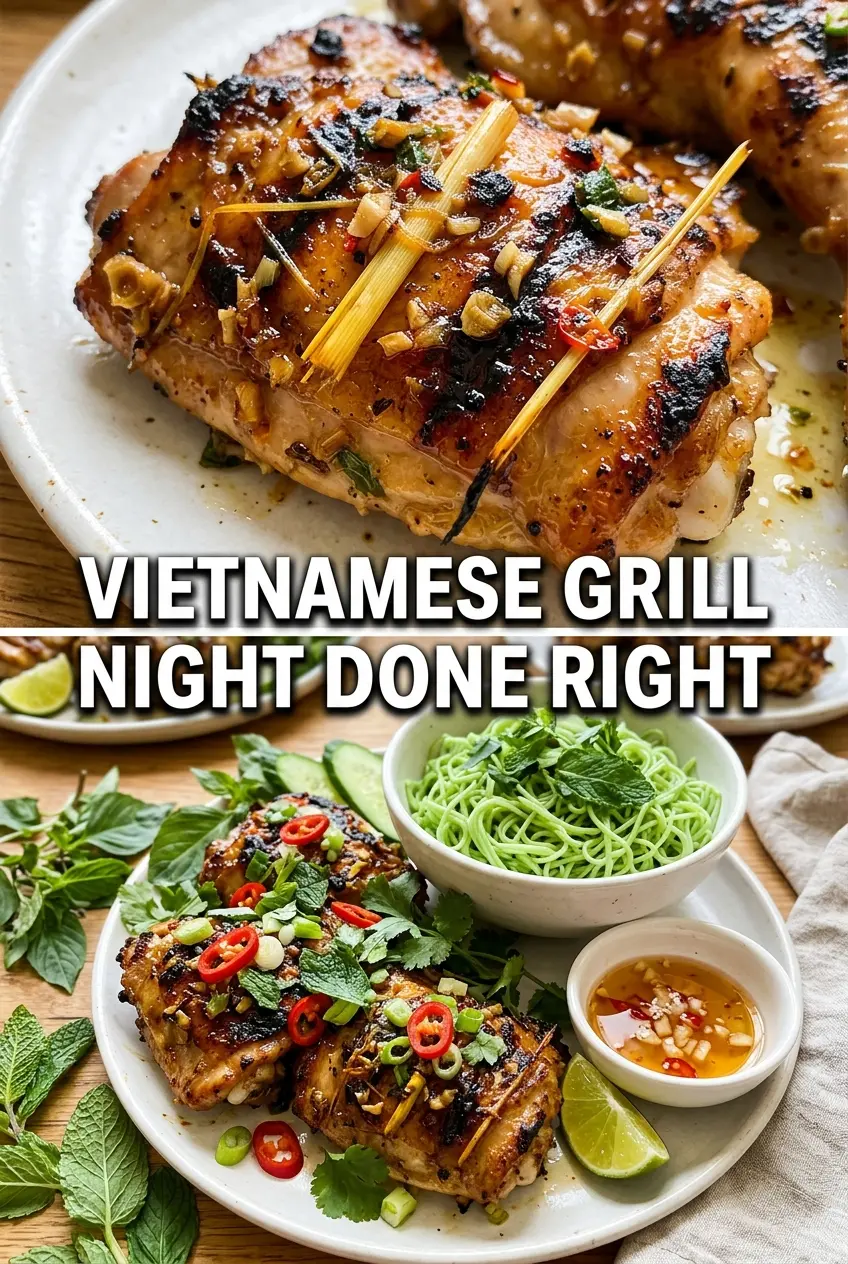
Grilled Vietnamese Lemongrass Chicken
Ingredients
Equipment
Method
- Combine the minced lemongrass, fish sauce, brown sugar, vegetable oil, minced garlic, minced shallot, soy sauce, and black pepper in a bowl, stirring until the sugar dissolves and the mixture looks glossy.
- Marinate the chicken thighs in the bowl and cover, then refrigerate for 4-24 hours so the surface turns aromatic and well coated.
- Preheat the grill to medium-high heat, aiming for steady sizzle when the chicken is placed on the grates.
- Grill the chicken for 6-7 minutes per side until deeply charred and cooked through, adjusting heat to keep the outside caramelizing without burning the marinade.
- Let the grilled chicken rest briefly, then slice and serve with rice, fresh herbs, and lime wedges.