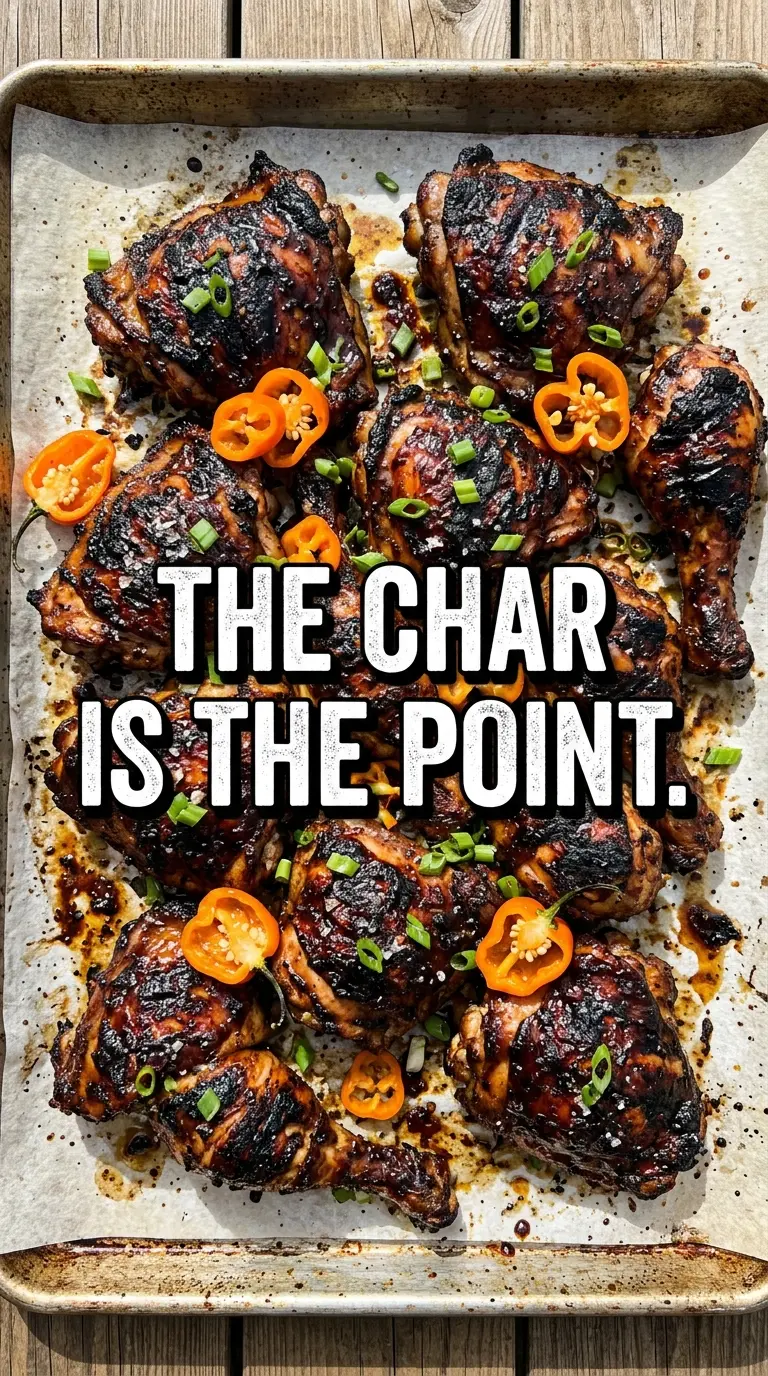
Jamaican jerk chicken lives and dies on the marinade. When it’s done right, the chicken comes off the grill with dark, spicy edges, a little sweetness in the crust, and meat that stays juicy under all that heat. The best bites have that smoky char on the outside and a deep, fragrant bite from thyme, allspice, lime, and pepper all at once.
This version works because the marinade isn’t just about heat. Scotch bonnets bring the fire, but the green onions, thyme, garlic, and allspice build the backbone, and the brown sugar helps the chicken brown instead of drying out. Scoring the chicken matters here too. It gives the seasoning a place to sink in, which is the difference between chicken that tastes coated and chicken that tastes seasoned all the way through.
Below, I’ve included the one marinating detail that makes a big difference, plus a few smart swaps and fixes for people who want the flavor without guessing at the heat level.
I marinated it overnight and the flavor went all the way through the meat. The grill got those charred edges without burning the sugar, and the lime at the end made it pop.
Save this Jamaican jerk chicken for the nights when you want smoky char, real heat, and a marinade that works all the way into the meat.
The Marinating Step That Decides Whether the Spice Stays on the Chicken
The biggest mistake with jerk chicken is rushing the marinade and hoping the grill will fix it. It won’t. The flavor needs time to move from the surface into the scored cuts, and that marinating window is what gives you chicken that tastes seasoned instead of just sauced. Four hours is the floor here. Overnight is even better if you want the ginger-free, thyme-heavy spice to settle in and round out.
Scoring the chicken is not busywork. Those shallow cuts let the marinade cling and seep in, especially around thicker pieces like thighs and drumsticks. If the cuts are too deep, the chicken can dry out over the grill. If they’re too shallow, you lose the payoff. You want enough space for the seasoning to get in without turning the meat ragged.
- Brown sugar — It doesn’t just sweeten the marinade. It helps the chicken caramelize and gives you those dark, sticky edges that jerk chicken should have.
- Scotch bonnet peppers — They bring the right kind of heat and a fruity pepper flavor. Habaneros work if that’s what you can buy, but they’re a little less floral and a little more straightforwardly hot.
- Fresh thyme — Dried thyme won’t taste the same here. Fresh thyme gives the marinade that clean, herbal backbone that keeps the spice from tasting flat.
- Allspice — This is the signature note. Skip it and you lose the jerk character completely.
What Each Ingredient Is Doing in the Jerk Marinade
- Chicken pieces — Bone-in pieces hold up best on the grill and stay juicy through the longer cooking time. A mix of thighs and drumsticks gives you the most forgiving result.
- Green onions — They bring sharpness and a little sweetness after blending. Don’t swap in yellow onion here unless you want a heavier, less fresh-tasting marinade.
- Soy sauce — It adds salt and deepens the color, which helps the chicken brown. If you need a gluten-free option, use tamari or coconut aminos, but coconut aminos will taste a touch sweeter.
- Lime juice — It brightens the marinade and helps cut through the richness of the chicken. Fresh lime is worth using because bottled juice tastes dull in a recipe this bold.
- Garlic, black pepper, cinnamon, and nutmeg — These are the support players that make jerk taste layered instead of one-note hot. The cinnamon and nutmeg sound unusual, but they’re part of what gives the seasoning its warm, unmistakable finish.
Building the Marinade, Then Grilling Until the Edges Char
Blending the spice base
Blend the green onions, peppers, garlic, thyme, brown sugar, soy sauce, lime juice, allspice, black pepper, cinnamon, nutmeg, and salt until the marinade looks thick and fairly smooth. A few tiny flecks are fine, but you don’t want big chunks left behind because they’ll stick to the grill and burn before the chicken cooks through. The mixture should smell sharp, warm, and peppery all at once.
Coating and resting the chicken
Score the chicken pieces, then rub the marinade over every surface and press some into the cuts. The chicken should look fully coated, not lightly brushed. Refrigerate it for 4 to 24 hours. If you stop at 20 minutes, you’ll get surface flavor, but you’ll miss the deeper, fuller seasoning that makes jerk chicken worth the wait.
Grilling for char without drying out
Preheat the grill to medium heat and cook the chicken, turning often, for 30 to 40 minutes. The skin should darken and char in spots, but if the heat is too high, the sugar in the marinade will burn before the meat cooks through. Move pieces around the grill if one side is getting too dark. The chicken is ready when the juices run clear and the thickest pieces are cooked through at the bone.
Finishing with the right sides
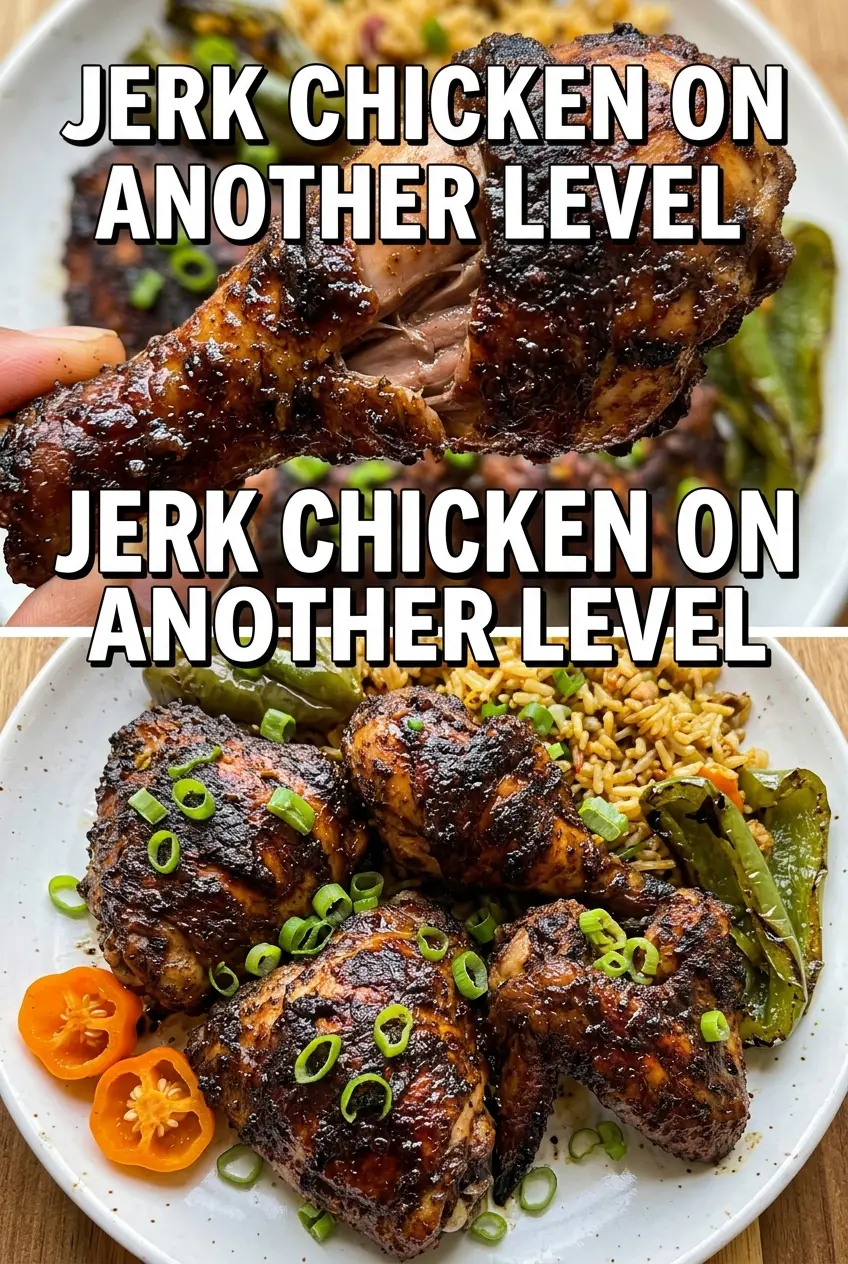
Let the chicken rest for a few minutes before serving so the juices stay in the meat instead of flooding the cutting board. Lime wedges are not optional in my kitchen because that last hit of acid wakes up the char and the spice. Rice and peas make the whole plate feel complete and give you something soft and calming next to all that heat.
How to Dial the Heat Up, Down, or Sideways
Milder jerk chicken
Use one seeded scotch bonnet or habanero instead of two, and add an extra green onion to keep the marinade balanced. You’ll still get the warm spice and the classic jerk aroma, but the burn backs off enough for people who want flavor without a lingering sting.
Gluten-free version
Swap the soy sauce for tamari or coconut aminos. Tamari keeps the flavor closest to the original, while coconut aminos adds a little sweetness and a lighter color.
Oven-cooked jerk chicken
If grilling isn’t an option, roast the marinated chicken on a rack set over a sheet pan at 425°F until cooked through, then finish under the broiler for a few minutes to bring back the char. You won’t get the same smoke, but the broiler gives you those dark edges that make the dish feel right.
Storage and Reheating
- Refrigerator: Store cooked chicken in an airtight container for up to 4 days. The spice gets even deeper on day two.
- Freezer: Freeze cooked chicken for up to 2 months. Wrap pieces well so they don’t dry out or pick up freezer burn.
- Reheating: Warm in a 325°F oven, covered loosely with foil, until heated through. A hot microwave will toughen the chicken fast, so use it only for small portions and cover them with a damp paper towel.
Questions I Get Asked About This Recipe
Jamaican Jerk Chicken
Ingredients
Method
- Blend the green onions, scotch bonnet peppers, garlic, fresh thyme, brown sugar, soy sauce, lime juice, allspice, black pepper, cinnamon, nutmeg, and salt until smooth (no visible chunks).
- Score the chicken pieces and rub the marinade all over, getting it into the cuts.
- Marinate in the refrigerator for 4-24 hours to fully flavor the meat.
- Preheat the grill to medium heat, aiming for steady cooking with visible grill marks.
- Grill the chicken, turning frequently, for 30-40 minutes until charred with jerk spice visible and cooked through (juices run clear).
- Serve the jerk chicken with rice and peas and add lime wedges on the side.