Caramelized BBQ chicken thighs earn their spot in the rotation because the skin turns crisp before the sauce goes on, then the glaze tightens into a sticky, smoky coat that clings to every bite. Dark meat handles the grill better than lean cuts, so you get juicy chicken with charred edges instead of dry meat chasing rescue from extra sauce.
The trick is starting with bone-in, skin-on thighs and giving the skin enough time over medium heat to render and brown before you brush on anything sweet. Brown sugar and BBQ sauce can burn fast if they go on too early, so the sauce gets added near the end, after the chicken has already cooked through and picked up real grill flavor. The apple cider vinegar keeps the glaze from turning flat, and the smoked paprika pushes the barbecue note deeper without making the sauce taste muddy.
Below you’ll find the timing that keeps the skin crisp, the point where the glaze goes from glossy to caramelized, and a couple of useful swaps if you’re working with a different cooker or a different sauce.
The skin got crispy before I even added the sauce, and the glaze turned sticky instead of burning. I served these with slaw and there wasn’t a thigh left.
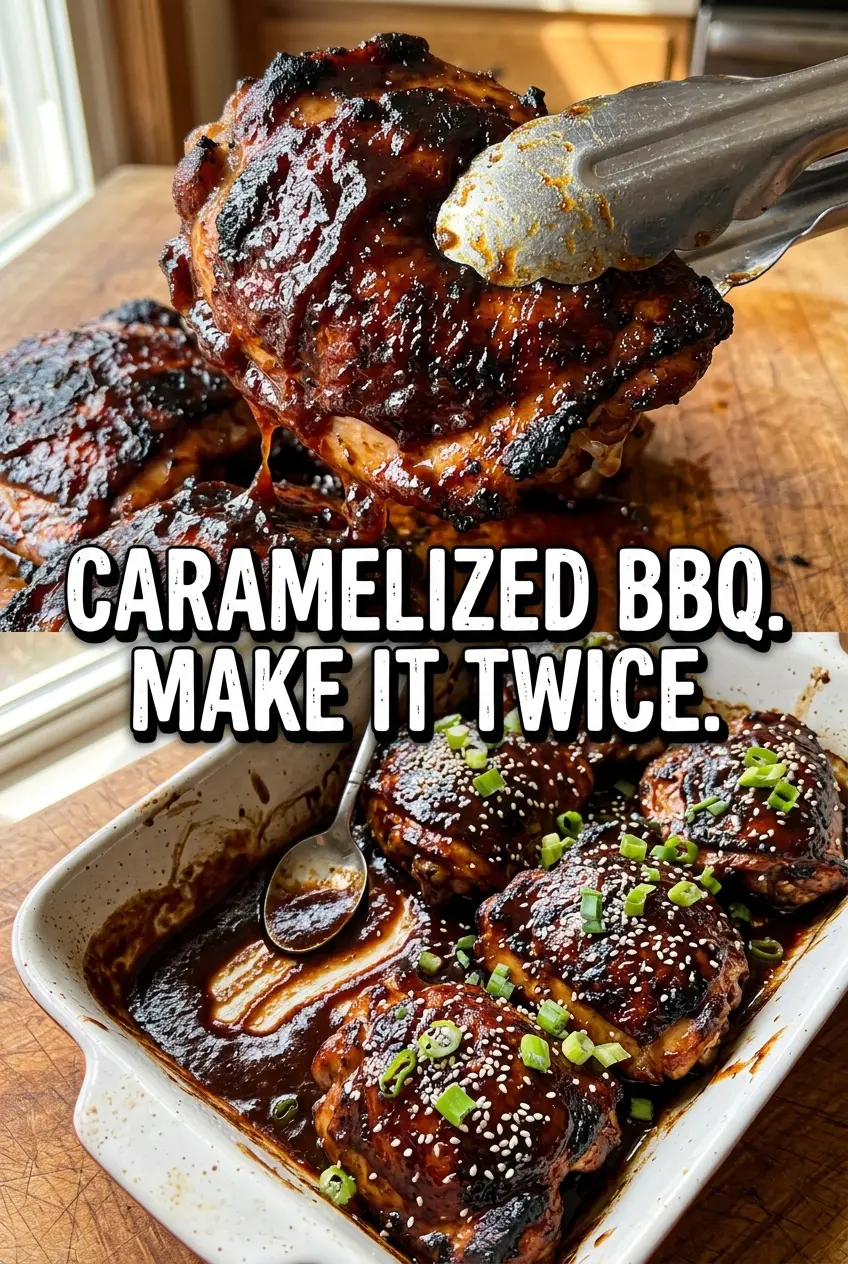
Caramelized BBQ chicken thighs stay crisp on the outside and sticky on top when the sauce goes on at the end.
The Part That Keeps the Sauce from Burning Before the Chicken Is Done
The mistake with barbecue chicken thighs is rushing the sauce. Sugar-heavy glazes look harmless at first, then they scorch fast once the grill runs hot, and burnt sauce tastes bitter long before the chicken has finished cooking. That’s why the thighs cook mostly plain in the beginning: the skin renders, the meat cooks through, and the sauce only comes in once the chicken has structure and color.
If the thighs are crowded, they steam instead of sear. Give each piece some breathing room so the skin has a chance to crisp and the fat can drip away. You’re aiming for a clean release from the grate and a deep golden color, not pale chicken with soft skin and a sauce that never quite sets.
What the BBQ Sauce, Brown Sugar, and Smoked Paprika Are Doing Here
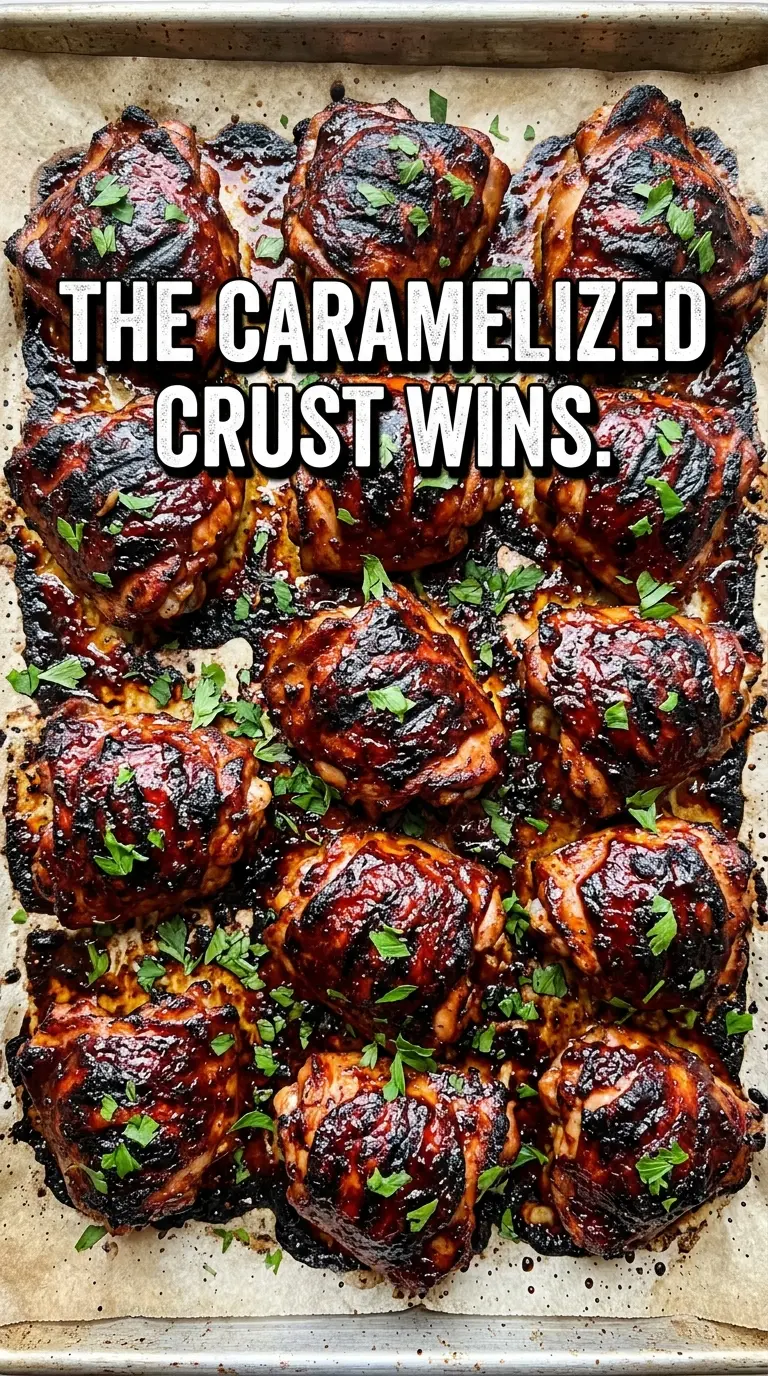
- Chicken thighs — Bone-in, skin-on thighs are the right cut here because the fat keeps the meat juicy while the skin crisps. Boneless thighs will cook faster, but they won’t give you the same contrast between crackly skin and sticky glaze.
- BBQ sauce — Use a sauce you already like eating on its own. Thick, balanced sauce caramelizes better than a thin, watery one, and if yours runs sweet, the vinegar in the recipe matters even more to keep it from tasting one-note.
- Brown sugar — This deepens the lacquer and helps the sauce cling, but it also raises the burn risk. If your BBQ sauce is already very sweet, cut the sugar back a little rather than piling sweetness on sweetness.
- Apple cider vinegar — This sharpens the glaze and loosens it just enough to brush on evenly. Lemon juice is harsher and can fight the smoke; vinegar keeps the sauce round.
- Smoked paprika — It reinforces the grill flavor even if your heat is moderate. Regular paprika works in a pinch, but you’ll lose some of the smoky edge that makes the finished chicken taste barbecued instead of just sauced.
Grilling the Thighs in the Right Order
Seasoning and Setting the Skin Up
Pat the thighs dry first, then season with salt, pepper, and olive oil. Dry skin is what crisps; wet skin gives you sputter and soft spots. Lay the thighs on the grill skin-side down and leave them alone long enough to pick up color and release naturally, which usually takes 8 to 10 minutes over medium heat.
Turning for Even Cooking
Flip the thighs and cook the second side until the meat starts to firm and the juices run clear at the edges. If the grill is too hot, the skin will blacken before the center cooks, so medium heat matters more here than high heat. You want steady rendering, not a flare-up contest.
Adding the Glaze at the End
Brush on the BBQ mixture only after the chicken has nearly finished cooking. Turn and baste a few times so the sauce builds into a shiny coat instead of pooling and burning. The finished thighs are ready when the internal temperature reaches 165°F and the sauce looks dark, sticky, and lightly blistered.
Make It Spicier Without Losing the Glaze
Add a pinch of cayenne or a spoonful of hot sauce to the BBQ mixture. That gives you heat without thinning the sauce too much, and it plays well with the brown sugar as long as you keep the grill temperature moderate.
Swap In Boneless Thighs
Boneless thighs work if that’s what you have, but they cook faster and won’t give you the same dramatic crispy skin. Start checking them several minutes earlier, and keep the sauce on at the very end so the glaze doesn’t over-reduce before the meat is done.
Gluten-Free BBQ Chicken Thighs
Use a gluten-free BBQ sauce and check that your vinegar and spices are labeled safely if cross-contamination is a concern. The grilling method doesn’t change, and the finished glaze still caramelizes the same way.
Oven Finish for Bad Weather
If the grill isn’t cooperating, sear the thighs skin-side down in a hot oven-safe skillet, then finish them in the oven until nearly done before brushing on the sauce and broiling briefly to caramelize. Keep an eye on the broiler; the sugar in the glaze can go from glossy to burnt in a minute.
Storage and Reheating
- Refrigerator: Store in an airtight container for up to 4 days. The skin softens a bit, but the flavor holds up well.
- Freezer: Freeze cooked thighs for up to 2 months. Wrap them well and freeze with a little sauce so they don’t dry out.
- Reheating: Reheat in a 350°F oven, covered loosely with foil at first, then uncover for the last few minutes to bring back some texture. The common mistake is microwaving until the sauce turns greasy and the skin goes rubbery.
Questions I Get Asked About This Recipe
Caramelized BBQ Chicken Thighs
Ingredients
Method
- Season the chicken thighs with salt, pepper, and olive oil.
- In a bowl, mix BBQ sauce, brown sugar, apple cider vinegar, and smoked paprika until smooth.
- Preheat the grill to medium heat (around 350–400°F), keeping the lid closed between moves.
- Grill the chicken skin-side down for 8-10 minutes until the skin looks deeply golden and releases easily from the grates.
- Flip the thighs and grill for another 8-10 minutes until the second side has grill marks and the meat is partway cooked.
- Brush the thighs generously with BBQ sauce and grill for 5 more minutes per side, basting frequently so the glaze thickens.
- Continue grilling until the internal temperature reaches 165°F and the sauce is visibly caramelized and glossy, with dark smoky edges.