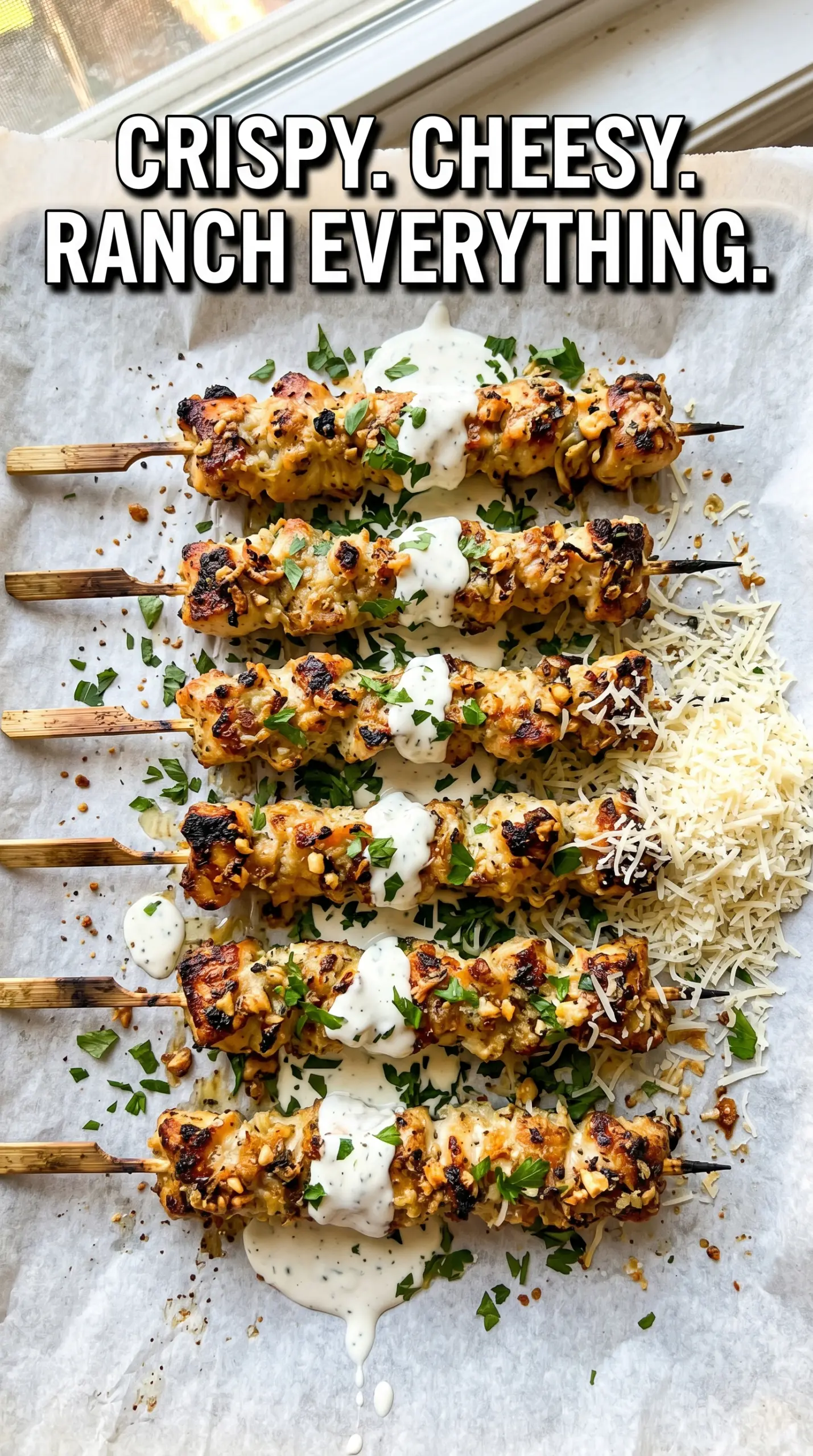
Ranch garlic Parmesan chicken skewers hit that sweet spot between juicy and crisp, with a savory coating that clings to every piece of chicken and turns deeply golden on the grill. The Parmesan doesn’t just add flavor here; it helps the marinade settle into a salty, nubbly crust that tastes like it took a lot more work than it did.
What makes this version worth making again is the way the marinade is built. Ranch dressing gives the chicken fat and tang, olive oil keeps it from drying out, and the dry ranch seasoning plus garlic push the flavor past plain grilled chicken into something you’d actually get excited to serve. A short marinate is enough to season the outside without turning the chicken soft or stringy.
Below, I’ll walk through the one step that keeps the skewers from sticking, the ingredient swap that matters if you’re using store-bought ranch, and a few practical variations for oven or air fryer cooking.
The chicken came off the grill juicy, and the Parmesan really did form that little golden crust instead of melting off. I marinated it for about an hour and the ranch flavor was perfect without getting soggy.
Save these ranch garlic Parmesan chicken skewers for the nights when you want grilled chicken with a salty Parmesan crust and almost no cleanup.
The Marinade Can Work Against You If You Let It
The trap with chicken skewers like this is over-marinating. Ranch dressing already carries acid and salt, and Parmesan brings even more salt, so the chicken only needs enough time to pick up flavor and moisture from the outside. Push it much past a couple of hours and the texture starts to turn soft at the edges instead of staying juicy and springy.
Another common miss is packing too much wet marinade onto the skewers. You want the coating to cling, not pool. A little excess on the chicken is fine, but if the bowl looks soupy when you’re ready to thread, the grill will steam the coating before it has a chance to color.
- 30 minutes to 2 hours of marinating is the sweet spot here. That gives the garlic and ranch seasoning time to do their job without breaking down the chicken.
- Medium-high heat matters because it sets the outside quickly. Too low and the Parmesan stays pale and the chicken dries out before it browns.
- Soaked wooden skewers cut down on burning, but they’re not magic. Keep the exposed ends away from the hottest part of the grill.
What Each Ingredient Is Actually Doing In This Dish
- Chicken breasts give you clean, lean pieces that cook fast on skewers. Cut them into even chunks so the smaller pieces don’t dry out before the larger ones are done.
- Ranch dressing brings fat, tang, and seasoning in one ingredient. A thick bottled ranch works fine; a thin, pourable one won’t cling as well and the coating won’t taste as full.
- Olive oil helps the marinade spread and keeps the surface from scorching too fast. You can swap in avocado oil if that’s what you keep on hand.
- Parmesan cheese is what gives the skewers that salty, toasty edge. Grated Parmesan melts into the marinade better than a chunky shred, so use the finer side of the grater if you can.
- Ranch seasoning mix and garlic are the flavor backbone. The seasoning mix adds that familiar ranch punch, while fresh garlic gives the marinade a sharper, more savory finish than garlic powder alone.
How to Keep the Chicken Juicy While the Edges Turn Golden
Mix the Marinade Until It Looks Coated, Not Separated
Stir the ranch dressing, olive oil, Parmesan, garlic, ranch seasoning, Italian seasoning, salt, and pepper until the mixture looks thick and evenly speckled. You want the cheese distributed through the marinade instead of collecting in one clump at the bottom of the bowl. If the mixture seems too loose, add a little more Parmesan rather than more salt. The goal is a coating that will stick to the chicken and char lightly on the grill.
Let the Chicken Sit, Then Thread It Evenly
Add the chicken chunks and toss until every piece is covered, then let it rest in the fridge for at least 30 minutes. After marinating, thread the pieces onto soaked skewers with a little space between them so heat can move around each chunk. If the chicken is jammed tight, the pieces in the center will steam and the outside won’t pick up that browned edge.
Grill Hot Enough to Color the Coating
Preheat the grill to medium-high before the skewers go on. Lay them down and leave them alone for the first few minutes so the surface can sear and release cleanly. Flip once the underside has deep grill marks and the chicken no longer sticks when you nudge it with tongs. Pull them as soon as the thickest piece hits 165°F; if you wait for them to look dry, they’re already past perfect.
Finish With a Fresh Dip and Let Them Rest Briefly
Move the skewers to a plate and give them a short rest before serving. That pause keeps the juices in the chicken instead of spilling out the second you bite in. Extra ranch on the side makes sense here, especially if you want a little cool, creamy contrast against the hot Parmesan crust.
How to Adapt These Skewers for the Grill, Oven, or Air Fryer
Oven-Baked for Rainy-Day Cooking
Bake the skewers on a lined sheet pan at 425°F, turning once halfway through. You won’t get quite the same smoky edges as the grill, but the Parmesan still browns nicely and the chicken stays juicy if you don’t overbake it. Use the broiler for the last minute if you want more color on the coating.
Air Fryer for Fast Weeknights
Cook the skewers in a single layer and give them space so the hot air can move around the chicken. They’ll brown faster than on the grill, so start checking early and pull them when the centers hit 165°F. If the coating looks pale, a light spritz of oil before cooking helps it color better.
Dairy-Free Version
Use a dairy-free ranch dressing and swap the Parmesan for a dairy-free grated parmesan alternative or nutritional yeast. You’ll lose a little of the sharp salty crust that real Parmesan gives, but the ranch and garlic still carry the dish. This is the best route if you need the same basic flavor without the cheese.
Chicken Thigh Swap for Extra Juiciness
Boneless, skinless chicken thighs work well here and give you a richer bite with a little more forgiveness on the grill. Cut them into similar-sized pieces and expect a slightly deeper flavor and softer texture. They may need an extra minute or two depending on size, so rely on temperature, not the clock.
Storage and Reheating
- Refrigerator: Store leftovers in an airtight container for up to 3 days. The coating softens a bit, but the chicken stays usable for lunch or wraps.
- Freezer: Freeze the cooked chicken off the skewers for up to 2 months. The texture is best if you freeze the pieces separately on a tray first, then bag them once solid.
- Reheating: Warm gently in a 300°F oven or air fryer until just heated through. High heat dries out the chicken fast, and microwaving can make the Parmesan coating rubbery.
Answers to the Questions Worth Asking
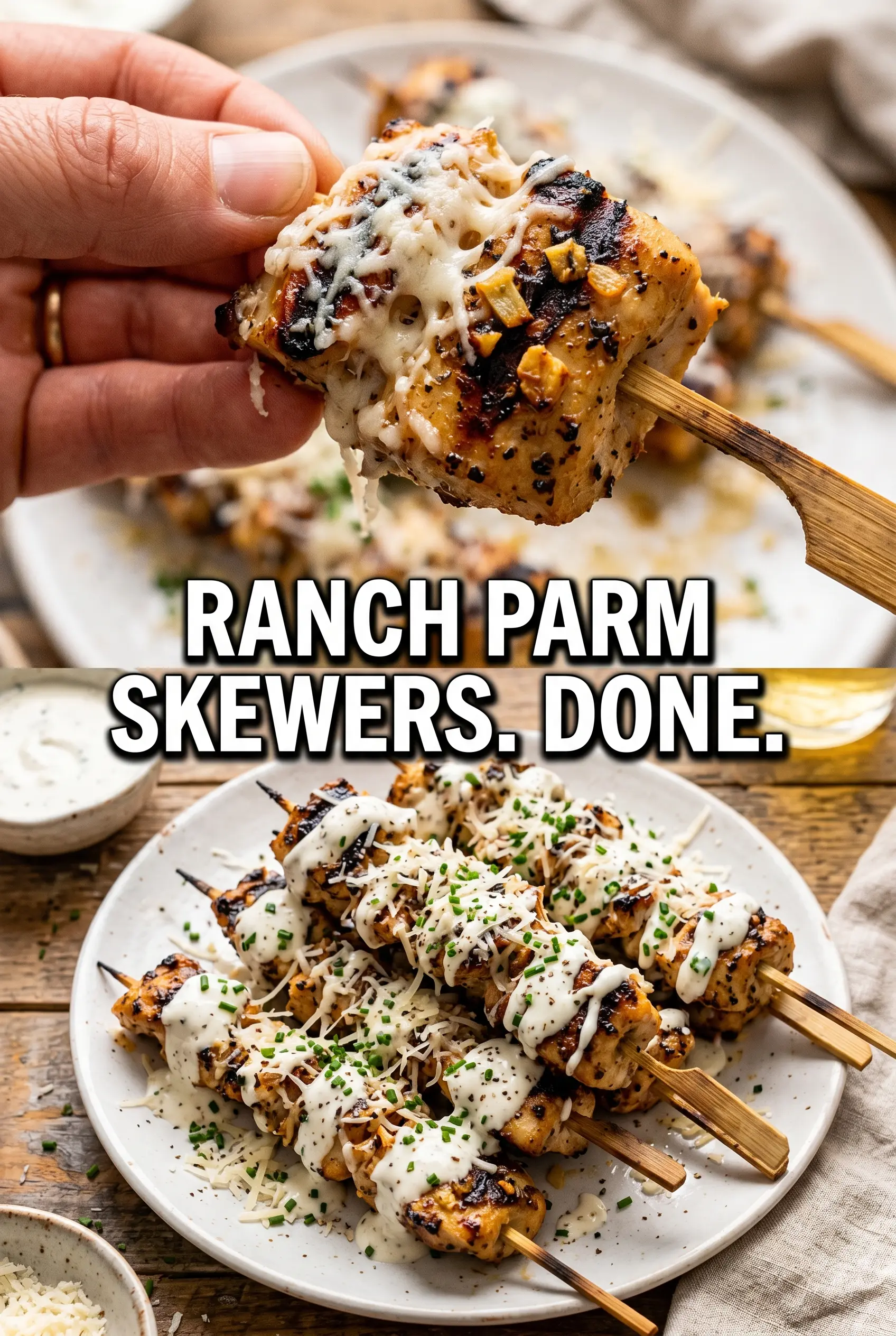
Ranch Garlic Parmesan Chicken Skewers
Ingredients
Equipment
Method
- In a bowl, mix ranch dressing, olive oil, grated Parmesan, minced garlic, ranch seasoning mix, Italian seasoning, salt, and pepper until evenly combined.
- Add the chicken chunks and toss until coated, then marinate for 30 minutes to 2 hours.
- Thread the marinated chicken onto the soaked wooden skewers, leaving a little space between pieces for even cooking.
- Preheat the grill to medium-high heat, aiming for steady heat before cooking.
- Grill the skewers for 5-6 minutes per side, turning once, until the chicken reaches 165°F and looks golden on the edges.
- Serve immediately with extra ranch for dipping.