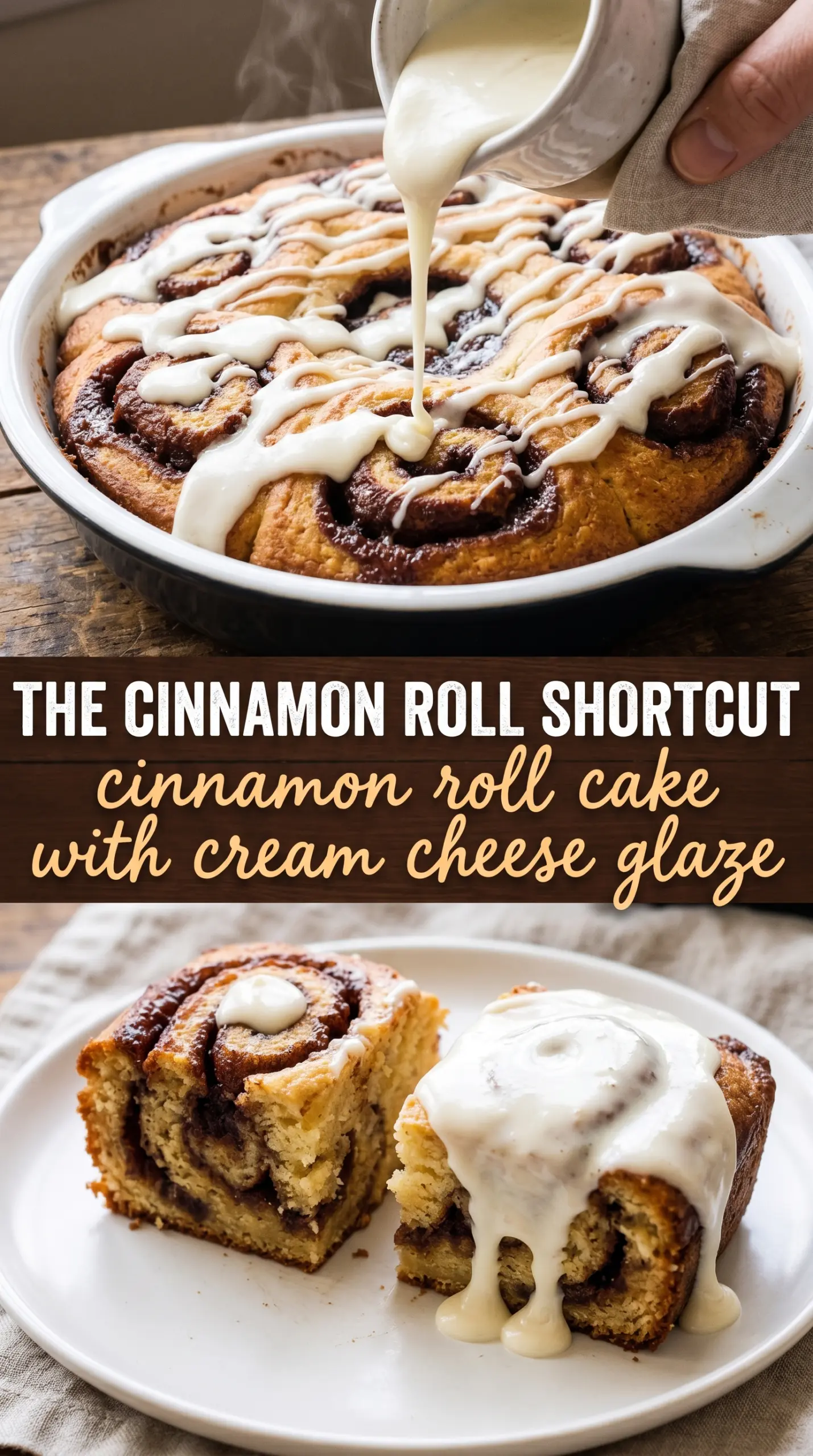
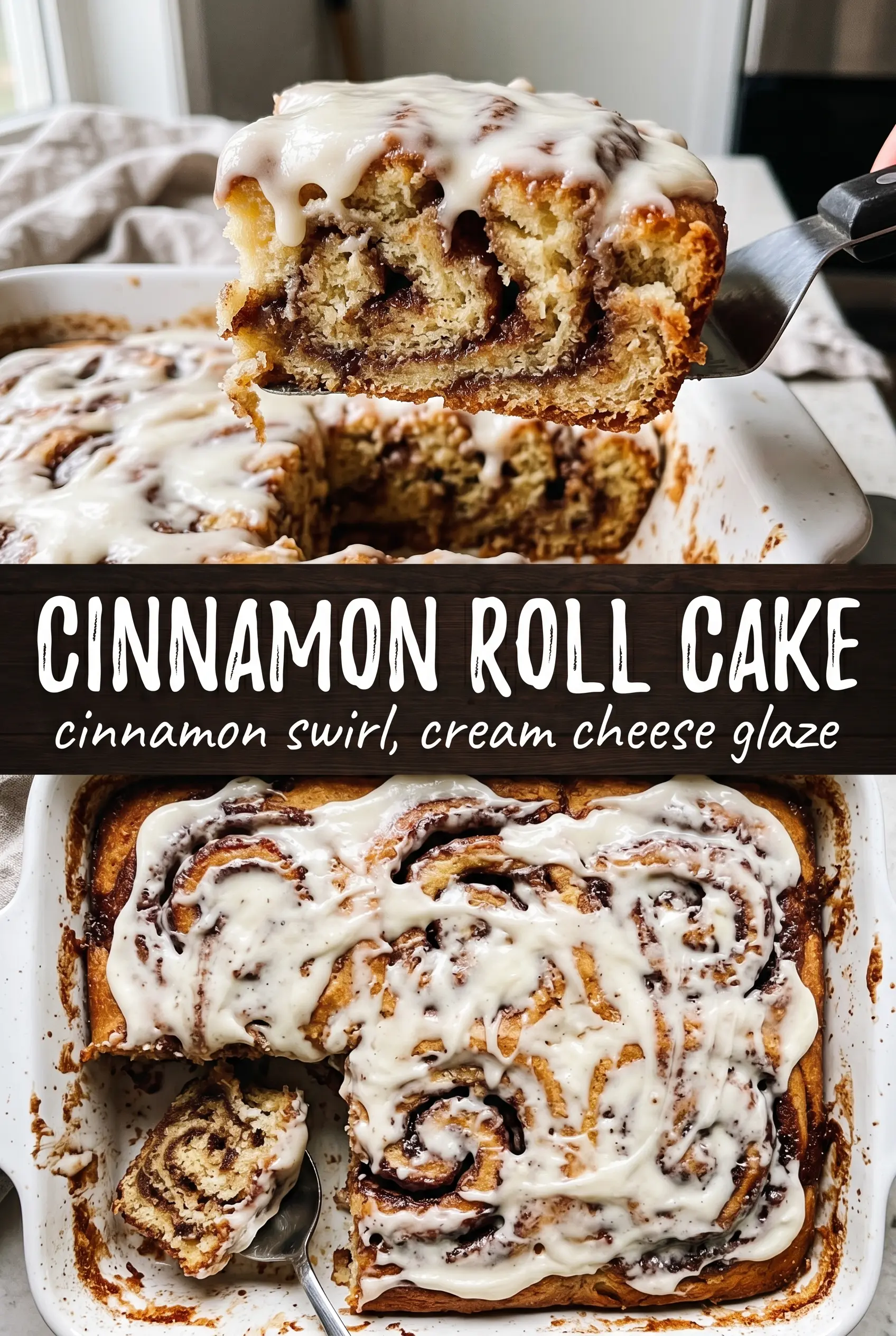
Golden, swirled, and finished with a cream cheese glaze that melts into every pocket, cinnamon roll cake delivers all the comfort of a bakery-style cinnamon roll without the proofing, shaping, or rolling. The crumb stays tender and buttery, while the cinnamon-brown sugar ribbons bake into soft, gooey streaks that make every square taste like the best part of a pan of rolls.
What makes this version work is the balance: enough baking powder to lift the cake without making it fluffy in the wrong way, melted butter for richness in the batter, and a thick cinnamon filling that stays distinct instead of disappearing. The glaze goes on while the cake is warm, which is the difference between a frosting that sits on top and one that settles into the swirls and turns each bite extra soft.
Below, you’ll find the small details that keep the swirl dramatic instead of muddy, plus the one timing trick that gives you the best glaze-to-cake ratio. If you’ve ever wanted a cinnamon roll breakfast with half the effort and all the payoff, this is the pan to make.
The swirl stayed distinct all the way through, and the glaze sank into the warm cake instead of sliding off. Mine baked up in exactly 33 minutes with those gooey cinnamon pockets everyone kept cutting around to get to.
Save this cinnamon roll cake for mornings when you want gooey cinnamon swirls and cream cheese glaze without making yeast rolls.
The Swirl That Stays Bold Instead of Melting Into the Batter
The biggest mistake with cinnamon roll cake is swirling too aggressively. If you drag the cinnamon mixture all the way through the batter, it bakes into one brown layer and you lose the marbled look that makes this cake worth making. The goal is a thick, visible ribbon that sits in pockets and folds, not a fully mixed coffee cake situation.
The batter itself is on the thicker side, which helps hold the swirl where you drop it. That matters. A loose batter lets the cinnamon filling sink, and a thin filling disappears into the cake instead of staying gooey. Keep the cinnamon mixture soft enough to dollop, not pour, and stop swirling as soon as you see streaks running through the top.
What Each Ingredient Is Doing in This Cake
- All-purpose flour — This gives the cake enough structure to hold a heavy cinnamon swirl without collapsing. Cake flour makes the crumb softer, but it can get fragile here, so regular all-purpose flour is the better choice.
- Whole milk — The fat in whole milk keeps the crumb tender and gives the cake a richer bite. Low-fat milk works in a pinch, but the cake won’t taste as plush.
- Melted butter in the batter — Melted butter blends in fast and keeps the cake moist without the extra step of creaming. Use real butter here; oil makes it softer, but you lose the buttery flavor that belongs in a cinnamon roll cake.
- Softened butter in the swirl — This is what keeps the cinnamon filling thick and spreadable. If it’s too cold, it clumps; if it’s melted, it runs straight into the batter and disappears.
- Brown sugar and cinnamon — Brown sugar melts into those sticky pockets, while cinnamon gives the cake its classic roll flavor. Pack the brown sugar firmly so the swirl is sweet enough to stand up to the glaze.
- Cream cheese glaze — Cream cheese gives the topping a little tang, which keeps the cake from tasting flat or overly sweet. Let it soften first so the glaze whisks smooth instead of staying grainy.
Building the Batter, Swirl, and Glaze in the Right Order
Mix the Cake Just Until It Comes Together
Whisk the dry ingredients first so the baking powder is evenly distributed, then stir in the milk, eggs, vanilla, and melted butter until the batter is just combined. A few small streaks of flour are fine; overmixing tightens the crumb and makes the cake bake up rubbery around the edges. Spread it into the pan in an even layer so the swirl bakes uniformly.
Drop the Cinnamon Filling, Then Swirl Once
Beat the softened butter, brown sugar, and cinnamon until fluffy, then drop it in spoonfuls across the batter. Use a knife to make slow figure-eight motions across the top, but stop early. If you keep going, the swirl disappears and the whole pan turns muddy instead of marbled.
Watch for the Set Edge and the Slightly Springy Center
Bake until the top is golden and a toothpick comes out clean from the cake portion, usually around 30 to 35 minutes. The center should spring back lightly when touched, but it shouldn’t wobble. If the swirls look dark before the cake is done, cover the pan loosely with foil for the last few minutes so the sugar doesn’t scorch.
Glaze While the Cake Is Still Warm
Beat the cream cheese glaze until smooth, then pour it over the warm cake and let it sink in for about five minutes. Warm cake grabs the glaze and turns it glossy and soft in all the right places. If you wait until the cake is cool, the glaze sits on top and you lose that bakery-style finish.
How to Adapt This for Different Mornings and Different Pans
Dairy-Free Version
Use a good unsalted plant butter in both the batter and the swirl, plus an unsweetened non-dairy milk like oat or almond milk. The cake will still bake up tender, though the glaze will lose the tang that cream cheese brings, so add a small spoonful of lemon juice if you want a little brightness.
Make It More Coffee Cake-Like
Skip half the glaze if you want a less sweet finish and let the cinnamon swirl carry the flavor. The cake will still be rich, but it reads more like a breakfast coffee cake than a dessert-style cinnamon roll.
Gluten-Free Swap
Use a cup-for-cup gluten-free flour blend that includes xanthan gum. The crumb will be a little more delicate, so let the cake cool for 10 minutes before slicing or the squares can crumble at the edges.
Storage and Reheating
- Refrigerator: Store covered for up to 4 days. The glaze firms up, but the cake stays moist.
- Freezer: Freeze slices tightly wrapped for up to 2 months. Thaw overnight in the fridge for the best texture.
- Reheating: Warm individual slices in the microwave for 15 to 20 seconds. Too much heat makes the glaze separate and the cake dry at the edges.
Answers to the Questions Worth Asking
Cinnamon Roll Cake
Ingredients
Equipment
Method
- Preheat oven to 350°F and grease a 9x13 baking dish, so the batter releases cleanly after baking.
- Whisk together all-purpose flour, granulated sugar, baking powder, and salt, then stir in whole milk, large eggs, vanilla extract, and melted butter until just combined.
- Spread the batter into the prepared dish, smoothing the top into an even layer.
- Beat softened butter, brown sugar, and cinnamon until fluffy, creating a spreadable swirl mixture.
- Drop spoonfuls of the swirl mixture over the batter, then use a knife to swirl into the batter for ribbon-like pockets.
- Bake for 30-35 minutes at 350°F until a toothpick comes out clean and the top is golden.
- While the cake is still warm, beat cream cheese, powdered sugar, milk, and vanilla extract until smooth and pour the glaze over the warm cake.
- Let the glaze soak in for 5 minutes before serving warm, letting it pool into every swirl and crevice.