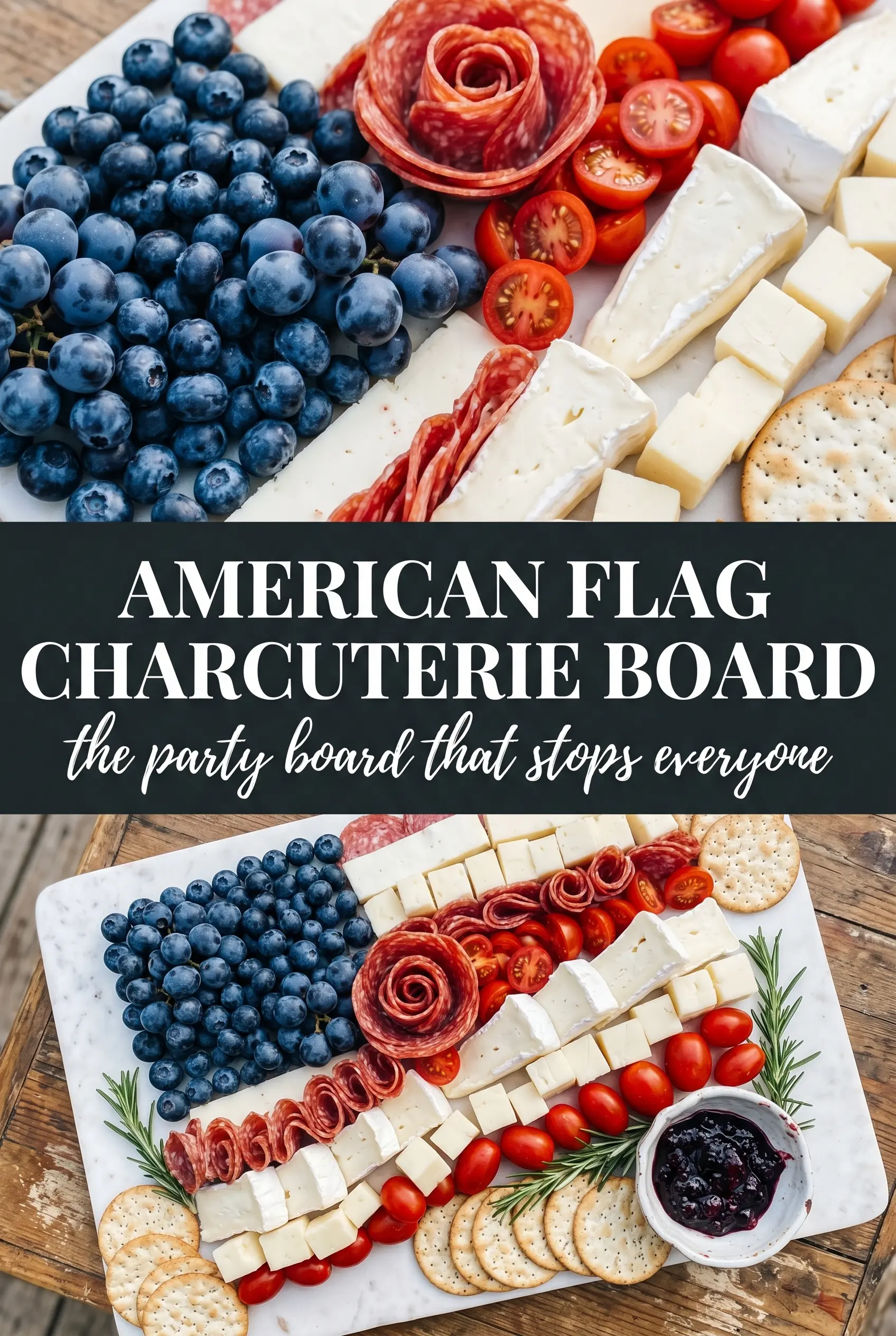
Clean stripes, a packed blue canton, and just enough variety to keep every bite interesting make this American flag charcuterie board the kind of appetizer people crowd around before the rest of the party even starts. It looks dramatic from across the room, but the build is straightforward once you think in blocks of color instead of individual ingredients. The key is keeping the rows tight and intentional so the flag reads clearly, not like a random snack tray with patriotic colors on it.
This version works because the ingredients are chosen for shape as much as flavor. Pepperoni lays flat into bold red bands, rolled salami gives the canton some height, and mozzarella or provolone brings the white stripes into focus without fighting the other ingredients. Blueberries are the easiest way to make the star field look full and solid, and the rosemary adds a fresh edge that keeps the board from feeling heavy.
Below, I’ll walk through the placement trick that makes the flag shape hold together and the small adjustments that help the board look neat right up until serving time.
The blue corner stayed packed and the rows looked sharp even after sitting out for an hour. I loved that the rosemary gave it a finished look without getting in the way of the cheese and salami.
Like this American flag charcuterie board? Save it to Pinterest for the next party when you want a bold red, white, and blue centerpiece with almost no cooking.
The Part That Makes the Flag Read Clearly Instead of Looking Random
The difference between a board that looks like a flag and one that just happens to contain red, white, and blue ingredients is spacing. The canton needs to be dense enough that the blueberries read as a solid field, and the stripes need to run in clean, uninterrupted bands across the board. If the rows get too loose, the whole thing starts to look messy before you’ve even set the crackers out.
Think of the board in zones. Build the blue corner first, then work outward in stripes so you can correct the shape as you go. The easiest mistake here is overfilling the board with too many types of food at once; that breaks the design. Keep the color blocks strong and let the garnish stay small and purposeful.
What Each Ingredient Is Actually Doing in the Design
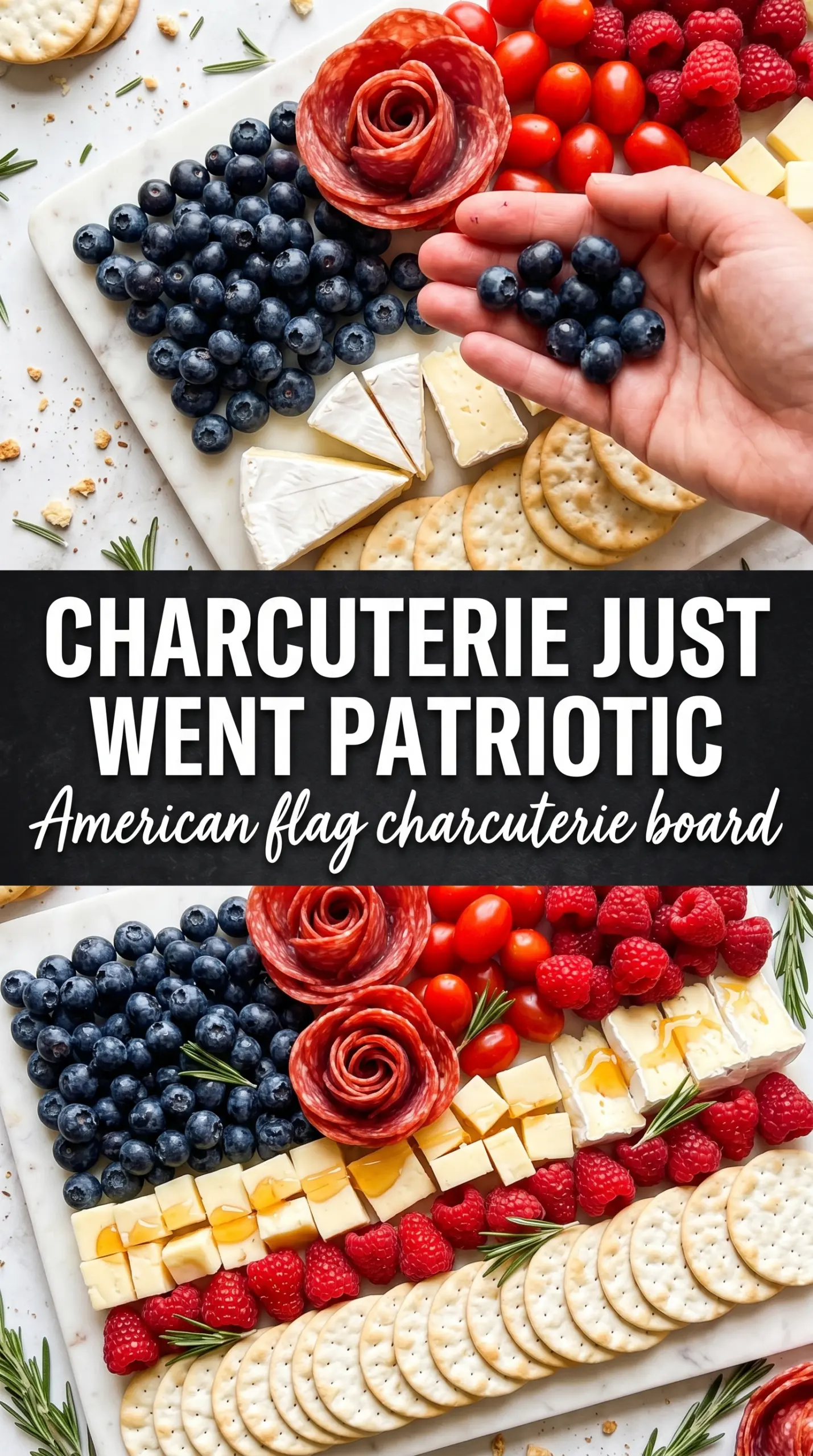
The ingredient list is doing visual work first and snacking work second. You want a mix of shapes that hold their place: sliced meats that drape and stack, cheeses that form clean white bands, and berries that pack tightly enough to create a solid blue field.
- Pepperoni slices — These lay down fast and make the red stripes unmistakable. Standard deli-style pepperoni works best because the slices are wide enough to cover ground without leaving lots of gaps.
- Salami, thinly sliced and rolled — Rolling the slices gives the canton a raised texture that mimics stars without needing anything fussy. If your slices are stiff, let them sit at room temperature for a few minutes so they roll without cracking.
- Prosciutto — This helps reinforce the red stripes with a softer, more elegant look. Tear or fold it into loose ribbons; trying to lay prosciutto flat usually makes it disappear into the board.
- Fresh mozzarella balls or white cheddar — These carry the white stripes and help break up all the cured meat. Mozzarella gives a lighter, fresher feel, while provolone or cheddar looks sharper and holds its shape better for a longer party spread.
- Blueberries — Packed tightly, they create the only part of the board that really needs to read as a solid block. Small berries work best because they fill the canton cleanly; oversized berries leave awkward holes.
- Strawberries — These add brighter red and help patch any weak spots in the stripes. Slice them if you want a flatter finish, or halve them if you need more height and color contrast.
Building the Board in Layers That Hold Their Shape
Marking the Flag Layout First
Set the board on a flat surface and mentally divide the upper left corner before you touch the food. That canton needs to be large enough to look balanced, not squeezed in like an afterthought. Once you know where the blue block ends, the stripe spacing gets much easier to manage.
Filling the Blue Canton
Pour the blueberries into the upper left corner and pack them tightly so they form a firm rectangle. Tuck rolled salami pieces into the middle of the berries so they stand up a bit and break up the surface, which gives the section more dimension. If the berries roll around, the board is too tilted or the corner is too shallow.
Laying Down the Red and White Stripes
Start at the top right and build outward in alternating rows. Pepperoni should overlap slightly so the red bands look full, and the white cheese should sit in an even line so the contrast stays crisp. If you’re using mozzarella balls, arrange them closely enough that they read as a stripe instead of a row of separate dots.
Finishing the Edges
Add prosciutto folds and strawberry halves wherever a stripe looks thin. Rosemary sprigs belong at the corners and along the sides, not scattered through the middle, because the board needs room to read from a distance. Put the crackers around the perimeter last so they frame the flag without interrupting the design.
How to Scale the Board, Swap the Cheese, or Keep It Gluten-Free
Make it gluten-free
Keep the board itself exactly the same and serve gluten-free crackers around the edge. The core arrangement is naturally gluten-free as long as your cured meats are labeled that way, but the crackers are where cross-contamination usually sneaks in.
Use a sharper cheese for cleaner stripes
Provolone or white cheddar gives the stripes a firmer edge than fresh mozzarella balls. That matters if the board is sitting out for a while, because the cheese keeps its shape better and the flag still looks crisp after people start serving themselves.
Make it bigger for a crowd
Add more rows rather than trying to stretch the same ingredients thinner. A larger board needs stronger stripes, not longer ones that disappear into the grain of the wood. The design stays cleaner when you build with full rows of each ingredient.
Storage and Reheating
- Refrigerator: Store leftovers covered for up to 2 days. The berries can soften and the crackers will lose their crunch, so keep them separate if possible.
- Freezer: Not a good freezer recipe. The fruit, cheese, and sliced meats all suffer in texture once thawed.
- Reheating: No reheating needed. Bring the board back to room temperature for about 15 minutes before serving if it has been chilled, because cold cheese and meat taste flat and the colors don’t look as vibrant.
Questions I Get Asked About This Recipe
American Flag Charcuterie Board
Ingredients
Equipment
Method
- Use a large rectangular wooden board or serving tray and mentally divide the upper left into a canton rectangle.
- Fill the canton with blueberries packed tightly together, then tuck rolled salami pieces in the center to resemble stars.
- Starting from the top right of the board, create a red stripe by layering pepperoni slices in a clean row across the full width of the board.
- Create the white stripes using rows of sliced white cheddar or mozzarella balls, alternating with the red stripes down the full board.
- Add prosciutto folds or strawberry halves to reinforce the red stripes and fill any gaps.
- Tuck rosemary sprigs at the corners and edges, then arrange crackers around the perimeter and serve.
- Keep the flag grazing board chilled until serving for the best texture and easiest slicing of crackers and meats.