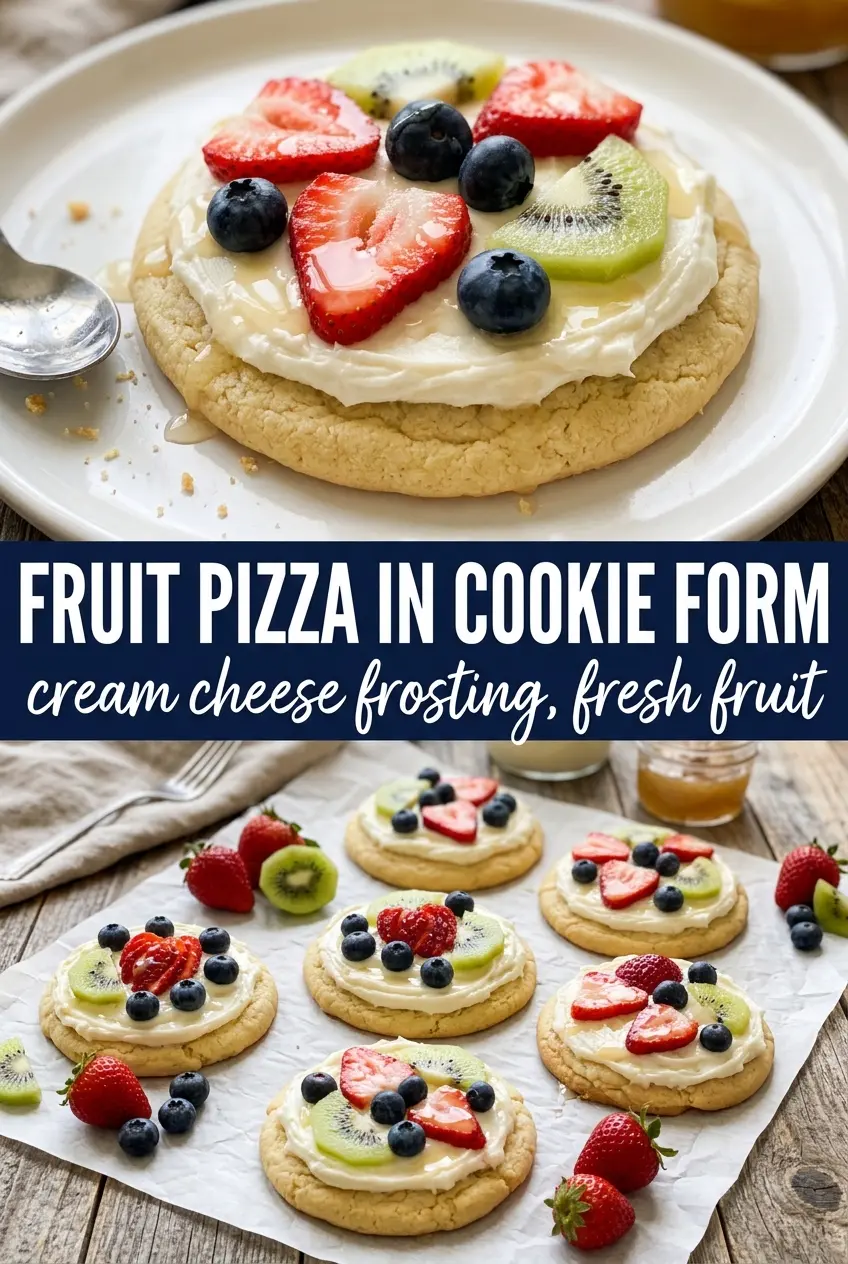
Fruit pizza cookies bring the same bright, creamy, fruit-topped payoff as a full fruit pizza, but in a smaller form that feels a lot easier to serve. The sugar cookie base stays soft in the middle with just enough edge to hold the frosting, and the fruit gives each cookie a fresh, juicy finish that keeps the whole thing from tasting heavy. When they’re done well, they look almost too pretty to eat, which is usually the first sign you’ve made the right dessert.
The key is baking the cookies just until the edges set. If you push them too far, they turn dry once the frosting goes on. The cream cheese layer should be thick enough to anchor the fruit but smooth enough to spread without tearing the cookies, and the jam glaze adds the shine that makes the fruit look bakery-polished instead of just placed on top.
Below you’ll find the small details that matter most: how to keep the cookies soft, how to choose fruit that stays put, and what to do if you want to make the colors pop even more. A little care here goes a long way.
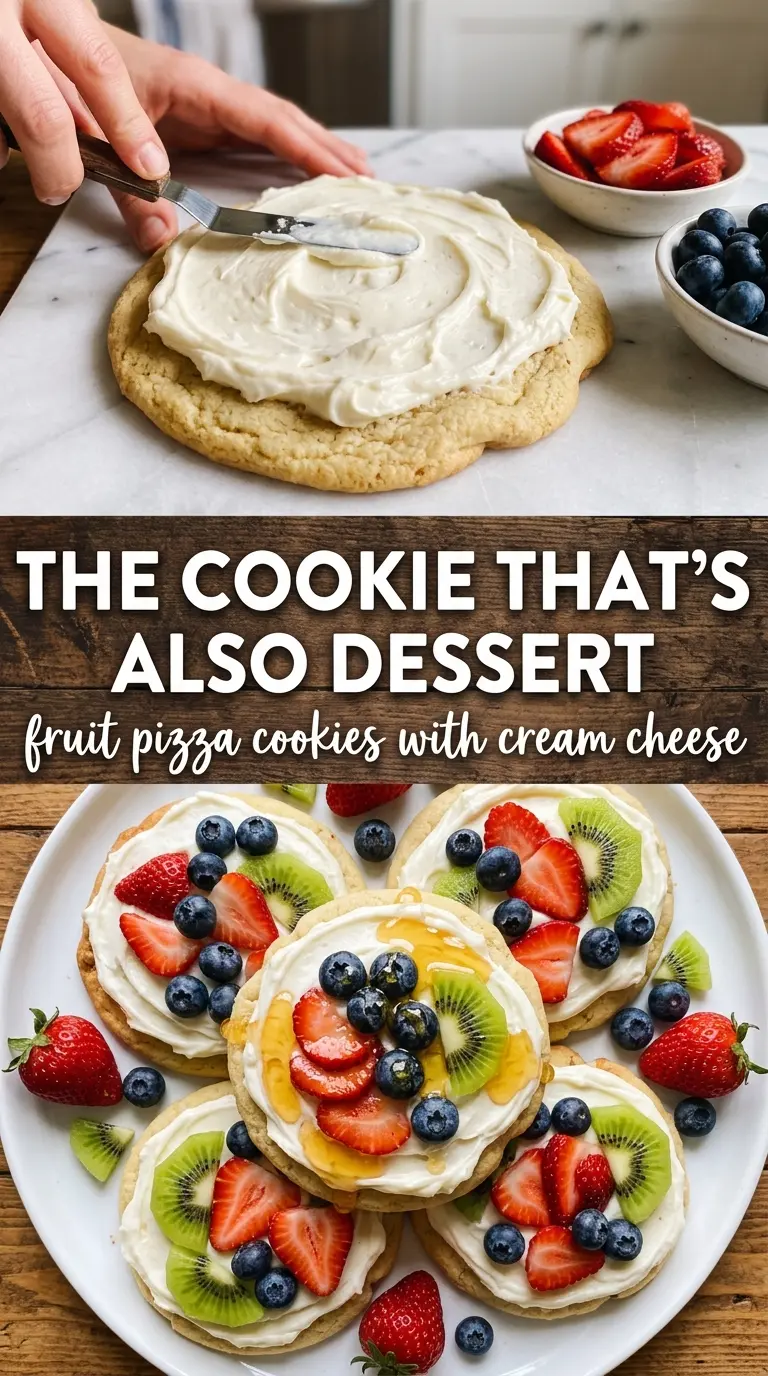
The cookies baked up soft in the center and the cream cheese frosting held the fruit without sliding around. I used strawberries, kiwi, and blueberries, and the apricot glaze made them look like little bakery cookies.
Save these fruit pizza cookies for the days when you want a soft sugar cookie, tangy cream cheese frosting, and fresh fruit all in one bite.
The Reason These Cookies Hold the Fruit Instead of Sliding Around
The biggest mistake with fruit pizza cookies is frosting cookies that are still even a little warm. The heat softens the cream cheese layer, and once that starts, the fruit shifts and the glaze turns messy instead of glossy. Let the cookies cool all the way down. Not just mostly cool. All the way.
The other thing that helps is keeping the cookies small and evenly flattened. A 3-inch round gives you enough surface for the fruit pattern without making the cookie too thin to support the topping. You want a soft sugar cookie, not a dry cracker pretending to be a base.
- Cool completely before frosting — The cream cheese mixture spreads cleanly only after the cookies lose all residual heat. If you rush this, the frosting loosens and the fruit starts slipping.
- Bake just to set — Pull them when the edges are barely golden. That keeps the centers soft enough to taste like a real dessert cookie instead of a hard biscuit.
- Use fruit with some structure — Strawberries, kiwi, blueberries, raspberries, and mandarin segments all hold their shape well. Very juicy fruit can weep and blur the design.
- Glaze right at the end — The apricot jam gives shine and helps the fruit look fresh longer, but it works best when brushed on lightly. Too much and the topping gets sticky fast.
What Each Ingredient Is Actually Doing in These Fruit Pizza Cookies
- Butter — Softened butter whips with the sugar to create the light, tender cookie base. This is one place where real butter matters; the flavor and texture both depend on it.
- Granulated sugar — It sweetens the cookie and helps create those slightly crisp edges that give the frosting something sturdy to sit on.
- Eggs — They bind the dough and add richness. Room-temperature eggs blend in more evenly, which keeps the dough from looking broken when you mix it.
- All-purpose flour — This gives the cookies enough structure to hold the toppings. Spoon and level it if you can; packing the cup adds too much flour and makes the cookies dry.
- Cream cheese — Full-fat cream cheese gives the frosting body and that tangy contrast that makes fruit pizza taste balanced instead of overly sweet. Low-fat versions tend to be thinner and softer.
- Powdered sugar — This thickens the frosting without graininess. If you want it a little sturdier for a warm day, add an extra spoonful at a time until it holds its shape.
- Fresh fruit — The toppings carry the whole look of the dessert, so use fruit that’s ripe but not mushy. Pat wet berries dry before arranging them or the frosting can loosen underneath.
- Apricot jam — Warming it turns it into a quick glaze that adds shine. You can swap in seedless raspberry jam in a pinch, but the color will read darker and a little less neutral.
Building the Cookies and Toppings in the Right Order
Mixing the Dough Until It Just Comes Together
Beat the butter and sugar until the mixture looks pale and fluffy, then add the eggs and vanilla. Once the flour, baking powder, and salt go in, mix only until a dough forms. If you keep beating after that point, the cookies can turn tough instead of tender. The dough should be soft but scoopable, not sticky enough to smear all over the bowl.
Shaping for Even Baking
Scoop the dough into 24 portions and flatten each one into a 3-inch round on parchment-lined baking sheets. Even thickness matters more than perfect circles here because thin edges brown too fast while thick centers stay underbaked. If the dough sticks to your hands, lightly dampen them rather than adding more flour, which can dry out the dough.
Baking to a Soft Center
Bake at 375°F for 10 to 12 minutes, watching for edges that are set and just barely golden. The centers may look a little underdone when you pull them, and that’s what you want. They finish setting as they cool, which keeps them soft enough to bite through under the frosting.
Frosting, Fruit, and the Glossy Finish
Beat the cream cheese, powdered sugar, and vanilla until smooth, then spread it over completely cooled cookies. Arrange the fruit in whatever pattern you like, but press it in lightly so it nests into the frosting instead of sitting on top of a slick layer. Brush on the warmed apricot jam last. A thin coat is enough to add shine without drowning the fruit.
How to Change These Cookies Without Losing What Makes Them Good
Make them ahead for a party platter
Bake the cookies a day ahead and store them plain, then frost and top them the day you plan to serve. That keeps the cookie base soft and prevents the fruit from weeping into the frosting.
Dairy-free version
Use a plant-based butter in the cookies and a dairy-free cream cheese for the topping. The frosting will be a little softer, so chill it briefly before spreading and keep the finished cookies refrigerated until serving.
Different fruit, different look
Peaches, blackberries, grapes cut in half, and thin mango slices all work well if they’re not overly juicy. Change the fruit mix and you change the whole personality of the dessert without touching the base recipe.
Gluten-free cookie base
A good 1:1 gluten-free baking flour can replace the all-purpose flour here. The cookies may spread a little less and bake up slightly more delicate, so let them cool fully before moving them.
Storage and Reheating
- Refrigerator: Store assembled cookies for up to 2 days. After that, the fruit starts to soften and the frosting loses its fresh look.
- Freezer: Freeze the baked cookies without frosting or fruit for up to 2 months. Thaw at room temperature before decorating.
- Reheating: These aren’t meant to be reheated. If you’ve chilled them, let them sit out for 10 to 15 minutes so the cookie softens slightly and the frosting isn’t too firm.
Answers to the Questions Worth Asking
Fruit Pizza Cookies
Ingredients
Equipment
Method
- Beat butter and sugar until fluffy, then add eggs and vanilla and mix until combined. Continue mixing until the texture looks light and smooth.
- Mix in all-purpose flour, baking powder, and salt until a dough forms. Stop as soon as the dough comes together so the cookies stay tender.
- Scoop dough into 24 balls and flatten each into 3-inch rounds on parchment-lined baking sheets. Leave a little spacing so they don’t spread into each other.
- Bake at 375°F for 10-12 minutes until edges are set and just barely golden, with centers still soft. Look for light golden edges and avoid deeper browning.
- Cool the cookies completely on the baking sheets to prevent frosting melt. Wait until they feel fully room temperature before spreading.
- Beat cream cheese, powdered sugar, and vanilla until smooth and spreadable. Stop when the frosting is glossy and free of lumps.
- Spread frosting over each cooled cookie, leaving a thin border at the edges. Use enough to cover the surface but not so much that it slides off.
- Arrange strawberries, blueberries, kiwi slices, mandarin segments, and raspberries decoratively on each cookie in colorful patterns. Build a vibrant flower-like layout so fruit is visible across the full cookie.
- Brush the fruit with warmed apricot jam for a glossy finish. Serve immediately or refrigerate after glazing.