Thick cucumber rounds, ripe tomatoes, creamy mozzarella, and basil make a Caprese salad feel lighter without losing the part everyone comes back for: the cold, juicy bite and the soft cheese against something crisp. This version keeps the Italian-American spirit intact, but the cucumber adds a clean snap that makes each forkful feel fresher and more substantial than the usual tomato-only platter.
The trick is in the cut and the layering. Slicing the cucumbers into 1/3-inch rounds gives them enough body to hold up under the tomatoes and mozzarella, and using either sliced fresh mozzarella or small pearl mozzarella keeps the texture varied instead of flat. The balsamic glaze goes on at the end, not earlier, so it stays glossy and concentrated instead of soaking everything into the plate.
Below, I’ve included a few practical notes on ingredient swaps, the one timing detail that keeps the salad looking sharp, and a couple of variations if you want to make it dairy-free or turn it into more of a composed appetizer.
The cucumbers stayed crisp and the balsamic glaze clung to everything without making the tomatoes watery. I served it with grilled chicken and it disappeared fast.
Like this cucumber caprese salad? Save it to Pinterest for the days when you want a crisp, no-cook side with basil, mozzarella, and balsamic glaze.
The Reason This Salad Stays Crisp Instead of Turning Watery
The common mistake with Caprese-style salads is treating every ingredient like it can sit around waiting for the last-minute drizzle. Tomatoes start giving up juice the moment they’re salted, cucumbers can go limp if they’re sliced too thin, and mozzarella sheds moisture if it’s left to sit in a puddle too long. This version works because the ingredients are cut large enough to keep their shape and assembled right before serving, which keeps the plate bright and clean.
The other detail that matters is the glaze. Balsamic vinegar and olive oil together are fine, but balsamic glaze gives you a thicker, more controlled finish that stays on the salad instead of running straight to the bottom. If your salad has ever tasted great but looked messy five minutes later, that’s usually the difference.
What Each Ingredient Is Actually Doing in the Bowl
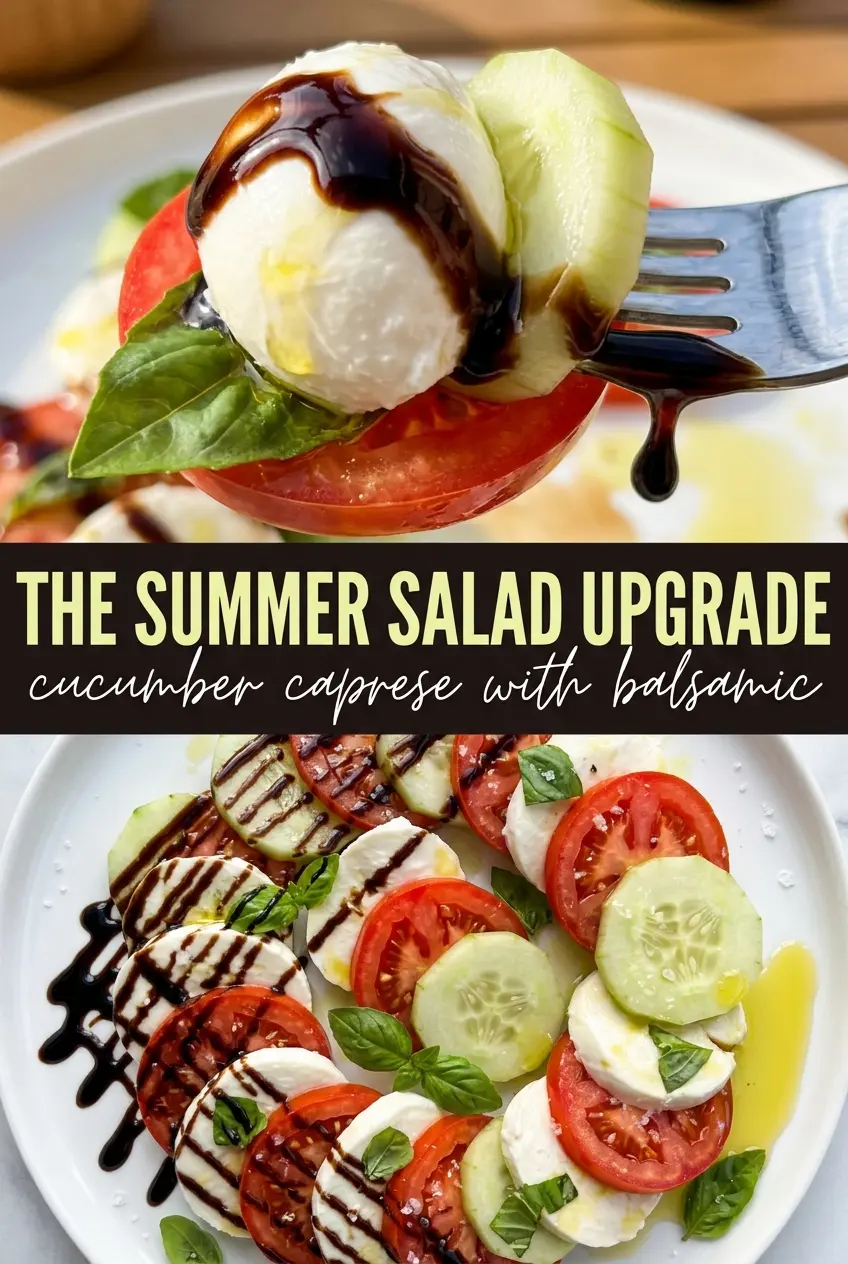
- English cucumbers — These give the salad its crunch and help it feel substantial enough to serve as a side dish. English cucumbers are the best choice because the skin is thin and the seeds are mild; regular cucumbers work too, but I’d peel them if the skin is tough.
- Fresh mozzarella — This is where the creamy, milky balance comes from. Use the freshest mozzarella you can find, because pre-shredded or low-moisture cheese changes the whole texture and doesn’t give you that soft bite.
- Ripe tomatoes — Cherry tomatoes hold their shape well, while sliced medium tomatoes give a more classic Caprese look. If your tomatoes are under-ripe, the salad falls flat fast, so pick ones that smell sweet and feel heavy for their size.
- Fresh basil — Don’t skip it or swap in dried basil here. The whole salad depends on that fresh, peppery note to tie the cucumber, tomato, and mozzarella together.
- Balsamic glaze — This gives the salad its dark, sweet finish without making it soggy. If you only have balsamic vinegar, simmer it until reduced and syrupy before drizzling, or it will run all over the plate.
- Extra-virgin olive oil — A good one matters because there’s nowhere to hide in a salad this bare. You don’t need your most expensive bottle, but you do want one that tastes clean and fruity instead of sharp.
How to Layer It So the Platter Looks Intentional
Start with the Cucumber Base
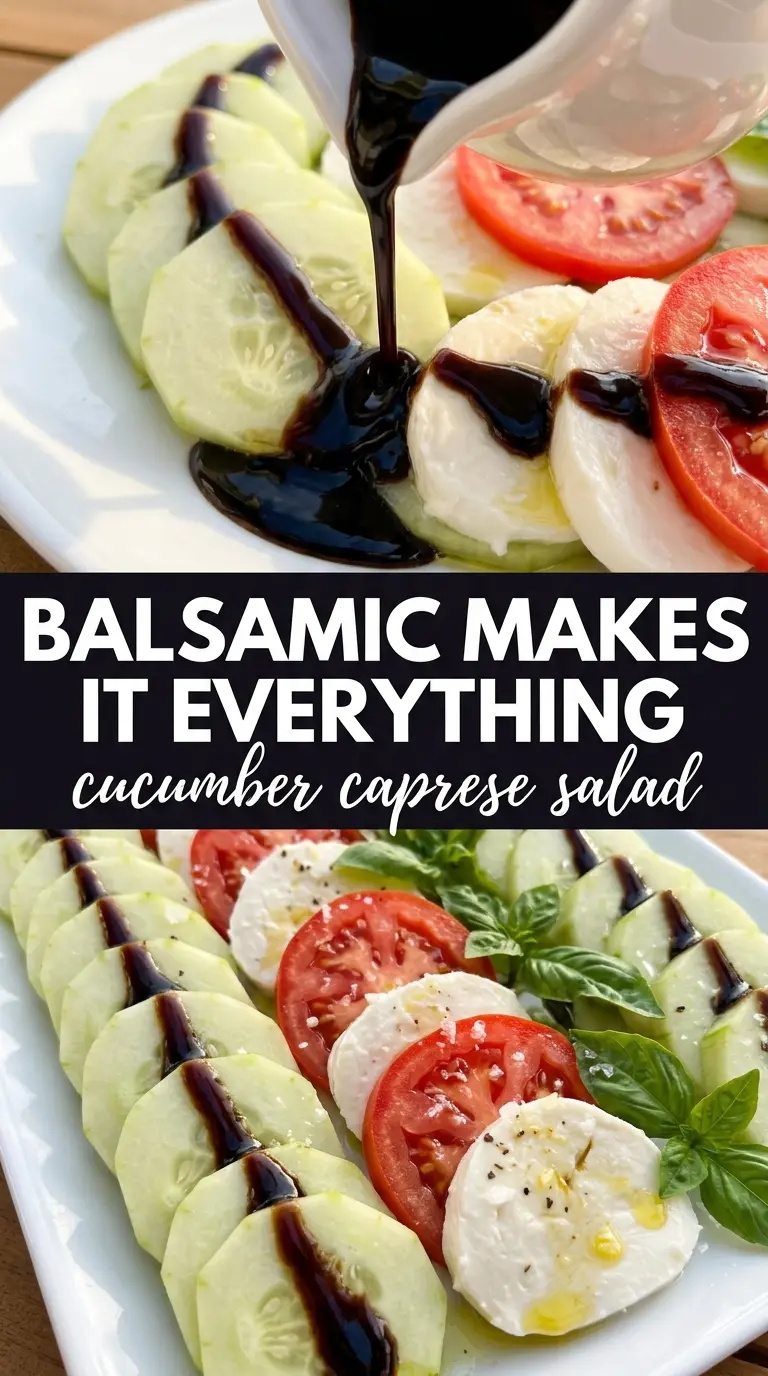
Lay the cucumber rounds in a slightly overlapping pattern so the platter has structure before anything else goes on. If the slices are too thin, they bend under the tomatoes and cheese; if they’re too thick, the salad eats clunky, so that 1/3-inch cut is the sweet spot. Aim for even slices so the whole platter feels balanced instead of lopsided.
Tuck in the Tomatoes and Mozzarella
Place the tomato halves or slices between the cucumber rounds instead of piling them on top. That keeps every bite easy to pick up and stops the juice from flooding the plate. Add the mozzarella next so it can nestle into the gaps and catch the olive oil and glaze later.
Finish with Basil, Oil, and Glaze
Scatter the basil over the top, then drizzle the olive oil in a light, even pass. Follow with the balsamic glaze in a thin ribbon or loose zigzag; if you pour too much in one spot, it overwhelms the fresh vegetables and turns the salad muddy. Season at the very end with flaky salt and cracked pepper so the cucumbers stay crisp and the tomatoes stay bright.
How to Change This Salad Without Losing What Makes It Work
Dairy-Free Version with Avocado
Swap the mozzarella for ripe avocado slices or cubes. You’ll lose the milky richness, but the avocado gives you that creamy contrast against the cucumbers and tomatoes, and it still feels satisfying enough to serve as a composed side.
Make It a Heartier Lunch Plate
Add grilled chicken, white beans, or chickpeas alongside the arranged salad. The base flavors stay the same, but the extra protein turns it from a side dish into something that can carry a lunch without any cooking beyond the grill or pantry opening.
Use Heirloom Tomatoes When They’re Good
Heirloom tomatoes make the salad prettier and more flavorful when they’re in season, but slice them only if they’re firm enough to hold their shape. If they’re extra juicy, let the slices sit on paper towels for a few minutes first so the platter doesn’t turn into a tomato puddle.
Storage and Reheating
- Refrigerator: This salad is best eaten right away, but leftovers can sit covered for up to 1 day. The cucumbers will soften and the tomatoes will release more liquid.
- Freezer: Don’t freeze it. The cucumbers, tomatoes, and mozzarella all lose their texture completely once thawed.
- Reheating: None needed. If you’ve chilled leftovers, let them sit at room temperature for 10 to 15 minutes before serving so the olive oil and mozzarella don’t taste dull.
Answers to the Questions Worth Asking
Cucumber Caprese Salad
Ingredients
Method
- Arrange cucumber rounds on a large serving platter or plate in an overlapping pattern.
- Tuck tomato slices or halves between the cucumber rounds.
- Place fresh mozzarella slices or pearls throughout the arrangement, distributing them evenly.
- Scatter fresh basil leaves generously over the entire salad.
- Drizzle extra-virgin olive oil evenly over everything so it seeps into the layers.
- Drizzle balsamic glaze in an artistic pattern across the top.
- Finish with flaky sea salt and cracked black pepper to taste and serve immediately.