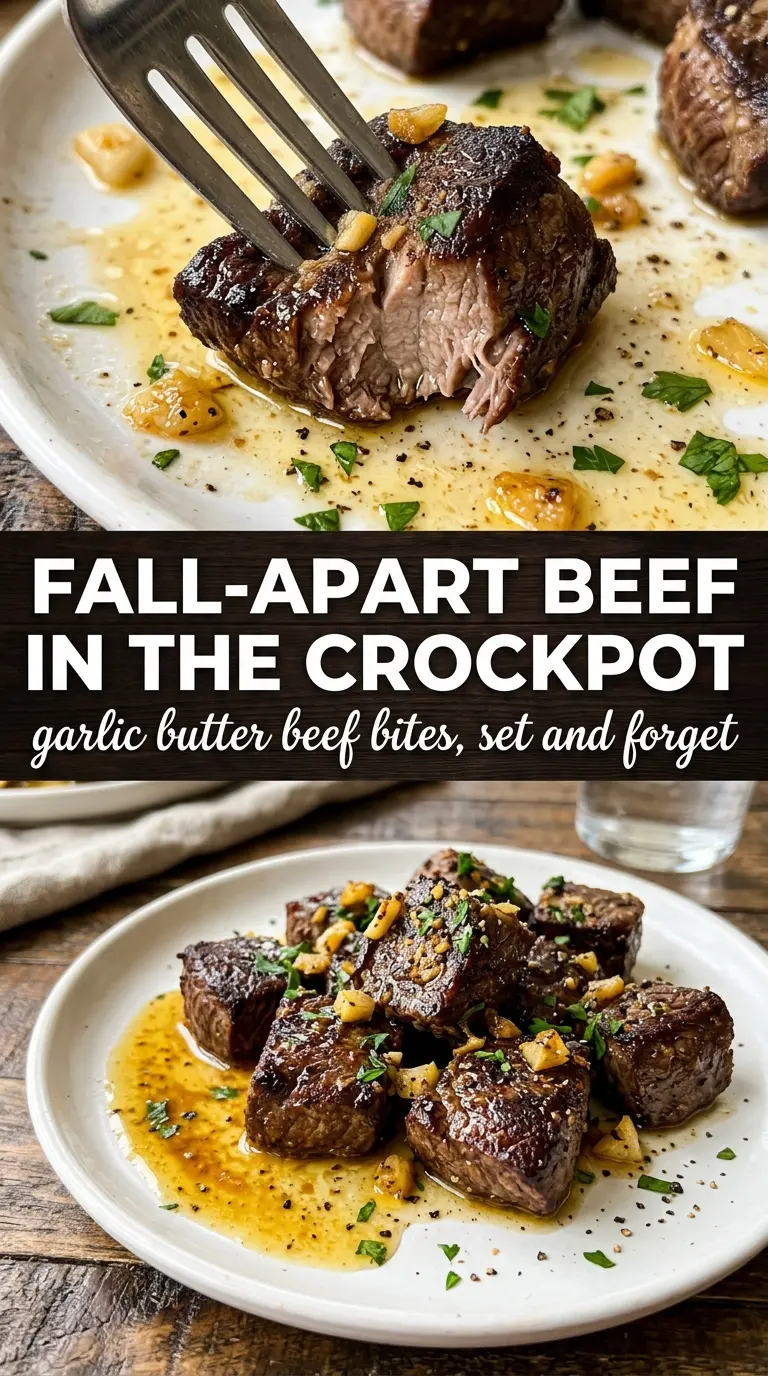
Slow cooker garlic butter beef bites turn humble beef into something rich, spoon-tender, and deeply savory with almost no last-minute effort. The beef cooks until it pulls apart with a fork, then gets coated in a glossy garlic butter sauce that clings to every edge instead of pooling at the bottom of the slow cooker. Served over mashed potatoes, it lands somewhere between a comfort-food braise and a steakhouse-style pan sauce.
The part that makes this work is the sear. Slow cookers are great at tenderness, but they don’t build flavor on their own, and that deep brown crust on the beef gives the sauce the backbone it needs. The butter, Worcestershire, and soy sauce do the heavy lifting in the liquid, while a small amount of broth keeps everything moving without washing out the garlic.
Below I’m walking through the exact points that matter: how hard to brown the beef, why the garlic goes in with the butter, and what to do if your sauce needs a little tightening at the end. If you’ve ever had slow cooker beef come out flat or watery, this version fixes both problems.
The beef was fall-apart tender and the garlic butter sauce actually thickened enough to spoon over the mashed potatoes instead of running all over the plate. My husband went back for seconds before I even sat down.
Keep these slow cooker garlic butter beef bites on hand for nights when you want tender beef and a glossy pan-style sauce without hovering over the stove.
The Sear That Keeps the Slow Cooker From Tasting Flat
The biggest mistake with slow cooker beef bites is skipping the browning step and expecting the crockpot to create flavor from scratch. It won’t. A hot skillet gives you the savory crust that carries through the whole dish, and that crust also helps the sauce taste rounded instead of just buttery.
Don’t crowd the pan. If the beef goes in too close together, it steams before it browns, and you lose the deep flavor you’re after. Work in batches and let each side sit long enough to form a dark, dry crust before you turn it. The slow cooker finishes the tenderness; the skillet builds the taste.
- Beef stew meat or sirloin — Stew meat gives you the most forgiving texture after a long cook. Sirloin cooks a little cleaner and stays more uniform, but it can dry out if you push the time too far. Cut either one into even 1.5-inch pieces so they finish at the same pace.
- Butter — This is what turns the cooking liquid into a real sauce instead of just seasoned broth. Use the full amount. If you cut it too far, the finished dish tastes thinner and the garlic never gets that glossy coating on the beef.
- Worcestershire and soy sauce — These two ingredients add the salty, savory depth that makes the sauce taste cooked and complete. Worcestershire brings tang and complexity; soy sauce brings body and color. If you need a substitute, use coconut aminos for the soy sauce, but expect a slightly sweeter finish.
- Beef broth — Use just enough to keep the slow cooker from drying out. More broth does not mean more flavor here; it usually means a looser sauce. If you only have water, the dish will still work, but the sauce won’t taste as full.
- Garlic — Fresh garlic matters here because it perfumes the butter as it cooks. Jarred garlic works in a pinch, but the flavor is sharper and less round. Mince it finely so it melts into the sauce instead of staying in little bits.
What Each Ingredient Is Actually Doing in This Recipe
- Primary ingredient (the star) — Quality matters most. Choose the best you can find.
- Cooking medium (oil, butter, or broth) — This carries flavors and prevents dryness.
- Seasonings (salt, pepper, spices, herbs) — Layer flavors so nothing overpowers. Build depth gradually.
- Aromatics (garlic, onion, herbs) — Cook with fat to bloom flavors. Become the foundation.
- Supporting ingredients — Complement the main ingredient without overpowering it.
- Sauce or liquid (if applicable) — Brings flavors together. Balance richness with acid.
- Acid (lemon, vinegar, wine, or other) — Brightens and prevents flat-tasting results.
- Final finish (garnish, glaze, or sauce) — Prevents one-dimensional taste and adds visual appeal.
Getting the Garlic Butter Sauce to Coat Instead of Pool
Seasoning and Browning the Beef
Season the beef generously before it ever touches the skillet. You want the surface dry enough to brown, not wet and gray. Sear in hot olive oil over high heat until you get a deep brown crust on at least two sides. If the pieces look pale and soft, keep going; the color is the flavor.
Building the Slow Cooker Base
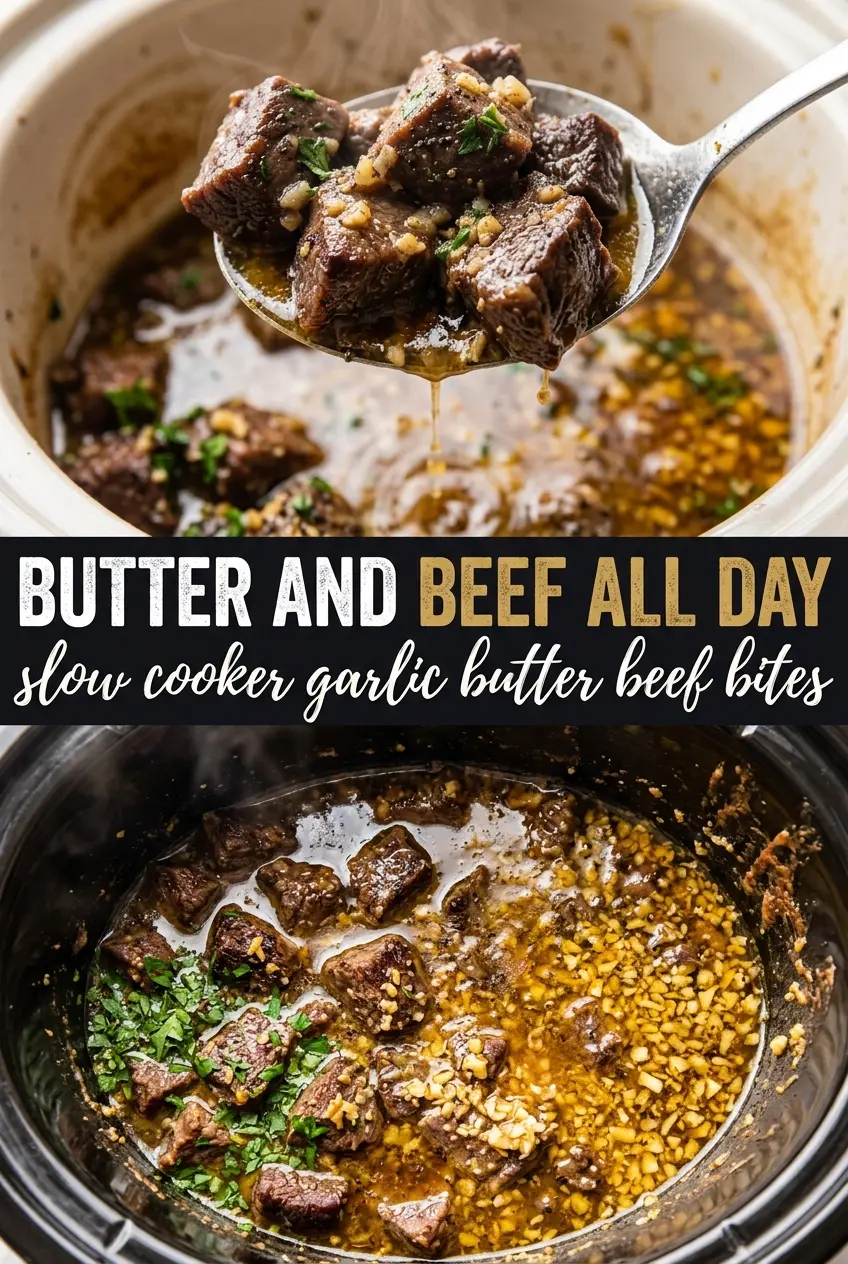
Add the browned beef to the slow cooker, then add the butter, garlic, Italian seasoning, onion powder, beef broth, Worcestershire sauce, and soy sauce. The butter melts into the juices and carries the garlic through the whole pot. Keep the liquid amount modest so the finished sauce has a chance to cling instead of turning soupy.
Cooking Until the Beef Relaxes
Cook on LOW for 6 to 7 hours or HIGH for 3 to 4 hours, until the beef yields easily when pressed with a fork. If you cook it past that point, sirloin can start to shred too much and stew meat can get stringy around the edges. The goal is tender cubes that still hold their shape when you stir.
Finishing the Sauce
Stir gently once the beef is done so the butter coats everything evenly. If the sauce looks thinner than you want, leave the lid off for 10 to 15 minutes on HIGH so a little steam escapes. That short finish makes a big difference. Taste at the end and adjust salt or pepper only after the sauce has had a chance to settle.
How to Adapt These Beef Bites for Different Dinners
Dairy-Free Version
Swap the butter for a good plant-based butter that melts cleanly. You’ll lose a little of the classic dairy richness, but the garlic and browned beef still carry the dish. Choose a dairy-free butter with a neutral taste, not a strongly flavored oil blend.
Gluten-Free Adjustment
Use a certified gluten-free Worcestershire sauce and tamari instead of soy sauce. The flavor stays close to the original, but tamari tends to taste a little smoother and less sharp. Serve with mashed potatoes instead of noodles if you want a naturally gluten-free plate.
Using Chuck Roast Instead of Stew Meat
Chuck roast works well if you cut it into even cubes and give it the full low-and-slow time. It brings a richer, beefier texture than packaged stew meat, but it needs enough time to relax and soften. Don’t rush this swap on high heat if the pieces are on the larger side.
Making It Over Egg Noodles
Egg noodles catch the garlic butter sauce beautifully and make this feel a little lighter than mashed potatoes. Drain them well and toss with a spoonful of the sauce before topping with the beef so the noodles don’t sit dry underneath. This is the fastest way to turn the dish into a full dinner without changing anything in the slow cooker.
Storage and Reheating
- Refrigerator: Store for up to 4 days. The sauce will thicken as it chills, which helps it cling even better when reheated.
- Freezer: Freeze for up to 2 months in an airtight container. The texture holds up better than many cream-based dishes, though the butter sauce may separate slightly and need a good stir after thawing.
- Reheating: Warm gently on the stove or in the microwave at medium power with a splash of broth if needed. High heat can tighten the beef and make the sauce look greasy instead of glossy.
Questions I Get Asked About This Recipe
Slow Cooker Garlic Butter Beef Bites
Ingredients
Equipment
Method
- Season the beef generously with salt, pepper, and garlic powder.
- Heat olive oil in a hot skillet over high heat and sear the beef in batches for 2-3 minutes per side until deeply browned; transfer to the slow cooker.
- Add butter, garlic, dried Italian seasoning, onion powder, beef broth, Worcestershire sauce, and soy sauce to the slow cooker with the beef.
- Cover and cook on LOW for 6-7 hours or HIGH for 3-4 hours until the beef is fork-tender (watch the sauce reduce to a glossy coating).
- Stir gently to coat the beef in the garlic butter sauce; taste and adjust seasoning.
- Serve the beef bites over mashed potatoes or egg noodles and garnish with fresh parsley.