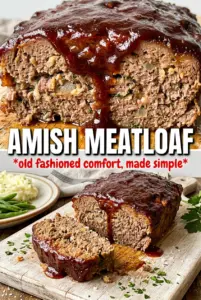
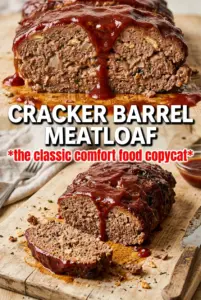
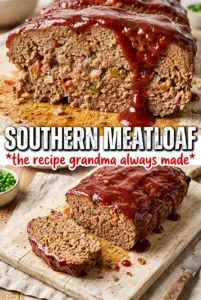
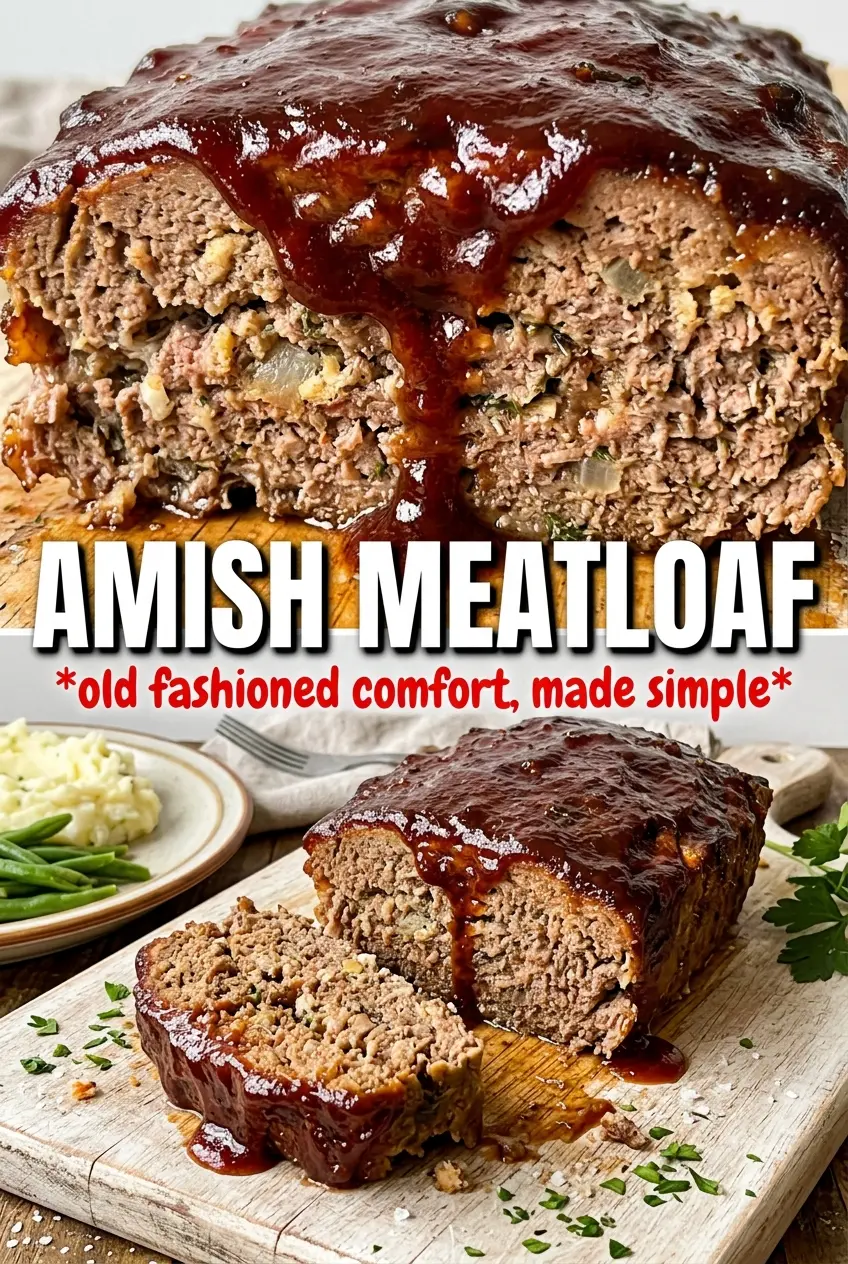
Amish meatloaf bakes up dense, sliceable, and deeply satisfying, with a simple ketchup glaze that turns sticky and caramelized at the edges. It’s the kind of dinner that lands on the table looking humble and ends up being the thing everyone reaches for first, especially when it’s served thick over mashed potatoes.
What sets this version apart is the balance of beef, pork, crackers, and milk. The pork keeps the loaf from eating dry, the saltines give it that old-fashioned texture without making it crumbly, and the grated onion melts into the mixture so you get flavor without obvious chunks. Pressing it firmly into the pan matters here; this isn’t a loose, airy meatloaf. It should hold together like a proper farmhouse slice.
Below, I’ve included the small details that make the difference — how to keep the glaze from burning, why grating the onion works better than chopping it, and the storage tips that keep leftovers just as good the next day.
The loaf held together beautifully and the glaze turned sticky on top without sliding off. I grated the onion like you suggested, and the texture came out old-fashioned and tender, not mushy.
Like this Amish meatloaf? Save it to Pinterest for the nights when you want a dense, old-fashioned meatloaf with a caramelized ketchup glaze.
The Reason This Loaf Slices Clean Instead of Crumbling
Meatloaf turns fragile when it’s packed with too many crumbs, overmixed, or underrested. This version avoids that by using just enough crushed saltines to bind the meat without turning it pasty, and by combining the ingredients only until they’re evenly distributed. Once the loaf goes into the pan, pressing it firmly helps it bake into tidy slices instead of a loose pile that falls apart on the plate.
The other thing that matters here is moisture management. Grated onion disappears into the meat, so you get its juice and flavor without big pockets that can make the loaf collapse. The milk and eggs help keep the interior tender, but the loaf still needs that full 10-minute rest after baking so the juices settle before slicing.
What Each Ingredient Is Actually Doing in This Meatloaf
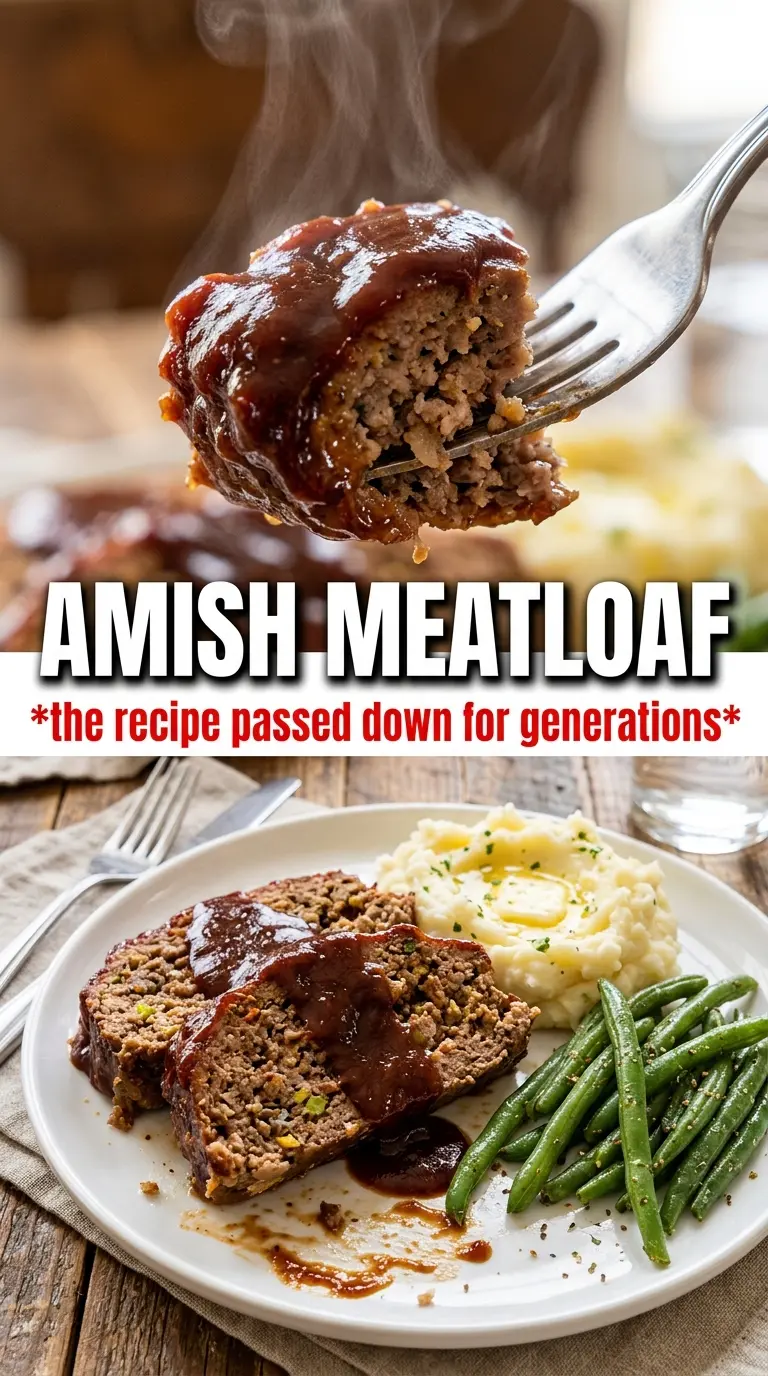
- Ground beef — This gives the loaf its main structure and beefy flavor. An 80/20 blend works best because it stays juicy without turning greasy.
- Ground pork — Pork softens the texture and adds richness that beef alone can’t quite match. If you skip it, the loaf will taste leaner and a little more rigid.
- Crushed saltine crackers — These are the old-fashioned binder here. They absorb moisture without making the texture heavy, and they’re a better fit than breadcrumbs if you want that classic Amish-style feel.
- Grated onion — Grating matters more than chopping. It melts into the mixture, seasons the meat evenly, and helps the loaf stay cohesive instead of leaving sharp onion pieces that can create weak spots.
- Whole milk and eggs — These add tenderness and help the loaf stay sliceable. Whole milk gives a softer result than low-fat milk, but in a pinch, 2% works fine.
- Worcestershire and mustard — These deepen the flavor without making the meatloaf taste like sauce. They keep the loaf from tasting flat, which is easy to do with simple meatloaf ingredients.
- Glaze — The ketchup, brown sugar, and apple cider vinegar build a sweet-tart topping that thickens as it bakes. If you want a tangier finish, increase the vinegar slightly; if you want a sweeter crust, lean harder on the brown sugar.
Building the Loaf So the Top Glazes, Not Burns
Mix the meat just until it comes together
Combine the beef, pork, crackers, eggs, milk, onion, Worcestershire, mustard, parsley, salt, and pepper in a large bowl, but stop as soon as everything looks evenly mixed. If you keep going, the proteins tighten up and the loaf turns dense in the wrong way. Cold hands help here, and a light touch keeps the texture tender.
Press it into the pan with purpose
Transfer the mixture to a greased 9×5 loaf pan and press it down firmly so there aren’t air pockets hiding in the middle. Smooth the top with the back of a spoon or your hand so the glaze has a flat surface to cling to. If the loaf is piled loosely in the pan, it won’t hold its shape as well when sliced.
Glaze in two passes
Mix the ketchup, brown sugar, and vinegar, then spread half over the top before baking. That first layer sets into the meat and starts forming a lacquered surface, while the second layer goes on after 55 minutes to finish the crust without burning the sugar. If you add all the glaze at the beginning, it can darken too fast and taste sharp instead of mellow and sticky.
Rest before slicing
Bake until the center reaches 160°F, then let the loaf stand for 10 minutes before cutting. That pause keeps the juices in the meat instead of letting them run straight onto the cutting board. Slice too soon and the loaf looks messy, even if the flavor is right.
How to Adapt This Amish Meatloaf for Different Tables
Gluten-free version with the same old-fashioned texture
Swap the saltine crackers for certified gluten-free crackers or gluten-free breadcrumbs in the same amount. The texture stays close to the original as long as you crush them finely and don’t add extra liquid. Keep the mixture loose enough to mix, but not wet enough to feel like paste.
Dairy-free meatloaf that still holds together
Use an unsweetened plain non-dairy milk with a neutral taste, like oat or soy milk. The loaf will still be tender, though it won’t have quite the same richness as whole milk. Keep the eggs in place, since they’re doing the real binding work.
A sharper glaze with less sweetness
Cut the brown sugar back to 1 tablespoon and add a little more vinegar. The topping will taste brighter and less candy-like, which works well if you’re serving the loaf with mashed potatoes or gravy. Just don’t remove the sugar entirely, or the glaze won’t caramelize the same way.
Making two smaller loaves instead of one large one
Divide the mixture between two smaller loaf pans for faster, more even baking. This is a good move if you want more glaze surface per slice or plan to freeze one loaf for later. Start checking earlier, since smaller loaves can reach temperature ahead of schedule.
Storage and Reheating
- Refrigerator: Store slices in an airtight container for up to 4 days. The texture firms up a little once chilled, which actually makes leftovers easier to reheat cleanly.
- Freezer: This freezes well. Wrap individual slices tightly and freeze for up to 3 months, or freeze the whole cooled loaf before slicing for the easiest make-ahead option.
- Reheating: Warm slices covered in the oven at 325°F with a spoonful of extra glaze or a splash of water to keep them from drying out. The common mistake is blasting meatloaf in the microwave until the edges turn rubbery before the center is hot.
Answers to the Questions Worth Asking
Amish Meatloaf
Ingredients
Equipment
Method
- Preheat oven to 350°F and grease a 9x5 loaf pan so the meatloaf releases cleanly after baking.
- Combine ground beef, ground pork, crushed saltine crackers, eggs, whole milk, grated onion, Worcestershire sauce, prepared mustard, dried parsley, salt, and black pepper in one bowl until evenly mixed.
- Press the mixture firmly into the loaf pan and smooth the top so the glaze sits flat and bakes evenly.
- Mix ketchup, brown sugar, and apple cider vinegar, then spread half of the glaze over the top in an even layer.
- Bake at 350°F for 55 minutes until the meatloaf has set and the edges start to brown.
- Spread the remaining glaze over the top, then bake 15 more minutes at 350°F until the internal temperature reaches 160°F.
- Rest the meatloaf for 10 minutes before slicing so juices settle and the dense texture holds together.
- Slice and serve with traditional sides while warm for a classic farm comfort food dinner.