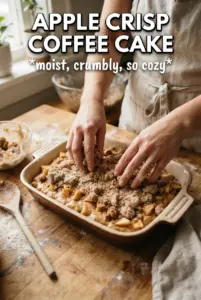
Apple crisp coffee cake brings together the best parts of two bakes in one pan: a tender, sour cream cake and a thick oat crumble that bakes into golden, cinnamon-edged clusters. The top gets crisp and nubby while the center stays soft and moist, and every slice lands with a little apple in the middle and a little crunch on top.
The trick is keeping the topping cold and clumpy before it goes on the batter. That cold butter stays in pieces long enough to create those crisp pockets instead of melting into a sandy layer. Sour cream also pulls its weight here, giving the cake a finer crumb and enough richness to hold up under the apples and streusel without turning heavy.
Below you’ll find the small details that matter most: how to keep the crumble from disappearing into the cake, why the apples should be diced small, and what to watch for so the center bakes through before the top gets too dark.
The topping stayed crisp even after sitting on the counter, and the apples baked into the cake without sinking. I loved the cinnamon in both layers because it made the whole pan smell like an apple orchard bakery.
Love the cinnamon oat crumble on this Apple Crisp Coffee Cake? Save it to Pinterest for the mornings when you want a buttery coffee cake with a crunchy apple topping.
The Reason the Crumble Stays Crisp Instead of Melting In
The topping on this cake is not a sprinkle. It needs to sit in distinct clumps so it can bake into a real crisp layer instead of disappearing into the batter. Cold butter is what makes that happen. When you cut it into the oats, flour, sugar, and cinnamon, you get little pockets that hold their shape long enough to brown and crisp in the oven.
The other thing that keeps this from turning soggy is the batter itself. Sour cream gives the cake enough body that it can support the apples and topping without collapsing, and the diced apples are small enough to soften quickly without leaking big pockets of juice. If your apples are cut too large, the cake can bake unevenly and the center can stay wet longer than the edges.
- Cold butter for the topping — Cubed butter straight from the fridge gives you the best crumble texture. If it starts to smear, the topping turns pasty instead of crisp.
- Sour cream — This keeps the crumb tender and adds enough richness to balance the apples. Plain Greek yogurt works in a pinch, but the cake will be a touch tangier and slightly less plush.
- Diced apples — Peel and dice them small so they soften at the same pace as the cake bakes. Large chunks can leave wet pockets behind.
What Each Ingredient Is Actually Doing in This Cake
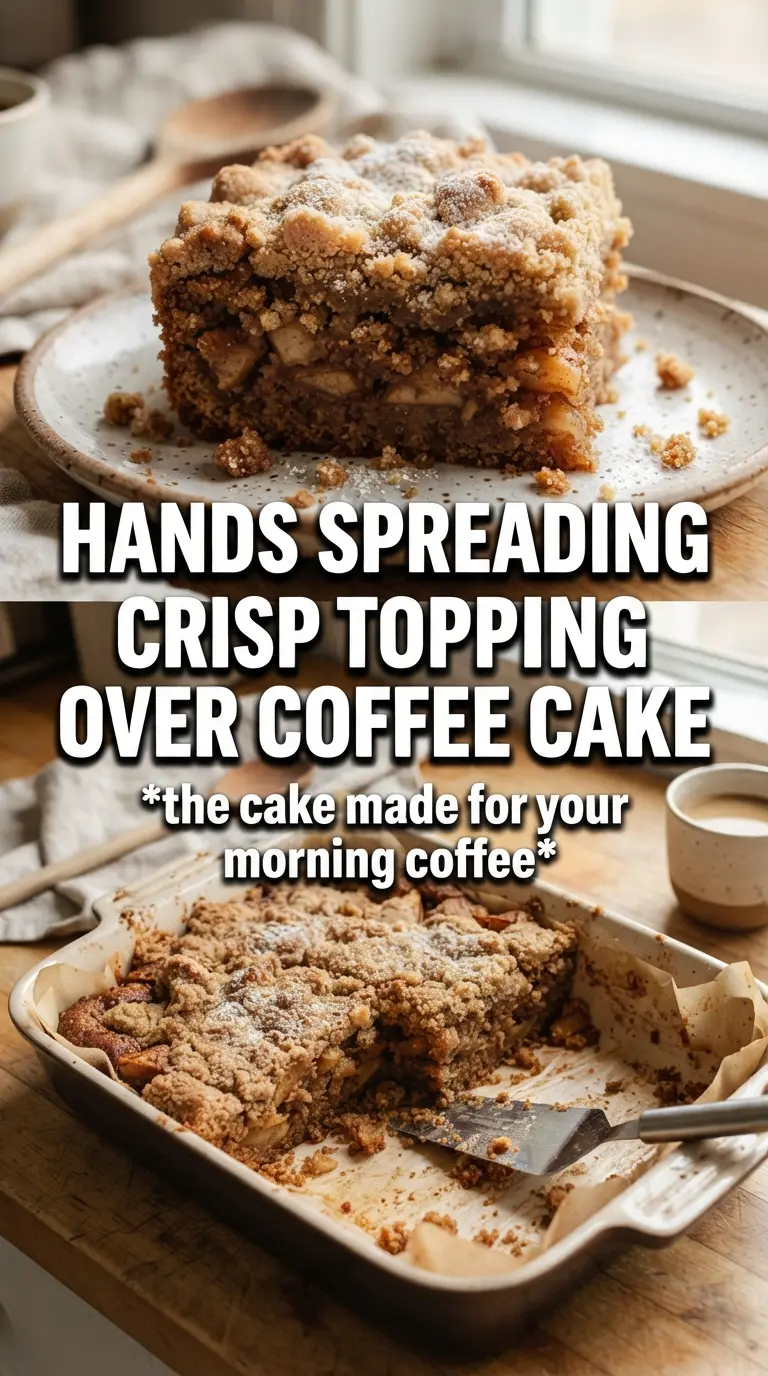
The flour in the cake gives structure, but it’s the sour cream and eggs that keep the crumb soft instead of dry. Butter and sugar get beaten together first to trap air, which helps the cake rise lightly under the heavier apple layer. If you rush that step, the cake still bakes, but it won’t have the same lifted texture.
The topping is built like a proper crisp: oats for chew, flour for binding, brown sugar for moisture and caramel notes, and cinnamon for warmth. Packed brown sugar matters here because loose sugar doesn’t create the same clumpy topping. If you only have quick oats, use them in a pinch, but the topping will be finer and less rustic.
- All-purpose flour — Keeps both the cake and topping sturdy. There isn’t a good one-to-one swap here if you want the same structure.
- Brown sugar — Adds moisture and helps the topping form those dark, caramelized clusters.
- Rolled oats — Give the crumble its signature texture. Quick oats soften too much and lose some of that crisp bite.
Building the Batter and Topping in the Right Order
Make the Crumble First
Mix the oats, flour, brown sugar, cinnamon, and salt, then cut in the cold butter until the mixture forms uneven clumps. Those clumps are what bake into the crisp top, so stop before it looks like wet sand. Refrigerating the topping while you build the batter keeps the butter firm and helps the pieces hold their shape in the oven.
Whip the Cake Base Until It Lightens
Beat the softened butter and sugar until the mixture looks pale and fluffy. That step builds the air that helps the cake rise under the weight of the apples and topping. Add the eggs one at a time, then the vanilla and sour cream, and mix just until smooth; if you overbeat after the flour goes in, the crumb gets tough.
Fold, Spread, and Cover Generously
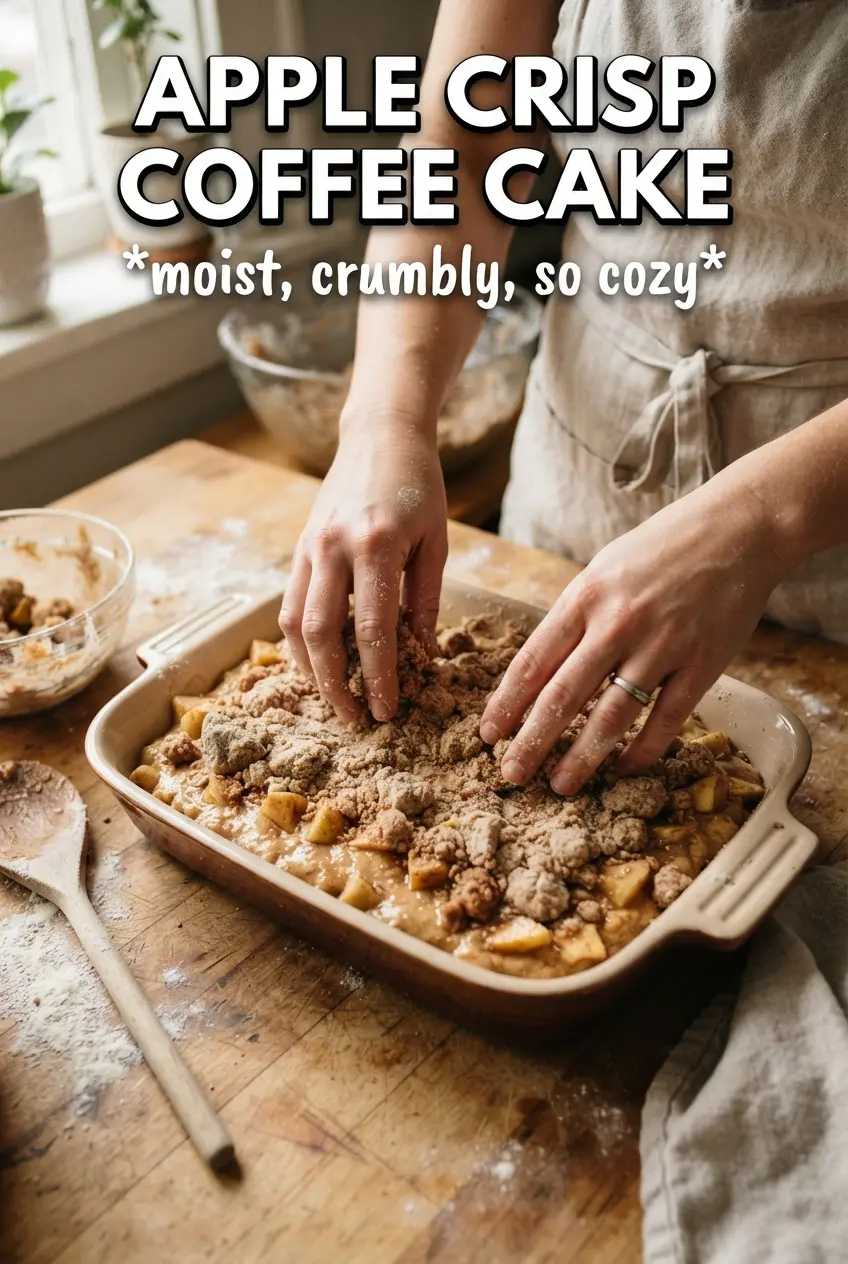
Stir the dry ingredients into the wet mixture just until no dry streaks remain, then fold in the diced apples. Spread the batter evenly into the greased pan so the cake bakes at the same rate across the whole dish. Scatter the topping all the way to the edges in a thick layer. If you leave bare spots, those areas dry out before the center finishes baking.
Bake Until the Center Sets
Bake at 350°F until the crumble is deep golden and a toothpick inserted into the center comes out clean or with just a few moist crumbs. If the top is browning too fast before the middle is done, lay a loose piece of foil over the pan for the last stretch of baking. Let the cake cool a bit before slicing or the topping will slide off and the crumb will seem underbaked.
How to Adapt This Apple Crisp Coffee Cake for Different Needs
Dairy-Free Version
Use plant-based butter in both the cake and topping, then swap the sour cream for a thick dairy-free yogurt. The cake will still be tender, though the crumb may be a little less rich and the topping may brown a touch faster, so keep an eye on it near the end of baking.
Gluten-Free Adjustment
A 1:1 gluten-free baking flour can replace the all-purpose flour in the cake, and certified gluten-free oats work in the topping. The result will be a little more delicate, so let the cake cool fully before slicing or it may crumble.
A Little More Spice
Add a pinch of nutmeg or cardamom to the cake batter if you want the apple flavor to lean warmer and deeper. Keep the amount modest so the cinnamon still leads and the crumb doesn’t taste crowded.
Storage and Reheating
- Refrigerator: Store covered for up to 4 days. The topping softens a little after the first day, but the cake stays moist.
- Freezer: Freeze slices tightly wrapped for up to 2 months. Thaw overnight in the fridge so the topping doesn’t turn soggy from rapid condensation.
- Reheating: Warm slices in a 300°F oven for about 10 minutes. The oven brings back the crumble far better than the microwave, which softens the topping and can make the apples taste watery.
Questions I Get Asked About This Recipe
Apple Crisp Coffee Cake
Ingredients
Equipment
Method
- Preheat the oven to 350F and grease a 9x13 baking dish with a light coat of butter or nonstick spray.
- Refrigerate the cold topping mixture after you make it so the butter stays firm and the crumble bakes clumpy.
- In a bowl, combine rolled oats, all-purpose flour, brown sugar, cinnamon, and salt.
- Cut in the cold cubed unsalted butter until the mixture forms clumps.
- Refrigerate the crisp topping while you mix the cake batter.
- In a separate bowl, whisk together all-purpose flour, baking powder, baking soda, cinnamon, and salt.
- Beat the softened unsalted butter and granulated sugar until fluffy, then beat in the eggs and vanilla.
- Mix in the sour cream until smooth.
- Fold in the flour mixture just until incorporated.
- Fold in the diced apples.
- Spread the batter evenly into the prepared baking dish.
- Scatter the oat crumble generously over the top to fully cover the batter.
- Bake for 50 to 55 minutes at 350F until a toothpick comes out clean and the crumble is golden.
- Let the cake cool briefly, then dust with powdered sugar if desired.