Apple crumble is the kind of dessert that disappears while it's still warm. The apples go soft and fragrant underneath a topping that bakes up sandy, buttery, and crisp at the edges, with just enough chew in the middle to keep every spoonful interesting. It's the sort of pudding that feels old-fashioned in the best way: simple ingredients, no fuss, and a payoff that tastes much greater than the effort it takes.
The difference between a good crumble and one that turns bland or soggy comes down to two things: the apple choice and the topping texture. Cooking apples hold their shape better, so you get tender slices instead of apple sauce, and cold butter rubbed into the flour keeps the topping loose and crumbly instead of dense. A little brown sugar deepens the topping and helps it caramelize, while lemon juice keeps the filling bright instead of flat.
Below, I've included the small details that matter most — how to tell when the crumble topping is done, what to do if your apples are extra tart, and a few practical variations if you want to change the serving or make it ahead.
The topping stayed crisp even after we spooned custard over it, and the apples were tender without turning mushy. I used Bramleys and the balance of sweet and tart was spot on.
Love the crisp cinnamon topping and soft apple filling? Save this apple crumble for the nights when you want a proper British pudding with almost no fuss.
The Reason a Crumble Topping Stays Crisp Instead of Going Flat
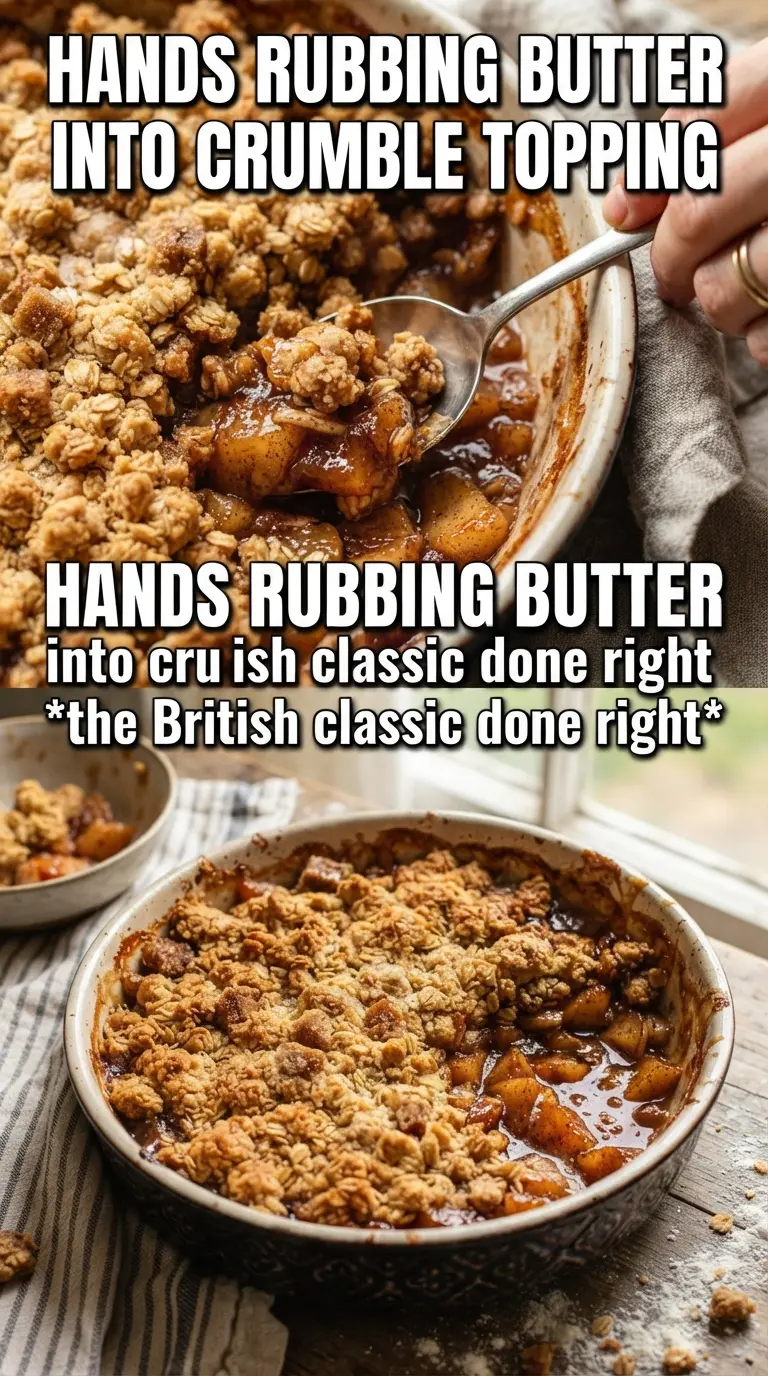
The topping on apple crumble needs to be uneven. That's the whole trick. When the butter stays cold and the mixture is rubbed into coarse crumbs instead of a smooth paste, the oven can create pockets of steam that leave you with a crisp, craggy surface rather than a cakey lid. Pack it down and you lose that texture; scatter it loosely and the heat can move through it properly.
The apples underneath matter just as much. If they release too much liquid before the crumble has a chance to set, the bottom turns soft and the topping loses its bite. Using cooking apples helps because they soften without collapsing completely, and the lemon juice sharpens the flavor while keeping the filling from tasting heavy.
What Each Ingredient Is Actually Doing in This Crumble
- Cooking apples — These hold their shape better than eating apples, so the filling turns tender instead of jammy. Bramley is the classic choice, but Granny Smith works well if that's what you can get.
- Cold butter — This is what gives the crumble its sandy, nubbly texture. If the butter softens too much before baking, the topping turns greasy and dense instead of crisp.
- Plain flour — It provides the structure for the crumble. Self-raising flour isn't needed here and can make the topping puff in a way that feels more biscuit-like than crumbly.
- Light brown sugar — This adds a deeper caramel note and helps the top brown more evenly. White sugar alone works in a pinch, but the flavor will be flatter.
- Lemon juice — It keeps the apple filling bright and stops the sweetness from taking over. If your apples are very tart, don't skip it; the juice balances them rather than making the dessert sour.
Building the Filling and Topping So Nothing Turns Soggy
Coating the Apples
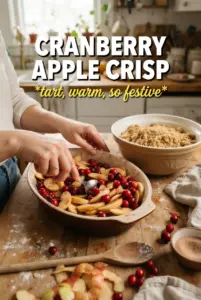
Toss the sliced apples with the sugar, cinnamon, and lemon juice until every piece looks lightly glossy. You want the sugar to begin drawing out a little juice, but not so much that the bowl turns watery before it reaches the dish. If your apples are especially juicy, give them a minute after tossing, then spoon them into the dish with only a little excess liquid.
Rubbing in the Butter
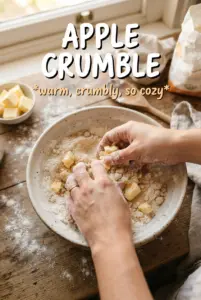
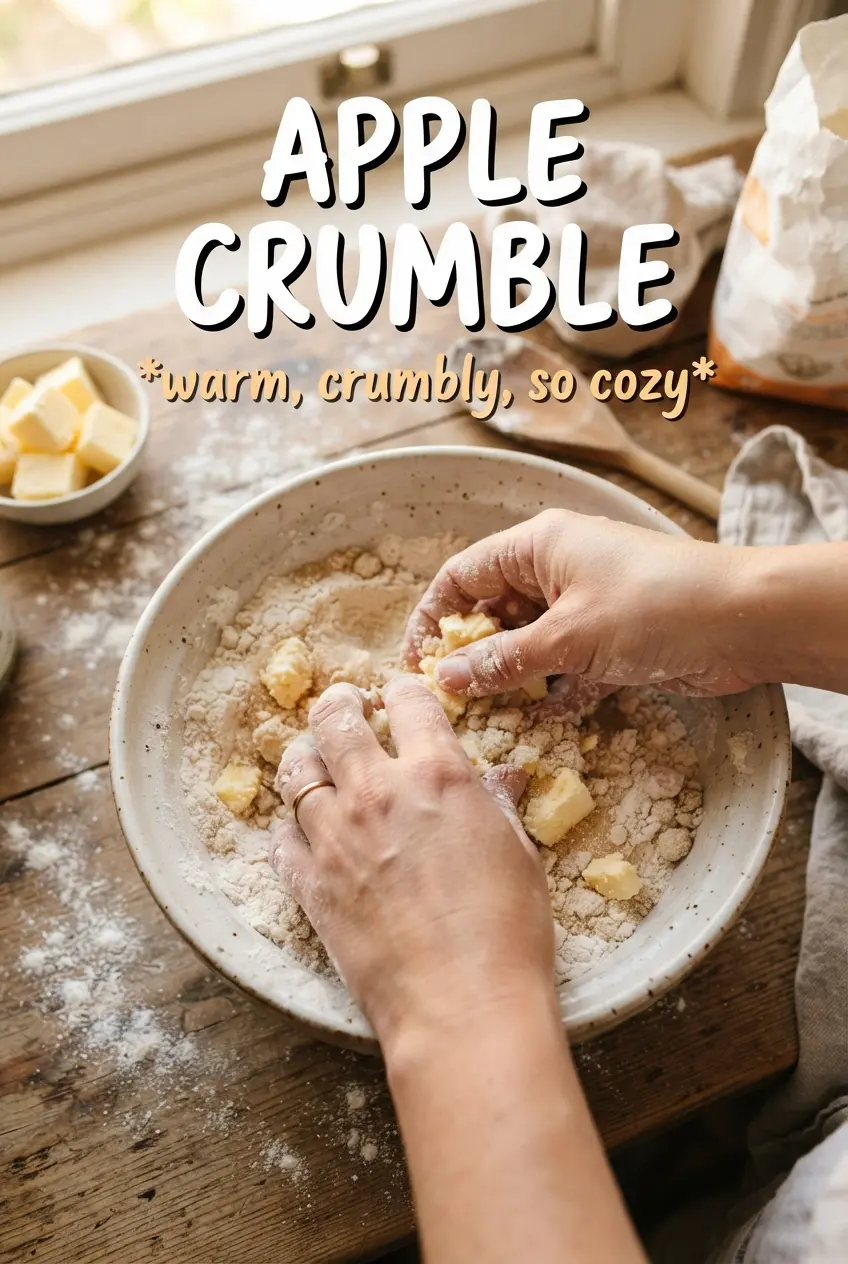
Work the cold butter into the flour with your fingertips until the mixture looks like coarse breadcrumbs with a few larger buttery bits. Those larger pieces matter because they melt into little pockets of crispness in the oven. If the whole mixture goes sandy and uniform, it'll still bake, but the topping won't have the same rugged crunch.
Finishing and Baking
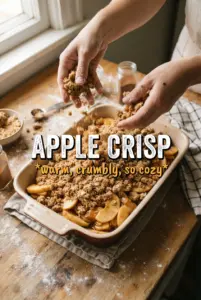
Spread the crumble over the apples without pressing it down. A loose layer lets the heat circulate and helps the top stay irregular and crisp. Bake until the topping is pale golden and the apple juices are bubbling at the edges; those bubbling edges are the sign that the fruit has softened underneath and the raw flour taste has baked out.
How to Adapt Apple Crumble for Different Needs
Gluten-Free Crumble
Swap the plain flour for a good 1:1 gluten-free flour blend. The topping will be a little more delicate and less nubbly, but the butter method stays the same, and the result is still crisp if you don't overwork it.
Dairy-Free Version
Use a solid dairy-free baking block instead of butter. Avoid soft tub spreads, which can melt too fast and make the topping greasy rather than crumbly.
Using Sweet Apples Instead of Cooking Apples
If you only have sweeter apples, add a little extra lemon juice and lean toward the lower end of the sugar in the filling. The crumble still works, but the finished dessert will taste softer and less sharply apple-forward.
Storage and Reheating
- Refrigerator: Keep covered for up to 4 days. The topping softens a little as it sits, but the flavor stays good.
- Freezer: It freezes well after baking. Cool completely, wrap tightly, and freeze for up to 2 months.
- Reheating: Reheat in a 180C (350F) oven until warmed through and the top is crisp again. The microwave will heat the filling, but it turns the crumble soft, which is the one thing you don't want here.
Questions I Get Asked About This Recipe
Apple Crumble
Ingredients
Equipment
Method
- Preheat your oven to 190C (375F) and grease a large baking dish. Set the dish aside while you prep the apples and crumble.
- Toss the apple slices with granulated sugar, cinnamon, and lemon juice, then spread them in the prepared dish. Make an even layer so the apples cook through at the same pace.
- Place flour and cold cubed unsalted butter together and rub with your fingertips until the mixture resembles coarse breadcrumbs with some larger pieces. This keeps the topping sandy rather than pasty.
- Stir in both granulated sugar and light brown sugar, plus cinnamon and salt, until evenly distributed. The crumb should look dry and grainy.
- Spread the crumble evenly over the apples without packing it down. Leave it fluffy on top so it bakes up crisp.
- Bake for 35-40 minutes at 190C (375F) until the topping is pale golden and the apple filling bubbles at the edges. If needed, rotate the dish once for even browning.
- Serve warm with custard, double cream, or vanilla ice cream. Let it sit for 5 minutes so the filling settles slightly before scooping.