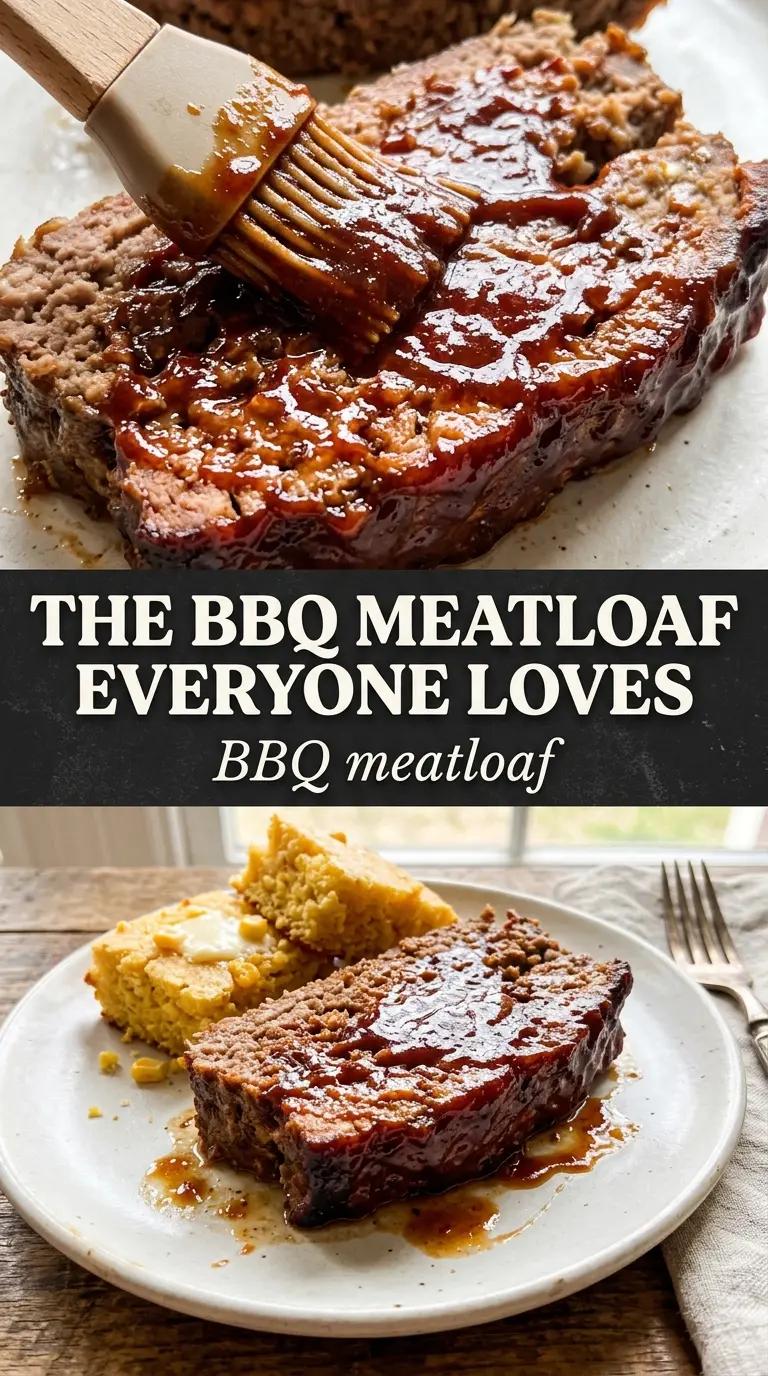
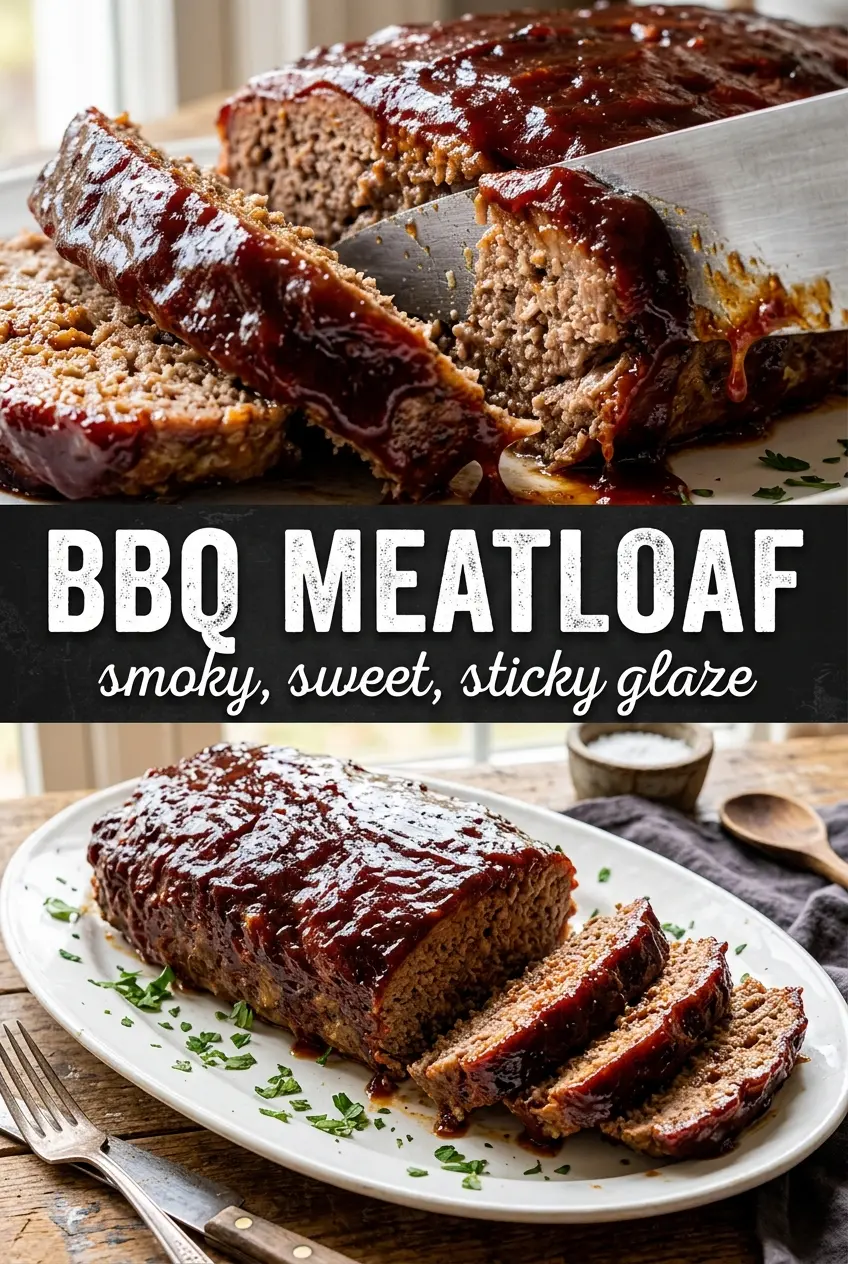
BBQ meatloaf turns a familiar dinner into something with a sticky, smoky crust and a tender middle that slices cleanly once it rests. The glaze bakes down into a dark, lacquered top instead of just sitting on the surface, and that gives each slice a little sweet heat and tang in every bite. It tastes like the comfort food version of a cookout, even when the grill never comes out of the garage.
What makes this version work is the balance of beef and pork, plus the free-form loaf shape. The pork keeps the texture soft without making it greasy, and the grated onion melts into the meat so you get moisture without obvious chunks. Baking it on a sheet pan instead of in a loaf pan gives the glaze more room to caramelize, which is the difference between a good meatloaf and one that tastes flat.
Below, I’ll walk you through the part that matters most: how to mix the meat without compacting it, how to build that glossy BBQ glaze, and what to change if you need a gluten-free version or want to use a different sauce.
The glaze set up with that sticky, caramelized edge I always want, and the loaf stayed tender instead of dense. I baked it on a sheet pan like you said, and it sliced beautifully after the rest.
Smoky BBQ meatloaf with a sticky caramelized glaze is the kind of dinner that disappears fast on a weeknight.
The Reason Free-Form Meatloaf Gets a Better BBQ Glaze
A lot of meatloaf problems come from the pan. When the mixture sits packed into a loaf pan, the fat and steam have nowhere to go, so the exterior turns soft before it has a chance to caramelize. A free-form loaf on a sheet pan gives the glaze direct heat and more exposed surface, which means the sugars brown instead of just melting into the meat.
The other thing that matters here is how you mix. If you work the meat like bread dough, the loaf turns tight and springy instead of tender. Stop as soon as the breadcrumbs, milk, and seasonings are evenly distributed. The mixture should hold together when you shape it, but it shouldn’t look pasted or dense.
- Grated onion — This melts into the loaf and adds moisture without leaving sharp chunks behind. If you only have a finely minced onion, that works too, but the texture will be a little more visible.
- Ground pork — Pork brings fat and softness that lean beef alone can’t match. If you skip it, use beef with a little more fat, or the loaf can bake up dry.
- BBQ sauce — This is the flavor of the finish, so use one you actually like on its own. A thicker sauce gives you a better lacquer; a thin, vinegary sauce can work, but it won’t cling as heavily.
- Breadcrumbs and milk — Together they act like a gentle binder and keep the meat from packing down. If you need a gluten-free version, use gluten-free breadcrumbs in the same amount.
What Each Ingredient Is Actually Doing in This Recipe
- Primary ingredient (the star) — Quality matters most. Choose the best you can find.
- Cooking medium (oil, butter, or broth) — This carries flavors and prevents dryness.
- Seasonings (salt, pepper, spices, herbs) — Layer flavors so nothing overpowers. Build depth gradually.
- Aromatics (garlic, onion, herbs) — Cook with fat to bloom flavors. Become the foundation.
- Supporting ingredients — Complement the main ingredient without overpowering it.
- Sauce or liquid (if applicable) — Brings flavors together. Balance richness with acid.
- Acid (lemon, vinegar, wine, or other) — Brightens and prevents flat-tasting results.
- Final finish (garnish, glaze, or sauce) — Prevents one-dimensional taste and adds visual appeal.
Building the Loaf So It Stays Tender and Gets Sticky on Top
Mix the Meat Just Until It Comes Together
Combine the beef, pork, breadcrumbs, eggs, milk, grated onion, garlic, Worcestershire, paprika, garlic powder, salt, and pepper in a large bowl. Use your hands or a fork and stop once everything looks evenly mixed. If the mixture starts turning pasty, you’ve gone too far, and that’s what makes meatloaf rubbery. It should feel cohesive, not mashed.
Shape It for Maximum Browning
Form the mixture into a free-form loaf on a foil-lined baking sheet. Aim for a shape that’s even in thickness so it cooks at the same rate from end to center. If the loaf is too tall, the outside will overbake before the middle reaches temperature. A flatter, oval shape gives you more surface for the glaze and a better crust all around.
Glaze in Two Layers
Mix the BBQ sauce, brown sugar, apple cider vinegar, and Worcestershire until smooth, then spread half over the loaf before it goes into the oven. That first layer sets the base and starts to caramelize. Add the second layer near the end so it stays glossy instead of burning. If your sauce is very sweet, pull back a little on the brown sugar; if it’s thin, the vinegar helps sharpen it and keeps the glaze from tasting flat.
Bake Until the Center Is Done, Then Let It Rest
Bake until the meatloaf reaches 160°F in the center and the glaze looks dark mahogany with some sticky edges. The biggest mistake here is slicing too soon. Rest it for 10 minutes before cutting so the juices settle back into the loaf instead of running across the board. That short rest is what gives you neat slices instead of a pile of crumbs.
Make It Gluten-Free
Swap in gluten-free breadcrumbs one for one. The loaf still binds well because the eggs and milk do most of the structural work, and the texture stays close to the original. Just pick a BBQ sauce that’s also gluten-free, since some brands use thickeners or soy sauce.
Use All Beef
If you don’t want pork, use 80/20 ground beef so the loaf doesn’t dry out. The flavor will be a little meatier and less soft, but the BBQ glaze gives it enough richness to still feel balanced. Lean beef alone needs the fat, or the slices can come out crumbly.
Swap the BBQ Sauce
A smoky, spicy sauce gives you the deepest flavor, but a honey BBQ or Kansas City-style sauce works too. If your sauce is already sweet, reduce the brown sugar a little so the glaze doesn’t turn candy-like in the oven. If it’s sharp and tangy, keep the sugar as written to round it out.
Storage and Reheating
- Refrigerator: Store slices in an airtight container for up to 4 days. The glaze will thicken and set more firmly as it chills.
- Freezer: Wrap individual slices tightly and freeze for up to 2 months. Freeze them in a single layer first if you want cleaner portions later.
- Reheating: Warm covered in a 325°F oven with a spoonful of water or extra BBQ sauce. Microwaving works for a quick lunch, but use short bursts so the edges don’t dry out while the center heats.
Answers to the Questions Worth Asking
BBQ Meatloaf
Ingredients
Equipment
Method
- Preheat oven to 350°F and line a baking sheet with foil for easy cleanup.
- Combine ground beef, ground pork, breadcrumbs, eggs, whole milk, grated small onion, minced garlic, Worcestershire sauce, smoked paprika, garlic powder, and salt and pepper in a large mixing bowl, mixing just until combined.
- Shape the mixture into a free-form loaf on the lined baking sheet, using the extra surface area to help the glaze caramelize.
- Mix BBQ sauce, brown sugar, apple cider vinegar, and Worcestershire to make the BBQ glaze, then spread half of it over the loaf.
- Bake at 350°F for 45 minutes until the glaze looks thick and beginning to set on top.
- Brush the remaining glaze over the loaf and bake 15–20 minutes more at 350°F, until the internal temperature reaches 160°F and the glaze is caramelized with dark, sticky lacquer.
- Rest the meatloaf for 10 minutes before slicing so juices settle and the loaf holds its shape.
- Slice and serve with the visible charred, caramelized BBQ glaze coating the surface.