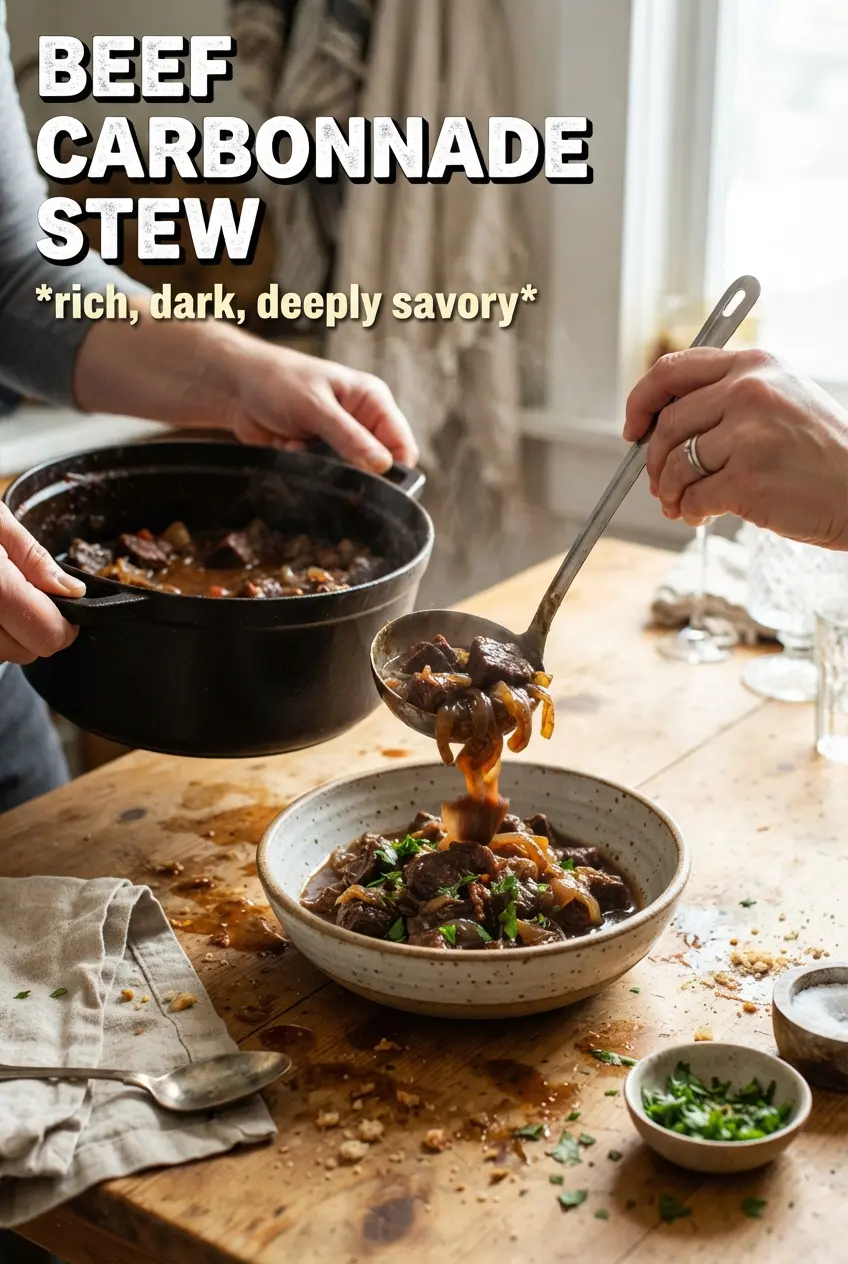
Deep mahogany beef carbonnade stew is the kind of pot that fills the kitchen with the smell of caramelized onions, dark beer, and slow-braised beef long before dinner is ready. The beef turns fork-tender, the broth thickens into something glossy and savory, and the onions melt into the sauce instead of sitting in strings. It lands somewhere between a beef stew and an onion gravy, and that balance is what makes it worth the time.
The key here is patience at two separate points: first with the onions, then with the braise. The onions need to soften and darken slowly until they taste sweet instead of sharp, and the beer needs enough time to simmer down so its bitterness rounds out into malty depth. A little vinegar and Dijon keep the stew from tasting flat, while the flour added early helps the broth cling to the beef without turning pasty.
Below you’ll find the part that matters most for getting the right texture, plus a few smart swaps for the beer, the beef, and the bread on the side. Once you’ve made it once, the rhythm of this stew makes perfect sense.
The onions cooked down into the broth exactly like you said, and the sauce turned thick and glossy instead of watery. I used stout and served it with crusty bread — my husband went back for seconds before I’d even sat down.
Love the deep Belgian beer broth and caramelized onions in this beef carbonnade stew? Save it to Pinterest for the next cold-night dinner when you want something hearty and bread-dipping good.
The Part Most Beef Stews Get Wrong: Browning the Meat Without Crowding the Pot
The beef needs a hard sear, not a gray simmer. If the cubes are crowded, they steam and the fond stays weak, which means the stew loses the deep roasted backbone that makes carbonnade taste like more than onion soup with meat in it. Work in batches and wait for a real brown crust before turning the pieces.
The onions need the same patience. They should go from sharp and pale to soft, jammy, and golden-brown, and that slow cook is what gives the broth its sweetness without needing a lot of sugar. Once the beer goes in, scrape the pot clean; those browned bits are where the flavor lives, and they dissolve into the sauce as it braises.
What Each Ingredient Is Actually Doing in This Belgian Stew

- Beef chuck — This cut is the right kind of tough for a long braise. It loosens into tender chunks without falling apart into threads, and the connective tissue helps thicken the broth naturally. If you swap to a lean cut, the stew will taste dry and the meat won’t have the same silky bite.
- Dark Belgian ale or stout — This is the defining flavor in carbonnade. A stout gives a deeper roast note, while a Belgian ale leans a little lighter and maltier. Use a beer you’d actually drink; overly sweet or aggressively bitter beer will throw the balance off.
- Onions — They aren’t just an aromatic here. They become part of the sauce, turning sweet and jammy as they cook down. Slice them thin so they melt into the braise instead of staying chunky.
- Dijon, vinegar, and brown sugar — These three keep the stew from tasting flat. Dijon sharpens the beer, vinegar brightens the richness, and brown sugar rounds out the edges without making the dish taste sweet.
How to Build the Braise So the Sauce Turns Thick and Glossy
Searing the Beef
Season the beef first, then sear it in hot oil until the outside is deeply browned on several sides. You want a dark crust, not a pale exterior with a few spots of color. If the pan starts to cool down, stop and let it heat back up before adding the next batch; weak heat is the fastest way to lose that roasted flavor.
Cooking the Onions Down
Add the onions to the same pot and cook them over medium heat until they collapse, soften, and turn golden. They should look almost jammy by the time they’re done, and any stuck bits on the bottom should loosen as the onions release their moisture. If they brown too fast, lower the heat; burnt onions will make the whole stew taste harsh.
Building the Braising Liquid
Stir in the garlic and flour, then cook for a minute so the raw flour taste cooks off. Pour in the beer and scrape the pot until the bottom is clean, then add the broth, tomato paste, vinegar, brown sugar, Dijon, thyme, and bay leaves. Bring it up just to a boil before dropping it to a gentle braise; a hard boil will beat the meat apart before it has a chance to turn tender.
Finishing the Stew
Cover the pot and let the beef cook until it gives easily when pressed with a spoon, usually around two hours. Pull out the bay leaves and thyme stems, then taste the broth and adjust the salt and pepper. If the sauce seems a little loose, uncover the pot for the last 10 to 15 minutes so it tightens into that glossy, spoon-coating texture.
How to Adapt This Carbonnade When You Need a Different Beer, Meat, or Make-Ahead Plan
Use stout for a darker, roastier stew
Stout gives the broth a deeper coffee-and-bread flavor and makes the stew taste a little more robust. It also darkens the sauce faster, so don’t judge the finished color too early. If you want the most classic carbonnade profile, use a Belgian ale instead.
Make it gluten-free with a small swap
Use a gluten-free flour blend in place of the all-purpose flour, or skip the flour and reduce the uncovered braising liquid a little longer at the end. The stew will still thicken, but the sauce will be slightly looser if you take the flour out completely.
Use beef short ribs if you want a richer finish
Short ribs bring extra richness from the fat and connective tissue, and they make the broth silkier. They also need a little more time than chuck, so keep cooking until the meat pulls apart easily. The flavor is deeper, but the dish ends up more luxurious than rustic.
Storage and Reheating
- Refrigerator: Keeps well for 4 days. The flavor gets even better after a day, and the sauce will thicken as it chills.
- Freezer: Freezes well for up to 3 months. Cool it completely first and store it in airtight containers, leaving a little headspace for expansion.
- Reheating: Warm it gently on the stove over low heat with a splash of broth or water if needed. Don’t blast it on high heat or the beef can tighten up and the sauce can split at the edges.
Answers to the Questions Worth Asking
Beef Carbonnade Stew
Ingredients
Equipment
Method
- Season the beef with salt and pepper. Sear in vegetable oil in a Dutch oven over high heat until deeply browned, about 6-8 minutes per batch, then remove to a plate and keep any browned bits in the pot.
- Cook the onions in the Dutch oven over medium heat for 20-25 minutes until very soft and golden, stirring occasionally so the color develops evenly.
- Add the minced garlic and cook for 1 minute, just until fragrant. Whisk in the all-purpose flour and cook for 1 minute to remove the raw flour taste.
- Deglaze with the dark Belgian ale or stout by pouring it in and scraping up all browned bits from the bottom of the Dutch oven.
- Add beef broth, tomato paste, red wine vinegar, brown sugar, Dijon mustard, fresh thyme, bay leaves, and the beef. Bring to a boil, then reduce heat to a gentle simmer, cover, and braise for 2 hours at a steady low simmer until the beef is very tender.
- Remove the bay leaves and thyme. Taste and season with salt and pepper as needed, then serve hot with crusty bread.