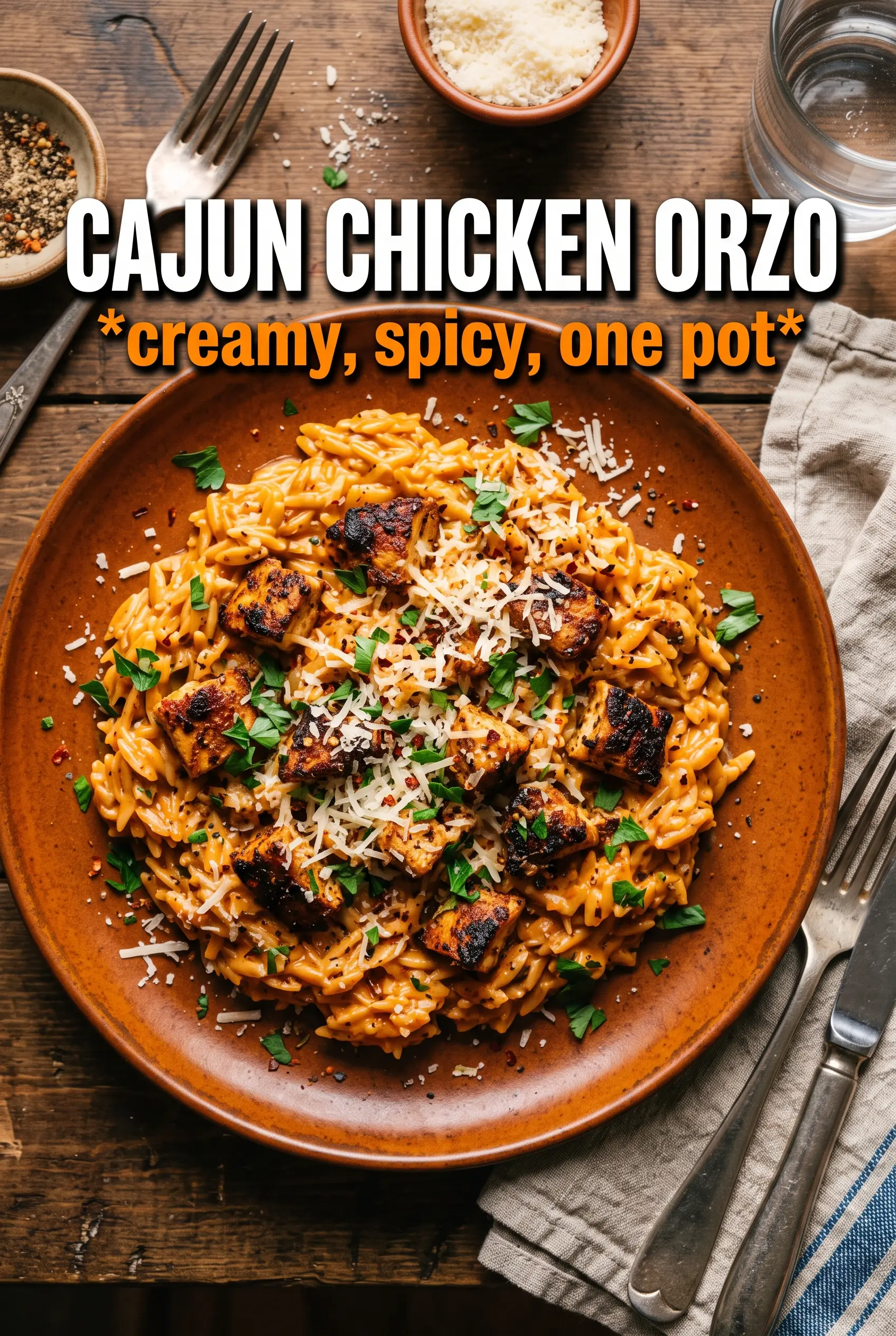
Blackened Cajun chicken over creamy orzo hits the table with the kind of heat and comfort that keeps it in regular dinner rotation. The chicken stays juicy under that smoky crust, and the orzo takes on a risotto-like texture without needing constant babysitting. Bell peppers, onion, and a little Parmesan round out the dish so every bite lands with spice, richness, and a little sharp finish from lemon.
What makes this version work is the order. The chicken sears first, leaving behind all those browned bits that season the whole pan, and the orzo gets a quick toast before the broth goes in, which helps it keep some texture instead of turning mushy. Adding the cream and Parmesan at the end keeps the sauce smooth and glossy instead of grainy. That last squeeze of lemon matters too. It cuts through the richness and wakes up the Cajun seasoning instead of letting the dish taste heavy.
Below, I’m breaking down the one-pan method, the ingredient choices that matter most, and a few swaps that still keep the dish bold and creamy. If your orzo has ever turned gluey or your chicken lost its crust, the notes here will help.
The chicken got that deep blackened crust, and the orzo turned out creamy without being soupy. I added the lemon at the end like you said, and it made the whole dish taste brighter.
Save this Cajun Chicken Orzo for a creamy one-pan dinner with blackened chicken, tender orzo, and just enough heat to keep every bite interesting.
The reason the orzo stays creamy instead of turning sticky
Orzo behaves like pasta, but it rewards you when you treat it a little more like a stovetop rice dish. Toasting it in the pan before the broth goes in gives the grains a thin coating of fat, which helps them keep their shape and keeps the final texture from collapsing into paste. Stirring often matters here, but constant stirring over high heat is the mistake that makes the starch seize up too fast and the liquid evaporate before the orzo is tender.
The other thing that changes the outcome is the order of the dairy. Heavy cream and Parmesan go in after the orzo is cooked through, not at the beginning. That keeps the sauce smooth and prevents the cheese from tightening up while the pasta is still absorbing liquid. If the mixture looks loose at first, give it a minute. Orzo thickens fast as it sits.
What the Cajun seasoning, cream, and Parmesan are each doing here

- Cajun seasoning — This is the backbone of the dish, so use one you actually like the taste of. Some blends lean saltier than others, which matters because the chicken gets seasoned twice. If your blend is very salty, cut back a little and let the broth and Parmesan do more of the work.
- Chicken thighs — Thighs hold up to the high heat needed for that blackened crust and stay juicy while the orzo finishes. Chicken breasts can work, but they dry out faster and don’t give you the same forgiving texture. Slice them after resting so the juices stay in the meat instead of running into the skillet.
- Orzo — Regular orzo is the right choice here because it releases just enough starch to make the sauce creamy. Whole wheat orzo will take a little longer and needs more broth. If that’s what you have, add liquid in small splashes near the end instead of dumping it all in at once.
- Heavy cream and Parmesan — This combination gives the sauce body without turning it overly thick or gluey. Half-and-half will work in a pinch, but the sauce will be thinner and a little less luxurious. Grate the Parmesan finely so it melts smoothly.
- Bell peppers and onion — These add sweetness that balances the heat and keep the dish from tasting one-note. Dice them evenly so they soften at the same rate and don’t leave crunchy bits in the finished orzo.
Building the skillet from blackened chicken to creamy finish
Getting the crust on the chicken
Rub the chicken thighs with half the Cajun seasoning and sear them in hot olive oil until the outside looks deeply browned and the edges look almost charred. Don’t move them around once they hit the pan, or you’ll lose that crust before it sets. If the chicken sticks at first, it usually needs another minute; once it releases cleanly, flip it and finish cooking through to 165°F. Pull it out before you start the vegetables so it doesn’t overcook while the orzo simmers.
Softening the vegetables in the fond
Cook the bell peppers and onion in the same skillet, right through the browned bits left behind by the chicken. That fond is free seasoning, and scraping it up is what gives the finished dish its depth. The vegetables should soften and look glossy, not browned all over. Add the garlic and remaining Cajun seasoning at the end of this stage so the garlic stays fragrant instead of burning.
Cooking the orzo until it turns glossy and tender
Stir the orzo into the vegetables and let it toast for about a minute before adding broth. That quick toast keeps the flavor nutty and helps the grains stay separate. Once the broth goes in, bring the pan to a steady simmer and stir often, especially around the corners of the skillet where orzo likes to stick. If the pan looks dry before the pasta is tender, add a splash more broth instead of cranking up the heat.
Finishing with cream, Parmesan, and the chicken
When the orzo is tender and most of the broth is absorbed, lower the heat and stir in the cream and Parmesan. The sauce should look silky and coat the spoon, not boil hard. If it starts to thicken too much, a small splash of broth loosens it right back up. Slice the chicken and set it on top, then finish with green onions and a squeeze of lemon so the richness doesn’t flatten the spice.
Three ways to adjust this Cajun chicken orzo without losing the point
Make it dairy-free
Use full-fat coconut milk or an unsweetened dairy-free cream instead of heavy cream, and skip the Parmesan or use a dairy-free Parmesan-style substitute. The sauce won’t taste exactly the same, but it will still be creamy and rich. Add the lemon at the end to brighten the flavor since you lose some of the sharpness Parmesan usually brings.
Make it gluten-free
Swap the orzo for a gluten-free orzo-style pasta if you can find one, but cook it with a close eye because gluten-free pasta can go from tender to soft faster than standard orzo. If the brand you buy tends to break down, reduce the broth slightly and add more only as needed. The rest of the recipe stays the same.
Use chicken breasts instead of thighs
Chicken breasts work, but they need a gentler hand. Sear them just until cooked through, then remove them right away so they don’t dry out while the orzo finishes. Slice them thin before serving, and expect a leaner result with a little less richness than thighs.
Turn it into a vegetarian skillet
Skip the chicken and use vegetable broth instead of chicken broth, then add sautéed mushrooms or white beans for something hearty. You’ll lose the blackened chicken flavor, so lean harder on the Cajun seasoning and smoked paprika. A little extra lemon at the end helps the dish taste complete without the meat.
Storage and Reheating
- Refrigerator: Store leftovers in an airtight container for up to 3 days. The orzo will thicken as it sits, which is normal.
- Freezer: It freezes, but the cream sauce can separate a little when thawed. If you freeze it, portion it first and expect a softer texture after reheating.
- Reheating: Reheat gently on the stove over low heat with a splash of broth or cream. Microwaving on high can make the sauce grainy and the chicken dry, so use short bursts and stir between each one.
Questions I Get Asked About This Recipe
Cajun Chicken Orzo
Ingredients
Equipment
Method
- Rub chicken thighs with 1 tablespoon Cajun seasoning, then sear in olive oil in a large deep skillet over medium-high heat for 4-5 minutes per side until blackened and cooked through to 165°F; remove and slice.
- In the same skillet, cook bell peppers and onion over medium heat for 4 minutes; add garlic and remaining Cajun seasoning and cook 1 minute.
- Add orzo and toast 1 minute, then pour in chicken broth and bring to a simmer; cook uncovered for 10-12 minutes, stirring often, until orzo is tender.
- Stir in heavy cream and Parmesan; simmer 2 minutes until creamy.
- Top with sliced Cajun chicken and garnish with green onions and lemon wedges; serve hot.